
Blockchain technology, once a niche concept primarily associated with cryptocurrencies like Bitcoin, has rapidly evolved into a foundational digital innovation with far-reaching implications across numerous industries. At its core, blockchain represents a revolutionary way to record and share information, promising unparalleled levels of security, transparency, and efficiency. Far more than just a ledger for digital money, it embodies a paradigm shift in how data is managed and trust is established in a decentralized manner. Understanding blockchain means delving into its fundamental architecture, its operational mechanics, and its potential to reshape everything from supply chains to digital identity.
The Foundational Concept of Blockchain: A Distributed Ledger Revolution
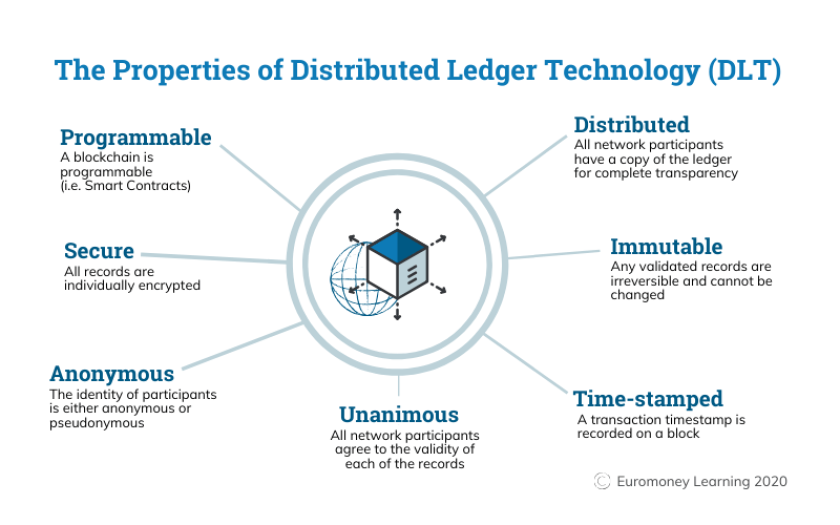
At its essence, blockchain is a specific type of Distributed Ledger Technology (DLT) – a digital system for recording transactions across multiple computers simultaneously. What distinguishes blockchain is its unique structure and the cryptographic principles that secure it, creating an immutable and transparent record of information.
Distributed Ledger Technology (DLT)
Traditional record-keeping systems are typically centralized, meaning a single entity (like a bank or a government agency) controls and maintains the database. This centralized model presents single points of failure, vulnerability to hacks, and often necessitates trust in an intermediary. DLT, conversely, distributes the ledger across a network of participants, known as nodes. Each node holds an identical copy of the ledger, and any updates must be validated and agreed upon by the network according to predefined rules. This distribution inherently enhances resilience and removes the need for a central authority.
Immutability and Transparency
One of blockchain’s most powerful features is its immutability. Once a transaction or a piece of data is recorded on the blockchain, it cannot be altered or deleted. This permanence is achieved through cryptographic hashing. Each “block” of transactions is linked to the previous one using a cryptographic hash, creating a continuous “chain.” If even a single piece of data in an older block were to be tampered with, its hash would change, breaking the chain and immediately alerting the network to the attempted fraud. This makes blockchain an incredibly secure and reliable system for maintaining records.
Transparency is another cornerstone. While the identities of participants might be pseudonymous (represented by cryptographic addresses), the transactions themselves are typically visible to everyone on the network. In public blockchains, anyone can view the entire history of transactions, ensuring accountability and reducing the potential for hidden manipulation. This combination of immutability and transparency builds a system where trust is derived from cryptography and network consensus, rather than reliance on a single, fallible entity.
Cryptography’s Role in Security
Cryptography is the backbone of blockchain security. It’s used in several critical ways:
- Hashing: As mentioned, cryptographic hash functions condense transaction data into a unique, fixed-length string (the hash). Any tiny change in the data produces a completely different hash, making tampering detectable.
- Digital Signatures: Participants use private and public key pairs to digitally sign their transactions. The private key is kept secret and used to authorize transactions, while the public key is shared and used to verify the signature, proving ownership and intent without revealing the private key.
- Merkle Trees: Within each block, a Merkle tree is often used to efficiently summarize all the transactions. It’s a tree-like structure where every leaf node is a hash of a transaction, and every non-leaf node is a hash of its child nodes. This allows for quick and secure verification that a transaction is included in a block without needing to download the entire block.
These cryptographic techniques ensure the integrity, authenticity, and non-repudiation of transactions within the blockchain network.
How Blockchain Works: A Step-by-Step Overview
To grasp the true meaning of blockchain, it’s crucial to understand the step-by-step process by which transactions are validated, recorded, and chained together. It’s a meticulously engineered sequence designed for robust data management.
The Anatomy of a Block
A blockchain is, literally, a chain of “blocks.” Each block is essentially a container for a set of validated transactions. Typically, a block contains:
- Block Header: This includes metadata such as the timestamp of creation, the version number of the software, the Merkle root (a hash of all transactions in the block), the hash of the previous block (the link in the chain), and a “nonce” (a number used in the mining process).
- Transaction Data: A list of all the transactions included in that particular block.
The size and frequency of new blocks vary depending on the specific blockchain protocol. For example, Bitcoin aims for a new block approximately every 10 minutes, while Ethereum targets closer to 12-15 seconds.
The Chaining Process
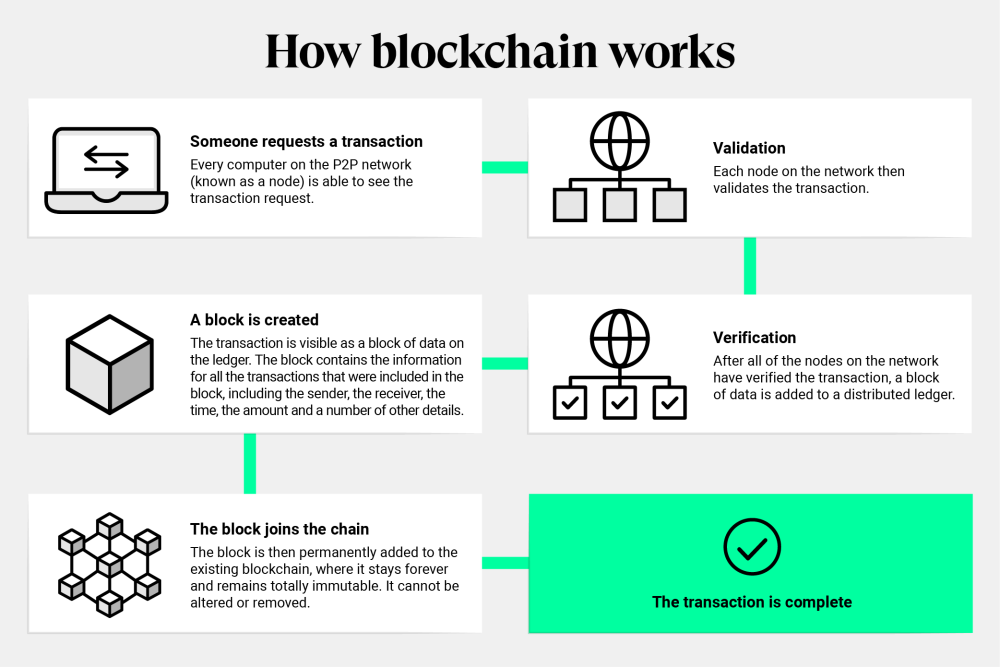
The “chain” aspect is fundamental. When a new block is created and validated, it contains the cryptographic hash of the immediately preceding block. This creates an unbreakable, chronological link. If any block in the middle of the chain were to be altered, its hash would change, and consequently, the hash stored in the next block would no longer match, effectively breaking the chain. This interlocking mechanism ensures the integrity of the entire ledger, making it practically impossible to retrospectively change data without being detected by the network. The longer the chain, the more secure the network, as altering older blocks would require re-mining every subsequent block, an incredibly computationally intensive task.
Consensus Mechanisms
For a decentralized system to function, all participants must agree on the state of the ledger. This agreement is achieved through “consensus mechanisms.” These are algorithms that establish rules for how nodes agree on the validity of transactions and the order of blocks.
- Proof of Work (PoW): Pioneered by Bitcoin, PoW requires “miners” to solve complex computational puzzles to propose a new block. The first miner to find the solution gets to add the block to the chain and is rewarded. This process is energy-intensive but highly secure, as it’s computationally prohibitive to overpower the network.
- Proof of Stake (PoS): An alternative to PoW, PoS selects block creators (often called “validators”) based on the amount of cryptocurrency they “stake” (lock up) as collateral. Validators are rewarded for creating valid blocks and penalized for dishonest behavior. PoS is significantly more energy-efficient than PoW and offers different security trade-offs.
- Other Mechanisms: Other consensus mechanisms include Delegated Proof of Stake (DPoS), Proof of Authority (PoA), and variations for specific enterprise or private blockchain contexts, each offering different balances of decentralization, scalability, and security.
Decentralization and Peer-to-Peer Networks
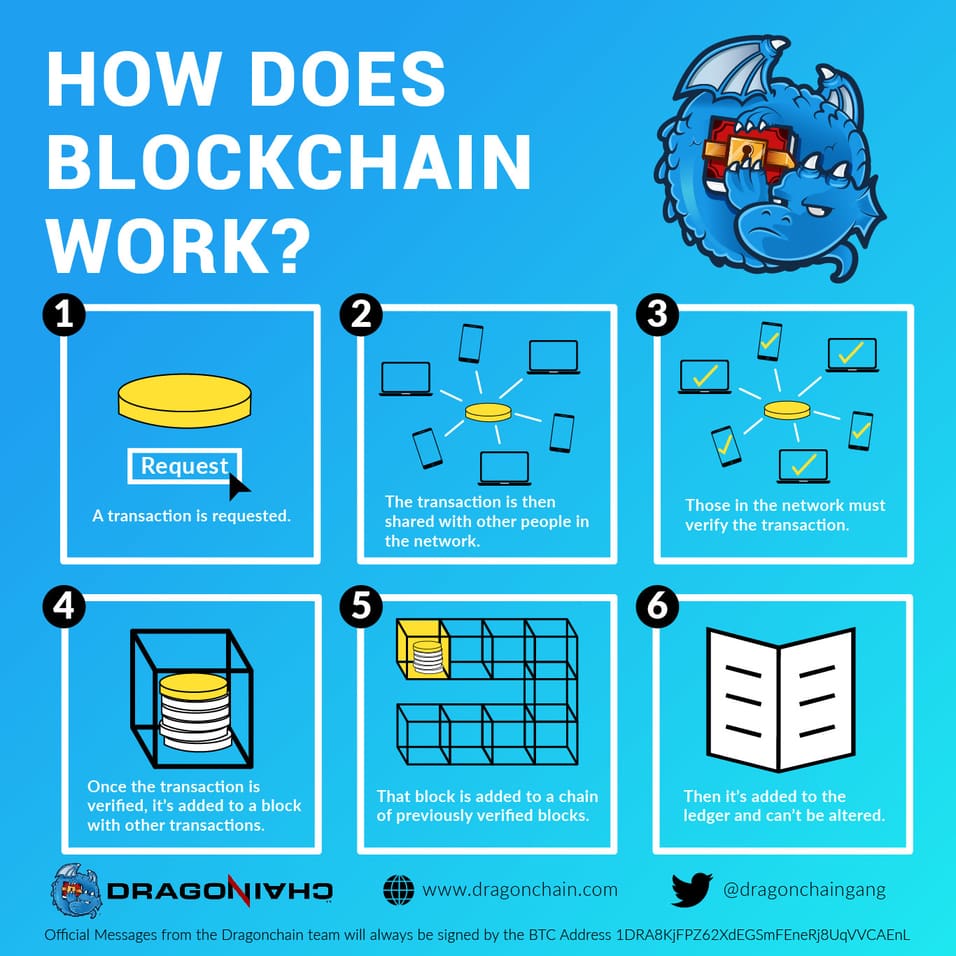
Blockchain operates on a peer-to-peer (P2P) network. There is no central server or authority. Every node in the network communicates directly with other nodes, sharing information and validating transactions. When a new transaction is initiated, it’s broadcast to the network. Nodes verify its authenticity (e.g., valid digital signature, sufficient funds) and then relay it. Once enough transactions are gathered, a new block is proposed (according to the consensus mechanism), and once validated, it’s added to the chain and replicated across all nodes. This decentralized, P2P architecture is crucial for resisting censorship, single points of failure, and external control.
Beyond Cryptocurrencies: Diverse Applications of Blockchain Technology
While its origins are intrinsically linked to digital currencies, blockchain’s underlying technology has proven to be incredibly versatile. Its core attributes – immutability, transparency, and decentralization – make it suitable for a vast array of applications far beyond financial transactions, redefining how industries manage data and establish trust.
Supply Chain Management and Provenance
One of the most promising applications of blockchain is in enhancing supply chain transparency and efficiency. By recording every step of a product’s journey – from raw materials to manufacturing, shipping, and retail – on an immutable ledger, companies can track provenance with unprecedented accuracy. This helps combat counterfeiting, verify ethical sourcing, identify bottlenecks, and improve recalls. Consumers can potentially scan a QR code to see the entire history of a product, fostering greater trust and accountability. Examples include tracking food safety, ensuring the origin of luxury goods, and managing pharmaceutical distribution.
Digital Identity and Record Keeping
Traditional identity systems are often fragmented and centralized, making them vulnerable to data breaches and identity theft. Blockchain offers a pathway to “self-sovereign identity,” where individuals control their personal data and selectively grant access to specific verified attributes without revealing their entire identity. For instance, instead of sharing a full birth certificate to prove age, a blockchain-based identity system could simply provide a verifiable proof that the user is over 18, without exposing other sensitive details. Similarly, academic credentials, medical records, and property titles can be securely stored and managed on a blockchain, reducing fraud and streamlining verification processes.
Smart Contracts and Automation
Smart contracts are self-executing contracts with the terms of the agreement directly written into lines of code. These contracts reside on the blockchain and automatically execute when predefined conditions are met, eliminating the need for intermediaries and reducing the risk of human error or manipulation. For example, an insurance policy could automatically disburse a payout if certain weather conditions are met, as recorded by an IoT sensor. Or, a payment could be released to a freelancer only when a specific task is marked as complete on a project management system. This automation significantly reduces costs, increases efficiency, and enhances trust in contractual agreements across various sectors, from legal agreements to real estate and logistics.
Decentralized Finance (DeFi) and Web3
While technically related to “Money,” the underlying technology enabling Decentralized Finance (DeFi) and the broader concept of Web3 is a critical technical application of blockchain. DeFi refers to a suite of financial applications built on blockchain that aim to recreate traditional financial services (lending, borrowing, trading, insurance) without central intermediaries. Web3, an evolution of the internet, envisions a decentralized web where users have greater control over their data and digital assets, powered by blockchain and other decentralized technologies. These are not about the money itself, but the technical architecture that enables new forms of economic interaction, data ownership, and governance models through protocols, smart contracts, and decentralized applications (dApps).
Healthcare and Data Sharing
In healthcare, blockchain can address critical challenges related to data interoperability, security, and patient privacy. Electronic health records (EHRs) could be stored on a blockchain, allowing patients to control who accesses their medical history and enabling secure, auditable sharing between different providers and institutions. This could streamline research, improve diagnostics, and prevent medical errors. Furthermore, blockchain can be used to track pharmaceutical supply chains, ensuring drug authenticity and preventing counterfeit medications from entering the market.
Challenges and Future Outlook
Despite its immense potential, blockchain technology is still in its relatively early stages of development and adoption. Several significant technical challenges need to be addressed before it can achieve widespread mainstream integration.
Scalability Issues
One of the most pressing technical challenges for many public blockchains, particularly those using Proof of Work, is scalability. Current transaction throughput on these networks is often far lower than what centralized payment processors (like Visa) can handle. As more users and applications join, networks can become congested, leading to slower transaction times and higher fees. Researchers and developers are actively working on solutions, including:
- Layer 2 Solutions: These protocols (e.g., Lightning Network for Bitcoin, optimistic rollups, ZK-rollups for Ethereum) build on top of existing blockchains to process transactions off-chain, then periodically settle them on the main chain, significantly increasing throughput.
- Sharding: Dividing the blockchain into smaller, more manageable segments (shards), each capable of processing transactions independently.
- New Consensus Mechanisms: As mentioned, PoS and other mechanisms are designed with greater scalability in mind.
Regulatory Landscape
While primarily a legal/governance issue, the evolving and often uncertain regulatory environment directly impacts the technological development and adoption of blockchain. Clarity on issues like data privacy (e.g., GDPR’s “right to be forgotten” versus blockchain’s immutability), digital asset classification, and international cooperation is crucial for developers and enterprises to build compliant and sustainable blockchain solutions. Technological innovations often outpace regulatory frameworks, creating a complex landscape for adoption.
Energy Consumption (for PoW)
The high energy consumption of Proof of Work blockchains, particularly Bitcoin, has been a significant point of concern. The computational power required to solve cryptographic puzzles translates into substantial electricity usage, raising environmental questions. This challenge has driven much of the innovation towards more energy-efficient consensus mechanisms like Proof of Stake, which dramatically reduce the carbon footprint of blockchain operations. The industry is actively moving towards greener alternatives, showcasing a commitment to sustainable technological development.
The Evolving Blockchain Ecosystem
The future of blockchain technology is dynamic and promising. We are witnessing continuous innovation in protocol design, cryptographic techniques, interoperability solutions (allowing different blockchains to communicate), and user-friendly interfaces. Enterprises are increasingly exploring private and consortium blockchains for specific business needs, while public blockchains continue to expand their capabilities and reach. The confluence of blockchain with other emerging technologies like Artificial Intelligence, Internet of Things (IoT), and augmented reality is poised to create entirely new paradigms for digital interaction and value exchange. As developers refine the technology and solve current limitations, blockchain is set to become an invisible, yet indispensable, part of our digital infrastructure, fundamentally redefining how we secure, share, and interact with information in a decentralized world.
aViewFromTheCave is a participant in the Amazon Services LLC Associates Program, an affiliate advertising program designed to provide a means for sites to earn advertising fees by advertising and linking to Amazon.com. Amazon, the Amazon logo, AmazonSupply, and the AmazonSupply logo are trademarks of Amazon.com, Inc. or its affiliates. As an Amazon Associate we earn affiliate commissions from qualifying purchases.