
In today’s competitive economic landscape, businesses are constantly seeking strategies to optimize their spending, streamline procurement, and enhance operational efficiency. Amazon Business Prime emerges as a powerful tool in this pursuit, promising a suite of benefits designed to reduce costs and improve financial management for organizations of all sizes. However, the crucial question for any financially astute decision-maker remains: “How much is Amazon Business Prime, and what is its true return on investment?” This article delves into the financial intricacies of Amazon Business Prime, dissecting its pricing structures, quantifying its value propositions, and guiding businesses on how to assess whether this membership is a financially sound investment for their unique operational needs.

Understanding Amazon Business: Beyond the Free Account
Before evaluating the financial commitment of Amazon Business Prime, it’s essential to distinguish it from the standard Amazon Business account. Many businesses, even small ones, are already leveraging the free Amazon Business account, which offers a foundational set of tools. Understanding this distinction is the first step in assessing where additional investment might bring value.
The Foundational Free Amazon Business Account
The standard Amazon Business account is a free service that provides a dedicated purchasing portal for registered businesses. It offers several immediate financial and operational advantages without a direct membership fee. Key benefits include:
- Multi-User Accounts: Centralize purchasing under one account, allowing multiple users with varying permissions, which aids in spend control and accountability.
- Tax-Exempt Purchases: Eligible tax-exempt organizations can apply their exemption status to purchases, leading to direct savings on sales tax.
- Business-Exclusive Pricing and Quantity Discounts: Access to special pricing on millions of items, often with discounts for bulk purchases, directly impacting procurement costs.
- Payment Solutions: Options like Pay by Invoice with extended payment terms can improve cash flow management.
- Reporting and Analytics: Basic spending reports offer visibility into purchasing patterns, a rudimentary tool for budget monitoring.
These features already represent a significant cost-saving and efficiency-boosting baseline for businesses. The transition to Amazon Business Prime, therefore, must demonstrate incremental financial value beyond these existing free benefits.
Differentiating Amazon Business Prime from Standard Prime
Many individuals are familiar with Amazon Prime for consumers, offering free two-day shipping and streaming services. Amazon Business Prime is a distinct, paid membership program specifically tailored for businesses, building upon the free Amazon Business account. While it shares some superficial similarities (like expedited shipping), its core value proposition is firmly rooted in enhancing business procurement, financial oversight, and operational logistics. The “Prime” aspect for businesses translates into a premium tier of benefits primarily focused on reducing procurement costs, optimizing delivery logistics, and providing deeper financial insights that directly impact a company’s bottom line. The decision to upgrade to Business Prime is a strategic financial one, requiring a clear understanding of its added benefits versus its recurring cost.
Deconstructing Amazon Business Prime Membership Tiers and Pricing
The cost of Amazon Business Prime is not a one-size-fits-all figure. Amazon has structured its Business Prime offering into various tiers, each designed to cater to different organizational sizes and purchasing volumes, with corresponding price points. This tiered approach allows businesses to select a plan that aligns with their financial capacity and operational scale.
Tiered Structures: Essentials, Small, Medium, Enterprise
Amazon Business Prime offers multiple membership tiers, typically including:
- Essentials: Geared towards smaller businesses with up to 3 users.
- Small: Designed for businesses with up to 10 users.
- Medium: For organizations supporting up to 100 users.
- Enterprise: Tailored for large corporations with more than 100 users, offering highly customizable solutions.
Each tier scales in terms of the number of users who can access Business Prime benefits, as well as the sophistication of features available, reflecting an increasing investment for larger, more complex organizations.
A Detailed Look at Membership Costs
While specific pricing can fluctuate and may vary by region or promotional offers, a general understanding of the annual cost structure is critical for budget planning. As of general information, the annual costs for these tiers might look something like this:
- Essentials (up to 3 users): Often priced around $69 per year. This tier is an affordable entry point for very small businesses looking to capitalize on core Prime benefits.
- Small (up to 10 users): Typically costs around $179 per year. This jump reflects the increased user count and potentially higher purchasing volume.
- Medium (up to 100 users): Could range around $499 per year. This tier provides significant scalability for growing businesses.
- Enterprise (100+ users): Pricing for this top tier is often custom-quoted, based on the specific needs, purchasing volume, and complexity of integration required by large organizations. It can run into thousands of dollars annually.
These figures represent a direct annual expenditure that businesses must factor into their operating budgets. The justification for this expense lies in the financial returns generated by the membership’s benefits.
Factors Influencing Your Investment
Choosing the right Business Prime tier is a strategic financial decision. Several factors should influence your investment choice:
- Number of Users: This is the primary determinant of the tier level and, consequently, the annual cost. Accurately assessing how many employees genuinely need Prime benefits is crucial.
- Annual Spend on Amazon Business: High-volume purchasers are more likely to see a substantial ROI from benefits like free shipping and exclusive discounts. Businesses with minimal Amazon spend may struggle to justify even the lowest tier’s cost.
- Logistics and Delivery Needs: Businesses reliant on fast, predictable shipping for critical supplies will find more value in expedited delivery options.
- Level of Spend Visibility Required: Organizations needing advanced analytics and guided buying features to control maverick spending will benefit more from higher tiers.
- Integration with Existing Procurement Systems: Enterprise-level businesses often require punchout capabilities or integration with e-procurement systems, justifying a higher investment for seamless operations.
A thorough analysis of these factors will guide businesses toward the most financially appropriate Business Prime tier, ensuring the investment aligns with actual operational requirements and expected financial gains.
Unlocking Financial Value: Key Benefits from a Monetary Perspective
The direct cost of an Amazon Business Prime membership is only one side of the financial equation. The other, more compelling side, is the monetary value it delivers through a range of premium benefits. When viewed through a financial lens, these features translate into quantifiable savings, enhanced efficiency, and improved cash flow.
Streamlining Procurement and Reducing Operational Costs
One of the most significant financial advantages of Business Prime is its ability to streamline the procurement process, thereby reducing hidden operational costs.
- Guided Buying: For higher tiers, this feature allows administrators to flag preferred suppliers and products or restrict certain categories. This directly controls spending, prevents unauthorized purchases, and ensures compliance with budget allocations and preferred vendor contracts, leading to significant cost avoidance.
- Consolidated Shipping: Instead of receiving multiple small packages, Business Prime allows for consolidated shipments where possible. This not only reduces internal receiving and unpacking labor costs but also minimizes the environmental footprint, which can have indirect financial benefits related to corporate social responsibility.
- Punchout Integration: For Enterprise accounts, seamless integration with existing e-procurement systems (e.g., SAP Ariba, Coupa) eliminates manual data entry, reduces errors, and speeds up the entire procure-to-pay cycle. This translates into considerable labor cost savings and increased efficiency for purchasing departments.
Leveraging Business Analytics for Smarter Spending
Data is currency in modern business, and Business Prime’s advanced analytics tools empower companies to make more informed financial decisions.
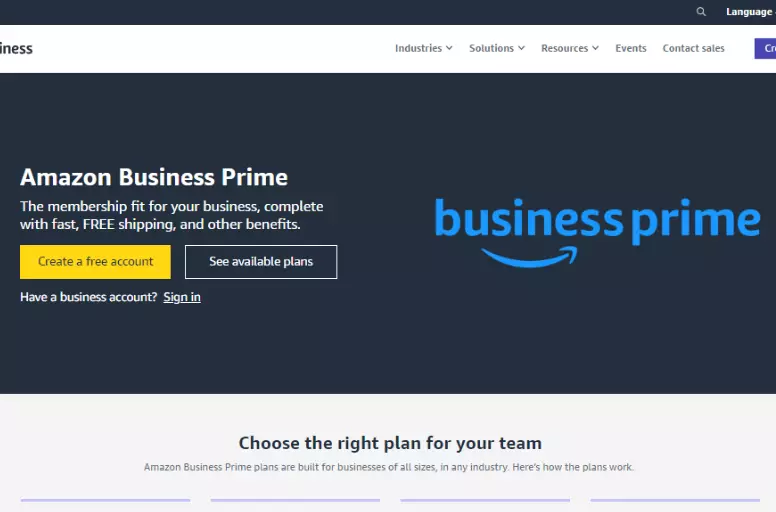
- Spend Visibility Dashboards: Beyond the basic reporting of the free account, Business Prime offers more granular insights into spending patterns by user, department, category, and time period. This heightened visibility allows finance teams to identify areas of overspending, pinpoint opportunities for bulk discounts, and negotiate better terms with suppliers by understanding internal consumption trends.
- Custom Reporting: The ability to generate custom reports tailored to specific financial metrics helps businesses track compliance with spending policies and optimize budget allocation more effectively, ultimately driving cost efficiencies.
Maximizing Tax Advantages and Exclusive Discounts
Direct monetary savings are often the easiest to quantify and a primary driver for adopting Business Prime.
- Tax-Exempt Purchases (Enhanced): While available in the free account, Business Prime may offer more robust tools for managing tax exemption across multiple entities or jurisdictions, simplifying compliance and ensuring consistent tax savings.
- Exclusive Business-Only Discounts: Members gain access to additional, often deeper, discounts on specific products and categories that are unavailable to free account holders. These can be particularly impactful for businesses making frequent or large-volume purchases in certain areas, directly reducing procurement costs.
- Tiered Pricing and Quantity Discounts: Beyond the standard business pricing, Business Prime members might unlock even more aggressive tiered pricing based on their specific plan, further enhancing savings on bulk orders.
Free Shipping and Expedited Delivery: Quantifying Savings
Perhaps the most immediately recognizable benefit, free shipping holds substantial financial value for businesses.
- Free Two-Day Shipping: For eligible items, this benefit eliminates shipping costs on millions of products. For businesses that frequently order supplies, components, or office necessities, the cumulative savings on shipping fees alone can easily offset the annual membership cost.
- Expedited Shipping Options: Beyond two-day, Business Prime often includes options for next-day or even same-day delivery at no additional cost for specific items and regions. This is invaluable for businesses with urgent needs, preventing costly downtime, meeting project deadlines, and avoiding more expensive local emergency purchases.
- Reduced Logistics Overhead: By relying on Amazon’s robust logistics network for shipping, businesses can potentially reduce their own internal logistics overhead, freeing up resources and capital that might otherwise be tied up in managing inbound freight.
The aggregate of these financial benefits must be weighed against the annual membership fee. For many businesses, particularly those with consistent Amazon Business spending, the cumulative savings from shipping, discounts, and improved operational efficiency can far exceed the initial investment.
Is Amazon Business Prime a Worthwhile Investment for Your Business?
Deciding whether to invest in Amazon Business Prime is a strategic financial choice that requires a thorough evaluation of its costs against its potential benefits. It’s not merely about the sticker price; it’s about the holistic impact on your financial health, operational efficiency, and long-term procurement strategy.
Conducting a Cost-Benefit Analysis
A rigorous cost-benefit analysis is paramount. Businesses should quantify their current spending habits and project potential savings derived from Business Prime features.
- Calculate Current Shipping Costs: Tally up what your business currently spends on shipping for all items procured through Amazon Business (and potentially other suppliers for comparison). This is a direct saving.
- Estimate Savings from Discounts: Based on your purchasing history, identify items that would likely qualify for Business Prime exclusive discounts. Project the percentage savings on these items.
- Assess Operational Efficiency Gains: While harder to quantify, estimate the time saved by your purchasing team due to streamlined processes, guided buying, and reduced manual tasks. Convert this time into a monetary value based on employee wages.
- Consider Inventory Holding Cost Reductions: With reliable expedited shipping, businesses might be able to reduce safety stock levels, freeing up capital and warehouse space.
- Factor in Compliance and Control: Consider the financial impact of reduced unauthorized spending and improved budget adherence thanks to guided buying and advanced analytics.
Compare the sum of these projected savings and efficiencies against the annual membership fee for the appropriate tier. If the projected financial benefits significantly outweigh the cost, the investment is likely justified.
Identifying Ideal Candidates for Business Prime
Certain types of businesses are naturally better positioned to extract maximum financial value from Business Prime:
- High-Volume Purchasers: Businesses that frequently procure a wide array of goods from Amazon Business – from office supplies to industrial components – will see the most substantial savings on shipping and bulk discounts.
- Businesses with Distributed Teams/Locations: Organizations with multiple departments or remote offices benefit greatly from centralized purchasing control, user management, and consistent access to Prime benefits across the board.
- Companies Prioritizing Efficiency: Those actively seeking to optimize their procurement process, reduce administrative overhead, and free up purchasing agents’ time for more strategic tasks.
- Organizations with Strict Budget Controls: Businesses aiming to curb maverick spending and enforce purchasing policies will find value in guided buying and detailed spend analytics.
- Small to Medium-Sized Businesses (SMBs): Particularly for the Essentials and Small tiers, SMBs can gain access to enterprise-level procurement efficiencies without the overhead of building their own complex systems, offering a competitive edge.
If your business aligns with several of these characteristics, the financial case for Business Prime becomes considerably stronger.
The Long-Term Financial Impact and Scalability
Investing in Amazon Business Prime isn’t just about immediate cost savings; it’s also about setting a foundation for scalable, efficient procurement. As a business grows, its purchasing needs become more complex. Business Prime’s tiered structure allows the membership to scale with the organization, ensuring that the financial benefits continue to accrue as the business expands. The advanced analytics and integrations available in higher tiers prepare businesses for larger-scale operations, contributing to sustained financial health and controlled growth. Over time, the cumulative savings and operational efficiencies can significantly impact the bottom line, freeing up capital for strategic investments elsewhere in the business.
Practical Steps to Evaluating and Implementing Business Prime
Making an informed decision about Amazon Business Prime requires more than just a theoretical understanding; it necessitates practical steps for evaluation and implementation to ensure maximum financial benefit.
Assessing Your Current Procurement Landscape
Before committing, conduct an internal audit of your current procurement processes.
- Identify Pain Points: Are you frequently paying for shipping? Is there a lack of visibility into departmental spending? Are different teams buying the same items from various sources at different prices? These pain points represent areas where Business Prime can deliver tangible financial relief.
- Analyze Purchase Volume and Frequency: Review past purchasing data on Amazon Business. How much are you spending? How often do you place orders? A high volume and frequency of orders will amplify the value of free shipping and discounts.
- Determine User Needs: How many employees regularly make purchases? Which departments would benefit most from direct access to Prime benefits? This informs the appropriate tier selection.
Piloting and Phased Rollouts
For larger organizations, a full-scale rollout might be daunting. Consider a pilot program:
- Start Small: Begin with the Essentials or Small tier, or implement the chosen tier for a specific department or team that is a heavy Amazon Business user.
- Monitor Key Metrics: Track specific financial metrics during the pilot: shipping cost savings, discount utilization, processing time reductions, and adherence to purchasing policies.
- Gather Feedback: Collect feedback from users and purchasing managers on the ease of use and perceived financial benefits.
This phased approach allows for a low-risk evaluation of the ROI before a broader commitment, ensuring the investment is validated by real-world performance within your organization.
Monitoring ROI and Adjusting Strategy
The financial evaluation of Business Prime doesn’t end after implementation.
- Regular Review of Analytics: Utilize Business Prime’s advanced reporting features to regularly monitor spend, identify savings, and ensure ongoing compliance.
- Compare Against Benchmarks: Periodically compare your actual savings (shipping, discounts) against your initial projections to confirm the membership is delivering its expected financial value.
- Tier Optimization: As your business evolves, reassess whether your current Business Prime tier still aligns with your user count and purchasing volume. You might need to upgrade or downgrade to optimize your annual expenditure.
By continuously monitoring the financial performance and strategically adjusting your Business Prime utilization, you ensure that your investment consistently yields a positive return, reinforcing its role as a valuable financial tool in your business’s procurement ecosystem.
Ultimately, Amazon Business Prime is more than just a subscription service; it’s a financial instrument designed to optimize procurement spending and enhance operational efficiencies. For businesses that strategically leverage its features and meticulously track its impact, the “cost” transforms into a wise investment that generates substantial and sustained financial returns.
aViewFromTheCave is a participant in the Amazon Services LLC Associates Program, an affiliate advertising program designed to provide a means for sites to earn advertising fees by advertising and linking to Amazon.com. Amazon, the Amazon logo, AmazonSupply, and the AmazonSupply logo are trademarks of Amazon.com, Inc. or its affiliates. As an Amazon Associate we earn affiliate commissions from qualifying purchases.