
In today’s subscription economy, discerning how each recurring expense impacts your personal finances is paramount. Amazon Prime, with its extensive suite of services, represents a significant consideration for many households. The core question, “How much is Amazon Prime for a year?” seems simple, but a truly insightful answer requires a deep dive into its pricing structure, potential savings, and overall financial value proposition. This article will meticulously break down the costs, explore avenues for discounts, and guide you through a financial evaluation to determine if an annual Amazon Prime membership aligns with your budgetary goals and spending habits.

Understanding the Core Financial Commitment of Amazon Prime
At its heart, understanding the cost of Amazon Prime involves more than just a single number; it’s about evaluating an investment in a bundled service. The standard annual fee offers a distinct financial advantage over its monthly counterpart, reflecting a strategic incentive from Amazon for long-term commitment.
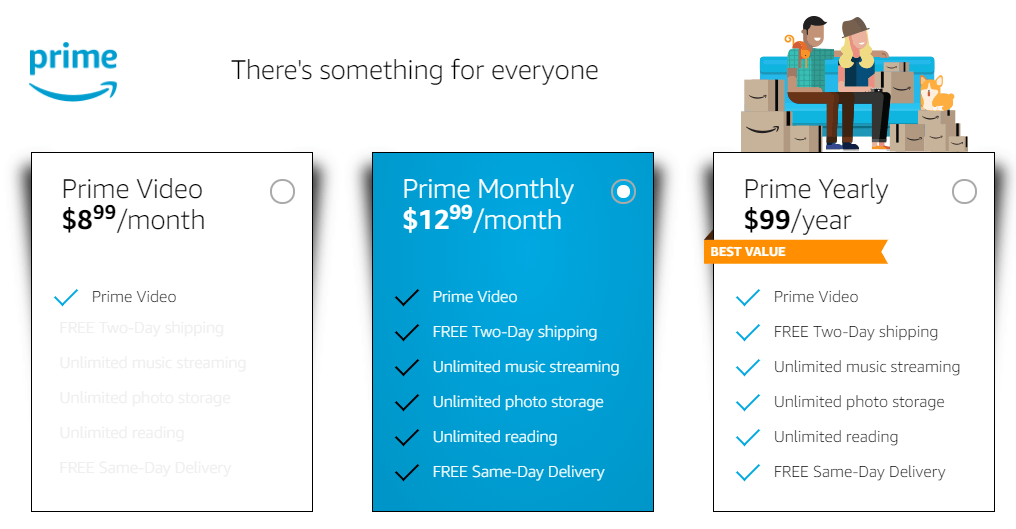
Annual vs. Monthly: Decoding the Price Structure
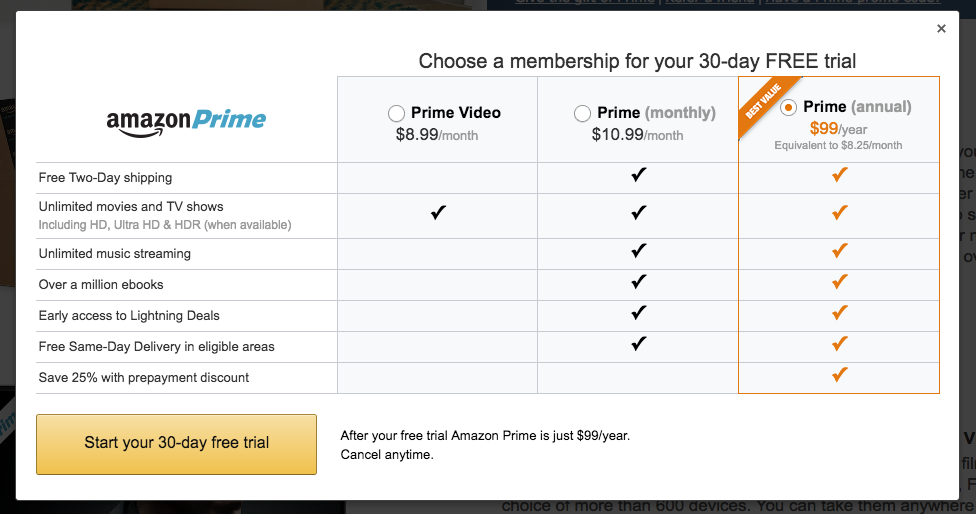
For most consumers, the primary choice when subscribing to Amazon Prime is between an annual and a monthly payment plan. As of recent updates, the standard annual membership costs approximately $139 per year. This yearly commitment is often presented as the most financially savvy option for consistent users. In contrast, opting for a month-to-month subscription typically costs around $14.99 per month.
A quick calculation reveals the financial incentive:
- Monthly Plan Cost over 12 months: $14.99/month * 12 months = $179.88 per year.
- Annual Plan Cost: $139 per year.
- Annual Savings by choosing the yearly plan: $179.88 – $139 = $40.88.
This nearly $41 saving underscores a crucial financial decision point for any prospective or current subscriber. If you anticipate using Prime services for a full year, the annual subscription represents a clear fiscal advantage. It locks in a lower effective monthly rate, reducing the total expenditure over the year. From a budgeting perspective, the annual lump sum payment, while larger upfront, eliminates 11 smaller monthly transactions, potentially simplifying financial tracking for some. Conversely, the monthly plan offers greater flexibility, allowing users to cancel at any time without having committed to a full year’s payment, which might appeal to those whose usage fluctuates or who are on a tighter month-to-month budget.
The Hidden Value: Beyond the Sticker Price
While the $139 annual fee is the direct financial outflow, the true monetary value of Amazon Prime is embedded in the extensive array of benefits it consolidates. These benefits, if purchased individually or through alternative services, would collectively far exceed the Prime subscription cost. For a financially astute consumer, the assessment of Prime’s value goes beyond simply acknowledging the free two-day shipping.
Consider the following core components included with Prime, each of which has an intrinsic market value:
- Expedited Shipping: The most widely recognized benefit. For frequent online shoppers, the accumulated shipping fees saved on even a moderate number of orders can quickly surpass the annual Prime fee. The convenience of not having to meet minimum order thresholds for free shipping also translates into indirect financial savings by preventing unnecessary purchases just to qualify.
- Prime Video: A vast library of streaming movies and TV shows. Subscribing to a standalone streaming service of similar breadth typically costs anywhere from $7 to $15 per month, totaling $84 to $180 annually.
- Amazon Music Prime: Access to millions of songs and thousands of stations ad-free. While not as extensive as Amazon Music Unlimited, its value is comparable to basic tiers of other music streaming services.
- Prime Reading: A rotating selection of free eBooks, magazines, and comics. For avid readers, this can represent significant savings on book purchases throughout the year.
- Amazon Photos: Unlimited full-resolution photo storage and 5 GB for video. Cloud storage services often charge monthly fees, making this a valuable inclusion for digital content creators or those with large photo libraries.
- Exclusive Deals and Discounts: Access to Prime Day sales and other member-only discounts, particularly at Whole Foods Market, can lead to tangible savings on groceries and other purchases throughout the year.
From a financial standpoint, if you utilize even a few of these services regularly, the aggregate cost savings become substantial. The real financial calculation for a consumer is not just “Can I afford $139?” but “How much would I spend on these services individually, and how does that compare to the Prime fee?” For many, Prime acts as a cost-effective bundle, transforming multiple potential expenses into one manageable annual payment.
Unlocking Financial Savings and Special Programs
Amazon recognizes that a single price point doesn’t fit all financial situations. To broaden its appeal and provide accessibility, it offers several discounted programs that significantly reduce the financial barrier to entry, making Prime an even more attractive proposition for eligible groups.
Student Prime: An Investment in Future Convenience
For students enrolled in higher education, Amazon offers a highly subsidized version of Prime known as Prime Student. This program is not just a temporary discount; it’s an investment in a demographic known for budget consciousness and a high likelihood of future e-commerce engagement.
Typically, Prime Student offers:
- A generous six-month free trial, which is significantly longer than the standard 30-day trial. This extended trial allows students ample time to experience the full range of benefits without any financial commitment, helping them assess its value against their needs.
- After the trial, the membership costs approximately $69 per year, or roughly half the standard annual fee.
- Alternatively, students can opt for a monthly plan at around $7.49 per month.
The financial implications for students are profound. At $69 per year, the effective monthly cost is just $5.75, making it an exceptionally affordable way to access expedited shipping for textbooks and supplies, streaming entertainment for downtime, and cloud storage for academic projects. Eligibility usually requires a valid .edu email address or other proof of enrollment in a two-year or four-year college or university. This program explicitly acknowledges the financial constraints faced by students, offering a significant saving that can free up funds for other essential expenses.
Government Assistance Programs: Prime Access
In a commendable effort to make its services more accessible to lower-income households, Amazon provides a discounted Prime membership for individuals receiving qualifying government assistance. This initiative, often referred to as Prime Access, reflects a commitment to financial inclusivity.
Eligible customers, typically those with a valid EBT card (Electronic Benefits Transfer) or receiving Medicaid benefits, can subscribe to Prime for approximately $6.99 per month. This translates to an annual cost of $83.88, which is considerably less than the standard annual fee.
From a personal finance perspective, this discount is invaluable. It brings the benefits of Prime – particularly free and fast shipping for essential goods, access to digital entertainment, and potential savings on groceries – within reach for those managing tight budgets. The monthly payment option for Prime Access also offers greater flexibility, aligning with the typical budgetary cycles of households relying on monthly assistance. The required verification process is straightforward, ensuring the benefits are directed to those who genuinely qualify, providing substantial financial relief.
Leveraging Free Trials: A Risk-Free Financial Assessment
Before committing financially to an Amazon Prime membership, both standard and student users have the opportunity to engage in a free trial. This is a crucial tool for a financially responsible consumer.
- Standard Amazon Prime: Offers a 30-day free trial.
- Prime Student: Offers an extended six-month free trial.
These trials serve as a risk-free period to thoroughly evaluate the financial and practical benefits of Prime. During this time, users can:
- Track shipping savings: Monitor how many purchases they make and estimate the shipping costs they would have incurred without Prime.
- Explore streaming content: Determine if Prime Video, Music, and Reading libraries meet their entertainment and information needs, potentially replacing other paid subscriptions.
- Utilize Whole Foods discounts: For those who shop at Whole Foods, assess the value of member-exclusive deals.
Crucially, users should set a reminder to review their usage and financial benefit before the trial period ends. If the services don’t align with their needs or don’t provide sufficient financial value, they can cancel before being charged, ensuring no financial outlay. This proactive financial management approach is key to avoiding unnecessary subscription costs.
Is Amazon Prime a Worthwhile Financial Investment?
Deciding whether Amazon Prime is a worthwhile financial investment extends beyond simply knowing the price. It requires a thoughtful assessment of personal usage against the cost, and an understanding of the opportunity cost involved.
Evaluating the Financial Benefits: A Cost-Benefit Analysis
A robust financial decision hinges on a clear cost-benefit analysis. For Amazon Prime, this means quantifying the monetary value of the benefits you actually use and comparing it to the annual or monthly fee.
Consider these questions:
- Shipping Savings: How many Amazon orders do you place per year? If each order incurs a standard shipping fee of $5-$10 without Prime, even 10-15 orders per year could easily offset the $139 annual fee just in shipping costs alone. The convenience of faster shipping also has an intangible value, but for financial analysis, focus on the direct savings.
- Streaming & Digital Content: Do you subscribe to other streaming services for movies, TV, or music? Could Prime Video or Amazon Music Prime replace one or more of these, leading to direct savings? For instance, if Prime Video replaces a $10/month streaming service, that’s $120 saved annually. If Prime Reading reduces your book purchases, quantify that saving.
- Grocery & Other Discounts: Do you shop at Whole Foods? The exclusive Prime discounts can add up over time. Similarly, Prime Day deals can offer significant savings on larger purchases, but only if you were planning those purchases anyway and find genuinely good deals. Avoid the trap of buying things you don’t need just because they’re on sale.
By tallying these potential savings, you can construct a personalized financial model. If your estimated annual savings from shipping, replaced subscriptions, and discounts exceed $139, then Prime is likely a financially sound investment. If your usage is minimal across most benefits, the financial return on investment (ROI) might be negative, suggesting the membership isn’t justified.
Calculating Your Personal ROI on Prime
To truly determine your personal Return On Investment (ROI) for Amazon Prime, follow these steps:
- List all Prime benefits you realistically use: Fast shipping, Prime Video, Amazon Music Prime, Prime Reading, Amazon Photos, Whole Foods discounts, Prime Day access.
- Assign a hypothetical monetary value to each used benefit:
- Shipping: Estimate your annual shipping costs if you didn’t have Prime (e.g., average $7/shipment x number of orders).
- Prime Video/Music: If it replaces another subscription, use that subscription’s annual cost. If it’s an additional service, estimate what you’d pay for a similar standalone service (e.g., $8-$10/month).
- Prime Reading/Photos: Estimate annual savings on books/cloud storage.
- Discounts: Estimate annual savings from Whole Foods or Prime Day if you made planned purchases.
- Sum these estimated savings: This is your “Personal Value Generated.”
- Compare to the Prime Cost:
- If Personal Value Generated > $139 (or your discounted rate), your ROI is positive.
- If Personal Value Generated < $139, your ROI is negative.
This calculation helps shift the perspective from a fixed cost to a dynamic investment. For example, a family that orders frequently, streams extensively, and takes advantage of grocery discounts might easily find their personal value generated to be $300-$500 annually, making the $139 fee an excellent financial decision. Conversely, a minimalist shopper who rarely orders online and already subscribes to other streaming services might find their personal value to be less than $50, rendering Prime financially inefficient.
The Opportunity Cost of a Prime Subscription
Beyond direct financial calculations, consider the opportunity cost. Every dollar spent on an Amazon Prime subscription is a dollar that cannot be spent or saved elsewhere. For $139 annually, you could:
- Contribute to an emergency fund.
- Invest in a low-cost index fund.
- Put it towards a debt repayment plan.
- Fund another subscription service that provides more direct value to your life (e.g., a gym membership, a skill-learning platform).
This is not to say Prime is a “bad” expense, but rather to encourage a holistic view of your financial resources. Is Prime providing the most value for those $139 compared to other potential uses of that money? For some, the convenience and entertainment are priceless. For others, particularly those on strict budgets, careful consideration of opportunity cost is vital for optimal financial planning. Regularly review your subscriptions and spending habits to ensure they align with your broader financial objectives.
Managing Your Prime Membership: Financial Planning and Cancellation
Effective financial management extends beyond the initial purchase; it involves proactive planning, awareness of auto-renewal, and knowing how to adjust or cancel services as your needs or budget change.
Setting Up Your Account: Payment Options and Auto-Renewal
When you sign up for Amazon Prime, you’ll be prompted to provide payment details. Amazon stores this information and, for annual memberships, typically sets up auto-renewal by default. This is a critical financial detail to understand.
- Payment Methods: Amazon accepts major credit cards, debit cards, and Amazon gift cards for Prime membership. Selecting a card that offers cash back or rewards points on subscription services could provide a minor additional financial benefit.
- Auto-Renewal: Your annual membership will automatically renew at the current full price unless you manually turn off this feature. While convenient for uninterrupted service, it can lead to unexpected charges if your financial situation or usage habits have changed.
- Proactive Management: It’s highly advisable to mark your calendar for the renewal date. A few weeks prior, revisit your financial cost-benefit analysis. Have you maximized your Prime benefits? Do you still need them? This allows you to make an informed decision before the next charge hits your account. You can manage auto-renewal settings within your Amazon account settings under “Manage Prime Membership.”
Cancelling Prime: Avoiding Unwanted Recurring Charges
Knowing how to cancel your Amazon Prime membership is just as important as knowing how to sign up, especially if your financial situation changes or you decide the service no longer offers sufficient value. Amazon’s cancellation process is designed to be straightforward, though it might prompt you with various options to keep your membership.
To cancel your Prime membership:
- Go to Your Account on Amazon.
- Navigate to Prime Membership.
- Click on Manage Membership (often located near the membership details).
- Look for options like “End Membership and Benefits” or “Cancel Membership.”
Important Financial Considerations during Cancellation:
- Prorated Refund: If you cancel an annual membership mid-term and have not used many Prime benefits (especially expedited shipping), Amazon may offer a prorated refund for the unused portion of your membership. This is a significant financial consideration, as it means you’re not necessarily locked into the full $139 if your circumstances change dramatically.
- No Charge During Trial: If you cancel during a free trial period, you will not be charged. This underscores the importance of utilizing the trial period to its fullest before a financial commitment.
- Grace Period: Even after cancellation, you may retain access to Prime benefits until the end of your current billing cycle (month or year, depending on your plan).
Being aware of these financial nuances of cancellation ensures you maintain control over your expenditures and avoid paying for services you no longer need or use.
Proactive Financial Management: Reviewing Your Subscriptions
Amazon Prime is often just one of many recurring subscriptions in a modern household’s budget. A crucial aspect of sound personal finance is regularly reviewing all your subscriptions to identify potential savings and eliminate unnecessary expenditures.
- Annual Subscription Audit: At least once a year, preferably before major annual renewals like Prime, conduct a comprehensive audit of all your paid subscriptions (streaming services, software, gym memberships, apps, etc.).
- Value Assessment: For each subscription, ask: “Am I using this enough to justify its cost? What financial benefit or enjoyment am I getting from this service?”
- Consolidation & Alternatives: Could one service (like Prime) replace multiple others? Are there free or lower-cost alternatives that meet your needs?
- Budget Alignment: Ensure your total subscription spending aligns with your overall budget and financial goals. If you’re struggling to save, cutting back on unused subscriptions is often an easy win.
By adopting this proactive approach to managing your Amazon Prime membership and all other subscriptions, you empower yourself to make informed financial decisions that optimize your spending and contribute positively to your long-term financial health.
The Broader Financial Ecosystem of Amazon Prime
While we’ve detailed the direct costs and immediate benefits, the financial impact of Amazon Prime also touches upon its integration within Amazon’s broader ecosystem and potential future price adjustments. A forward-looking financial perspective is always beneficial.
Complementary Services and Their Value
Amazon Prime acts as a gateway to several other Amazon services, some of which are free add-ons, while others come with additional costs but are often enhanced for Prime members. Understanding these can further refine your financial valuation of the core Prime membership.
- Amazon Music Unlimited: While Prime includes a basic music library, Music Unlimited offers a much larger catalog. Prime members often receive a discounted monthly rate for Music Unlimited (e.g., $8.99/month instead of $9.99/month for non-Prime members), representing a small but recurring financial saving if you desire an expanded music service.
- Prime Video Channels: Subscribers can add premium channels (HBO, Showtime, Starz, etc.) through Prime Video. While these incur separate monthly fees, the convenience of managing them through one platform can be a minor intangible benefit, and sometimes Prime members get exclusive trial offers.
- Whole Foods Market Discounts: As mentioned, Prime members get exclusive discounts and 5% back on select items with the Amazon Prime Rewards Visa Card. For regular Whole Foods shoppers, these can accumulate into significant annual savings on groceries, directly impacting household budgets.
- Amazon Pharmacy: Prime members receive free 2-day shipping on prescription medications and often access to exclusive discounts on generic and brand-name drugs. For those with ongoing medical needs, this can translate into substantial health-related financial savings.
These complementary services, even if they come with additional costs, often offer Prime members better terms or unique convenience, further embedding the financial value within the Amazon ecosystem. When evaluating the worth of your Prime membership, consider if these peripheral benefits contribute to your overall financial strategy and savings.
Future Price Adjustments and Budgetary Considerations
No subscription service is immune to price changes, and Amazon Prime has seen its cost increase periodically over the years. From a financial planning perspective, it’s prudent to anticipate and factor in potential future adjustments.
- Historical Trends: Prime’s annual fee has increased from $79 to $99, then to $119, and most recently to $139. These increases reflect rising operational costs, expanded benefits, and market adjustments.
- Budgetary Impact: Future price increases will directly impact your annual household budget. Staying informed about Amazon’s announcements regarding Prime membership fees is essential. This allows you to update your financial plans accordingly and re-evaluate your cost-benefit analysis.
- Value Proposition Re-evaluation: Each time the price changes, it triggers a necessary re-evaluation of Prime’s worth. Does the increased cost still justify the benefits you receive? This continuous financial assessment ensures you’re always making the most economical choice for your circumstances.
Maintaining an active awareness of the evolving costs of your subscriptions, including Amazon Prime, is a cornerstone of effective personal financial management. By proactively monitoring these elements, you ensure that your financial decisions remain aligned with your current budget and long-term financial goals.
Conclusion: A Prudent Financial Choice or Unnecessary Expenditure?
The question of “How much is Amazon Prime for a year?” transcends a simple dollar figure; it’s an inquiry into financial prudence, value optimization, and personal budgeting. With a standard annual cost of $139, or discounted rates for students and eligible low-income households, Amazon Prime presents a multifaceted financial proposition.
For individuals and families who frequently utilize its core benefits—expedited shipping, extensive streaming content via Prime Video, music, reading, and exclusive discounts—the annual membership can represent a sound financial investment, consolidating multiple potential expenditures into one cost-effective package. The financial savings on shipping alone, combined with the market value of its digital entertainment offerings, can often far outweigh the subscription fee.
However, for those with infrequent Amazon purchases or who already subscribe to alternative streaming and digital services, the opportunity cost of $139 per year might lead to a negative return on investment. The key lies in a personalized, honest assessment of usage, a meticulous cost-benefit analysis, and an understanding of the available discount programs and cancellation policies.
Ultimately, whether Amazon Prime is a prudent financial choice or an unnecessary expenditure depends entirely on your individual spending habits, lifestyle, and existing budgetary framework. By engaging in a thorough financial deep dive, as outlined in this article, you can confidently determine if this popular subscription service truly adds value to your financial landscape.
aViewFromTheCave is a participant in the Amazon Services LLC Associates Program, an affiliate advertising program designed to provide a means for sites to earn advertising fees by advertising and linking to Amazon.com. Amazon, the Amazon logo, AmazonSupply, and the AmazonSupply logo are trademarks of Amazon.com, Inc. or its affiliates. As an Amazon Associate we earn affiliate commissions from qualifying purchases.