
In today’s subscription-driven economy, understanding the financial implications of every recurring charge is paramount for astute personal finance management. Amazon Prime, with its ubiquitous presence and extensive suite of benefits, often sits at the top of many consumers’ “must-have” lists. However, the initial question – “how much does it cost?” – quickly evolves into a more complex financial assessment: “is it truly worth the investment?” This guide delves into the granular costs, the tangible and intangible financial benefits, and provides a framework for evaluating whether an Amazon Prime membership aligns with your financial goals and spending habits.
Deconstructing the Amazon Prime Membership Tiers and Costs
The direct cost of an Amazon Prime membership is the most straightforward aspect, yet it comes with several nuances that can impact your overall expenditure. Understanding these different pricing structures is the first step in a financially prudent decision.
Standard Annual and Monthly Rates
Amazon Prime typically offers two primary payment structures for its standard membership:
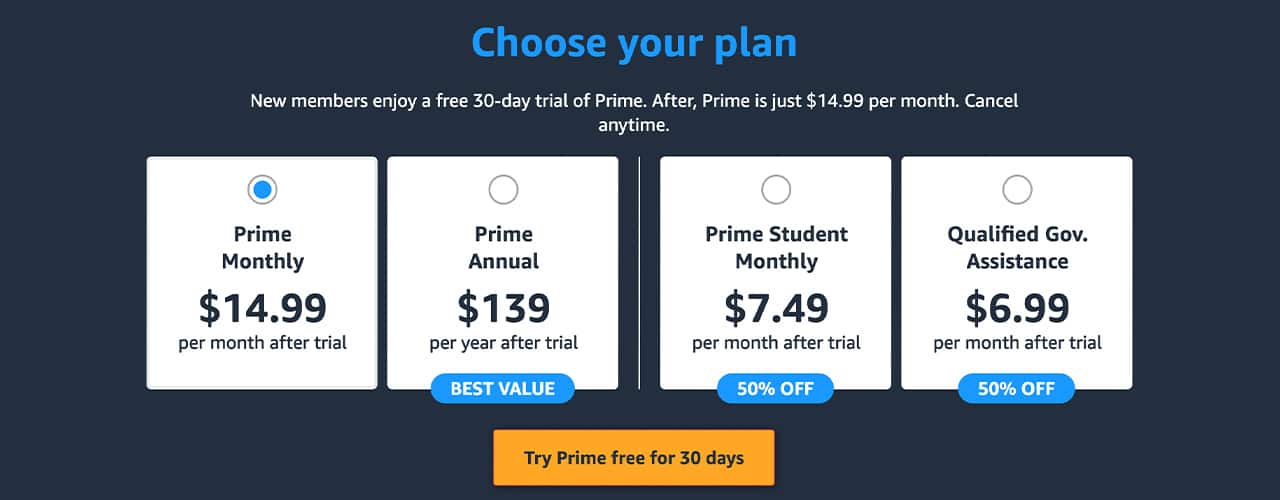
- Annual Membership: This is generally the most cost-effective option for long-term users. Paying for an entire year upfront locks in a lower effective monthly rate compared to paying month-to-month. For instance, if the annual fee is, say, $139 (example figure, actual rate may vary and should be checked), this breaks down to roughly $11.58 per month. This upfront commitment requires a larger immediate outflow of capital but rewards members with savings over the year.
- Monthly Membership: For those who prefer flexibility, are uncertain about long-term commitment, or wish to use Prime only during specific periods (e.g., holiday shopping seasons), the monthly option is available. This comes at a higher per-month cost, for example, $14.99 per month (example figure). While more expensive annually, it offers the freedom to cancel anytime without being locked into a yearly payment, providing budgeting agility for some households.
When considering these options, a simple calculation reveals the savings associated with the annual plan. If you anticipate using Prime for more than approximately 9-10 months out of the year, the annual plan nearly always presents a better financial deal. For infrequent users, however, the monthly flexibility might prevent unnecessary long-term expenditure.
Discounted Memberships: Student, EBT, and Medicaid Benefits
Amazon recognizes that not all demographics have the same financial capacity, and it offers significant discounts to make Prime more accessible. These programs are vital for budget-conscious individuals and families:
- Prime Student: University and college students can often avail themselves of a substantial discount, typically around 50% off the standard annual membership rate (e.g., $69 per year, example figure). This not only reduces the financial burden on students but also provides a range of benefits tailored to their needs, from expedited shipping for textbooks to entertainment for downtime. Eligibility usually requires a valid .edu email address. This is a significant financial boon for students, effectively halving their subscription cost.
- Prime for EBT and Medicaid Recipients: In a commendable effort towards inclusivity, Amazon extends a highly discounted Prime membership to individuals receiving government assistance, specifically through qualifying EBT (Electronic Benefits Transfer) or Medicaid programs. This discount can bring the monthly cost down to a very affordable rate (e.g., $6.99 per month, example figure). This initiative addresses financial disparities, ensuring that essential services like fast shipping and digital entertainment are not exclusively for higher-income households. For eligible individuals, this offers an unparalleled value proposition.
These discounted tiers highlight Amazon’s strategic approach to expanding its subscriber base while addressing financial accessibility. For eligible individuals, opting for these programs can result in substantial annual savings, making Prime a much more justifiable expenditure within a tight budget.
Understanding Tax Implications and Regional Variations
While the advertised price is a major component, consumers must also factor in sales tax, which is applied based on the billing address’s local and state regulations. This can add a few extra dollars to the annual or monthly fee, which, while seemingly small, can add up over time and should be accounted for in your budgeting.
Furthermore, Amazon Prime pricing and even the specific benefits included can vary by country. This guide primarily focuses on the U.S. market, but international users should always verify local pricing and benefit structures, as these can significantly impact the financial value proposition in their respective regions.
Beyond the Price Tag: Quantifying the Value of Prime Benefits
The true financial assessment of an Amazon Prime membership extends far beyond its sticker price. It requires a detailed look at the services included and how they translate into tangible and intangible savings and benefits for the user. This is where the cost-benefit analysis truly begins.
The Core Financial Saving: Free Expedited Shipping
For many, the cornerstone of Prime’s value proposition is the free expedited shipping on millions of eligible items. This translates into direct financial savings in several ways:
- Elimination of Shipping Fees: For frequent online shoppers, especially those who make multiple small purchases throughout the year, the cumulative cost of standard shipping fees can quickly surpass the Prime membership fee. With Prime, these fees are entirely negated, representing a clear, quantifiable saving on every eligible order.
- Time-Sensitive Purchases: The ability to receive items quickly (often within one or two days) can prevent impulse purchases from local stores at higher prices or save you from paying extra for expedited shipping on individual orders when time is of the essence. While difficult to put a precise dollar value on convenience, the avoidance of higher-priced alternatives or rush delivery fees is a definite financial advantage.
- Reduced Need for Physical Shopping Trips: By relying on Prime’s fast delivery, individuals can reduce their frequency of trips to brick-and-mortar stores. This translates to savings on fuel costs, parking fees, and the opportunity cost of time spent commuting and shopping.
Entertainment Bundles: Prime Video, Music, and Gaming as Cost-Savers
Amazon Prime is not merely a shipping service; it’s a comprehensive digital entertainment bundle that can significantly reduce the need for separate subscriptions:
- Prime Video: Included with Prime, this streaming service offers a vast library of movies, TV shows, and exclusive originals. For households already paying for or considering other streaming services (e.g., Netflix, Hulu, HBO Max), Prime Video can serve as a primary or supplementary option, potentially eliminating the need for an additional monthly subscription fee. The financial saving here is direct: avoid paying for another streamer.
- Amazon Music Prime: While not as extensive as Amazon Music Unlimited, Music Prime offers millions of ad-free songs and podcasts. For casual listeners, this can negate the need for a separate music streaming service, again offering a direct financial saving.
- Prime Gaming (formerly Twitch Prime): This benefit provides free games, in-game content, and a free monthly Twitch channel subscription. For gamers, this can represent a significant saving on game purchases and exclusive content, which would otherwise cost money.
Evaluating these benefits requires an honest assessment of your current entertainment spending and usage. If you would otherwise subscribe to a similar video or music service, then the value of these inclusions within Prime is substantial.
Exclusive Shopping Advantages: Deals, Whole Foods, and Early Access
Prime membership unlocks several other shopping-related financial benefits:
- Prime Day and Exclusive Deals: Prime members gain exclusive access to Amazon’s major annual sales event, Prime Day, as well as lightning deals and other member-exclusive discounts throughout the year. These deals, particularly on high-value items, can lead to significant savings if you are a savvy shopper who plans purchases around these events.
- Whole Foods Market Benefits: Prime members enjoy exclusive discounts and 5% back on eligible purchases at Whole Foods Market when using the Amazon Prime Rewards Visa Card. This is a direct saving for those who frequent the upscale grocery chain, especially on essential grocery items.
- Amazon Fresh/Whole Foods Delivery: In many areas, Prime members receive free grocery delivery from Amazon Fresh and Whole Foods Market on orders over a certain threshold. This convenience, combined with the elimination of delivery fees, can translate to considerable savings, particularly for those who value time and wish to avoid physical grocery shopping.
- Early Access to Lightning Deals: Prime members often get a 30-minute head start on certain Lightning Deals, increasing their chances of snagging popular items before they sell out. This isn’t a direct financial saving but can prevent the need to pay full price later if you missed out.
Is Amazon Prime a Worthwhile Investment? A Cost-Benefit Analysis
The ultimate question for any financial decision is whether the cost is justified by the benefits received. For Amazon Prime, this involves a personalized calculation of return on investment (ROI).
Calculating Your Personal ROI: When Prime Pays Off
To truly assess Prime’s value, you need to conduct a personalized audit:

- Quantify Shipping Savings: Estimate how many orders you place from Amazon annually and what the average shipping cost would be without Prime. (e.g., 20 orders x $6 shipping = $120 annual shipping cost saved).
- Value Entertainment Inclusions: Determine if you would subscribe to a separate streaming video or music service if Prime Video/Music weren’t available. Assign a monthly cost to those hypothetical subscriptions and multiply by 12. (e.g., if you’d pay $10/month for another video service, that’s $120 annual value).
- Account for Exclusive Discounts: Roughly estimate how much you save through Prime Day deals, Whole Foods discounts, or other exclusive offers throughout the year. This can be harder to quantify but is important for frequent shoppers.
- Consider Convenience: While intangible, the value of convenience (faster delivery, less physical shopping) can be significant. How much is your time worth? How much stress does fast delivery alleviate?
Summing these estimated savings and values will give you a rough annual benefit. If this total exceeds the annual cost of your Prime membership (including tax), then from a purely financial perspective, Prime offers a positive ROI.
The Opportunity Cost: Weighing Prime Against Other Subscriptions
Every dollar spent on one subscription is a dollar that cannot be spent elsewhere. This is the concept of opportunity cost. When evaluating Prime, consider:
- Alternative Subscriptions: Are there other services (e.g., a gym membership, a specialized software subscription, another streaming service) that would provide more value or align better with your current needs?
- Budgetary Constraints: Does the Prime membership fee strain your budget? If so, the benefits, no matter how good, might not outweigh the financial pressure.
- Underutilized Benefits: Are you paying for Prime primarily for shipping but rarely using Prime Video, Music, or other benefits? If so, you might be overpaying for a service whose full potential you’re not realizing.
A critical self-assessment of actual usage versus potential value is crucial to avoid financial waste.
Strategies for Maximizing Membership Value
If you decide Prime is a good fit, employ strategies to extract maximum value:
- Utilize All Benefits: Make a conscious effort to explore and use Prime Video, Music, Reading, Gaming, and other perks beyond just shipping.
- Plan Purchases: Consolidate orders to maximize shipping savings. Plan major purchases around Prime Day or other member-exclusive sales events.
- Share Benefits (where allowed): Amazon allows sharing certain Prime benefits with another adult in your household, effectively doubling the value for a single subscription fee.
- Monitor Your Usage: Periodically review your Amazon order history and streaming habits to ensure you’re consistently getting value from the membership.
Managing Your Prime Membership: Financial Control and Flexibility
Understanding how to manage your Prime account is essential for maintaining financial control and preventing unwanted charges.
Seamless Sign-Up and Auto-Renewal Considerations
Signing up for Prime is straightforward, often including a free trial period. However, it’s crucial to be aware of the auto-renewal feature. After the trial, or at the end of your billing cycle, Amazon will automatically charge your default payment method. This convenience can become a financial pitfall if you forget about the subscription or no longer need it.
- Calendar Reminders: Set a calendar reminder a week before your trial ends or your annual membership renews to review your need for the service.
- Review Payment Methods: Ensure your linked payment method is current and that you’re comfortable with it being automatically charged.
Navigating Cancellation and Refund Policies
Amazon has a clear cancellation policy. You can cancel your membership at any time.
- Full Refund: If you cancel a paid Prime membership and haven’t used any Prime benefits (including free shipping, Prime Video, etc.), you might be eligible for a full refund of your current membership period.
- Partial Refund: If you’ve used some benefits, Amazon may issue a partial refund based on the benefits used or the remaining duration of your membership.
- No Further Charges: Canceling means you won’t be charged for future renewal periods, though you typically retain access to benefits until the end of your current billing cycle.
Knowing these policies empowers you to make timely financial decisions and avoid paying for a service you no longer want or need.
Gifting Prime: A Financial Present
Amazon Prime memberships can be purchased as gifts. This offers a thoughtful financial present for friends or family, providing them with a year of benefits without them incurring the cost. It’s a way to share the financial advantages of Prime with others.
Alternatives and Supplementary Strategies for Smart Spenders
Even if Amazon Prime doesn’t fit your budget or usage patterns, smart financial strategies can still get you many benefits or comparable value.
Leveraging Amazon Without Full Prime
- Free Shipping Threshold: Amazon often offers free standard shipping on orders over a certain dollar amount (e.g., $25 or $35) for non-Prime members. Consolidate your purchases to meet this threshold.
- Individual Digital Purchases: You can rent or buy movies/TV shows from Prime Video, subscribe to Amazon Music Unlimited, or use Kindle Unlimited without a full Prime membership, paying only for the specific services you need.
- Amazon Day: For non-urgent orders, non-Prime members might have options like “Amazon Day” where items are delivered on a specific day of the week, sometimes for free or reduced cost.
Comparing Prime’s Value to Competitor Offerings
Before committing to Prime, consider how its value stacks up against other retailers or service bundles:
- Walmart+: Walmart’s subscription service offers free shipping, grocery delivery, and fuel discounts, providing a direct competitor, especially for those prioritizing groceries and local shopping.
- Target RedCard: While not a full subscription, the Target RedCard offers 5% off most purchases and free shipping on many items, which might be sufficient for Target loyalists.
- Standalone Services: Compare the cost of Prime to individual subscriptions for just shipping (e.g., specific store memberships), streaming video, or music. Sometimes, subscribing à la carte to only what you need can be more cost-effective.

Bundling Services: A Holistic Financial Approach
Finally, consider your entire portfolio of subscriptions. Is there overlap? Can you consolidate?
- Evaluate All Recurring Charges: Perform an annual or semi-annual audit of all your subscriptions. Are you using them all? Are they providing sufficient value?
- Prioritize Essential Services: Distinguish between “must-have” and “nice-to-have” subscriptions based on your financial capacity and lifestyle.
- Negotiate or Look for Deals: Be on the lookout for promotional offers or bundles that can reduce your overall monthly outflow.
Ultimately, the decision of “how much for Prime membership” is not just about the sticker price, but about a detailed financial calculation of value, necessity, and opportunity cost. By meticulously evaluating the costs, benefits, and your own consumption habits, you can make an informed decision that truly enhances your financial well-being.
aViewFromTheCave is a participant in the Amazon Services LLC Associates Program, an affiliate advertising program designed to provide a means for sites to earn advertising fees by advertising and linking to Amazon.com. Amazon, the Amazon logo, AmazonSupply, and the AmazonSupply logo are trademarks of Amazon.com, Inc. or its affiliates. As an Amazon Associate we earn affiliate commissions from qualifying purchases.