
Understanding when your direct deposit will land in your Bank of America account is a common query that sits at the heart of personal financial management. For many, a paycheck represents the lifeblood of their budget, covering everything from rent and utilities to groceries and discretionary spending. The precise timing of these funds can impact bill payments, spending habits, and overall financial stability. While direct deposits are generally reliable and efficient, several factors can influence the exact moment your money becomes available. This comprehensive guide will demystify the process, offering insights into Bank of America’s procedures, the variables at play, and how you can best anticipate and manage your incoming funds.
Understanding the Direct Deposit Process
Direct deposit is an electronic funds transfer (EFT) system that allows employers, government agencies, or other payers to send money directly into a recipient’s bank account, bypassing traditional paper checks. This method offers unparalleled convenience, security, and speed compared to its manual counterparts. Before delving into Bank of America’s specifics, it’s crucial to grasp the general mechanics of how these electronic transfers work.
The ACH Network: The Backbone of Direct Deposits
At the core of direct deposits in the United States is the Automated Clearing House (ACH) network, managed by Nacha (National Automated Clearing House Association). This network facilitates large volumes of electronic credit and debit transactions, including direct deposits, bill payments, and inter-bank transfers. When your employer initiates a direct deposit, they are essentially sending an instruction through the ACH network to debit their account and credit yours.
The ACH network processes transactions in batches, typically on a daily schedule, though not continuously in real-time like some other payment systems. There are specific cut-off times and processing windows that dictate when these batches are moved between financial institutions. This batch processing is a primary reason why direct deposits don’t always appear instantaneously once initiated by the payer.
The Role of Your Employer or Payer
Your employer or the payer plays the first critical role in the direct deposit timeline. They are responsible for initiating the payment instruction and sending it to their financial institution (the Originating Depository Financial Institution, or ODFI) in a timely manner. The timing of this initiation is paramount. If an employer submits payroll information late, it can cascade into a delay in your funds arriving, regardless of your bank’s processing speed. Most employers aim to submit payroll files several days in advance of the actual pay date to ensure timely delivery.
Once the employer submits the file, their bank sends it to the ACH network, which then transmits it to your bank (the Receiving Depository Financial Institution, or RDFI) for crediting to your account. This multi-step process, while electronic, requires a structured flow of information and approvals.
Bank of America’s Direct Deposit Timing: What to Expect
Bank of America, as one of the largest financial institutions in the U.S., processes millions of direct deposits daily. While the general ACH rules apply, specific bank policies and processing schedules can influence when funds become available to account holders.
Standard Availability and Posting Times
For most direct deposits, Bank of America follows the standard ACH processing window. This typically means that funds are generally available on the official pay date. The ACH network often processes and settles direct deposits overnight, making them available on the morning of the scheduled pay date.
For Bank of America, this often translates to funds being posted to your account in the early hours of the pay date. While there isn’t a universally fixed hour like 12:01 AM for all deposits, many account holders report seeing their funds available between 3:00 AM and 6:00 AM Eastern Time on the scheduled payday. It’s important to remember that this is an approximate window and can vary.
Potential for Early Access (Early Payday)
In recent years, many banks, including Bank of America, have begun offering “Early Payday” or “Early Access” features. This means that if Bank of America receives notification of an incoming direct deposit from the payer’s bank a day or two in advance, they might make the funds available to the recipient earlier than the official pay date.
Bank of America’s specific offering for early access is tied to its “Balance Assist” program and certain account features. While not a guaranteed feature for all direct deposits or all account types, it’s worth checking if your specific account qualifies for early access and understanding the conditions. Typically, this early availability is offered as a courtesy and depends entirely on when the payer’s bank sends the funds and when Bank of America processes that advance notification. If an employer sends the payroll file close to the actual pay date, early access may not be possible.
Weekends and Bank Holidays
Bank of America, like all financial institutions, adheres to the Federal Reserve and ACH network operating calendar. This means that direct deposits are not processed on weekends (Saturdays and Sundays) or federal bank holidays.
If your scheduled pay date falls on a weekend or a bank holiday, your direct deposit will typically be processed on the preceding business day. For example, if your usual pay date is a Friday, and that Friday is a federal holiday, your funds might become available on Thursday. Conversely, if your pay date is a Saturday, funds are often available on Friday. It’s crucial to consult a calendar for federal holidays to anticipate any shifts in your direct deposit schedule.
Factors Influencing Direct Deposit Arrival Times
While Bank of America aims for consistency, several variables can affect the precise moment your direct deposit hits your account. Understanding these factors can help you manage expectations and plan your finances more effectively.
Employer Processing and Submission Times
As mentioned, the employer’s processing schedule is the first and often most significant factor. If your employer runs payroll and submits the ACH file well in advance, it increases the likelihood of your funds arriving punctually or even early. Delays on the employer’s side—due to internal payroll issues, late submission, or errors in the payroll file—will inevitably push back your deposit date. New employers or changes in payroll systems can sometimes lead to initial delays as well.

Time Zones and Bank Processing Cut-offs
Although the ACH network operates nationally, individual banks have their own internal processing cut-off times. Bank of America, being a national bank, processes transactions across different time zones. Most of their core processing will align with Eastern Time (ET) for the sake of consistency.
This means that while your employer might be in Pacific Time (PT) and submit their payroll file in the afternoon, by the time it reaches Bank of America’s processing systems, it might be late in the day ET, pushing its effective processing to the next available ACH batch. However, for direct deposits intended for the official pay date, these time zone differences are usually accounted for, so funds are still generally available in the early morning of the pay date across different time zones relative to the account holder’s local time.
First-Time Deposits and Account Changes
The very first direct deposit to a new account, or after a change in your banking information (e.g., switching from a checking to a savings account for deposits, or changing banks entirely), might experience a slight delay. This is often due to verification processes that banks undertake to ensure the account information is correct and to prevent fraud. It’s common for the first direct deposit to take one full pay cycle to clear, with subsequent deposits returning to the regular schedule. Always verify your account and routing numbers carefully when setting up or changing direct deposit information.
Checking Your Direct Deposit Status and Troubleshooting Issues
Even with the reliability of direct deposit, occasional issues can arise. Knowing how to check your status and what steps to take if there’s a delay is essential.
How to Check Your Bank of America Account
The easiest way to check for an incoming direct deposit is through Bank of America’s digital channels:
- Online Banking: Log in to your Bank of America online account. Your account summary or transaction history will show pending or posted deposits.
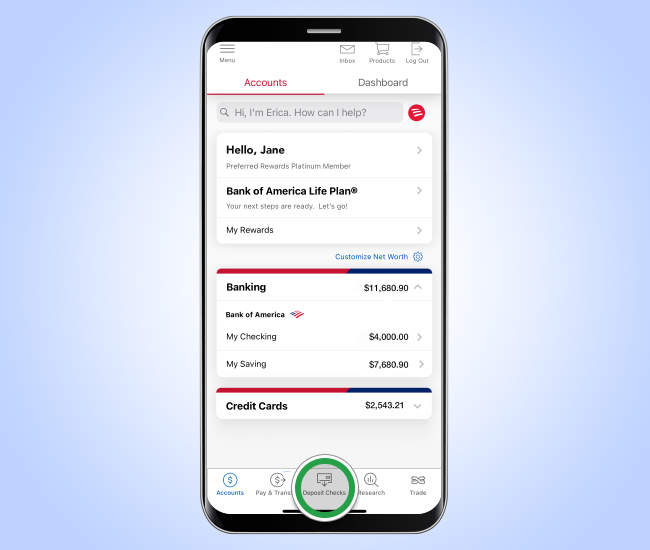
- Mobile Banking App: The Bank of America mobile app provides real-time access to your account balance and transaction history, allowing you to quickly see if your deposit has arrived.
- ATM: You can also check your balance at any Bank of America ATM.
- Customer Service: If you prefer, you can call Bank of America’s customer service line. However, digital channels are usually faster for this type of query.
It’s wise to check your account regularly, especially on your scheduled pay date, but avoid calling customer service immediately if it’s only a few hours past your usual arrival time. Give it until at least mid-morning on the pay date.
What to Do If Your Direct Deposit Is Delayed
If your direct deposit is significantly delayed past its expected arrival time on the official pay date, follow these steps:
- Confirm the Pay Date: Double-check with your employer or the payer that the official pay date has not changed and that the payment was indeed initiated. Ask for confirmation of the date the payment file was submitted.
- Verify Account Information: Ensure that the account and routing numbers you provided to your employer are correct and match your Bank of America account details. A single incorrect digit can cause significant delays or even send funds to the wrong account.
- Check for Holidays: Refer to a calendar to ensure the delay isn’t due to a weekend or federal holiday that shifted the processing date.
- Contact Your Employer’s Payroll Department: This should be your first point of contact for significant delays. They can confirm if the payment was sent, if there were any errors, and provide a trace number if necessary.
- Contact Bank of America: If your employer confirms the payment was sent correctly and on time, and it’s well past the typical arrival window, then contact Bank of America customer service. They can check if they have received the ACH credit and if there’s any hold or issue with your account. Have your account details and any information from your employer ready.
Common Reasons for Delays
- Employer Error: Incorrect account numbers, late submission of payroll files, or issues with the payroll system.
- Bank Holidays/Weekends: Processing pauses on non-business days.
- First-Time Deposit/Account Change: Verification processes may cause initial delays.
- Technical Glitches: Rare but possible issues within the ACH network or bank systems.
- Fraud Holds: In rare instances, a deposit might be flagged for review due to unusual activity, though this is uncommon for regular payroll.
Maximizing Your Financial Planning with Direct Deposit
Understanding the nuances of direct deposit timing with Bank of America is not just about knowing when your money arrives; it’s about optimizing your financial planning. Direct deposit is a powerful tool for financial stability and growth when utilized effectively.
Budgeting and Bill Payment Alignment
Knowing your direct deposit schedule allows you to align your budget and bill payment dates accordingly. Many people schedule automatic bill payments to occur a day or two after their expected direct deposit hits. This ensures funds are available and helps avoid overdrafts or late payment fees. If you have the flexibility, try to set up payments for essential bills (rent, mortgage, utilities) to clear shortly after your payday.
Automatic Savings and Investments
One of the most effective strategies for building wealth is “paying yourself first.” With direct deposit, you can often set up automatic splits, where a portion of your paycheck is directly transferred to a savings account, investment account, or even a different bank account upon arrival. Bank of America allows you to set up recurring transfers, which you can time to happen immediately after your direct deposit. This automates saving and helps you reach financial goals without needing to manually transfer funds each pay period.

Emergency Fund Building
A consistent and predictable direct deposit schedule is fundamental to building a robust emergency fund. By knowing precisely when your income will be available, you can confidently allocate a portion of it towards your emergency savings, creating a financial safety net that can withstand unexpected expenses without derailing your budget.
In conclusion, while direct deposits at Bank of America generally arrive reliably on the scheduled pay date, typically in the early morning hours, various factors can influence the exact timing. By understanding the ACH network, your employer’s role, and Bank of America’s specific policies, you can better anticipate your funds, manage your finances, and troubleshoot any potential delays effectively. Direct deposit remains an indispensable tool for modern financial management, offering convenience, security, and a predictable foundation for your economic well-being.
aViewFromTheCave is a participant in the Amazon Services LLC Associates Program, an affiliate advertising program designed to provide a means for sites to earn advertising fees by advertising and linking to Amazon.com. Amazon, the Amazon logo, AmazonSupply, and the AmazonSupply logo are trademarks of Amazon.com, Inc. or its affiliates. As an Amazon Associate we earn affiliate commissions from qualifying purchases.