
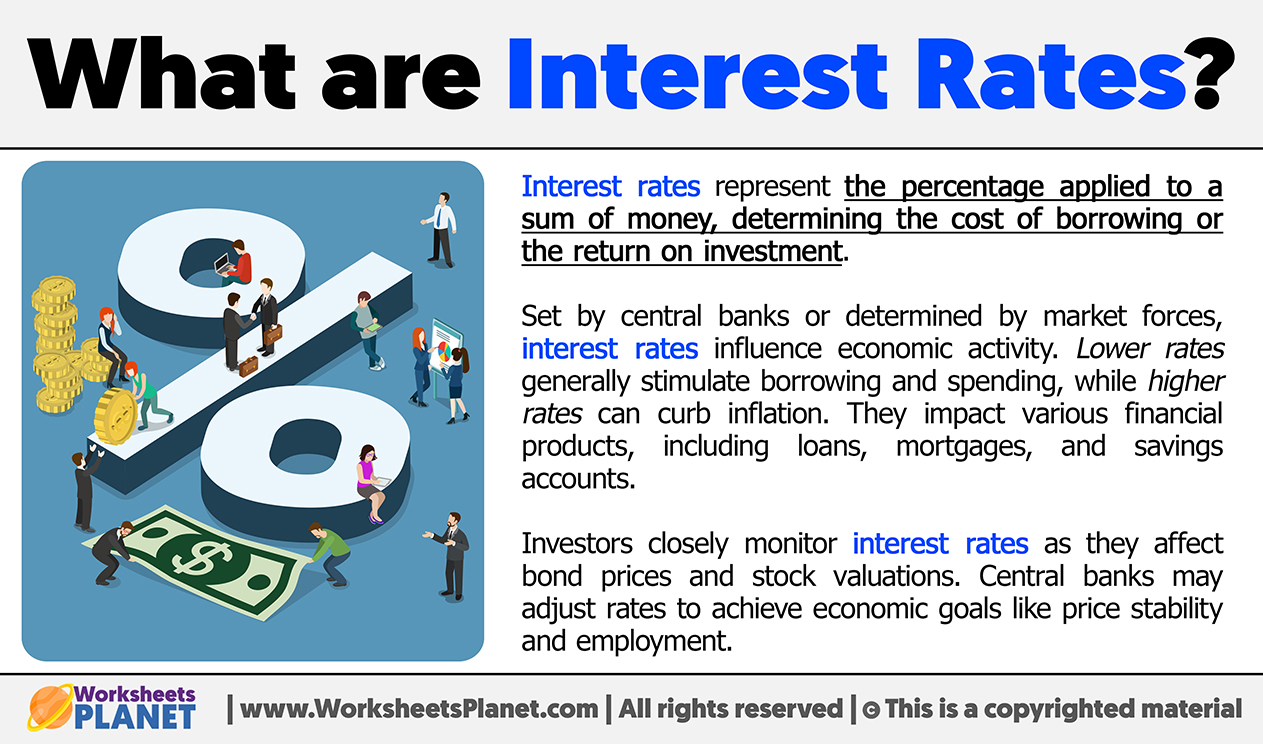
In the world of finance, few concepts carry as much weight or influence as the interest rate. Often referred to as the “price of money,” the interest rate is a fundamental pillar that supports the global economy, dictates consumer behavior, and shapes the investment landscape. Whether you are looking to buy a home, start a business, or grow your retirement savings, understanding what interest rates are and how they function is essential for achieving financial success.
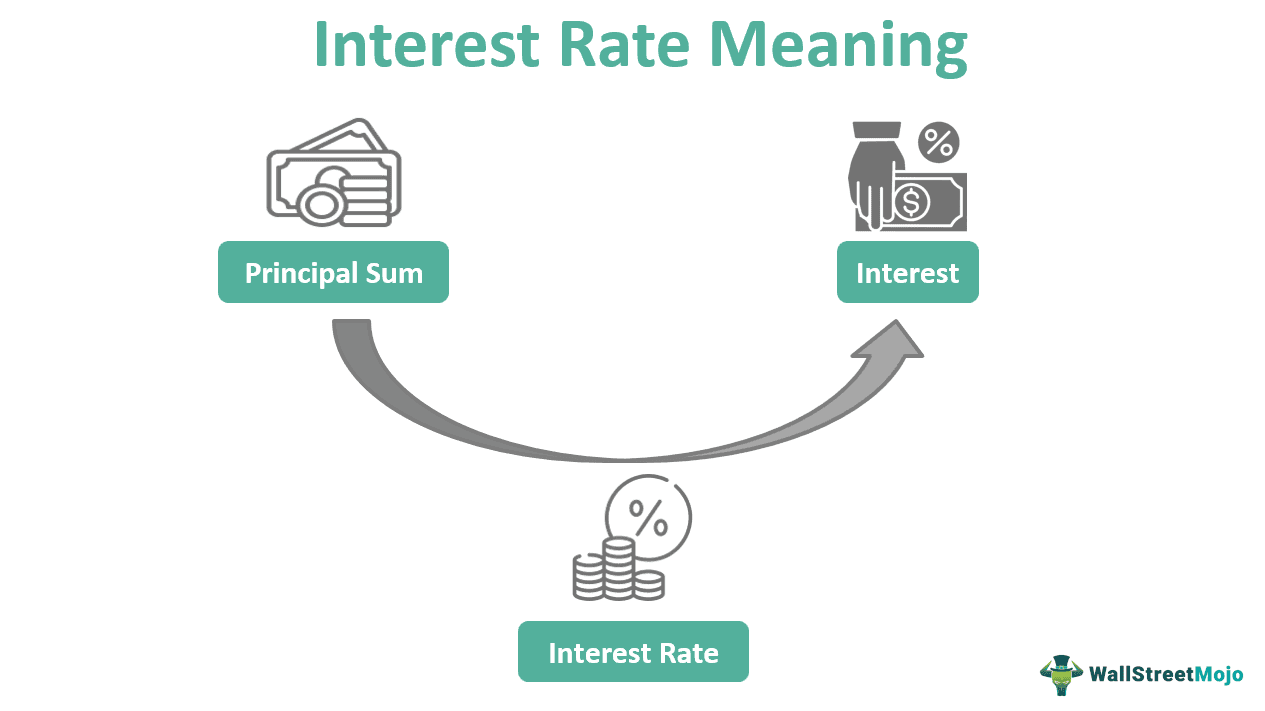
At its core, an interest rate is the amount charged by a lender to a borrower for the use of assets. For the borrower, it is the cost of debt; for the lender, it is the reward for forgoing immediate use of their capital and taking on the risk of lending it. This guide explores the mechanics of interest rates, the factors that drive them, and how they impact your personal and professional financial life.
The Fundamentals: How Interest Rates Work
To navigate the financial world effectively, one must first understand that not all interest rates are created equal. They are calculated and applied in various ways, depending on the financial instrument and the duration of the loan.
Simple vs. Compound Interest
The most basic distinction is between simple and compound interest. Simple interest is calculated solely on the principal amount—the original sum of money borrowed or invested. It is common in short-term personal loans and some specialized financial products.
Compound interest, however, is far more powerful and prevalent. It is calculated on the principal amount plus the accumulated interest from previous periods. This “interest on interest” allows debt to grow exponentially if left unpaid, but it also allows savings to snowball over time. For the savvy investor, compound interest is a primary tool for wealth building, while for the unwary borrower, it can lead to a cycle of mounting debt.
Nominal vs. Real Interest Rates
When you see a rate advertised by a bank, you are looking at the nominal interest rate. This is the “sticker price” that does not account for inflation. However, to understand the true economic value of money, you must look at the real interest rate.
The real interest rate is the nominal rate minus the rate of inflation. For example, if your savings account offers a 5% nominal interest rate, but inflation is running at 3%, your real rate of return—the actual increase in your purchasing power—is only 2%. Distinguishing between these two is vital for long-term financial planning and protecting your capital from eroding over time.
The Macroeconomic Engine: Why Rates Move
Interest rates do not exist in a vacuum. They are influenced by complex global economic forces and, most significantly, by the actions of central banks, such as the Federal Reserve in the United States.
The Role of Central Banks
Central banks act as the ultimate “lender of last resort” and use interest rates as a primary lever to manage the national economy. By setting a benchmark short-term lending rate (often called the Federal Funds Rate), the central bank influences the rates that commercial banks charge one another. This, in turn, trickles down to the rates offered to consumers on credit cards, mortgages, and savings accounts.
When the economy is sluggish, central banks typically lower interest rates to make borrowing cheaper, encouraging businesses to invest and consumers to spend. Conversely, when the economy is “overheating” and inflation is rising too quickly, central banks raise rates to cool down spending and stabilize prices.
Inflation and the Supply of Money
Inflation is perhaps the most significant driver of interest rate adjustments. Lenders demand higher interest rates when inflation is high to compensate for the fact that the money they will be repaid in the future will have less purchasing power than the money they lent today.
Furthermore, the law of supply and demand applies to money just as it does to physical goods. When there is a high demand for credit but a limited supply of lendable funds, interest rates rise. When the market is flushed with liquidity but few people are looking to borrow, rates tend to fall.
Consumer Impact: Borrowing and the Cost of Life
For the average individual, interest rates are most visible through the lens of borrowing. The fluctuations in these rates can mean the difference between financial freedom and a strained monthly budget.
Mortgages and Long-Term Debt
For most people, a mortgage is the largest financial commitment they will ever make. Because mortgage terms are typically long (often 15 to 30 years), even a 1% difference in the interest rate can result in tens of thousands of dollars in additional costs over the life of the loan.
Fixed-rate mortgages provide stability, locking in a rate for the duration of the loan, regardless of market shifts. Variable-rate or adjustable-rate mortgages (ARMs), however, fluctuate with market conditions. While they may start with lower rates, they carry the risk of significant payment increases if interest rates rise in the future.
Credit Cards and High-Interest Debt
Credit cards represent a different side of the interest rate spectrum. These are typically unsecured loans with much higher interest rates than mortgages or auto loans. Because credit card interest is usually compounded daily or monthly, carrying a balance can quickly become an expensive burden. Understanding the Annual Percentage Rate (APR) on your credit cards is the first step toward managing high-interest debt and prioritizing repayments.
Investing and Savings: Maximizing Your Returns
While interest rates represent a cost for borrowers, they represent an opportunity for savers and investors. In a high-interest-rate environment, the strategies for wealth preservation and growth must shift.
High-Yield Savings and Certificates of Deposit (CDs)
When central banks raise rates, banks eventually follow suit by increasing the APY (Annual Percentage Yield) on savings products. High-yield savings accounts and CDs become attractive options for those seeking a “risk-free” return on their cash. For conservative investors, locking in a high rate through a CD can provide guaranteed income during periods of economic uncertainty.
The Inverse Relationship Between Rates and Bonds
For those involved in the bond market, interest rates have a very specific and inverse relationship with bond prices. When market interest rates rise, the price of existing bonds falls. This is because new bonds are being issued at higher rates, making the older, lower-rate bonds less valuable.
Investors must understand this “duration risk” when building a portfolio. Diversifying across different maturities and asset classes can help mitigate the impact of fluctuating rates on a fixed-income portfolio.
Strategic Management: Navigating the Rate Environment
Success in personal and business finance requires an agile approach to interest rates. By monitoring the economic climate, you can make proactive decisions to protect your assets and minimize your liabilities.
The Power of Refinancing
One of the most effective ways to manage interest costs is through refinancing. When market rates drop significantly below the rate on your existing loans (such as a mortgage or student loan), you may have the opportunity to take out a new loan at the lower rate to pay off the old one. This can lower your monthly payments and reduce the total interest paid over the life of the loan. However, it is important to calculate closing costs and fees to ensure the move is mathematically sound.
Timing the Market and Hedging
While it is notoriously difficult to “time” interest rate movements perfectly, being aware of the economic cycle can inform your timing. For instance, if indicators suggest that a period of rising rates is imminent, it might be the ideal time to lock in a fixed-rate loan. Conversely, in a falling-rate environment, a business might delay a major capital expenditure until financing becomes cheaper.
In business finance, companies often use “interest rate swaps” or other derivatives to hedge against the risk of rising rates. While these are complex tools, the underlying principle is simple: protecting the bottom line from the volatility of the money market.

Conclusion
The interest rate is far more than just a percentage on a bank statement; it is a dynamic force that influences every corner of our financial lives. From the macro-level decisions of central bankers to the micro-level choices of a family saving for a first home, the cost of money dictates the pace of progress.
By mastering the fundamentals of how interest is calculated, understanding the forces that drive rate changes, and strategically managing your debt and investments, you can turn the “price of money” into a tool for financial empowerment. In an ever-changing economic landscape, staying informed about interest rates is not just a matter of academic interest—it is a prerequisite for building lasting wealth and financial security.
aViewFromTheCave is a participant in the Amazon Services LLC Associates Program, an affiliate advertising program designed to provide a means for sites to earn advertising fees by advertising and linking to Amazon.com. Amazon, the Amazon logo, AmazonSupply, and the AmazonSupply logo are trademarks of Amazon.com, Inc. or its affiliates. As an Amazon Associate we earn affiliate commissions from qualifying purchases.