
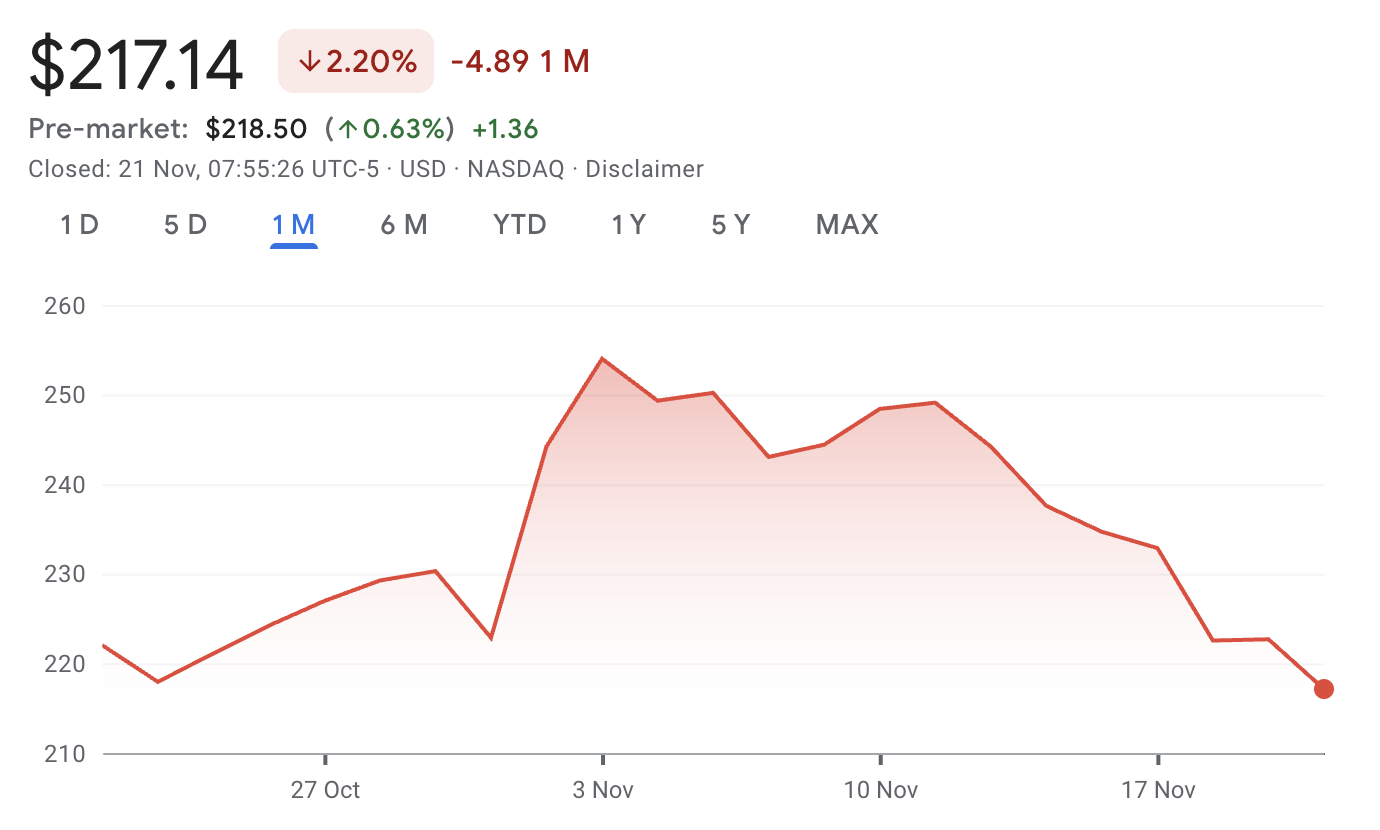
Amazon, a titan of e-commerce, cloud computing, and digital entertainment, has long been a darling of investors, synonymous with relentless growth and technological innovation. Its stock (AMZN) has delivered phenomenal returns over decades, transforming countless portfolios. However, even the most formidable companies experience periods of correction, and AMZN stock has, at various times, faced significant downward pressure. Understanding the multifaceted reasons behind such declines requires a deep dive into macroeconomic forces, company-specific performance, competitive landscapes, and evolving investor sentiment. For financial professionals and individual investors alike, deciphering these dynamics is crucial for informed decision-making in the complex world of investing.
Macroeconomic Headwinds and Broader Market Sentiment
No stock exists in a vacuum, and even a company as resilient as Amazon is susceptible to the broader economic climate. Periods of AMZN stock decline frequently coincide with significant macroeconomic shifts that impact investor confidence and capital allocation across the board.
Inflationary Pressures and Rising Interest Rates
One of the most potent forces impacting growth stocks like Amazon is the specter of inflation and the subsequent policy responses by central banks. When inflation rises, the cost of doing business increases across the board – from wages and raw materials to shipping and energy. Amazon, with its vast logistics network and extensive workforce, is particularly vulnerable to these rising operational costs, which can compress profit margins.
Simultaneously, central banks, notably the U.S. Federal Reserve, combat inflation by raising interest rates. Higher interest rates make borrowing more expensive, which can stifle consumer spending and business investment – key drivers for Amazon’s e-commerce and cloud (AWS) segments. Moreover, higher rates reduce the present value of future earnings, a critical factor for valuing growth stocks that are projected to generate substantial profits years down the line. As the “risk-free” rate (like U.S. Treasury yields) climbs, investors demand higher returns from riskier assets like stocks, leading to a re-evaluation and often a downward adjustment of stock prices. This phenomenon particularly impacts companies like Amazon that historically reinvest heavily for long-term growth rather than distributing immediate high dividends.
Broader Market Corrections and Risk Aversion
AMZN stock often moves in tandem with the broader market, especially the technology-heavy NASDAQ Composite index. During periods of generalized market corrections or bear markets, even fundamentally strong companies can see their stock prices plummet. Such corrections can be triggered by a confluence of factors: economic slowdown fears, geopolitical events, or a general “flight to safety” where investors liquidate riskier assets in favor of less volatile investments like bonds or cash.
In an environment of increased risk aversion, investors become more scrutinizing of valuations, particularly for companies that trade at high price-to-earnings (P/E) multiples or rely heavily on future growth projections. Amazon, historically valued for its growth potential rather than immediate profitability, can experience significant pullbacks as investors prioritize current earnings and balance sheet strength over long-term vision. This shift in sentiment means that even positive company news can be overlooked if the overarching market mood is negative.
Geopolitical Instability and Supply Chain Disruptions
Global geopolitical events, from trade wars to regional conflicts, introduce significant uncertainty into the economic landscape. Amazon, with its vast international footprint, is exposed to these risks. Geopolitical instability can disrupt global supply chains, leading to increased shipping costs, inventory shortages, and delays in product delivery. This directly impacts Amazon’s ability to serve customers efficiently and profitably.
For instance, closures of factories in key manufacturing regions or disruptions to international shipping lanes can impede the flow of goods into Amazon’s fulfillment centers, affecting product availability and pricing. Furthermore, geopolitical tensions can dampen consumer confidence in affected regions, leading to reduced discretionary spending on e-commerce, thus impacting Amazon’s revenue streams. Companies operating on a global scale like Amazon require a stable international environment to thrive, and any significant disruption can be a tangible reason for investor apprehension and subsequent stock depreciation.
Amazon’s Core Business Challenges
While macroeconomic factors play a crucial role, specific challenges within Amazon’s core business segments often contribute significantly to its stock performance. Understanding these internal dynamics is key to a comprehensive analysis.
Slowdown in E-commerce Growth Post-Pandemic
The COVID-19 pandemic provided an unprecedented boom for Amazon’s e-commerce segment, as lockdowns and social distancing measures forced consumers online. This surge in demand pulled forward years of digital adoption. However, as economies reopened, consumers returned to brick-and-mortar stores, and spending patterns normalized or shifted towards services and experiences rather than goods.
This “post-pandemic hangover” resulted in a deceleration of e-commerce growth rates for Amazon, leading investors to question the sustainability of its past explosive expansion. While still growing, the pace was no longer at the elevated levels seen during the pandemic peak. This slowdown, combined with increased investments made during the boom to expand capacity (warehouses, logistics), created a situation where the company faced higher fixed costs just as revenue growth moderated, impacting profitability in its retail division. Investors often react negatively when a company’s growth narrative, especially one as dominant as Amazon’s in e-commerce, begins to waver from its historical trajectory.
Increased Competition and Operating Costs
Amazon operates in highly competitive markets. In e-commerce, it faces intense rivalry from established players like Walmart and Target, as well as a myriad of specialized online retailers and direct-to-consumer brands. In cloud computing, AWS competes fiercely with Microsoft Azure and Google Cloud. This competition puts pressure on pricing and requires continuous investment in innovation and customer acquisition.
Beyond competition, Amazon has grappled with escalating operating costs. The company’s massive logistics network, while a competitive advantage, is incredibly expensive to run and maintain. Rising fuel prices, increased labor costs (due to wage inflation and unionization efforts), and the need to constantly optimize its fulfillment network contribute to higher expenses. Furthermore, Amazon’s aggressive expansion into new areas, such as grocery (Whole Foods), healthcare, and satellite internet (Project Kuiper), requires substantial capital expenditure and often operates at thin margins or even losses in their nascent stages. When these investments don’t immediately translate into proportional revenue or profit growth, investors can become impatient, leading to downward pressure on the stock.
Regulatory Scrutiny and Antitrust Concerns
As one of the world’s largest corporations, Amazon has come under increasing scrutiny from regulators globally. Concerns about its market dominance, competitive practices, data privacy, and labor conditions have led to numerous investigations and potential legal challenges. These regulatory headwinds introduce a significant element of uncertainty and risk for investors.

Antitrust probes, in particular, pose a threat to Amazon’s business model. Regulators are examining whether Amazon leverages its e-commerce platform dominance to unfairly disadvantage third-party sellers, or if its acquisition strategies stifle competition. Potential outcomes of such scrutiny could include forced divestitures, significant fines, or restrictions on how Amazon conducts its business, all of which could severely impact its financial performance and long-term strategic flexibility. The ongoing threat of regulatory intervention casts a shadow over Amazon’s future growth prospects, causing some investors to reduce their exposure or demand a “regulatory discount” on the stock’s valuation.
AWS Performance and Cloud Sector Dynamics
Amazon Web Services (AWS) has long been the primary engine of Amazon’s profitability, consistently delivering robust growth and high margins. However, even this powerhouse segment is subject to market forces and competitive pressures that can influence the overall AMZN stock performance.
Deceleration in Cloud Spending
The cloud computing market, while still growing, has shown signs of deceleration from its hyper-growth phase. During economic uncertainties, many enterprises tend to optimize their cloud spending, looking for efficiencies and cutting non-essential projects. This “optimization trend” can lead to slower consumption growth for cloud providers like AWS. Companies might re-evaluate their cloud infrastructure, consolidating workloads, or negotiating better deals, which can impact AWS’s revenue trajectory.
While AWS remains a market leader, even a slight dip in its growth rate can have an outsized impact on Amazon’s overall profitability, given its high margin contribution. Investors accustomed to AWS delivering staggering year-over-year growth might react negatively to any signs of moderation, interpreting it as a slowdown in a key future growth driver for the entire company.
Intense Competition in the Cloud Market
AWS faces formidable and increasingly aggressive competition from Microsoft Azure and Google Cloud Platform (GCP). These rivals are investing heavily, expanding their service offerings, and often competing aggressively on price and enterprise contracts. The “cloud wars” are real, and while AWS maintains its leadership position, it requires continuous innovation and significant investment to stay ahead.
This intense competition can compress margins as providers battle for market share, offering discounts or more favorable terms to large clients. It also means AWS must constantly expand its feature set, build new data centers, and attract top engineering talent, all of which are costly endeavors. Any perception that AWS is losing significant market share or struggling to maintain its competitive edge can directly impact investor confidence in Amazon’s long-term profit potential.
Impact of Enterprise Budget Cuts
In periods of economic contraction or heightened uncertainty, enterprise budget cuts become common. IT spending, while critical, is often one of the areas scrutinized for cost reductions. Companies might delay new cloud migrations, reduce their consumption of certain high-cost cloud services, or postpone upgrades.
Given AWS’s significant reliance on enterprise clients, these budget cuts can translate directly into slower revenue growth. The cyclical nature of enterprise spending means that even a highly diversified and resilient service like AWS isn’t entirely immune to broader economic slowdowns. Investors monitor enterprise spending trends closely, and any indication of widespread belt-tightening can foreshadow weaker performance for cloud providers, contributing to a downward re-evaluation of AMZN stock.
Investor Perception and Future Outlook
Ultimately, a stock’s price reflects investor perception of a company’s current performance and future potential. Shifts in this perception, driven by a myriad of factors, are crucial for understanding AMZN’s movements.
Profitability Concerns Over Growth
For years, Amazon was rewarded by investors for its relentless pursuit of growth, even if it came at the expense of short-term profitability. The narrative was that Amazon was building an unparalleled ecosystem, and profits would eventually follow. However, in changing market environments, especially those characterized by higher interest rates and increased risk aversion, investors often prioritize current profitability and free cash flow generation over unbridled top-line growth.
When Amazon’s retail segment shows signs of declining margins or sustained losses, particularly outside of AWS’s offsetting profits, it triggers investor concern. If the narrative shifts from “growth at all costs” to “profitable growth,” Amazon faces pressure to demonstrate more consistent bottom-line performance across all segments. Failing to meet these new investor expectations can lead to a re-rating of the stock, where its valuation multiples contract, even if revenue continues to grow.
Valuation Adjustments in a Shifting Market
Growth stocks like Amazon tend to trade at higher valuation multiples (e.g., P/E ratio, price-to-sales) than more mature, slower-growing companies. This premium reflects expectations of robust future earnings. However, these multiples are highly sensitive to market conditions. In a bull market, particularly one characterized by low interest rates, investors are often willing to pay a higher premium for future growth.
When interest rates rise and market sentiment shifts towards value or profitability, growth stock multiples typically contract. This means that even if Amazon’s underlying business performance remains solid, its stock price can decline simply because the market is no longer willing to pay as much for each dollar of earnings or sales. This “multiple compression” is a common reason for significant stock price corrections in high-growth companies, as investors recalibrate their valuation models to reflect new economic realities and perceived risks.

Strategic Initiatives and Long-Term Vision
Amazon is constantly innovating and expanding into new ventures, from satellite internet (Project Kuiper) to healthcare (Amazon Pharmacy, One Medical) and grocery. While these initiatives represent significant long-term growth opportunities, they also require substantial upfront investment and often take years to become profitable. In the short term, these investments can weigh on earnings and free cash flow, especially if market conditions demand immediate profitability.
Investors scrutinize these strategic initiatives. If the market perceives that Amazon is making too many speculative bets, or that new ventures are draining resources without clear paths to profitability, it can erode confidence. Conversely, clear communication about the long-term vision and tangible progress in these areas can reassure investors. The balance between investing for future growth and demonstrating current financial discipline is a delicate one, and how Amazon manages this balance significantly influences investor perception and, consequently, its stock price.
In conclusion, the reasons for AMZN stock’s downward movements are rarely singular. They are typically a complex interplay of broader economic pressures such as inflation and rising interest rates, specific challenges within its core e-commerce and cloud businesses, intense competitive dynamics, increasing regulatory scrutiny, and evolving investor expectations regarding growth versus profitability. For investors, monitoring these diverse factors is essential for understanding Amazon’s financial trajectory and navigating the volatility inherent in even the most dominant market players.
aViewFromTheCave is a participant in the Amazon Services LLC Associates Program, an affiliate advertising program designed to provide a means for sites to earn advertising fees by advertising and linking to Amazon.com. Amazon, the Amazon logo, AmazonSupply, and the AmazonSupply logo are trademarks of Amazon.com, Inc. or its affiliates. As an Amazon Associate we earn affiliate commissions from qualifying purchases.