
The world of cryptocurrency, once a niche topic for tech enthusiasts, has rapidly evolved into a significant frontier for personal finance and investment. Digital assets like Bitcoin and Ethereum have captured global attention, offering both unprecedented opportunities for wealth creation and considerable risks for the unprepared. For individuals looking to diversify their investment portfolios or simply explore new financial avenues, understanding the mechanics of buying and selling crypto is an essential first step. This guide aims to demystify the process, providing a professional, insightful, and engaging overview for both novices and those seeking a clearer understanding of the crypto market. Navigating this dynamic landscape requires careful consideration of various factors, from choosing the right platform to implementing sound risk management strategies. By understanding the core principles and practical steps involved, investors can approach the cryptocurrency market with greater confidence and informed decision-making.
Understanding the Cryptocurrency Landscape
Before diving into transactions, it’s crucial to grasp the fundamental concepts that underpin the cryptocurrency ecosystem. This foundational knowledge will equip you to make more informed decisions and navigate the market’s inherent complexities.
What is Cryptocurrency?
At its heart, a cryptocurrency is a digital or virtual currency secured by cryptography, making it nearly impossible to counterfeit or double-spend. Unlike traditional currencies issued by central banks, cryptocurrencies operate on a decentralized network called a blockchain. This distributed ledger technology records all transactions across a vast network of computers, ensuring transparency, immutability, and security without the need for an intermediary like a bank. Bitcoin, launched in 2009, was the first cryptocurrency and remains the largest by market capitalization, pioneering the concept of peer-to-peer electronic cash. Since then, thousands of other cryptocurrencies, known as “altcoins,” have emerged, each with unique features, use cases, and underlying technologies. These can range from smart contract platforms like Ethereum, which powers decentralized applications (dApps), to privacy coins, stablecoins pegged to fiat currencies, and utility tokens designed for specific services.
Key Concepts: Volatility, Decentralization, and Market Cap
Understanding several key concepts is vital for anyone considering crypto investment:
- Volatility: Cryptocurrencies are notoriously volatile. Their prices can fluctuate dramatically within short periods, driven by market sentiment, regulatory news, technological advancements, and macroeconomic factors. While this volatility presents opportunities for significant gains, it also carries the risk of substantial losses.
- Decentralization: The absence of a central authority is a defining characteristic of most cryptocurrencies. This decentralization aims to provide censorship resistance, transparency, and empower users by giving them direct control over their assets. However, it also means there’s no central body to appeal to in case of errors, fraud, or lost private keys.
- Market Capitalization (Market Cap): This metric represents the total value of all circulating coins of a particular cryptocurrency and is calculated by multiplying the current price per coin by the total number of coins in circulation. Market cap is a critical indicator of a cryptocurrency’s size and relative stability. Generally, cryptocurrencies with higher market caps tend to be more established and liquid, though this is not a guarantee against volatility.
Popular Cryptocurrencies for Beginners
For newcomers, starting with well-established cryptocurrencies can be a prudent approach due to their higher liquidity and broader acceptance.
- Bitcoin (BTC): The original cryptocurrency, often considered “digital gold” due to its fixed supply and role as a store of value. It’s the most widely recognized and accepted cryptocurrency.
- Ethereum (ETH): The second-largest cryptocurrency, Ethereum is a powerful platform that enables smart contracts and decentralized applications. Its native token, Ether, is used to pay for transaction fees on the network and is essential for interacting with the vast ecosystem of DeFi (Decentralized Finance) and NFTs (Non-Fungible Tokens).
- Stablecoins (e.g., USDT, USDC): These cryptocurrencies are designed to minimize price volatility by being pegged to a stable asset, typically the US dollar. They serve as a safe haven during market downturns, a medium for trading, and a way to hold value without converting back to fiat currency.
Getting Started: Setting Up Your Crypto Investment Journey
Once you have a basic understanding of the crypto landscape, the next step involves setting up the necessary infrastructure to begin buying and selling. This primarily revolves around choosing a suitable platform and ensuring your account is properly secured.
Choosing the Right Cryptocurrency Exchange
A cryptocurrency exchange acts as an online marketplace where you can buy, sell, and trade digital assets. The choice of exchange is critical, as it impacts everything from fees and supported assets to security and user experience.
- Centralized Exchanges (CEXs): These are the most common type, operating similarly to traditional stock exchanges. Examples include Coinbase, Binance, Kraken, and Gemini. CEXs offer user-friendly interfaces, robust security features, and often support a wide range of cryptocurrencies and fiat currencies. They typically require Know Your Customer (KYC) verification.
- Decentralized Exchanges (DEXs): These platforms allow peer-to-peer trading directly from users’ wallets without an intermediary. Uniswap and PancakeSwap are popular DEXs. While offering greater privacy and control over funds, they can be more complex for beginners and might have higher transaction fees (gas fees) depending on network congestion.
When selecting an exchange, consider the following factors:
- Security: Look for exchanges with strong security protocols, including two-factor authentication (2FA), cold storage for a majority of assets, and insurance funds.
- Fees: Understand the trading fees (maker/taker fees), deposit, and withdrawal fees. These can vary significantly between platforms.
- Supported Assets: Ensure the exchange offers the cryptocurrencies you’re interested in buying or selling.
- User Interface: A beginner-friendly interface can make the initial experience much smoother.
- Regulatory Compliance: Choose exchanges that are regulated in your jurisdiction, which often provides an added layer of consumer protection.
Account Creation and Verification (KYC)
After selecting an exchange, you’ll need to create an account. This process typically involves:
- Providing Basic Information: Your email address, phone number, and a strong password.
- Email/Phone Verification: Confirming your contact details.
- Two-Factor Authentication (2FA): Setting up 2FA (e.g., via Google Authenticator or SMS) is highly recommended for enhanced security.
- Know Your Customer (KYC) Verification: Most centralized exchanges are legally required to comply with KYC and Anti-Money Laundering (AML) regulations. This involves submitting government-issued identification (passport, driver’s license), proof of address, and sometimes a selfie to verify your identity. While this might seem intrusive, it’s a standard practice designed to prevent financial crime and is a prerequisite for most fiat deposits and higher trading limits.
Funding Your Account
Once your account is verified, you’ll need to deposit funds to start trading. Exchanges offer various methods for depositing fiat currency:
- Bank Transfer (ACH/SEPA): Often the most cost-effective method, though it can take a few business days for funds to clear.
- Debit/Credit Card: Provides instant deposits but usually comes with higher fees compared to bank transfers.
- Wire Transfer: Suitable for larger amounts, often with higher fees and processing times.
- Peer-to-Peer (P2P) Trading: Some exchanges facilitate direct trading between users, where you can buy crypto using various payment methods directly from another individual.
Always check the deposit limits, fees, and processing times associated with each method on your chosen exchange.
Executing Trades: Buying and Selling Crypto
With your account funded, you’re ready to make your first crypto purchase or sale. Understanding the different order types is crucial for effective trading.
Placing a Buy Order
When buying cryptocurrency, you typically have a few options:
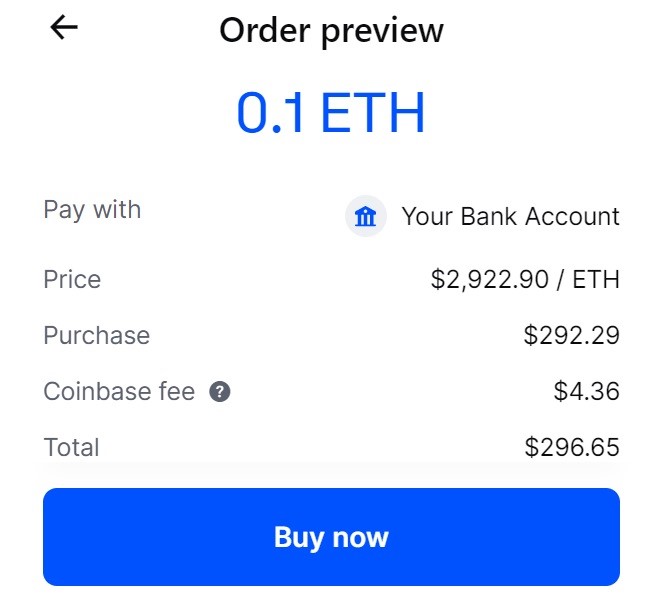
- Market Order: This is the simplest way to buy. You instruct the exchange to purchase a specified amount of cryptocurrency (e.g., $100 worth of Bitcoin) at the best available current market price. Market orders are executed immediately but offer no price guarantee, meaning the final price might be slightly different than what you saw moments before, especially in volatile markets.
- Limit Order: A limit order allows you to set a specific price at which you want to buy. For example, you might place a limit order to buy 1 ETH when its price drops to $1,800. The order will only be executed if and when the market price reaches your specified limit price or better. This gives you more control over the price you pay but there’s no guarantee the order will be filled.
- Recurring Buys (Dollar-Cost Averaging – DCA): Many exchanges offer an option to set up recurring purchases (e.g., $50 of Bitcoin every week). This strategy, known as dollar-cost averaging, involves investing a fixed amount of money at regular intervals, regardless of the asset’s price. It helps mitigate the impact of volatility by averaging out your purchase price over time and reduces the need for market timing.
Placing a Sell Order
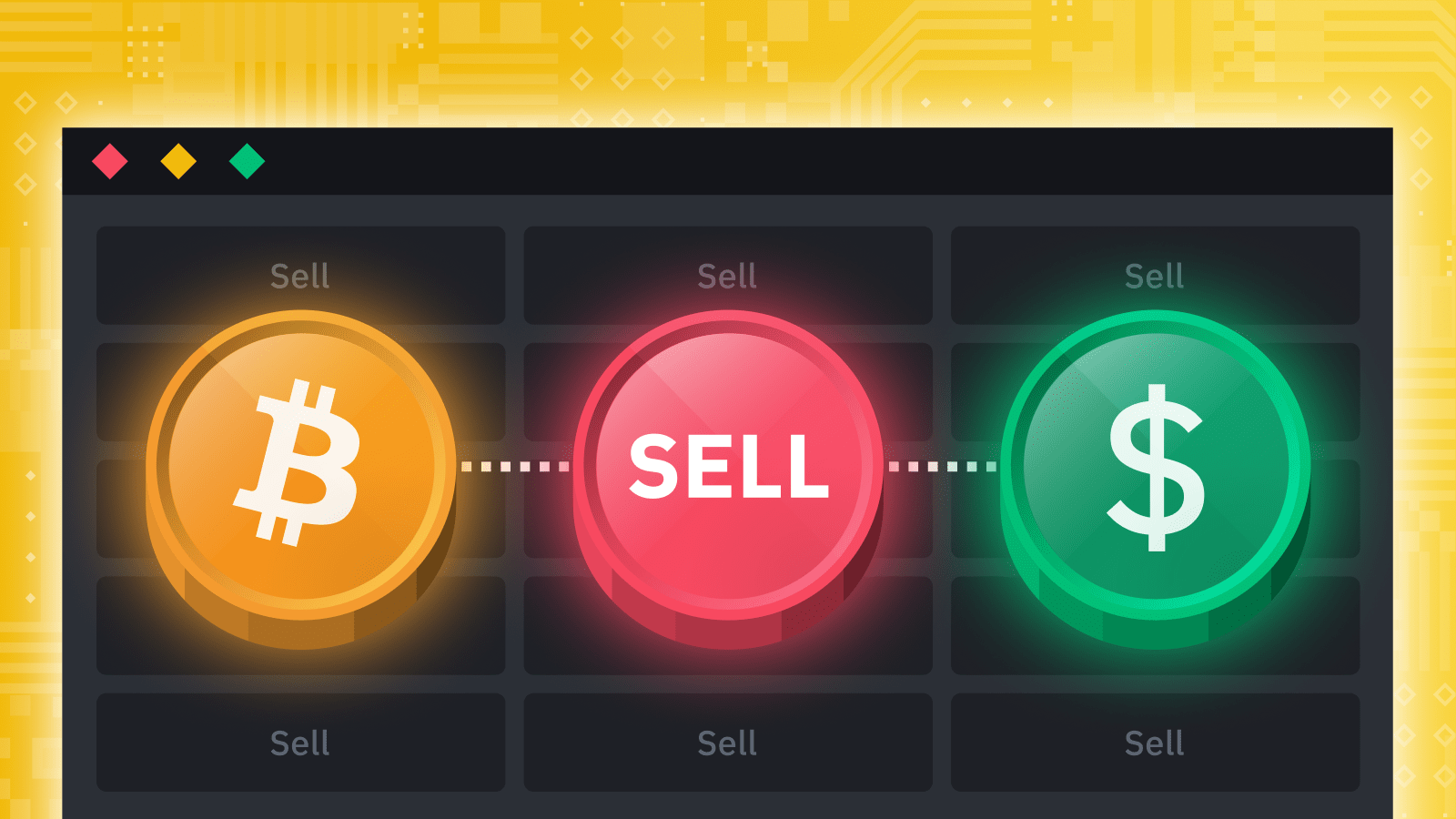
Selling cryptocurrency follows similar principles to buying, with market and limit orders being the primary methods:
- Market Order: You instruct the exchange to sell your cryptocurrency at the best available current market price. This is useful when you want to exit a position immediately, but again, without a price guarantee.
- Limit Order: You set a specific price at which you want to sell your cryptocurrency. For instance, you could place a limit order to sell 0.5 ETH if its price reaches $2,500. The order will only execute if the market price hits or exceeds your specified limit. Limit orders are crucial for profit-taking strategies and can also be used as a form of stop-loss (though dedicated stop-loss orders are often available).
- Stop-Loss Order: This order automatically sells your cryptocurrency if its price falls to a predetermined level. It’s a crucial risk management tool designed to limit potential losses on an investment. For example, you might set a stop-loss at $1,700 for your ETH holdings to prevent further losses if the market turns sharply downwards.
Understanding Trading Pairs and Fees
Cryptocurrency trading typically involves “trading pairs,” which denote the exchange rate between two different assets. Common pairs include BTC/USD (Bitcoin against US Dollar), ETH/BTC (Ethereum against Bitcoin), or SOL/USDT (Solana against Tether). When you buy or sell, you are essentially exchanging one asset for another within a pair.
Exchanges charge fees for executing trades. These are often categorized as “maker” fees and “taker” fees:
- Maker Fees: Charged when you place a limit order that adds liquidity to the order book (i.e., your order isn’t immediately matched). Makers “make” the market.
- Taker Fees: Charged when you place a market order or a limit order that is immediately filled by an existing order on the order book. Takers “take” liquidity from the market.
Taker fees are generally slightly higher than maker fees. Always be aware of these fees, as they can impact your overall profitability, especially with frequent trading.
Securing Your Assets and Managing Risks
The decentralized nature of cryptocurrency means you bear a greater responsibility for the security of your assets. Proper storage and sound risk management are paramount.
Cryptocurrency Wallets: Custodial vs. Non-Custodial
Once you buy crypto, you need a place to store it. This is where wallets come in. A crypto wallet is a software program that stores your public and private keys, allowing you to send and receive digital currency.
- Custodial Wallets: These are wallets provided by centralized exchanges. The exchange holds your private keys, meaning they technically control your funds. While convenient, this approach carries counterparty risk – if the exchange is hacked or goes bankrupt, your funds could be at risk. For beginners, they are a practical starting point for smaller amounts.
- Non-Custodial Wallets: You hold your own private keys, giving you full control over your assets. This comes with greater responsibility.
- Hot Wallets: Connected to the internet (e.g., mobile apps, desktop software, browser extensions like MetaMask). Convenient for frequent transactions but generally less secure than cold wallets.
- Cold Wallets (Hardware Wallets): Physical devices (e.g., Ledger, Trezor) that store private keys offline. They are considered the most secure option for storing significant amounts of cryptocurrency, as they are impervious to online hacking attempts.
When using a non-custodial wallet, you will be given a “seed phrase” (a series of 12 or 24 words). This phrase is your master key – anyone with access to it can access your funds. Never share your seed phrase and store it securely offline in multiple physical locations.
Risk Management Strategies
Given the inherent volatility of the crypto market, robust risk management is essential.
- Only Invest What You Can Afford to Lose: This is perhaps the most fundamental rule. Cryptocurrency is a high-risk, high-reward investment.
- Diversification: Don’t put all your capital into a single cryptocurrency. Spread your investments across several different assets to reduce risk.
- Dollar-Cost Averaging (DCA): As mentioned earlier, regularly investing a fixed amount helps mitigate the impact of price fluctuations over time.
- Set Stop-Loss Orders: Implement stop-loss orders to automatically sell an asset if its price drops to a certain level, limiting potential losses.
- Research Thoroughly (DYOR): Before investing in any cryptocurrency, conduct your own due diligence. Understand its technology, team, use case, market capitalization, and community support.
- Avoid FUD and FOMO: Don’t make impulsive decisions based on “Fear, Uncertainty, and Doubt” (FUD) or “Fear Of Missing Out” (FOMO). Emotional trading often leads to poor outcomes.
Understanding Regulatory and Tax Implications
The regulatory landscape for cryptocurrency is still evolving and varies significantly across different jurisdictions.
- Regulation: Some countries have embraced crypto, while others have imposed strict bans or operate in a legal grey area. It’s crucial to understand the specific regulations in your country of residence regarding crypto ownership, trading, and reporting.
- Taxes: In many countries, cryptocurrency is treated as property for tax purposes, meaning capital gains (profits from selling crypto) are subject to taxation. You may need to report all crypto transactions, including buying, selling, trading one crypto for another, and even using crypto to purchase goods or services. It is highly recommended to keep detailed records of all your transactions and consult with a qualified tax professional who specializes in cryptocurrency. Ignoring tax obligations can lead to severe penalties.
Advanced Strategies and Long-Term Considerations
As you gain experience, you might explore more sophisticated strategies and think about the long-term potential of your crypto investments.
Staking and Yield Farming
Beyond simply buying and holding, cryptocurrencies offer avenues for generating passive income:
- Staking: For cryptocurrencies that use a Proof-of-Stake (PoS) consensus mechanism, staking involves “locking up” your coins to support the network’s operations. In return, you earn rewards, similar to earning interest in a savings account.
- Yield Farming: A more complex DeFi strategy where users lend or stake their crypto assets in various protocols to earn high returns or additional tokens as rewards. This often involves providing liquidity to decentralized exchanges. Both staking and yield farming come with their own sets of risks, including smart contract vulnerabilities and impermanent loss.
Technical Analysis Basics and Fundamental Analysis
For those looking to make more informed trading decisions, two primary analytical approaches are often employed:
- Fundamental Analysis (FA): Involves evaluating the intrinsic value of a cryptocurrency by examining its underlying technology, team, whitepaper, use cases, market adoption, community, and potential for future growth.
- Technical Analysis (TA): Focuses on studying past market data, primarily price and volume charts, to identify patterns and predict future price movements. Traders use indicators like moving averages, Relative Strength Index (RSI), and MACD to make trading decisions. While useful, TA is not a guaranteed predictor of future performance.
The Future of Crypto Investing
The cryptocurrency market is characterized by rapid innovation and constant change. Staying informed about emerging trends, technological advancements (e.g., Layer 2 solutions, interoperability, Web3, institutional adoption), and regulatory developments is crucial for long-term success. The integration of blockchain technology into traditional finance, supply chains, and various industries suggests a continued evolution of digital assets beyond speculative trading. Approaching crypto investing with a long-term perspective, alongside continuous learning and adaptation, will be key to navigating its future landscape.
Conclusion
Embarking on the journey of buying and selling crypto can be a thrilling and potentially rewarding endeavor. From understanding the fundamental concepts of decentralization and volatility to choosing the right exchange, securing your assets with appropriate wallets, and implementing sound risk management strategies, each step is vital. While the allure of significant returns is strong, it is equally important to approach this market with caution, a commitment to continuous learning, and an unwavering adherence to responsible financial practices. Always conduct your own thorough research, understand the inherent risks, and never invest more than you are prepared to lose. By following these guidelines, you can navigate the complex yet exciting world of cryptocurrency with greater confidence, aiming for informed decisions that align with your financial goals.
aViewFromTheCave is a participant in the Amazon Services LLC Associates Program, an affiliate advertising program designed to provide a means for sites to earn advertising fees by advertising and linking to Amazon.com. Amazon, the Amazon logo, AmazonSupply, and the AmazonSupply logo are trademarks of Amazon.com, Inc. or its affiliates. As an Amazon Associate we earn affiliate commissions from qualifying purchases.