
Purchasing a car is a significant financial decision for most individuals and families. While the sticker price of a vehicle often grabs the most attention, an equally, if not more, crucial element determining the true cost of your car is the interest rate on your loan. Understanding how much interest rate for a car loan you can expect, and more importantly, how to secure the most favorable terms, can save you thousands of dollars over the lifetime of your loan.
In an ever-fluctuating economic environment, interest rates are influenced by a myriad of factors, from your personal financial health to broader market conditions. This comprehensive guide will demystify car loan interest rates, equipping you with the knowledge and strategies to approach your next vehicle purchase with confidence and financial acumen. We will explore what these rates signify, the pivotal factors that shape them, where to seek out the best lending options, and actionable steps you can take to ensure you drive away with not just a great car, but also a smart financial deal.
Deconstructing Car Loan Interest Rates: What Are They and Why Do They Matter?
Before diving into the complexities of securing a car loan, it’s essential to grasp the fundamental concepts of interest rates and their profound impact on your overall financial commitment. An informed borrower is an empowered borrower, capable of making decisions that align with their long-term financial goals.
Defining Interest Rates and APR
At its core, an interest rate is the cost of borrowing money, expressed as a percentage of the principal amount. When you take out a car loan, the lender charges you this percentage for the privilege of using their money to finance your purchase. This rate is typically quoted annually, meaning it’s the percentage charged over one year.
However, a more comprehensive measure you’ll frequently encounter is the Annual Percentage Rate (APR). While the interest rate primarily reflects the cost of borrowing, the APR incorporates the interest rate plus any additional fees associated with the loan, such as administrative fees, origination fees, or processing charges. For example, if a loan has a 5% interest rate but also includes various fees that add up, its APR might be 5.5% or higher. The APR provides a more accurate representation of the total annual cost of borrowing and is generally the best metric for comparing different loan offers. Always compare APRs, not just interest rates, when shopping for a loan.
The Cost Beyond the Sticker Price
Many car buyers make the mistake of focusing solely on the monthly payment or the car’s purchase price. While these are important, they don’t tell the whole story. The interest rate dictates how much extra you will pay over the vehicle’s sticker price. A lower interest rate means less money paid to the lender and more money staying in your pocket. Conversely, even a seemingly small difference in interest rate can translate into a significant difference in total cost over several years.
For instance, on a $30,000 car loan over 60 months:
- At 4% APR, your total repayment might be around $33,150.
- At 8% APR, your total repayment could surge to roughly $36,200.
- At 12% APR, you’re looking at close to $39,400 in total repayment.
This simple illustration underscores the critical importance of scrutinizing interest rates, as they directly impact the total financial burden of your car purchase.
The Impact of Interest on Your Monthly Payment and Total Loan Cost
The interest rate directly influences two key aspects of your car loan: your monthly payment and the total amount you repay over the loan term. A higher interest rate will lead to a higher monthly payment, all else being equal. This can strain your monthly budget and potentially make a car unaffordable even if the purchase price itself is within reach.
Furthermore, the total interest paid over the life of the loan can be substantial. For longer loan terms, even a low interest rate can accrue a significant amount of interest, but the effect of a high interest rate is dramatically magnified. Understanding this interplay allows you to make an informed decision about balancing a comfortable monthly payment with the lowest possible total cost. Sometimes, a slightly higher monthly payment on a shorter loan term with a lower interest rate can save you thousands in the long run.
Key Factors Influencing Your Car Loan Interest Rate
Car loan interest rates are not arbitrary; they are meticulously calculated by lenders based on a combination of personal financial metrics and broader economic conditions. Understanding these influential factors is the first step toward strategically positioning yourself to secure the most competitive rate.
Your Credit Score: The Primary Determinant
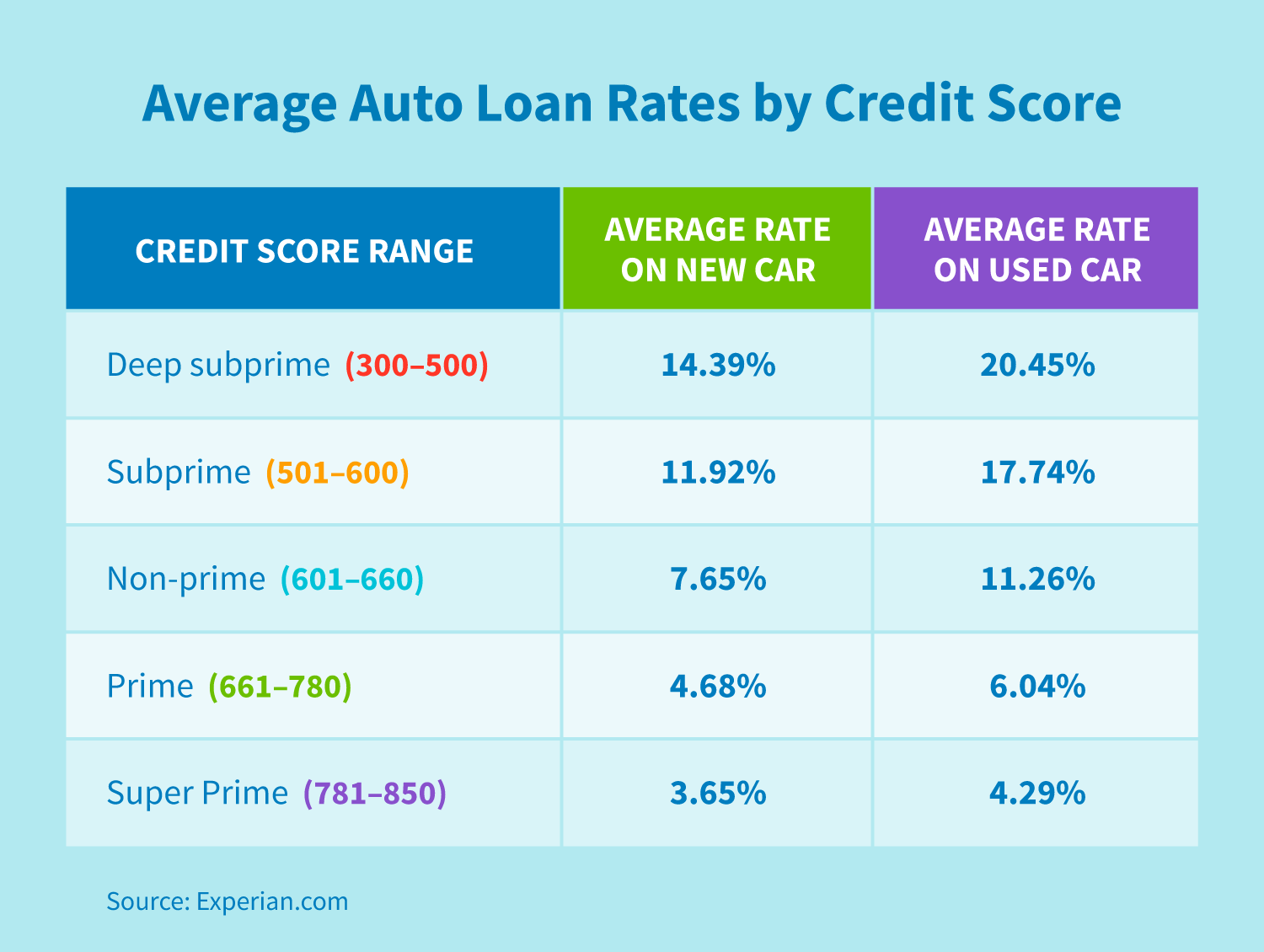
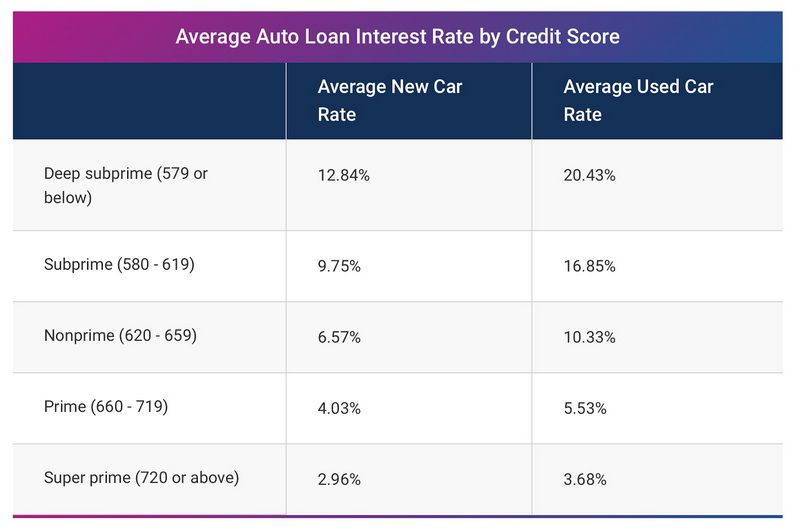
Without a doubt, your credit score is the single most important factor lenders consider when determining your interest rate. It’s a numerical representation of your creditworthiness – your history of borrowing and repaying debt. A higher credit score (typically FICO scores above 720 for excellent credit, 660-719 for good credit) signals to lenders that you are a low-risk borrower, leading to significantly lower interest rates. Conversely, a lower credit score (below 600) suggests a higher risk of default, resulting in higher interest rates to compensate the lender for that perceived risk.
Lenders use various scoring models, but they generally look at payment history, amounts owed, length of credit history, new credit, and credit mix. Improving your credit score by paying bills on time, reducing debt, and avoiding new credit inquiries before applying for a car loan can dramatically impact the rate you’re offered.
Loan Term Length: Short vs. Long
The length of your loan term also plays a crucial role. Shorter loan terms (e.g., 36 or 48 months) typically come with lower interest rates because the lender’s risk is reduced as their money is tied up for a shorter period. While shorter terms mean higher monthly payments, the total interest paid will be substantially less.
Conversely, longer loan terms (e.g., 72 or 84 months) often carry higher interest rates. Lenders perceive a greater risk over a longer period, and economic conditions can change, impacting the borrower’s ability to pay. Despite offering lower monthly payments, a longer term with a higher interest rate will lead to paying considerably more in total interest over the life of the loan. It’s a trade-off between affordability and overall cost.
Down Payment and Trade-In Value
Making a substantial down payment reduces the amount you need to borrow, thereby decreasing the lender’s risk. A larger down payment (typically 10-20% of the vehicle’s price, or more for used cars) can lead to a lower interest rate. Similarly, if you have a vehicle to trade in, the equity from that trade-in acts like a down payment, achieving the same benefit. By reducing the loan-to-value (LTV) ratio, you present yourself as a more secure borrower.
Vehicle Type and Age
The type of vehicle you’re purchasing can also influence the interest rate. New cars generally command lower interest rates than used cars. This is because new cars typically hold their value better in the initial years, are less prone to mechanical issues, and are easier for lenders to resell if repossessed. Used cars, being older and potentially less reliable, present a higher risk to lenders, often resulting in slightly higher interest rates. Very old or high-mileage vehicles might be considered even riskier.
Lender Type and Market Conditions
Different lenders have different risk appetites and funding costs, which translate into varying interest rates. Banks, credit unions, online lenders, and dealership financing arms each have their own rate structures. We’ll delve deeper into these avenues in the next section.
Beyond individual factors, broader market conditions significantly impact interest rates. The federal funds rate set by central banks influences borrowing costs across the economy. When the economy is strong, and inflation is a concern, rates tend to rise. Conversely, during economic slowdowns, rates may be lowered to stimulate borrowing. These macroeconomic forces are largely beyond your control but are critical to understanding why rates fluctuate over time.
Exploring Lending Avenues: Where to Find Your Car Loan
Securing the right car loan involves more than just a good credit score; it also means knowing where to look for financing. The market offers a diverse range of lenders, each with its own advantages and disadvantages. Exploring multiple avenues is key to finding the most competitive interest rate and suitable terms.
Dealership Financing: Convenience vs. Cost
Many car buyers opt for dealership financing due to its convenience. You can walk in, select a car, and complete the financing paperwork all in one location. Dealerships often work with multiple lenders (banks, credit unions, captive finance companies like Toyota Financial Services or Ford Credit) and can sometimes offer promotional rates, especially on new vehicles, to move inventory.

However, convenience doesn’t always equate to the best deal. Dealerships are businesses, and they often add a markup to the interest rates offered by their partner lenders. While they might match an offer you’ve received elsewhere, it’s rare for them to beat a pre-approved rate from an independent lender without negotiation. Always get a pre-approval from an external source before negotiating financing at a dealership.
Banks and Credit Unions: Traditional Options
Traditional banks (e.g., Chase, Wells Fargo, Bank of America) are a common source for car loans. They offer a wide range of loan products, often have competitive rates for well-qualified borrowers, and provide the comfort of a known entity. If you have an existing relationship with a bank, they might offer you slightly better terms.
Credit unions are member-owned financial cooperatives that often boast some of the most competitive interest rates. Because they are non-profit organizations, their primary goal is to serve their members rather than maximize shareholder profits. This often translates into lower interest rates on loans and higher yields on savings accounts. Joining a credit union is typically straightforward, often requiring residency in a certain area or affiliation with a specific employer or group. They are definitely worth investigating for car loans.
Online Lenders: Speed and Specialization
In recent years, online lenders have emerged as a powerful force in the auto loan market. Companies like LightStream, Capital One Auto Finance, and Carvana (which also offers financing) provide quick application processes, often with instant pre-approvals. They leverage technology to streamline the lending process, potentially reducing overhead and passing savings onto borrowers in the form of competitive rates.
Online lenders are particularly appealing for those seeking speed and convenience, or for individuals with less-than-perfect credit who might find more tailored options. Their platforms often allow for easy comparison of rates and terms from various lenders.
Pre-Approval: A Strategic Advantage
Regardless of where you intend to purchase your car, obtaining pre-approval for a loan before stepping foot in a dealership is a highly recommended strategy. Pre-approval means a lender has reviewed your financial information and tentatively agreed to lend you a specific amount at a particular interest rate, subject to final verification.
Armed with a pre-approval letter, you effectively become a cash buyer at the dealership. This shifts your focus from negotiating financing to negotiating the car’s price. You’ll know the best interest rate you qualify for upfront, giving you leverage and a benchmark against which to compare any financing offers from the dealership. If the dealership can beat your pre-approved rate, fantastic; if not, you already have a strong offer in hand.
Strategies for Securing the Most Favorable Car Loan Interest Rate
The difference between a good interest rate and a great one can save you hundreds, if not thousands, of dollars over the life of your car loan. While some factors like market conditions are beyond your control, there are several proactive steps you can take to significantly improve your chances of securing the best possible rate.
Bolstering Your Credit Health
As established, your credit score is paramount. Before you even start shopping for a car, take time to review your credit report from all three major bureaus (Equifax, Experian, TransUnion) – you can get a free report annually at AnnualCreditReport.com. Dispute any errors, as even small inaccuracies can negatively impact your score.
Focus on improving your credit by:
- Paying all bills on time: Payment history is the biggest factor in your score.
- Reducing existing debt: Lowering your credit utilization (the amount of credit you’re using versus your total available credit) can boost your score.
- Avoiding new credit applications: Each hard inquiry can temporarily dip your score.
- Maintaining a diverse credit mix: Showing you can manage different types of credit (e.g., credit cards, student loans, mortgage) is beneficial.
The Power of Comparison Shopping
Never settle for the first loan offer you receive. Just as you compare prices for the car itself, you should meticulously compare interest rates and terms from multiple lenders. Apply for pre-approval from at least three different sources: a bank, a credit union, and an online lender.
The credit bureaus typically treat multiple credit inquiries for the same type of loan (like an auto loan) within a short period (usually 14-45 days, depending on the scoring model) as a single inquiry, minimizing the impact on your credit score. This allows you to shop around without penalty. Use these competitive offers as leverage when negotiating.
Negotiation Tactics: Don’t Settle
When you have a strong credit profile and have comparison-shopped, you’re in a powerful negotiating position.
- Negotiate the car price first, then the financing: Dealers sometimes try to distract buyers by shifting focus between monthly payments and interest rates. Stick to one negotiation at a time. Get a firm price on the vehicle before discussing financing.
- Use pre-approval as leverage: Present your best pre-approval offer to the dealership and ask if they can beat it. If they can’t, you have a solid fallback.
- Be prepared to walk away: If the terms aren’t favorable, be ready to take your business elsewhere. This signals to the dealer that you are a serious and informed buyer.
Understanding and Utilizing Co-Signers
If your credit score is low, or you have limited credit history, a co-signer with excellent credit might help you secure a lower interest rate. A co-signer agrees to be legally responsible for the loan if you fail to make payments. This reduces the lender’s risk, potentially leading to better terms. However, understand the implications: if you default, the co-signer’s credit will also be negatively impacted, and they will be liable for the debt. This should only be considered with great trust and clear understanding between both parties.
Leveraging Manufacturer Incentives
Manufacturers occasionally offer special financing deals, such as 0% APR for a certain number of months on specific new models. While these can be incredibly attractive, they are usually reserved for buyers with impeccable credit. Additionally, sometimes these low APR offers come at the expense of other incentives, like cash rebates. Always calculate which option provides the greater overall savings: the low APR or a cash rebate combined with a standard (but still good) interest rate.
Beyond the Rate: Understanding the Full Financial Picture
While the interest rate is a critical component of your car loan, it’s just one piece of the broader financial puzzle. A truly savvy car buyer understands the totality of their financial commitment, looking beyond just the monthly payment to the comprehensive cost of ownership.
Total Cost of Ownership: Interest, Principal, and Fees
The “true” cost of your car isn’t just the sticker price or your monthly payment. It’s the sum of the principal (the amount you borrowed for the car itself), all the interest accrued over the loan term, and any additional fees. These fees can include documentation fees, registration fees, sales tax, and sometimes even optional add-ons like extended warranties or GAP insurance, which can be rolled into the loan principal and thus accumulate interest.
Always ask for a detailed breakdown of all costs before signing any paperwork. Understand what’s included in your total loan amount and how it impacts your interest calculations. Ensure you’re not paying interest on inflated administrative fees or unnecessary extras.
The Importance of the Loan Agreement
The loan agreement is a legally binding contract, and it’s imperative that you read and understand every clause before signing. Pay close attention to:
- The APR: Confirm it matches what was quoted.
- The loan term: Ensure it’s the agreed-upon duration.
- Prepayment penalties: Some loans charge a fee if you pay off the loan early. While less common for auto loans, it’s good to check.
- Late payment fees and default clauses: Understand the consequences of missing payments.
- Any additional charges or fees: Verify all itemized costs.
If anything is unclear, ask for clarification. Don’t be rushed or intimidated. A reputable lender will be happy to explain all terms.
Refinancing Options: When and Why to Consider It
Your financial situation and market conditions can change after you’ve secured your initial car loan. If your credit score has improved significantly, or if prevailing interest rates have dropped since you bought your car, refinancing could be an excellent option.
Refinancing involves taking out a new loan to pay off your existing car loan. The goal is typically to secure a lower interest rate, which can reduce your monthly payment and/or the total interest paid over the remaining term. It can also be used to shorten or lengthen the loan term, depending on your financial goals. However, be mindful of any fees associated with refinancing, and ensure the new loan truly offers a net benefit. Use online calculators to compare your current loan’s remaining payments and total cost with potential refinancing scenarios.
In conclusion, understanding “how much interest rate for car loan” is far more than just knowing a percentage. It’s about empowering yourself with knowledge of the factors at play, diligently comparing options, and strategically negotiating to secure a deal that aligns with your financial well-being. By focusing on your credit health, exploring diverse lending avenues, and scrutinizing every aspect of the loan agreement, you can ensure your next car purchase is not just an exciting acquisition, but also a sound financial decision.
aViewFromTheCave is a participant in the Amazon Services LLC Associates Program, an affiliate advertising program designed to provide a means for sites to earn advertising fees by advertising and linking to Amazon.com. Amazon, the Amazon logo, AmazonSupply, and the AmazonSupply logo are trademarks of Amazon.com, Inc. or its affiliates. As an Amazon Associate we earn affiliate commissions from qualifying purchases.