
Navigating the world of car financing can often feel like deciphering a complex financial puzzle. At the heart of this puzzle lies the interest rate – a critical factor that dictates how much extra you’ll pay for your vehicle over the loan’s lifetime. Understanding how interest rates on car loans are calculated, and what influences them, isn’t just about crunching numbers; it’s about empowering yourself to make informed decisions that save you thousands of dollars. This guide delves into the mechanics of car loan interest, offering insights and practical advice to help you secure the best possible deal. For anyone looking to buy a car, from first-time buyers to seasoned shoppers, mastering this aspect of personal finance is an indispensable skill in your money management toolkit.
The Fundamentals of Car Loan Interest
Before we dive into the calculations, it’s essential to grasp the core concepts that define a car loan and its associated interest. This foundational understanding is the first step towards demystifying the financing process.
What is Interest and Why Does It Matter?
At its simplest, interest is the cost of borrowing money. When you take out a car loan, the lender provides you with a sum of money to purchase a vehicle, and in return, you agree to pay back the principal amount (the money borrowed) plus an additional charge – the interest. For a car loan, this interest is typically expressed as an annual percentage rate (APR).
Why does it matter so much? Because the interest rate directly impacts the total cost of your car. A higher interest rate means a larger portion of your monthly payment goes towards interest, increasing the overall price you pay for the car significantly over the loan term. Conversely, a lower interest rate translates to lower monthly payments and substantial savings over time, making your vehicle purchase more affordable and manageable within your personal finance strategy. Ignoring the interest rate or failing to understand its implications can lead to considerable financial strain.
Key Components of a Car Loan
To fully understand interest rate calculation, you must first be familiar with the main components that make up a car loan agreement:
- Principal: This is the initial amount of money you borrow from the lender to purchase the car. If the car costs $30,000 and you make a $5,000 down payment, your principal loan amount would be $25,000.
- Interest Rate: As discussed, this is the percentage charged by the lender for borrowing the principal. It’s usually an annual rate.
- Loan Term: This refers to the duration over which you agree to repay the loan, typically expressed in months (e.g., 36, 48, 60, 72, or even 84 months). The loan term directly influences your monthly payment and the total interest paid.
- Monthly Payment: This is the fixed amount you pay back to the lender each month. Each payment comprises a portion that goes towards reducing the principal and a portion that covers the accrued interest.
- Total Interest Paid: This is the cumulative amount of interest you will pay over the entire life of the loan. It’s the difference between the total amount you repay and the principal amount you borrowed.
Differentiating Between Interest Rate and APR
While often used interchangeably, the “interest rate” and “Annual Percentage Rate (APR)” are distinct concepts, particularly important in car loans:
- Interest Rate: This is the nominal rate the lender charges on the principal balance. It solely reflects the cost of borrowing the money itself.
- APR (Annual Percentage Rate): The APR is a broader measure of the total cost of borrowing. It includes not only the nominal interest rate but also certain other fees and charges associated with the loan, such as origination fees, documentation fees, or sometimes even credit insurance premiums, when expressed as an annual percentage. For car loans, while some fees might be rolled into the loan amount and affect the principal, the APR provides a more comprehensive picture of the true annual cost of your credit. It allows for a more “apples-to-apples” comparison between different loan offers, as it encompasses more than just the raw interest rate. Always look at the APR when comparing loan offers to get the most accurate understanding of the total cost.
Unpacking the Calculation Methods
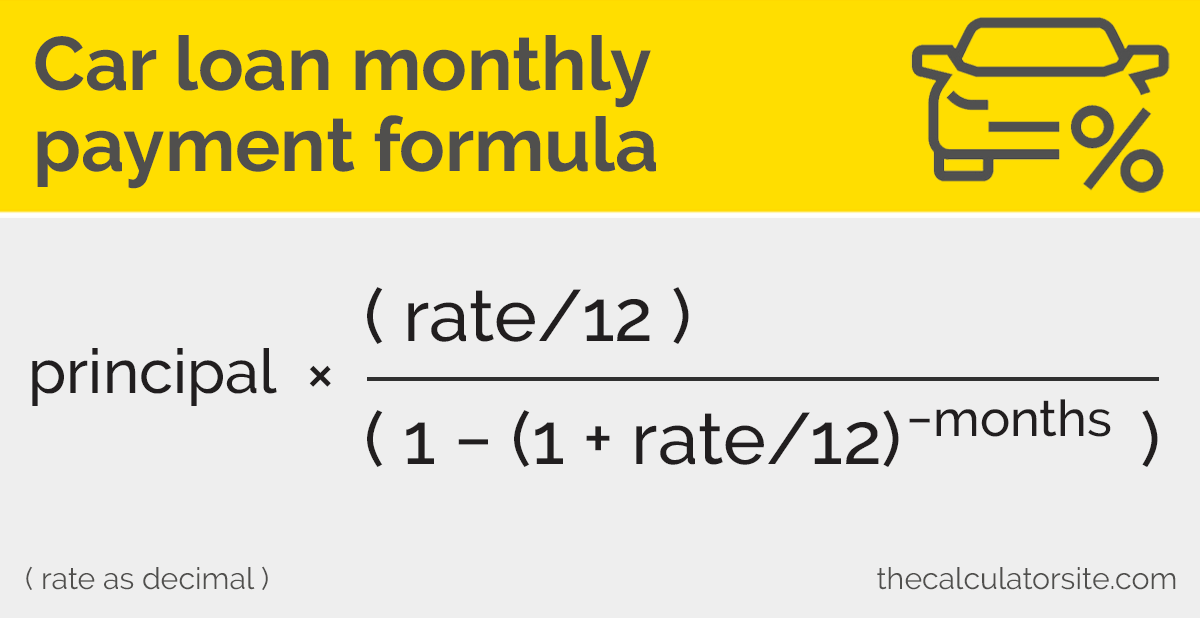
Understanding the theoretical components is one thing; putting them into practice to calculate the interest is another. While complex financial formulas exist, you don’t necessarily need to be a mathematician to grasp how your car loan interest is computed.
Manual Calculation: The Amortization Approach
Most car loans use a method called simple interest on a reducing balance, also known as an amortization schedule. This means that interest is calculated on the remaining principal balance of the loan, not the original principal. As you make payments, a portion goes towards the principal, reducing the balance, and subsequently, the amount of interest charged in the following period.
Here’s a simplified conceptual breakdown without diving deep into complex formulas:
- Determine Your Daily Interest Rate: Divide your annual interest rate by 365 (or 360, depending on the lender’s method) to get the daily rate.
- Example: If your annual interest rate is 5%, your daily rate is 0.05 / 365 = 0.000136986.
- Calculate Monthly Interest: At the beginning of each month, the lender calculates the interest accrued since your last payment. This is done by multiplying your current outstanding principal balance by the daily interest rate and then multiplying that by the number of days in the payment period (roughly 30 days for a monthly payment).
- Example: If your current principal is $20,000 and the daily rate is 0.000136986, the monthly interest for 30 days would be $20,000 * 0.000136986 * 30 = $82.19.
- Apply Your Payment: When you make your monthly payment, the interest portion is paid first. The remainder of your payment then goes towards reducing the principal.
- Example: If your monthly payment is $400 and $82.19 goes to interest, then $400 – $82.19 = $317.81 goes towards reducing your principal. Your new principal balance would be $20,000 – $317.81 = $19,682.19.
- Repeat: This process repeats each month. As your principal balance decreases, the amount of interest you pay each month also decreases, assuming a consistent interest rate. This is why more of your payment goes towards principal reduction later in the loan term.
While manually calculating an entire amortization schedule is tedious, understanding this principle helps you see how each payment chips away at the loan and why early payments have a greater impact on reducing the principal balance.
Leveraging Online Car Loan Calculators
For most individuals, the most practical and efficient way to calculate car loan interest and estimate payments is by using online car loan calculators. These tools are readily available on bank websites, financial planning platforms, and automotive portals.
To use an online calculator effectively, you’ll typically need to input:
- Loan Amount (Principal): The amount you plan to borrow after any down payment.
- Interest Rate (APR): The annual rate offered by the lender.
- Loan Term: The number of months you plan to take to repay the loan.
- Down Payment (Optional): Many calculators allow you to input a down payment to see how it affects the principal.
Once you input these figures, the calculator will instantly provide:
- Estimated Monthly Payment: The amount you’ll owe each month.
- Total Interest Paid: The full amount of interest you’ll incur over the loan term.
- Total Cost of the Loan: Principal + Total Interest Paid.
These calculators are invaluable for comparing different scenarios (e.g., shorter vs. longer terms, higher vs. lower interest rates) and for budgeting your monthly expenses within your personal finance plan.
Understanding the Loan Amortization Schedule
An amortization schedule is a table detailing each payment over the life of a loan. It breaks down how much of each payment goes towards interest and how much goes towards the principal. Lenders provide these, and online calculators can often generate a simplified version.
Reading an amortization schedule allows you to see:
- The decreasing interest portion: In the early stages of a loan, a larger percentage of your payment goes towards interest. As the principal balance reduces over time, the interest portion of your payment decreases, and more of your payment goes towards the principal.
- Your principal balance at any given time: You can see how much you still owe after each payment.
- The total interest paid by the end of the loan: This provides a clear picture of the overall cost of borrowing.
Familiarizing yourself with an amortization schedule is a powerful way to visualize the financial commitment and understand the long-term impact of your interest rate.
Factors Influencing Your Car Loan Interest Rate
While calculation methods are universal, the interest rate you’re offered is highly personalized. Several factors play a significant role in determining the rate a lender will provide you. Understanding these can help you strategically improve your position before applying for a loan.

The Critical Role of Your Credit Score
Your credit score is arguably the most influential factor in determining your car loan interest rate. Lenders use credit scores (like FICO or VantageScore) as a primary indicator of your creditworthiness – your likelihood of repaying the loan.
- High Credit Score (e.g., 700+): Generally indicates a low-risk borrower, leading to lower interest rates. Lenders see you as reliable and are more willing to offer favorable terms.
- Low Credit Score (e.g., below 620): Suggests a higher-risk borrower, often resulting in higher interest rates. Lenders need to offset the perceived risk of default.
Before applying for a car loan, it’s wise to check your credit score and review your credit report for any inaccuracies. Improving your score, even by a few points, can translate into substantial savings on interest over the life of the loan.
Loan Term and Its Relationship with Interest
The length of your loan term (e.g., 36 months vs. 72 months) also significantly impacts your interest rate and the total interest you’ll pay.
- Shorter Loan Terms (e.g., 36 or 48 months): Typically come with lower interest rates because the lender’s risk is reduced over a shorter period. While monthly payments will be higher, the total interest paid over the life of the loan will be considerably less.
- Longer Loan Terms (e.g., 72 or 84 months): Often have slightly higher interest rates. Lenders face a longer period of potential risk. While longer terms result in lower monthly payments, making the car seem more affordable upfront, you’ll end up paying significantly more in total interest over the life of the loan. This is a crucial trade-off in personal finance planning.
Down Payment and Vehicle Type Considerations
Your down payment and the type of vehicle you’re purchasing also play a role:
- Down Payment: A larger down payment reduces the principal amount you need to borrow. This not only lowers your monthly payments but can also make you a more attractive borrower to lenders, potentially qualifying you for a lower interest rate, as their risk is reduced.
- Vehicle Type: New cars generally command lower interest rates than used cars. Lenders perceive new cars as less risky because they typically come with warranties and have a more predictable value. Used cars, being older and potentially having more unknowns, might carry slightly higher rates. However, promotional rates on new cars can sometimes make their financing surprisingly competitive.
Lender Type and Market Dynamics
The financial institution you choose and the broader economic climate can also affect your rate:
- Lender Type: Different lenders have different risk appetites and pricing structures.
- Banks: Offer competitive rates, especially to well-qualified borrowers.
- Credit Unions: Often known for offering slightly lower rates to their members due to their non-profit status.
- Dealership Financing: Can be convenient but may sometimes mark up interest rates. However, they can also offer compelling promotional rates from manufacturer-backed financing arms.
- Online Lenders: Increasingly popular, offering competitive rates and streamlined application processes.
- Market Dynamics: General economic conditions, such as the prime rate set by central banks and the overall lending environment, can influence car loan interest rates across the board. When interest rates are low generally, car loan rates tend to follow suit.
Strategies to Secure a Favorable Interest Rate
Knowing how interest rates are calculated and what influences them is powerful. Equipping yourself with strategies to secure the best possible rate can lead to significant savings.
Enhancing Your Creditworthiness
Since your credit score is paramount, proactively improving it is a top strategy:
- Pay Bills on Time: Payment history is the most significant factor in your credit score. Set up automatic payments to avoid missing due dates.
- Reduce Existing Debt: Lowering your credit utilization ratio (the amount of credit you’re using compared to your available credit) can boost your score. Pay down credit card balances.
- Avoid New Credit Applications: Applying for multiple lines of credit in a short period can temporarily ding your score.
- Monitor Your Credit Report: Regularly check your credit report for errors and dispute any inaccuracies, as these can negatively impact your score.
Making a Substantial Down Payment
A larger down payment directly translates to a smaller loan amount, which reduces the lender’s risk and can help you qualify for a lower interest rate. Aim for at least 10-20% of the car’s purchase price if possible. Beyond the rate, a larger down payment also reduces your monthly payments and lessens the risk of being “upside down” on your loan (owing more than the car is worth).
The Power of Shopping Around for Lenders
Never accept the first loan offer you receive. Different lenders will offer different rates based on their risk models, overheads, and current promotions.
- Get Pre-Approved: Seek pre-approvals from several banks, credit unions, and online lenders before you even step foot in a dealership. This gives you concrete offers to compare and a strong negotiating tool.
- Compare APRs, Not Just Interest Rates: Remember that APR gives you the most comprehensive picture of the loan’s true cost.
- Consider Dealership Financing, But Compare: While dealerships can be convenient, their rates might not always be the best. Use your pre-approvals to see if they can beat or match external offers.
Negotiating Terms Beyond the Rate Itself
While the interest rate is critical, the overall loan terms also matter. Don’t be afraid to negotiate:
- Loan Term: If you can afford higher monthly payments, opt for a shorter term to save significantly on total interest.
- Fees: Understand all fees involved. Some might be negotiable or avoidable.
- Additional Products: Be wary of add-ons like extended warranties or GAP insurance being automatically rolled into your loan, potentially increasing your principal and interest. Evaluate if you truly need them and if you can get them cheaper elsewhere.
The Long-Term Impact and Empowering Your Purchase
Understanding the immediate monthly payment is just one piece of the puzzle. The true financial insight comes from grasping the long-term impact of your car loan.
Calculating the True Cost of Your Car Loan
The sticker price of the car plus the interest you pay determines the actual total cost of your vehicle. A simple calculation (Monthly Payment * Loan Term in Months) will give you the total amount repaid. Subtract the principal from this figure to see your total interest paid. This calculation often highlights just how much more you end up paying for the convenience of financing, underscoring the importance of securing a low-interest rate. For example, a $30,000 loan at 6% over 72 months results in over $5,800 in interest alone, making the car cost almost $36,000.
Regular Review and Refinancing Opportunities
Your financial situation and market conditions can change over time. What was a good interest rate initially might not be the best available a year or two down the line.
- Monitor Your Credit: As you make timely payments, your credit score might improve.
- Market Shifts: General interest rates can go down.
- Refinancing: If your credit score has improved significantly, or if market rates have dropped, consider refinancing your car loan. Refinancing replaces your old loan with a new one, potentially at a lower interest rate or with a different term, leading to lower monthly payments or substantial savings on total interest. It’s a key strategy in ongoing personal finance management to ensure you’re always getting the best deal.
By taking the time to understand how car loan interest rates are calculated, what factors influence them, and how to strategically approach the borrowing process, you empower yourself to make a financially sound decision. This knowledge transforms a potentially daunting purchase into a manageable and economically savvy investment in your transportation needs.
aViewFromTheCave is a participant in the Amazon Services LLC Associates Program, an affiliate advertising program designed to provide a means for sites to earn advertising fees by advertising and linking to Amazon.com. Amazon, the Amazon logo, AmazonSupply, and the AmazonSupply logo are trademarks of Amazon.com, Inc. or its affiliates. As an Amazon Associate we earn affiliate commissions from qualifying purchases.