
Bitcoin, since its inception in 2009, has revolutionized the financial landscape, introducing a decentralized, digital currency system unlike any before it. One of its most defining characteristics, and arguably its greatest economic strength, is its absolutely fixed supply. Unlike traditional fiat currencies, which can be printed ad infinitum by central banks, or even precious metals whose supply, while finite, remains somewhat unknown, Bitcoin has a hard cap of 21 million units. This pre-programmed scarcity is fundamental to its value proposition as a potential store of value and a hedge against inflation. Understanding how much Bitcoin has been mined, the mechanics behind its emission, and the economic ramifications of its finite nature is crucial for any investor or financial enthusiast.
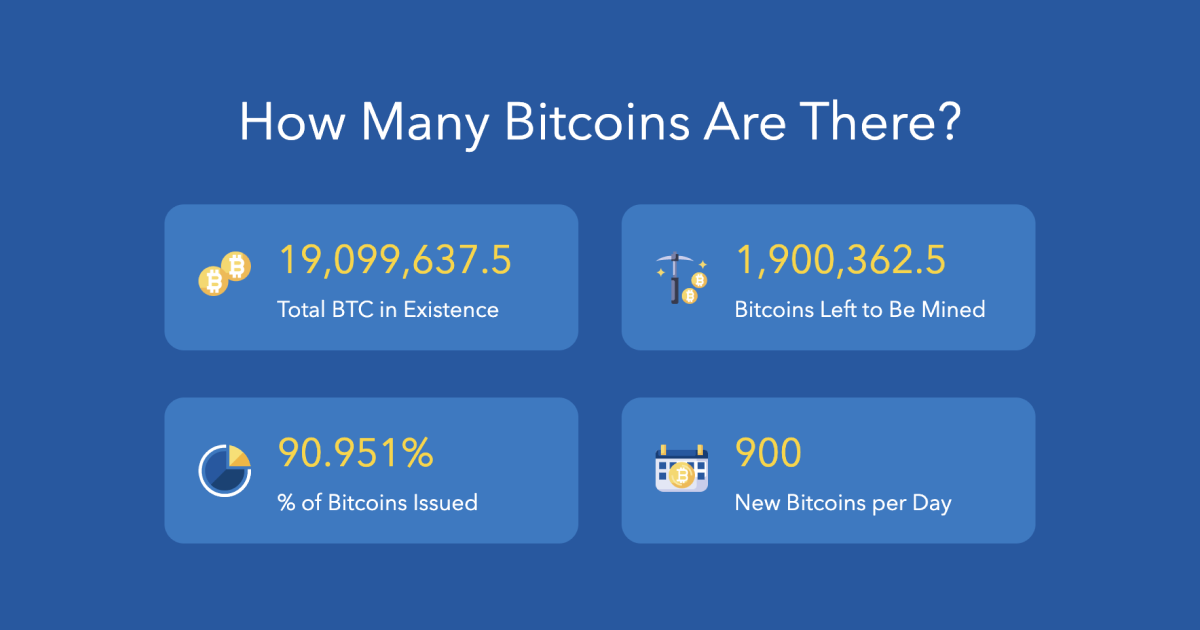
As of mid-2024, approximately 19.7 million Bitcoin out of the maximum 21 million have been successfully mined and are in circulation. This means that over 93% of the total Bitcoin supply has already entered the market, with the remaining fraction to be gradually released over the next century. This remarkable progress towards its supply limit underscores a unique financial experiment, driving discussions about digital scarcity, future value, and investment strategies in an ever-evolving global economy. This article delves into the intricate details of Bitcoin’s supply dynamics, exploring its mining process, the impact of its programmed halving events, and the profound economic implications for its status as a financial asset.
The Foundations of Bitcoin’s Supply: A Finite Digital Asset
Bitcoin’s design ingeniously intertwines technological protocols with economic incentives to create a self-sustaining and predictable monetary system. At its core, the principle of scarcity is not merely an outcome but a foundational pillar deliberately engineered into its code by its pseudonymous creator, Satoshi Nakamoto. This deliberate constraint sets it apart from conventional currencies and underpins much of its appeal as a robust financial asset.
Bitcoin’s Genesis and the 21 Million Cap
When Satoshi Nakamoto launched Bitcoin in January 2009, they hard-coded a critical parameter into its protocol: a maximum supply limit of 21 million BTC. This immutable ceiling is a cornerstone of Bitcoin’s economic model, preventing inflationary practices that often erode the purchasing power of traditional fiat currencies. The fixed supply directly addresses concerns about monetary dilution, offering a predictable and transparent emission schedule. This revolutionary approach to monetary policy aims to create a truly deflationary or disinflationary asset, drawing parallels to digital gold due to its predictable scarcity and resistance to manipulation. Investors often view this finite supply as a key advantage, making Bitcoin a compelling long-term store of value, especially in times of economic uncertainty and expansive monetary policies by central banks. The 21 million cap is not just an arbitrary number; it’s a statement of financial principle, emphasizing stability and predictability over arbitrary governmental discretion.
The Mechanics of Bitcoin Mining: Proof-of-Work and Block Rewards
The process by which new Bitcoin enters circulation is known as “mining.” Far from a metaphorical term, Bitcoin mining involves powerful computers competing to solve complex cryptographic puzzles. This system, called “Proof-of-Work” (PoW), ensures the integrity and security of the network. When a miner successfully solves a puzzle, they get to add the next “block” of verified transactions to the blockchain and are rewarded with newly minted Bitcoin, alongside transaction fees paid by users.
This reward, known as the “block subsidy,” is the primary mechanism for introducing new BTC into the ecosystem. Initially, in 2009, the reward for mining a block was 50 BTC. This reward, however, is not constant. It is deliberately reduced by half approximately every four years, or more precisely, every 210,000 blocks. This programmed reduction is critical to understanding Bitcoin’s supply dynamics and is a key driver of its engineered scarcity. The economic incentive for miners is twofold: they earn the block reward, which is a direct subsidy of new Bitcoin, and they also collect transaction fees. This dual incentive model ensures the network remains secure and operational while simultaneously managing the supply of new coins. The cost of mining—electricity, hardware, cooling—also contributes to the intrinsic value of Bitcoin, as it requires real-world resources to produce.
Tracking the Mined Supply: Current Status and Historical Milestones
Monitoring the amount of Bitcoin already mined provides crucial insights into its journey towards full circulation and its evolving economic scarcity. The current supply count is not just a static number but a dynamic figure influenced by programmed events and real-world factors.
The Current Count: How Many BTC Are Circulating?
As mentioned, as of mid-2024, approximately 19.7 million BTC have been mined and are currently in circulation. This represents over 93% of the total 21 million Bitcoin that will ever exist. This figure is constantly increasing with every new block mined, albeit at a diminishing rate. You can track this in real-time on various blockchain explorer websites, which provide up-to-the-minute data on the total circulating supply, block height, and block rewards. The high percentage of mined Bitcoin means that the market is rapidly approaching a state of maximal scarcity, making the remaining supply incrementally more valuable from an economic perspective. For investors, understanding this proximity to the supply cap is crucial for long-term valuation and portfolio strategy, emphasizing the diminishing availability of new coins.
The Halving Events: A Programmed Scarcity Mechanism
The “halving” is perhaps the most significant economic event in Bitcoin’s life cycle. It’s a pre-programmed event that occurs approximately every four years, where the reward for mining a new block is cut in half.
- 2009 – 2012: Block reward was 50 BTC.
- 2012 – 2016: First halving, reward reduced to 25 BTC.
- 2016 – 2020: Second halving, reward reduced to 12.5 BTC.
- 2020 – 2024: Third halving, reward reduced to 6.25 BTC.
- April 2024 onwards: Fourth halving, reward reduced to 3.125 BTC.
These halving events dramatically reduce the rate at which new Bitcoin enters circulation, thereby increasing its scarcity. Historically, each halving has been followed by significant price appreciation, as the reduced supply emission meets existing or growing demand. While past performance is not indicative of future results, these events are keenly watched by investors and analysts as they underscore Bitcoin’s disinflationary policy and its potential as a hard asset. The predictability of these halvings removes any guesswork about future supply, a stark contrast to the unpredictable quantitative easing measures often seen in traditional finance.
Lost Bitcoin: The Invisible Reduction in Effective Supply
Beyond the programmed scarcity, an additional layer of true scarcity arises from “lost” Bitcoin. It is estimated that a significant portion of the already mined Bitcoin, perhaps millions of coins, may be permanently unrecoverable. This loss can occur due to various reasons:
- Lost Private Keys: Users losing access to their wallet seeds or private keys, rendering their BTC inaccessible.
- Accidental Disposal: Throwing away hard drives containing wallet data, or sending BTC to non-existent addresses.
- Early Miner Errors: Many early adopters and miners may have lost keys or simply forgotten about their holdings, as Bitcoin’s value was negligible in its nascent years.
- Death of Holders: Wallets belonging to deceased individuals where no one else has access to the keys.

While these lost coins still technically count towards the “mined” total, they effectively remove supply from circulation, making the truly available, liquid supply even scarcer. This phenomenon further strengthens Bitcoin’s value proposition as a digital asset, as its effective circulating supply is even less than the reported figures, intensifying its deflationary characteristics.
The Economic Impact of Bitcoin’s Finite Supply
The hard cap and predictable emission schedule of Bitcoin are not merely technical details; they are fundamental economic policies that profoundly influence its valuation, investor behavior, and long-term role in the global financial system.
Scarcity as a Store of Value
Bitcoin’s finite supply is its strongest argument for being a superior store of value, often compared to gold. Gold has historically been revered for its scarcity and durability, serving as a hedge against inflation and economic instability. Bitcoin offers a digital alternative, with an even more predictable and verifiable scarcity. Unlike gold, whose new supply is subject to mining discoveries and costs, Bitcoin’s supply schedule is immutable and known decades in advance. This absolute scarcity makes it an attractive asset for those seeking to preserve wealth in an era of unprecedented money printing and currency debasement. Investors view Bitcoin’s limited supply as an inherent anti-inflationary characteristic, positioning it as a safeguard against the erosion of purchasing power.
Price Dynamics and Investor Psychology
The relationship between Bitcoin’s fixed supply and its price dynamics is complex yet critical. When demand for Bitcoin increases, and the supply of newly minted coins is simultaneously decreasing due to halvings, the price naturally tends to appreciate, assuming all other factors remain constant. This supply-side pressure, combined with growing adoption and institutional interest, creates a powerful upward trajectory for its value. Investor psychology also plays a significant role; the anticipation of halvings and the narrative of increasing scarcity often fuel speculative buying, contributing to Bitcoin’s characteristic volatility. However, for long-term holders (often termed “HODLers”), this volatility is seen as a short-term phenomenon in the journey towards a higher, scarcity-driven valuation. Understanding these dynamics is essential for making informed investment decisions and managing risk in a Bitcoin portfolio.
The Future of Mining: Post-Block Reward Economics
With new Bitcoin scheduled to be minted until approximately the year 2140, what happens to the network’s security and miner incentives when the block reward dwindles to near zero? This is a crucial financial consideration for the long-term viability of the Bitcoin network. As block rewards diminish with each halving, transaction fees are expected to become the primary revenue source for miners.
- Transition to Transaction Fee Dominance: Over time, the economic model will shift, making transaction fees, rather than block subsidies, the main incentive for miners to secure the network.
- Market for Block Space: As Bitcoin adoption grows and transaction volume increases, the competition for limited block space will drive up transaction fees, providing ample revenue for miners.
- Network Security: A robust fee market is vital for maintaining the economic security of the Bitcoin network against potential attacks. Miners’ continued profitability ensures they invest in the hardware and energy required to perform Proof-of-Work, thereby securing the blockchain.
This transition highlights Bitcoin’s elegant self-sustaining design. The network is built to adapt, with market forces eventually dictating miner compensation, ensuring the integrity and decentralization of the system long after the last Bitcoin is mined.
Investing in a Deflationary Asset: Strategies and Considerations
Bitcoin’s unique economic properties, particularly its finite and predictable supply, necessitate a distinct approach to investment strategy, differing from traditional equities or bonds.
Bitcoin as an Investment Portfolio Diversifier
Given its low correlation with traditional asset classes like stocks and bonds, Bitcoin can serve as a powerful diversifier within an investment portfolio. Its potential as a store of value and an inflation hedge makes it attractive for investors seeking to mitigate risks associated with conventional financial markets. Allocating a small, carefully considered portion of a portfolio to Bitcoin can potentially enhance returns while reducing overall portfolio volatility over the long term, provided one understands the asset’s inherent risks. Financial advisors are increasingly exploring Bitcoin and other digital assets as legitimate components of a diversified investment strategy, moving past its initial perception as a purely speculative asset.
Long-Term Holdings vs. Trading: Different Approaches to Scarcity
For many, Bitcoin’s scarcity-driven value proposition lends itself well to a “HODL” (Hold On for Dear Life) strategy, where investors acquire Bitcoin and hold it for extended periods, believing its value will appreciate significantly over time due to its limited supply and increasing adoption. This long-term approach aims to capitalize on Bitcoin’s disinflationary nature and its eventual maturity as a global reserve asset.
Conversely, Bitcoin’s volatility also attracts traders who seek to profit from short-term price fluctuations. While this can yield quick gains, it also carries higher risks and requires active market monitoring and advanced trading skills. For the average investor, especially those new to the crypto space, a long-term, dollar-cost averaging approach to accumulating Bitcoin often aligns better with its fundamental economic characteristics and reduces the impact of short-term price swings.

Regulatory Landscape and Market Maturity
The evolving regulatory landscape is a critical factor for investors considering Bitcoin. As Bitcoin matures and gains mainstream acceptance, governments and financial institutions are developing clearer guidelines and frameworks for its use and trading. The approval of spot Bitcoin ETFs in major markets, for example, has opened doors for institutional investors and provided a more accessible, regulated avenue for exposure to Bitcoin for retail investors. Further regulatory clarity is expected to reduce market uncertainty, attract more capital, and enhance Bitcoin’s legitimacy as a mainstream financial asset. This institutionalization signifies a growing confidence in Bitcoin’s long-term viability and its role in the future of finance, further solidifying its position as a unique and influential financial instrument driven by its inherent scarcity.
aViewFromTheCave is a participant in the Amazon Services LLC Associates Program, an affiliate advertising program designed to provide a means for sites to earn advertising fees by advertising and linking to Amazon.com. Amazon, the Amazon logo, AmazonSupply, and the AmazonSupply logo are trademarks of Amazon.com, Inc. or its affiliates. As an Amazon Associate we earn affiliate commissions from qualifying purchases.