
Bitcoin, since its inception in 2009, has revolutionized the global financial landscape, introducing the world to decentralized digital currency. One of its most defining and often discussed characteristics is its finite supply. Unlike traditional fiat currencies, which can be printed or digitally created ad infinitum by central banks, Bitcoin operates on a predetermined, immutable schedule of issuance. This inherent scarcity is not merely a technical detail; it is a fundamental economic principle that underpins Bitcoin’s value proposition as a store of value, an investment asset, and a potential hedge against inflation. Understanding the precise number of bitcoins in existence, how that number changes over time, and its implications is crucial for anyone engaging with or considering an investment in the cryptocurrency market. This article delves into the mechanics of Bitcoin’s supply, its programmed scarcity, and the profound economic ramifications of its finite nature.
The Foundational Principle of Bitcoin’s Scarcity
At the heart of Bitcoin’s design lies a radical departure from conventional monetary policy: a fixed and unalterable supply cap. This fundamental characteristic distinguishes Bitcoin from virtually every other form of money and asset in the modern financial system, establishing a bedrock of trust and predictability that is often absent in traditional economies.
Satoshi Nakamoto’s Vision: A Finite Supply
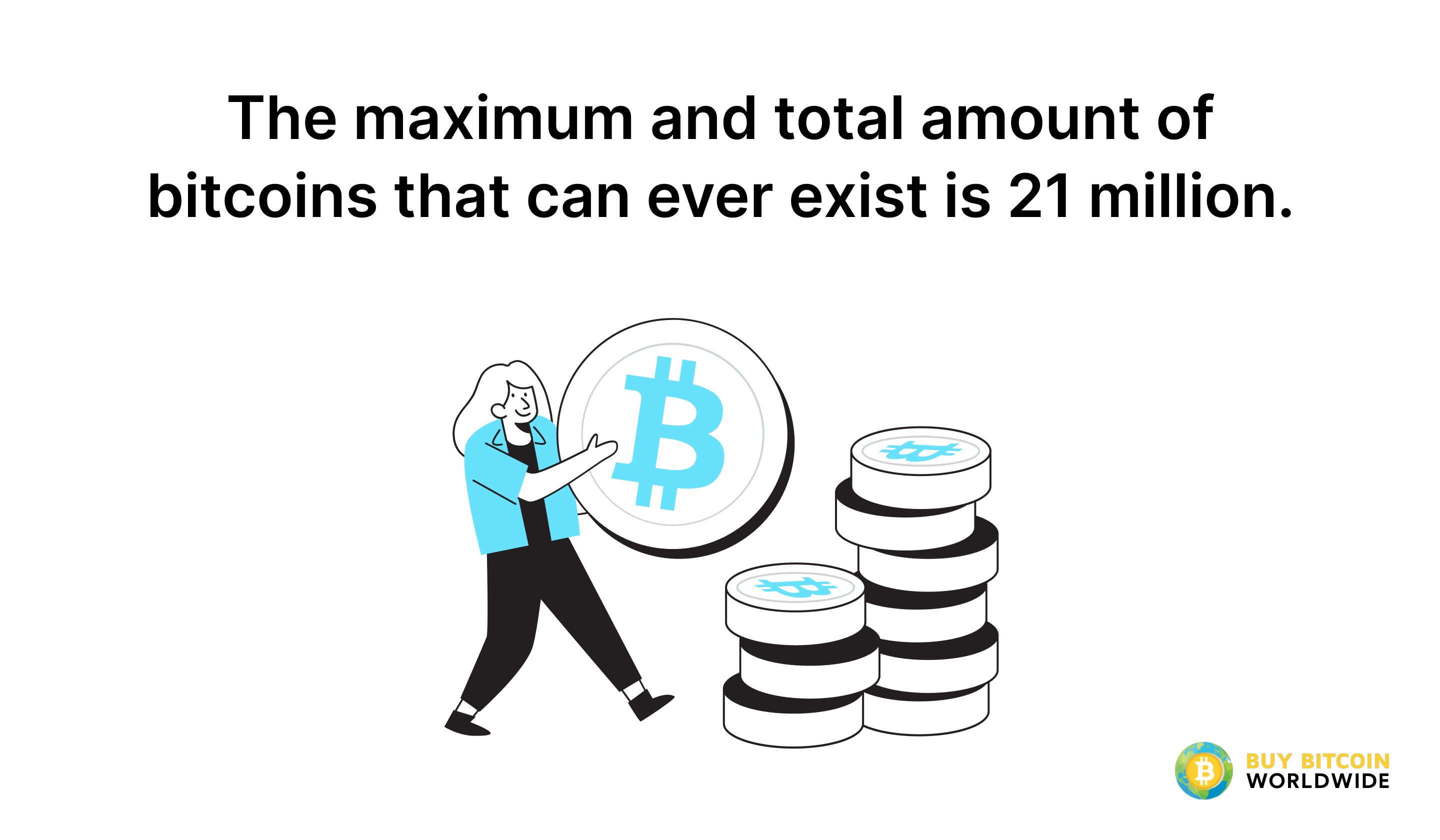
When the anonymous creator(s) Satoshi Nakamoto unleashed Bitcoin upon the world, they hard-coded a maximum supply limit of 21 million bitcoins. This number is not arbitrary; it is an integral part of Bitcoin’s protocol, etched into its very DNA. This absolute cap serves as a digital equivalent of a precious metal’s limited physical supply, designed to prevent inflation and preserve purchasing power over time. In contrast, fiat currencies such as the US Dollar, Euro, or Yen have no such limit. Central banks can, and often do, increase the money supply through quantitative easing or other measures, which can lead to inflation and a devaluation of existing currency units. Bitcoin’s fixed supply is a direct antidote to this inflationary potential, offering a compelling alternative for those seeking a truly scarce asset in a world of expanding monetary bases. This decentralized control over the supply means no single entity, government, or corporation can unilaterally decide to create more bitcoins, thus protecting its value from political or economic manipulation.
The Mining Process and Block Rewards
New bitcoins enter circulation through a process known as “mining.” Bitcoin mining is essentially a computational race where participants (miners) use powerful computers to solve complex cryptographic puzzles. The first miner to solve the puzzle gets the right to add the next block of verified transactions to the blockchain – Bitcoin’s public ledger – and is rewarded with a set amount of newly minted bitcoins, alongside transaction fees. This “block reward” is the primary mechanism by which new bitcoins are introduced into the economy.
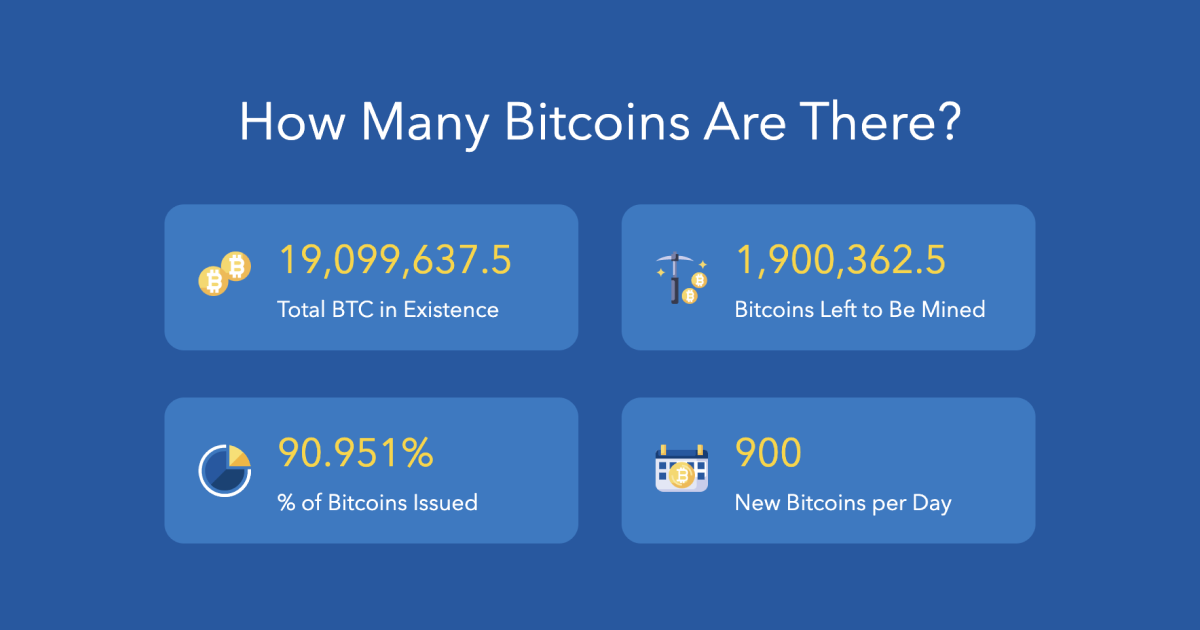
The mining process serves a dual purpose: it not only issues new currency but also secures the network. By expending computational power (and thus electricity), miners validate transactions, prevent double-spending, and maintain the integrity of the blockchain. The block reward incentivizes miners to dedicate resources to this effort, ensuring the network remains robust and decentralized. As of early 2024, the vast majority of the 21 million bitcoins have already been mined, with approximately 19.6 million bitcoins currently in circulation. The remaining bitcoins will be gradually released through the block reward system over the coming decades, until the 21 million cap is reached.
Understanding Bitcoin’s Emission Schedule and Halving Events
The release of new bitcoins isn’t a continuous, unchanging flow. Instead, it follows a carefully engineered schedule designed to gradually reduce the rate of new supply, making Bitcoin an increasingly scarce asset over time. This controlled scarcity is orchestrated through a unique event known as the “halving.”
Programmed Scarcity: The Halving Mechanism
The “halving” (or “halvening”) is a pre-programmed event within the Bitcoin protocol that automatically slashes the block reward for miners by 50%. This occurs approximately every four years, or more precisely, every 210,000 blocks mined. For example, when Bitcoin first launched, the block reward was 50 bitcoins. The first halving in 2012 reduced this to 25 bitcoins, the second in 2016 brought it down to 12.5 bitcoins, and the third in 2020 further decreased it to 6.25 bitcoins. The next halving, anticipated in April 2024, will cut the reward to 3.125 bitcoins per block. This consistent reduction in supply issuance is critical for Bitcoin’s long-term economic model.
The halving mechanism is a brilliant design choice that ensures a predictable, decelerating rate of new supply, regardless of demand. It’s an economic shock absorber, guaranteeing that Bitcoin becomes progressively scarcer. This makes Bitcoin fundamentally deflationary in its issuance schedule, a stark contrast to inflationary fiat systems. While some worry about the impact on miner profitability, the expectation is that Bitcoin’s value will appreciate over time as its scarcity increases, compensating miners through higher transaction fees and a more valuable asset.
Historical Halving Events and Their Market Impact
Historically, Bitcoin halvings have been pivotal events, often preceding significant price rallies. The reduced supply issuance creates a “supply shock” in the market: if demand remains constant or increases, the price must rise to balance the market.
- 2012 Halving: The first halving saw the block reward drop from 50 BTC to 25 BTC. In the year following this event, Bitcoin’s price surged from around $12 to over $1,000, illustrating the powerful effect of reduced supply.
- 2016 Halving: The reward fell to 12.5 BTC. Again, the period after this halving saw Bitcoin climb from around $650 to an all-time high of nearly $20,000 by the end of 2017.
- 2020 Halving: The block reward was reduced to 6.25 BTC. This was followed by Bitcoin’s historic bull run, pushing its price well above previous highs, crossing $60,000 in 2021.
While past performance is not indicative of future results, these historical trends highlight the market’s tendency to react strongly to the tightening supply. Each halving event serves as a reminder of Bitcoin’s engineered scarcity, reinforcing its narrative as a store of value and an increasingly valuable asset. The sequence of halvings will continue until the last fraction of a bitcoin is mined, estimated to be around the year 2140. At that point, the 21 million cap will be fully reached, and miners will be compensated solely through transaction fees.
The Reality of “Circulating Supply” vs. “Total Supply”
While the Bitcoin protocol mandates a total supply of 21 million, the actual number of bitcoins available for trade and use – the “circulating supply” – is often less than the total bitcoins that have been mined. This discrepancy arises primarily due to bitcoins that have been permanently removed from circulation.
Accounting for Lost Bitcoins
One of the unique aspects of Bitcoin is the phenomenon of permanently lost coins. These are bitcoins that, for various reasons, have become inaccessible and can never be spent again. The primary causes of lost bitcoins include:
- Lost Private Keys: Bitcoin ownership relies on private keys. If a user loses their private key, the bitcoins associated with that key are irretrievably lost. This can happen through forgetting passwords, physical destruction of storage devices (e.g., hard drives, USBs), or data corruption.
- Forgotten Wallets: Early adopters who mined or acquired bitcoins when their value was negligible might have simply forgotten about their digital wallets or dismissed their contents as worthless.
- Accidental Destruction: Bitcoins can be sent to “burn addresses” – valid Bitcoin addresses with no known private key – or to non-existent addresses, effectively removing them from circulation.
- Early Mining Rewards: Some of the earliest bitcoins mined by Satoshi Nakamoto and other early participants have remained unspent for over a decade, leading to speculation that these keys might be lost or that Nakamoto intended them to be permanently out of circulation.
Estimates for the number of lost bitcoins vary widely, but many analyses suggest that several million bitcoins – potentially as much as 15-20% of the total supply – may be permanently out of reach. This further accentuates Bitcoin’s scarcity, as the effective circulating supply is even lower than the already finite programmed total. For investors, this means the true supply-demand dynamics are potentially even more favorable for price appreciation than simply looking at the 21 million cap.
Unmined Bitcoins and the Future of Supply
As of early 2024, approximately 19.6 million of the 21 million total bitcoins have been mined. This leaves around 1.4 million bitcoins yet to be issued. However, the rate at which these remaining bitcoins will enter circulation is continually slowing down due to the halving events. With each halving, the block reward is halved, meaning it takes longer to mine the remaining bitcoins.
The final bitcoin is projected to be mined around the year 2140. At that point, the block reward will become zero, and miners will rely exclusively on transaction fees for their compensation. This transition is a crucial aspect of Bitcoin’s long-term sustainability. The diminishing returns for miners over time mean that the network will increasingly rely on transaction volume and value to incentivize security. This ensures that even after all 21 million bitcoins are mined, the network will remain secure, sustained by the utility and demand for Bitcoin as a medium of exchange. The gradual deceleration of new supply over a period of more than a century ensures a smooth, predictable path to its ultimate fixed supply.
Economic Implications of Bitcoin’s Finite Supply
The hard cap of 21 million bitcoins is not merely a technical specification; it is a profound economic statement. This fundamental design choice has far-reaching implications for how Bitcoin functions as a financial asset, influencing its role in investment portfolios and its potential impact on the global economy.
Bitcoin as a Store of Value: Digital Gold
Bitcoin’s fixed supply is the primary reason it is often referred to as “digital gold.” Just as gold’s value is derived, in part, from its rarity and the difficulty of extraction, Bitcoin’s value proposition is strengthened by its inherent scarcity and predictable supply schedule. In an era where central banks globally have embarked on unprecedented monetary expansion, leading to concerns about inflation and the erosion of purchasing power for fiat currencies, Bitcoin offers a compelling alternative.
Investors and financial institutions increasingly view Bitcoin as a reliable store of value and an inflation hedge. Its decentralized nature, coupled with its finite supply, means it cannot be debased by governmental policies or economic crises in the same way traditional currencies can. This makes it an attractive asset for diversifying portfolios, especially for those seeking to protect wealth against macroeconomic instability and currency devaluation. Its digital nature also makes it highly portable and divisible, offering advantages over physical gold in a globally connected, digital economy.
Deflationary Asset vs. Inflationary Fiat Currencies
The inherent design of Bitcoin positions it as a deflationary asset, or at the very least, an asset with disinflationary tendencies in its issuance. Its supply growth rate steadily decreases over time until it reaches zero, ensuring that each unit theoretically holds or increases its purchasing power relative to goods and services, assuming consistent or growing demand. This stands in stark contrast to the inflationary policies common to modern fiat currencies.
Central banks typically aim for a modest inflation rate (e.g., 2%) to stimulate economic activity. While this can have benefits, persistent inflation erodes savings and reduces the long-term value of money. Bitcoin offers an escape from this cycle. Its predictable, diminishing supply fosters a system where the purchasing power of each bitcoin is designed to appreciate over time, making it an attractive long-term investment. This fundamental difference in monetary philosophy makes Bitcoin a revolutionary financial tool, challenging entrenched ideas about money and its management. As global debt levels rise and the stability of fiat systems is questioned, Bitcoin’s deflationary characteristics offer a powerful counter-narrative and a potential solution for preserving wealth across generations.
Investing and Participating in the Bitcoin Ecosystem
Understanding Bitcoin’s fixed supply is not just academic; it has direct implications for investment strategies and how one chooses to participate in this evolving financial ecosystem. For investors, its scarcity is a core pillar of its investment thesis.
How Investors Access Bitcoin
The growing interest in Bitcoin as a financial asset has led to a proliferation of avenues for investment. Historically, individuals purchased Bitcoin directly from cryptocurrency exchanges. This remains a popular method for those who wish to hold their own private keys and interact directly with the underlying asset. However, the financial industry has also developed more traditional and regulated pathways:
- Spot Bitcoin ETFs: Exchange-Traded Funds (ETFs) that hold actual Bitcoin have emerged as a significant development, particularly in the United States. These provide institutional and retail investors with exposure to Bitcoin’s price movements without the complexities of direct ownership, such as managing private keys or navigating cryptocurrency exchanges. This has opened the market to a broader range of investors, including those in traditional brokerage accounts.
- Bitcoin Futures and Options: Derivatives markets allow investors to speculate on Bitcoin’s future price without owning the underlying asset, offering tools for hedging or leveraged plays.
- Publicly Traded Companies with Bitcoin Holdings: Some corporations have added Bitcoin to their balance sheets, allowing investors to gain indirect exposure by buying shares in these companies.
Each of these methods carries its own set of risks and rewards, from the security challenges of self-custody to the management fees and counterparty risks associated with financial products. Due diligence and understanding one’s risk tolerance are paramount before investing.
Future Outlook: Scarcity, Adoption, and Value
The core argument for Bitcoin’s long-term value hinges on its unparalleled scarcity combined with increasing global adoption. As more individuals, institutions, and even nation-states recognize Bitcoin’s unique properties – its decentralization, immutability, and most importantly, its finite supply – demand is likely to continue to grow. This increasing demand, set against a demonstrably limited and predictable supply, forms a powerful economic equation that many believe will drive significant price appreciation in the decades to come.
The journey to the final bitcoin being mined in 2140 will be punctuated by numerous halvings, each further reducing the rate of new supply and reinforcing its scarcity narrative. As fiat currencies grapple with inflationary pressures and traditional financial systems face increasing scrutiny, Bitcoin stands as a resilient, mathematically guaranteed alternative. Its fixed supply ensures that it will remain a singular asset in the digital age, a true store of value that cannot be debased by arbitrary creation, cementing its role as a revolutionary force in the world of finance. The question of “how many bitcoins are in existence” ultimately points to the profound economic implications of a truly scarce, digital asset.
aViewFromTheCave is a participant in the Amazon Services LLC Associates Program, an affiliate advertising program designed to provide a means for sites to earn advertising fees by advertising and linking to Amazon.com. Amazon, the Amazon logo, AmazonSupply, and the AmazonSupply logo are trademarks of Amazon.com, Inc. or its affiliates. As an Amazon Associate we earn affiliate commissions from qualifying purchases.