
Bitcoin, the pioneering digital asset, continues to be a central topic of discussion in financial circles worldwide. From its humble beginnings as a niche technological experiment, it has evolved into a formidable, albeit volatile, force in global finance. The question “what’s going on with Bitcoin” isn’t merely about its price, but rather an inquiry into its evolving role as an investment asset, a technological innovation challenging traditional finance, and a potential hedge against economic uncertainties. Understanding its current status requires a deep dive into market dynamics, institutional adoption, regulatory landscapes, and its fundamental investment thesis, all viewed through the lens of financial implications.

Bitcoin’s journey has been marked by dramatic cycles of euphoria and despair, attracting both fervent advocates and skeptical critics. Its decentralized nature, limited supply, and borderless transactions present a unique value proposition that continues to captivate investors and financial institutions alike. As the global economic climate shifts and technological advancements accelerate, Bitcoin finds itself at a critical juncture, navigating complex macroeconomic headwinds while simultaneously gaining unprecedented mainstream acceptance. This article will explore the multifaceted developments shaping Bitcoin’s present and future from a purely financial perspective, offering insights into its market movements, its integration into traditional finance, and its enduring appeal as a distinct asset class.
The Current Market Landscape: Volatility and Maturation
Bitcoin’s market behavior is a constant source of fascination and frustration for investors. While its reputation for extreme volatility precedes it, recent years have shown a degree of maturation, albeit with significant price swings still inherent to the asset class. Understanding the interplay of market forces, investor sentiment, and global economic indicators is crucial for anyone engaging with Bitcoin financially.
Price Dynamics and Macroeconomic Headwinds
The most visible aspect of Bitcoin’s journey is its price. Recent periods have seen Bitcoin’s valuation influenced by a confluence of macroeconomic factors that extend far beyond its internal ecosystem. Global inflation concerns, interest rate hikes by central banks, and geopolitical tensions have all contributed to a risk-off sentiment in broader financial markets, often impacting Bitcoin. Traditionally, Bitcoin has been touted as a hedge against inflation or “digital gold” due to its fixed supply and decentralized nature. However, its correlation with traditional tech stocks and growth assets during periods of tightening monetary policy has demonstrated its sensitivity to liquidity and investor appetite for risk. When central banks signal higher rates, assets perceived as riskier, including Bitcoin, tend to face selling pressure. This evolving correlation challenges its pure “safe-haven” narrative and places it more firmly within the high-growth, high-beta segment of investment portfolios.
Furthermore, the strength of the U.S. dollar against other major currencies often plays a role. As the dollar strengthens, global investors may pull capital from riskier assets, including cryptocurrencies. Conversely, periods of dollar weakness can sometimes fuel interest in alternative assets. Analyzing Bitcoin’s price requires a nuanced view, considering it not in isolation but as part of a complex global financial system where capital flows and risk perceptions are constantly shifting.
Evolving Investor Sentiment and Market Cycles
Investor sentiment around Bitcoin is notoriously cyclical, often oscillating between periods of extreme fear and irrational exuberance. Tools like the “Crypto Fear & Greed Index” reflect this psychological ebb and flow. Retail investors, historically a significant driver of Bitcoin’s price surges, have been joined by increasingly sophisticated institutional players. This shift has led to a more complex market dynamic. Institutional investors, driven by mandates, risk models, and long-term strategies, can provide more stable demand, but also contribute to deeper sell-offs during de-risking periods.
Bitcoin’s historical market cycles, often tied to its “halving” events (where the reward for mining new blocks is cut in half, reducing the supply rate), continue to be a subject of intense scrutiny. While past performance is no guarantee of future results, these events are often seen as supply shocks that can precede bull markets. However, the market today is far more mature and efficient than in previous cycles, with more participants and sophisticated derivatives markets. This means that while the halving mechanism remains a fundamental aspect of Bitcoin’s monetary policy, its impact might be more priced-in or diffused over time compared to earlier, less developed periods. Understanding these cycles, alongside current sentiment and liquidity conditions, is paramount for investors looking to position themselves in the Bitcoin market.
Institutional Inflows and Mainstream Integration
Perhaps one of the most significant narratives surrounding Bitcoin’s maturation has been the increasing interest and participation from institutional investors and traditional financial entities. This integration marks a pivotal shift, moving Bitcoin from the fringes of finance into a more established, regulated, and accessible asset class.
The ETF Effect and Regulatory Milestones
A monumental development in Bitcoin’s journey was the approval of spot Bitcoin Exchange Traded Funds (ETFs) in major markets like the United States. This regulatory milestone dramatically lowered the barrier to entry for a vast segment of the investment community, including retail investors, financial advisors, and institutional funds that were previously restricted from directly holding digital assets. Spot Bitcoin ETFs allow investors to gain exposure to Bitcoin’s price movements through a regulated investment vehicle that can be traded on traditional stock exchanges, without the complexities of self-custody or navigating crypto exchanges.
The launch of these ETFs has introduced a new dynamic of demand, as billions of dollars flow into these instruments. The “ETF effect” is multifaceted: it provides liquidity, legitimacy, and simplifies compliance for institutions. It also signals a tacit acceptance by financial regulators that Bitcoin is a legitimate, albeit volatile, asset to be offered to a broader investing public. This approval is not an isolated event but part of a broader trend of increasing regulatory clarity and the establishment of frameworks for digital assets, which is crucial for fostering long-term confidence and attracting deeper pools of capital.
Corporate Treasury and Sovereign Adoption
Beyond financial institutions, Bitcoin has seen increasing adoption at the corporate and even sovereign level. A growing number of public companies have begun to allocate a portion of their treasury reserves to Bitcoin, viewing it as a long-term store of value and a hedge against inflation, rather than keeping all cash in traditional fiat currencies that can devalue over time. These pioneering companies articulate a strategy based on Bitcoin’s fixed supply, decentralization, and potential for appreciation, seeing it as a superior asset to hold compared to cash earning negligible interest.
On the sovereign front, while still nascent, the move by some nations to adopt Bitcoin as legal tender or to explore its integration into national financial strategies has sent powerful signals. El Salvador’s embrace of Bitcoin, for example, highlighted its potential for financial inclusion, remittances, and attracting foreign investment, even amidst significant international scrutiny. While not without challenges, these early adopters demonstrate Bitcoin’s potential to transcend traditional financial paradigms and offer alternative models for economic development and monetary policy. This trend, if it expands, could fundamentally alter the geopolitical and financial landscape, cementing Bitcoin’s status as a globally recognized asset.
Bitcoin’s Role in a Diversified Portfolio
For investors seeking to understand “what’s going on with Bitcoin,” a critical question is its utility within a well-constructed investment portfolio. Bitcoin, with its unique characteristics, presents both opportunities for diversification and significant risk considerations.
The Digital Gold Debate Revisited
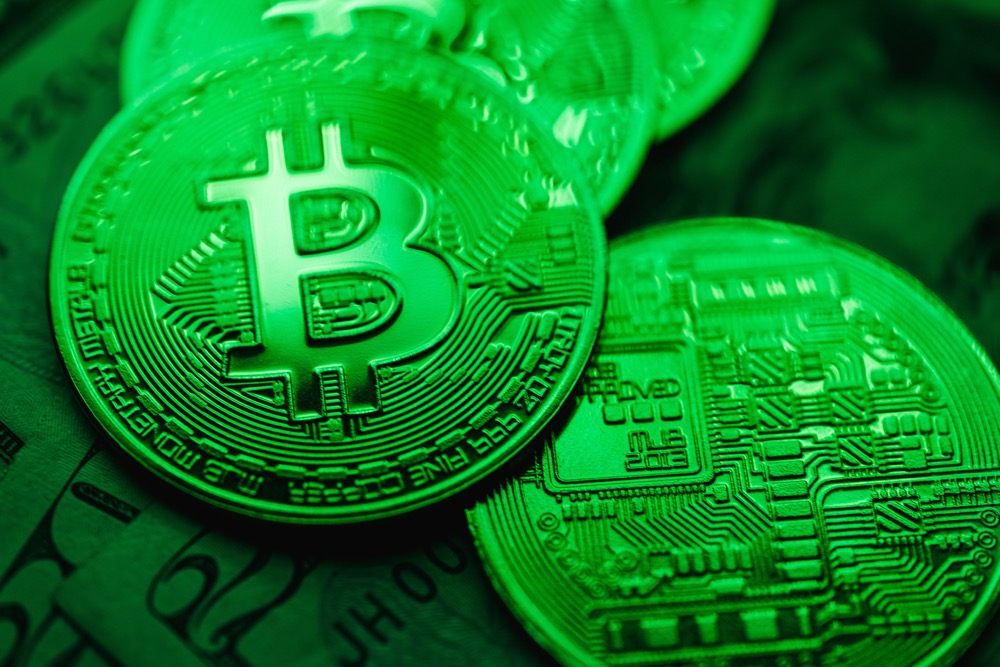
The narrative of Bitcoin as “digital gold” has been a cornerstone of its investment thesis since its inception. Proponents argue that its scarcity (capped at 21 million coins), decentralization (immune to government seizure or censorship), and global accessibility make it a superior store of value, particularly in an era of unprecedented fiat currency debasement through quantitative easing and increased government spending. In this view, Bitcoin acts as an inflation hedge, preserving purchasing power over the long term.
However, its high volatility and sometimes strong correlation with traditional risk assets (like tech stocks) have led some to question this “digital gold” status. During periods of market stress, Bitcoin has not always acted as a safe haven, often selling off alongside other riskier assets. This has prompted a more nuanced perspective: while Bitcoin retains many gold-like properties, its market behavior is also influenced by its growth-asset characteristics, reflecting investor appetite for high-reward, high-risk assets. Therefore, its role might be dual: a long-term store of value for some, and a high-beta growth asset for others, depending on market conditions and individual investment horizons. Its potential to serve as an uncorrelated asset for diversification remains a compelling argument, but one that requires careful consideration of current market cycles.
Risk Management and Allocation Strategies
Integrating Bitcoin into a diversified portfolio requires robust risk management and thoughtful allocation strategies. Due to its inherent volatility, financial advisors often recommend a modest allocation, typically a single-digit percentage of a total portfolio, to mitigate significant downside risk while still participating in potential upside. Dollar-cost averaging (DCA), a strategy of investing a fixed amount of money at regular intervals, regardless of the asset’s price, is particularly popular for Bitcoin. This approach helps to smooth out the impact of price fluctuations and reduces the risk of making a large investment at an inopportune time.
Understanding one’s risk tolerance is paramount. Bitcoin is not suitable for all investors, especially those with short-term horizons or low risk tolerance. For those who do invest, it’s crucial to treat it as a long-term strategic allocation rather than a short-term speculative trade. Investors should also be aware of the operational risks associated with digital assets, including cybersecurity concerns if self-custodying, or the counterparty risks associated with centralized exchanges or ETF providers. Due diligence on custodians and platforms is as important as the investment decision itself. For many, Bitcoin is a high-growth component that, when properly sized and managed, can enhance portfolio returns and offer unique diversification benefits that traditional assets may not provide.
Regulatory Scrutiny and Future Prospects
The rapid growth and increasing financial footprint of Bitcoin have inevitably drawn the attention of regulators worldwide. The future trajectory of Bitcoin, both as an investment and as a technological innovation, will be heavily influenced by the evolving regulatory landscape and its continued development.
Navigating the Global Regulatory Patchwork
One of the most complex challenges facing Bitcoin and the broader crypto market is the fragmented and often inconsistent regulatory environment across different jurisdictions. Nations vary widely in their approach, ranging from outright bans in some countries to comprehensive regulatory frameworks in others. The United States, for example, has seen various agencies grapple with classifying Bitcoin and other digital assets, leading to a patchwork of rules and enforcement actions. Europe, on the other hand, has made strides towards a more harmonized approach with initiatives like MiCA (Markets in Crypto-Assets), aiming to provide clarity and consumer protection across member states.
This global regulatory patchwork impacts everything from how financial institutions can interact with Bitcoin to how retail investors access it. Uncertainty can stifle innovation and deter mainstream adoption by risk-averse entities. However, the trend generally points towards increasing regulation rather than outright prohibition in major economies. The focus is increasingly on investor protection, market integrity, anti-money laundering (AML), and combating terrorist financing (CTF). As regulators develop a deeper understanding of digital assets, clearer, more consistent frameworks are likely to emerge, which could ultimately de-risk the asset class for broader financial integration and foster more stable growth. This ongoing dialogue between innovators and policymakers will define Bitcoin’s operational and financial boundaries.
The Path Ahead: Adoption, Scaling, and Competition
Bitcoin’s long-term financial relevance hinges on its continued adoption and its ability to scale effectively to meet increasing demand. While Bitcoin’s base layer is designed for security and decentralization, not speed, secondary layers like the Lightning Network offer solutions for faster and cheaper transactions, enhancing its utility as a medium of exchange. Further development and adoption of such scaling solutions could significantly broaden Bitcoin’s use cases beyond just a store of value, potentially making it more viable for everyday transactions and remittances globally.
However, Bitcoin does not exist in a vacuum. It faces competition from other cryptocurrencies and evolving digital asset ecosystems. While Bitcoin maintains its dominant position as the largest and most decentralized cryptocurrency, other projects offer different features, scalability, or smart contract capabilities. Investors continually evaluate Bitcoin’s unique value proposition – its unparalleled security, network effect, and fixed supply – against the innovations and utility offered by alternative digital assets. The path ahead will involve ongoing innovation within Bitcoin itself, increasing integration with traditional financial systems, and a dynamic interplay with the broader digital asset landscape. Its enduring success will be measured by its ability to maintain its core principles while adapting to the demands of a rapidly evolving digital economy.
Key Investment Considerations and a Forward Look
As Bitcoin continues to carve out its niche in the global financial system, prospective and current investors must remain attentive to its unique attributes and the dynamic forces at play. Its journey is far from over, and its future impact on finance remains a subject of intense debate and speculation.
Understanding the Unique Investment Thesis
At its core, Bitcoin’s investment thesis is built upon several fundamental pillars that differentiate it from traditional assets. Its absolute scarcity, enforced by cryptographic rules, positions it as a truly deflationary asset in a world of increasing monetary expansion. Its decentralization ensures censorship resistance and eliminates single points of failure, offering a powerful alternative to centralized financial systems. Furthermore, its global, permissionless nature means it can be transferred anywhere, at any time, without intermediaries, providing unprecedented financial sovereignty for individuals and businesses alike. These attributes resonate deeply with investors seeking protection against inflation, government overreach, or simply a novel asset class with potentially asymmetric returns.
The “network effect” is another crucial aspect. As more individuals, businesses, and institutions adopt Bitcoin, its utility and security strengthen, creating a virtuous cycle that can drive further adoption and value. For many, investing in Bitcoin is not just about price speculation; it’s a bet on the long-term paradigm shift towards a more open, transparent, and decentralized global financial infrastructure. This long-term conviction often helps investors weather the asset’s significant short-term volatility.

Staying Informed in a Rapidly Evolving Market
The world of Bitcoin and digital assets is characterized by rapid innovation, evolving regulatory landscapes, and constant market developments. For any investor, staying informed is not just beneficial, but essential. This involves keeping abreast of macroeconomic trends that influence all risk assets, monitoring regulatory developments that could impact market access or operational frameworks, and understanding the technological advancements within the Bitcoin ecosystem itself. Reliable sources of information, critical thinking, and a healthy skepticism towards sensationalist claims are invaluable.
The journey of Bitcoin is a testament to financial innovation and human ingenuity. From its initial emergence, it has faced skepticism, significant challenges, and periods of extreme volatility. Yet, it has consistently demonstrated resilience, adapted to new environments, and steadily gained acceptance in mainstream finance. As we look ahead, Bitcoin’s ongoing narrative will likely be shaped by further institutional integration, the development of more robust regulatory frameworks, and its continued evolution as both a technological marvel and a compelling investment asset. Its path will undoubtedly continue to be dynamic and challenging, but for those who understand its unique financial proposition, Bitcoin remains one of the most intriguing and potentially transformative assets of our time. Its enduring appeal lies in its promise to fundamentally reshape how we perceive and interact with money.
aViewFromTheCave is a participant in the Amazon Services LLC Associates Program, an affiliate advertising program designed to provide a means for sites to earn advertising fees by advertising and linking to Amazon.com. Amazon, the Amazon logo, AmazonSupply, and the AmazonSupply logo are trademarks of Amazon.com, Inc. or its affiliates. As an Amazon Associate we earn affiliate commissions from qualifying purchases.