
The question “when does taxes start?” might seem straightforward, but its answer is multifaceted, touching upon various aspects of personal finance, business operations, and financial planning. For individuals and businesses alike, understanding the different commencements of tax obligations is crucial for compliance, avoiding penalties, and optimizing financial health. This article delves into the various interpretations of “when taxes start,” from the beginning of the tax year to specific filing deadlines and the triggers for different types of tax liabilities. We will explore how tax obligations aren’t a single event but a continuous process influenced by income, business activity, and the ever-evolving landscape of tax legislation. Navigating this complexity requires a clear understanding of the timelines and triggers that dictate when you become accountable to the tax authorities.
Understanding the Tax Year: The Foundation of Taxation
At the core of all tax systems is the concept of the tax year, a defined period over which income and expenses are calculated to determine tax liability. This foundational period dictates when your financial activities are aggregated for assessment.
The Calendar Year Standard: January 1st to December 31st
For the vast majority of individual taxpayers, the tax year aligns with the calendar year, running from January 1st to December 31st. This twelve-month period is the standard against which your annual income, deductions, and credits are measured. All earnings received within these dates, regardless of when they are actually reported or when the tax return is filed, fall into that specific tax year. This universal start and end date simplify income tracking for employees who receive W-2 forms and for many self-employed individuals. It’s the period that defines the scope of the tax return you’ll prepare and submit in the subsequent year. Understanding this fundamental period is the first step in comprehending your annual tax cycle and ensuring all relevant financial activities are correctly attributed.
Fiscal Years for Businesses: Flexibility and Strategic Planning
While individuals typically follow the calendar year, many businesses have the flexibility to choose a fiscal year. A fiscal year is any 12-month period ending on the last day of any month other than December. This choice can be a strategic decision, allowing businesses to align their tax year with their natural business cycle, such as inventory cycles, peak seasons, or major financial reporting periods. For example, a retail business that experiences a significant sales surge around the holidays might choose a fiscal year ending in January or February, allowing them to close their books after the busiest period and conduct inventory counts more efficiently. The Internal Revenue Service (IRS) permits this flexibility, but once a fiscal year is chosen, it generally must be maintained consistently unless specific IRS approval for a change is obtained. This strategic choice impacts everything from quarterly estimated tax payments to annual financial statements, offering a tailored approach to tax planning.
Different Tax Years for Different Jurisdictions
It’s important to recognize that while the U.S. federal government primarily uses the calendar year for individuals and allows fiscal years for businesses, tax years can vary significantly across different jurisdictions and for specific types of taxes. For instance, some countries have entirely different tax year start and end dates. Even within the U.S., state tax years typically mirror the federal structure, but local taxes or specific industry taxes might operate on slightly different cycles. For businesses operating internationally or individuals with global income streams, understanding the specific tax year of each relevant country is paramount to avoid confusion and ensure compliance. This divergence highlights the importance of country-specific tax knowledge for anyone with cross-border financial interests.
When Your Personal Tax Obligation Begins: Income, Age, and Residency
Beyond the official start of the tax year, an individual’s personal tax obligation is triggered by a combination of factors, primarily concerning their income level, age, and residency status. It’s not just about when the calendar year begins, but when your personal circumstances meet the criteria for tax liability.
The Income Threshold: Earning to Trigger Tax Liability
The most common trigger for personal tax obligations is earning income above a certain threshold. In many countries, including the United States, individuals are not required to file a tax return or pay income tax if their gross income falls below a certain amount, typically linked to the standard deduction for their filing status. This threshold varies based on factors such as age, filing status (single, married filing jointly, head of household), and whether you are claimed as a dependent. For instance, a single individual under 65 might not need to file a federal income tax return if their gross income is below the standard deduction for that year. However, even if you don’t have to file, it might be beneficial to do so to claim refundable tax credits, such as the Earned Income Tax Credit, which could result in a refund. The moment your income surpasses these thresholds, your tax obligation “starts,” requiring you to track income and prepare for filing.
Age and Dependency: Special Considerations for Young Earners and Seniors
Age plays a significant role in determining when tax obligations begin or change. Young earners, particularly those under 18 or 24 who are full-time students and can be claimed as dependents, often have different filing requirements and income thresholds. Their “unearned” income (e.g., from investments) might be subject to the “kiddie tax,” while their “earned” income (e.g., from a job) is taxed at their own rate once it exceeds a certain limit. Conversely, seniors (individuals aged 65 or older) often receive higher standard deductions, potentially raising their income threshold before they are required to file. These age-related adjustments mean that the “start” of tax obligation is not uniform across all demographics, requiring careful consideration of individual circumstances.
Residency and Citizenship: Global Tax Implications
Where you live and your citizenship status are critical factors in determining when and where your tax obligations begin. The United States, for example, taxes its citizens and resident aliens on their worldwide income, regardless of where they reside. This means that a U.S. citizen living abroad still “starts” their tax year on January 1st and has a U.S. tax obligation if their income exceeds the foreign earned income exclusion or other thresholds. Conversely, non-resident aliens typically only pay U.S. tax on income effectively connected with a U.S. trade or business, or on certain U.S.-source passive income. Different countries have different residency tests and taxation rules, making international tax planning complex. For global citizens and expatriates, understanding the tax laws of both their country of citizenship and their country of residence is paramount to determine when and to whom their tax obligations commence.
Withholding Taxes: Paying as You Earn
For many employees, “taxes start” not when they file their return, but from their very first paycheck. This is due to the system of withholding taxes. Employers are legally required to withhold a portion of an employee’s wages for federal, state, and local income taxes, as well as Social Security and Medicare (FICA) taxes, and remit these amounts directly to the government. This “pay-as-you-earn” system means that tax liability is continuously paid throughout the year, mitigating a large tax bill at year-end. For self-employed individuals, a similar concept applies through quarterly estimated tax payments, where they are responsible for calculating and remitting their own taxes on income as they earn it, rather than waiting for annual filing. In essence, for most working individuals, the practical commencement of tax payment is concurrent with earning income.
The Tax Filing Season: Annual Rituals and Key Deadlines
While tax obligations accrue throughout the year, the “tax season” is the period when individuals and businesses officially reconcile their income and tax payments with the government. This period is marked by specific deadlines that dictate when tax forms must be submitted.
Federal Tax Deadlines: April 15th and Extensions
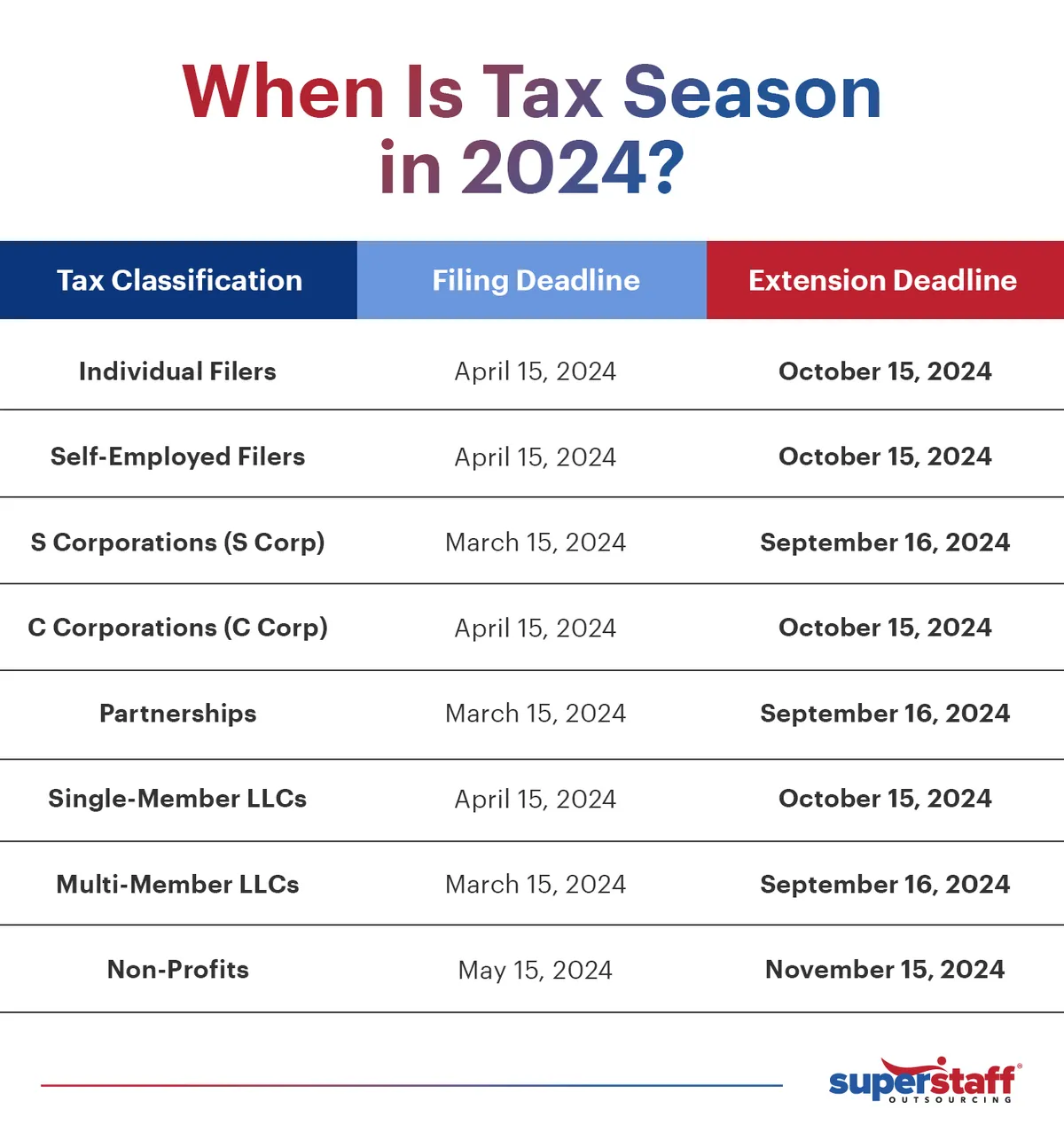
For most individual taxpayers in the United States, the federal income tax filing deadline is April 15th of the year following the tax year. So, for the 2023 tax year, your federal return would typically be due by April 15, 2024. If April 15th falls on a weekend or holiday, the deadline is shifted to the next business day. This date marks the official “start” of the government’s review process for your annual tax liability. If you cannot meet this deadline, you can typically request an extension, which usually pushes the filing deadline to October 15th. However, it’s crucial to understand that an extension to file is not an extension to pay. Any taxes owed are still due by the original April 15th deadline, and interest and penalties may accrue on underpayments after this date. Missing this initial deadline can lead to penalties, making proactive planning essential.
State Tax Deadlines: Varying Schedules
In addition to federal taxes, most states that levy an income tax have their own filing deadlines. While many states align their income tax deadlines with the federal April 15th date, some have unique schedules. For example, some states might have later filing dates, while others might have earlier ones, especially for specific types of taxes. It is imperative for taxpayers to be aware of their specific state’s income tax deadlines, as failing to meet these can result in separate state-level penalties and interest. For individuals living in states with no state income tax, this particular deadline is, of course, irrelevant, simplifying their tax calendar somewhat. Staying informed about both federal and state-specific deadlines is a non-negotiable aspect of comprehensive tax compliance.
Quarterly Estimated Taxes: For the Self-Employed and Business Owners
For self-employed individuals, freelancers, and small business owners who don’t have taxes withheld from regular paychecks, the “start” of their tax payment obligation is quarterly, not just annually. They are generally required to pay estimated taxes in four installments throughout the year to cover their income tax and self-employment taxes (Social Security and Medicare). The deadlines for these quarterly payments are typically April 15th, June 15th, September 15th, and January 15th of the following year. Failure to pay enough tax through withholding or estimated payments by these due dates can result in underpayment penalties. Therefore, for this segment of the workforce, taxes “start” not once a year, but four times, requiring diligent financial forecasting and proactive payment to avoid issues.
Importance of Early Preparation
Regardless of the specific deadlines, the “start” of effective tax management often begins much earlier than the official filing season. Gathering documentation throughout the year, maintaining meticulous records, and consulting with tax professionals well in advance can significantly streamline the filing process and reduce stress. Early preparation allows for the identification of potential deductions or credits, provides ample time to resolve any discrepancies, and ensures that all necessary forms and information are at hand. Waiting until the last minute can lead to errors, missed opportunities, and a hurried, anxiety-ridden experience. Proactive tax preparation effectively means that for a well-organized taxpayer, “taxes start” continuously throughout the year as income is earned and expenses are incurred.
Business Tax Commencements: From Incorporation to Operation
For businesses, the question of “when taxes start” is intrinsically linked to their lifecycle, from initial formation to day-to-day operations, encompassing a broad range of tax types beyond just income tax.
Entity Formation and Initial Tax Registrations
The very act of forming a business entity often “starts” the clock on various tax obligations. When you register an LLC, corporation, or partnership, you typically need to obtain an Employer Identification Number (EIN) from the IRS, which is essentially a social security number for businesses. This step is usually required for filing tax returns, opening a business bank account, and hiring employees. Beyond federal requirements, businesses must register with state and local tax authorities for various state income taxes, franchise taxes, sales taxes, and potentially other specialized local taxes. These initial registrations lay the groundwork for a company’s tax identity and mark the earliest “start” points for its formal tax relationship with government bodies. Without these foundational registrations, a business cannot legally operate or fulfill its subsequent tax duties.
Payroll Taxes: Employer Responsibilities Start with First Hire
The moment a business hires its first employee, a new set of significant tax obligations “starts”: payroll taxes. As an employer, the business becomes responsible for withholding federal income tax, Social Security, and Medicare taxes from employee wages, as well as paying its own share of Social Security, Medicare, and federal unemployment taxes (FUTA). State unemployment taxes and workers’ compensation insurance premiums also become mandatory. These withholding and payment obligations are ongoing, typically requiring deposits on a weekly, bi-weekly, or monthly basis, depending on the amount of taxes owed. Payroll tax compliance is highly scrutinized by the IRS and state agencies, and failure to properly withhold, report, and remit these taxes can lead to severe penalties. Therefore, the decision to hire is a clear trigger for substantial and continuous tax responsibilities.
Sales and Use Taxes: Collecting from Day One of Sales
For businesses that sell tangible goods or certain services, the obligation to collect and remit sales tax often “starts” with their very first sale to a customer. Sales tax is a consumption tax levied by state and local governments on the sale of goods and services. Businesses acting as vendors are generally responsible for collecting these taxes from customers at the point of sale and periodically remitting them to the appropriate tax authorities. The specific rules, rates, and exemptions vary significantly by state and even by local jurisdiction, and can be complex, especially for e-commerce businesses selling to customers across different states. Use tax, the counterpart to sales tax, is owed by the consumer when sales tax wasn’t collected by the seller. Registration for sales tax permits typically precedes the first sale, ensuring the business is prepared to comply from the outset.
Corporate Income Tax: Based on Fiscal Year Profits
Just like individuals, corporations are subject to income tax on their profits. For businesses structured as C-corporations, corporate income tax “starts” accumulating from the first dollar of taxable profit earned within their chosen fiscal year. While S-corporations and partnerships are “pass-through” entities where profits and losses are passed through to the owners’ personal tax returns, even these entities typically file informational returns (e.g., Form 1120-S or Form 1065) to report their income and distributions. Corporate income tax payments, like individual estimated taxes, are often due quarterly to avoid underpayment penalties. The exact commencement of the tax calculation is tied to the start of the business’s fiscal year, and the subsequent payment obligations are critical components of maintaining business solvency and compliance.
The Dynamic Nature of Tax Law: When New Taxes “Start”
Taxation is not static; laws and regulations are constantly evolving. Understanding when new tax rules or entirely new taxes “start” is vital for financial planning and risk management.
Legislative Changes and Effective Dates
New taxes, tax rates, deductions, or credits often “start” when new legislation is passed. For example, a new tax bill might introduce a new environmental tax, adjust corporate tax rates, or eliminate certain deductions. Crucially, legislation will specify an “effective date” for these changes. This effective date determines when the new rules apply—it could be immediately upon signing, retroactively to the beginning of the current tax year, or prospectively for a future tax year. Businesses and individuals must stay abreast of legislative developments to anticipate how these changes will impact their financial obligations and when those impacts will officially “start.” Missing an effective date can lead to non-compliance or missed opportunities for tax savings.
Local and Special Taxes: Unique Triggers
Beyond federal and state income and sales taxes, various local and special taxes can “start” based on unique triggers. These can include property taxes, which become due annually based on property ownership; excise taxes on specific goods or services (e.g., fuel, tobacco, alcohol), which are triggered by their production or sale; or occupancy taxes for hotels, triggered by guest stays. Some cities levy business license taxes or gross receipts taxes that commence with business operations within their jurisdiction. These taxes often have their own specific schedules, reporting requirements, and triggering events, requiring taxpayers to understand the local tax landscape pertinent to their activities. The commencement of these obligations is often tied directly to the specific activity being taxed.

Staying Informed: The Role of Financial Planning
Given the complexity and dynamic nature of tax laws, the most important “start” is the proactive commitment to staying informed. For individuals, this means regular review of tax news, understanding changes to income thresholds, deductions, and credits. For businesses, it involves continuous monitoring of federal, state, and local tax policy changes, often with the assistance of tax accountants or financial advisors. Professional financial planning involves anticipating these changes, understanding their effective dates, and adjusting strategies accordingly. By integrating tax awareness into ongoing financial planning, individuals and businesses can ensure they are always prepared for when taxes “start” in their various forms, minimizing surprises and optimizing their financial position. This continuous vigilance is the true beginning of effective tax management.
In conclusion, “when does taxes start?” is not a singular event but a continuous process determined by the tax year, an individual’s income and circumstances, a business’s operational milestones, and the evolving landscape of tax law. From the calendar year’s opening to the first paycheck, the first sale, or the passage of new legislation, understanding these diverse commencements is fundamental to navigating the intricate world of taxation. Proactive engagement with tax rules and deadlines is not merely about compliance; it’s a cornerstone of sound financial health and strategic planning, ensuring that you are always prepared for your tax obligations as they arise.
aViewFromTheCave is a participant in the Amazon Services LLC Associates Program, an affiliate advertising program designed to provide a means for sites to earn advertising fees by advertising and linking to Amazon.com. Amazon, the Amazon logo, AmazonSupply, and the AmazonSupply logo are trademarks of Amazon.com, Inc. or its affiliates. As an Amazon Associate we earn affiliate commissions from qualifying purchases.