
Texas Roadhouse, a name synonymous with hand-cut steaks, lively atmosphere, and legendary margaritas, has steadily carved out a significant niche in the casual dining sector. For investors, business analysts, and those interested in the financial robusticity of a successful restaurant chain, the sheer number of its locations offers far more than a simple headcount. It serves as a potent indicator of market penetration, operational scale, revenue potential, and long-term investment viability. Understanding the scope of Texas Roadhouse’s physical footprint is fundamental to grasping its financial narrative and strategic trajectory.
As of its most recent public disclosures and consistent growth patterns observed over the past decade, Texas Roadhouse operates over 650 locations worldwide, a testament to its scalable model and enduring appeal. This impressive figure encompasses a mix of corporate-owned restaurants and franchised establishments, both domestically and internationally. Each location represents a tangible asset, a revenue-generating unit, and a contributor to the company’s overall financial health and market valuation. The journey to this extensive network is a story of calculated expansion, strategic capital allocation, and a deep understanding of market demand, all underpinned by a consistent operational model that prioritizes customer experience and financial efficiency.
The Sprawling Financial Footprint of Texas Roadhouse
The expansion of Texas Roadhouse’s physical presence is a direct reflection of its financial ambition and operational success. Each new restaurant represents not just a dining spot, but a significant capital investment designed to yield sustained financial returns. Analyzing the total count requires looking deeper into the ownership structures and geographical distribution, which have distinct implications for revenue recognition, profit margins, and overall asset management.
Unpacking the Global Tally: Corporate vs. Franchise
Texas Roadhouse employs a dual model of ownership: corporate-owned restaurants and franchised locations. This distinction is critical from a financial perspective. Corporate-owned restaurants, while requiring higher initial capital expenditure from the company, contribute 100% of their revenue directly to the company’s top line, albeit after deducting direct operational costs. They offer greater control over brand standards, menu development, and pricing strategies, which can lead to higher profit margins per unit when managed efficiently. These units are directly reflected on the company’s balance sheet as assets and their performance directly impacts the company’s earnings per share.
Franchised locations, on the other hand, require less direct capital outlay from the parent company for construction and setup. Instead, Texas Roadhouse generates revenue from these units primarily through initial franchise fees and ongoing royalty payments—a percentage of the franchisee’s gross sales. This model provides a high-margin, recurring revenue stream with lower associated operational risks and overheads for the corporate entity. It allows for faster expansion into new markets, leveraging local entrepreneurial drive and capital. The balance between corporate and franchised locations is a strategic financial decision, optimizing for growth, profitability, and risk management. A healthy mix ensures diverse revenue streams and a flexible growth strategy.
Domestic Dominance and Nascent International Ventures
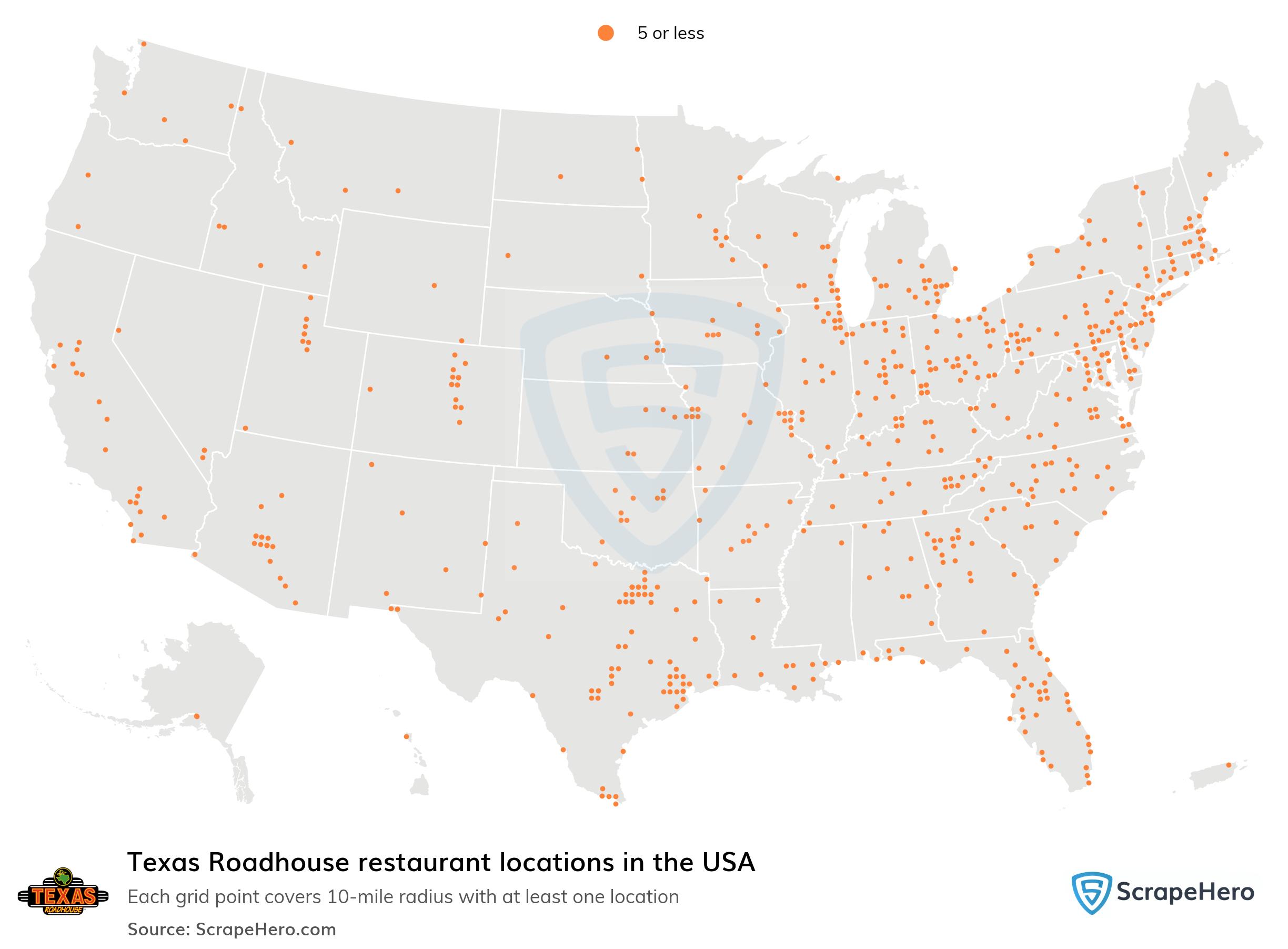
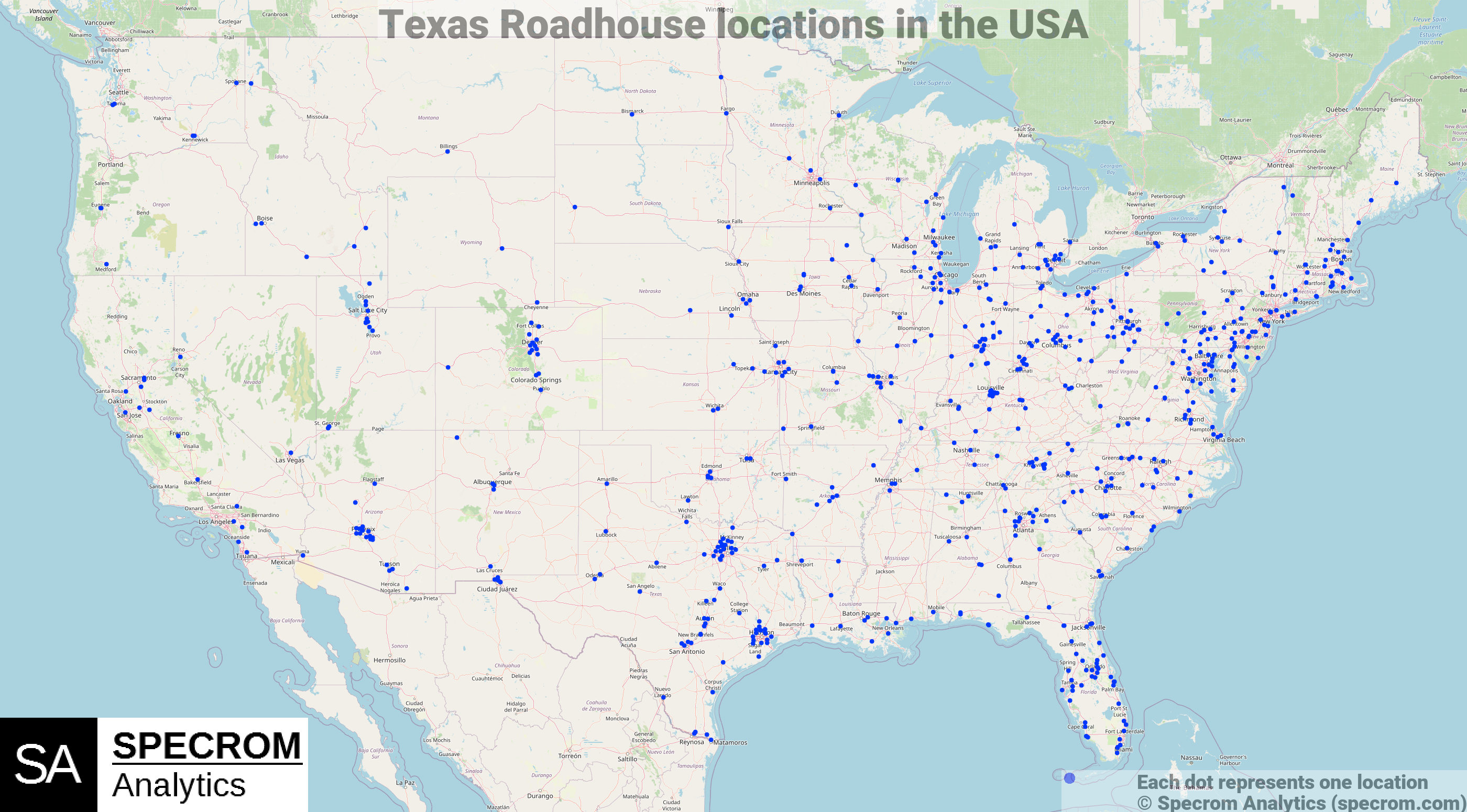
The overwhelming majority of Texas Roadhouse locations are situated within the United States. This domestic dominance signifies a deeply entrenched market presence, strong brand recognition, and established supply chains, all contributing to operational efficiencies and predictable revenue streams. The density of locations within the U.S. also allows for effective regional marketing campaigns and the leveraging of economies of scale in procurement and distribution. This strong domestic base provides a stable financial bedrock for the company.
While the international footprint is smaller, it represents a crucial avenue for future financial growth and market diversification. International expansion, though often more complex due to varying consumer preferences, regulatory environments, and economic conditions, offers significant long-term revenue potential. Each international opening is a strategic investment, testing the brand’s adaptability and scalability beyond its core market. Success abroad can unlock vast new customer bases and revenue streams, reducing reliance on any single geographical market and potentially increasing the company’s overall market capitalization. These ventures are typically undertaken with careful financial planning, assessing market entry costs against projected returns.
Historical Growth Trajectory: A Decade of Expansion
Texas Roadhouse has demonstrated a consistent pattern of year-over-year growth in its store count, a key metric for evaluating the health and ambition of a restaurant chain’s business model. This steady expansion is not accidental; it’s the result of a disciplined site selection process, strong unit economics, and access to capital for investment. The ability to consistently open new, profitable locations signals robust consumer demand, effective operational procedures, and a viable long-term strategy. From an investment standpoint, a company demonstrating consistent growth in its physical assets and associated revenue streams often commands a higher valuation multiple, reflecting investor confidence in its future earnings potential. The growth trajectory underscores the brand’s capacity to identify profitable markets, execute efficient openings, and integrate new units into its operational network, all while maintaining profitability across its expanding portfolio.
The Economics of Expansion: Why More Locations Matter
The decision to open more locations is never taken lightly; it’s a profound economic calculation aimed at maximizing shareholder value. Each new restaurant is a complex investment, requiring careful consideration of market potential, capital expenditure, and projected return on investment. The ‘why’ behind expansion is fundamentally tied to increasing financial performance and solidifying market position.
Revenue Generation and Market Share Capture
The most direct financial benefit of opening new locations is the incremental revenue they generate. Each new Texas Roadhouse location adds to the company’s top-line sales, expanding its customer base and increasing its overall market share within the competitive casual dining sector. This revenue growth is crucial for attracting investors and demonstrating the company’s ability to scale its business model successfully. Furthermore, by expanding into new geographical areas, Texas Roadhouse captures market share that might otherwise go to competitors, consolidating its position as a leading steakhouse concept. This expansion also contributes to overall brand visibility, creating a virtuous cycle where increased presence leads to greater brand recognition, potentially boosting sales at existing locations as well. The aggregate revenue from a growing number of profitable units is a primary driver of the company’s financial success and fuels further investment.
Capital Allocation and Investment Strategy
The continuous growth in location count reflects a robust capital allocation strategy. Texas Roadhouse invests significant capital in building and fitting out new corporate-owned restaurants, and also in supporting its franchise partners. This capital can come from retained earnings, debt financing, or equity issuance, each with its own financial implications. A company’s ability to efficiently allocate capital to projects that yield high returns is a hallmark of strong financial management. For Texas Roadhouse, this means identifying underserved markets, negotiating favorable lease agreements or property purchases, and managing construction costs effectively. The return on investment (ROI) from new units—measured by factors like unit-level profitability, payback period, and cash flow generation—is a key metric scrutinized by investors. A sustained track record of strong unit economics justifies ongoing investment in expansion and underscores the wisdom of the company’s capital deployment strategy.
Mitigating Risk Through Diversified Geographies
While expansion involves inherent risks, strategically diversified growth can also serve as a risk mitigation tool. By spreading its locations across numerous cities, states, and even countries, Texas Roadhouse reduces its reliance on the economic health or specific market conditions of any single region. A downturn in one market might be offset by strong performance in another, leading to more stable overall financial results. This geographical diversification helps insulate the company from localized economic shocks, natural disasters, or shifts in regional consumer preferences. From a financial analyst’s perspective, a diversified asset base generally translates to a more resilient and less volatile investment, making the company more attractive to a broader range of investors.
Franchise vs. Corporate: Financial Models and Their Implications

The mixed ownership model of Texas Roadhouse locations is a deliberate financial strategy, offering distinct advantages and challenges in terms of revenue, control, and capital management. Each approach contributes uniquely to the company’s overarching financial performance and growth trajectory.
Franchise System: Royalty Streams and Brand Leverage
The franchising model is a powerful engine for capital-efficient growth. For Texas Roadhouse, franchised locations generate consistent royalty fees, typically a percentage of gross sales, which flow directly to the company’s income statement as high-margin revenue. These royalty streams represent a relatively stable and predictable source of income, as they are less sensitive to the specific operational costs or labor fluctuations of individual franchisee units. Franchisees bear the majority of the upfront capital costs for construction, equipment, and initial working capital, effectively leveraging external capital for brand expansion. This allows Texas Roadhouse to expand its brand presence rapidly without significant strain on its own balance sheet, enabling greater return on invested capital. Furthermore, franchisees pay marketing fees, contributing to a collective marketing fund that benefits the entire system, further enhancing brand value without direct corporate expenditure.
Corporate-Owned: Direct Control, Higher Capital Outlay
In contrast, corporate-owned restaurants require substantial direct investment from Texas Roadhouse’s capital budget. The company funds the land acquisition or lease, construction, equipment, and initial staffing. This higher capital outlay means a longer payback period for each individual unit. However, the financial upside is also greater: the company retains 100% of the profits generated by these locations after covering operational expenses. This model provides direct control over every aspect of the restaurant’s operations, from menu development and pricing to service standards and employee training. This level of control is crucial for maintaining brand consistency and quality, which are paramount to long-term financial success. Corporate-owned stores also serve as incubators for innovation, allowing the company to test new menu items, operational procedures, or technologies before potentially rolling them out across the entire system. Their direct financial performance significantly impacts the company’s reported earnings.
Balancing Growth and Profitability Across Models
The strategic balance between franchised and corporate-owned locations is a continuous optimization challenge for Texas Roadhouse’s financial team. A high proportion of corporate-owned stores offers greater profit potential per unit but demands more capital and incurs higher operational risk. Conversely, a heavily franchised model provides rapid, capital-light growth and stable royalty income but relinquishes some control over day-to-day operations and a share of the direct profit. Texas Roadhouse’s approach appears to be a calculated blend, allowing it to reap the benefits of both models: leveraging franchisee capital for broad market penetration while maintaining a significant corporate footprint to ensure brand integrity, drive innovation, and capture a larger share of the profits in key strategic markets. This hybrid model contributes to a resilient and adaptable financial structure, capable of sustaining growth while managing risk effectively.
Beyond the Count: Location Strategy as a Financial Indicator
While the raw number of Texas Roadhouse locations provides a snapshot of its scale, a deeper financial analysis requires understanding the strategy behind this expansion. Location strategy is a critical determinant of a company’s long-term profitability, market valuation, and ability to sustain growth in a dynamic industry.
Market Saturation and Future Growth Prospects
A key consideration for investors is the potential for market saturation. As a company expands, the availability of prime locations with sufficient demand to support a new restaurant diminishes. Texas Roadhouse’s ability to continue opening new, profitable locations in existing or new markets indicates that it still sees significant whitespace for growth. Analysts closely watch metrics like average unit volume (AUV) and same-store sales growth, even as the store count increases. If a growing number of locations leads to declining AUV or negative same-store sales, it could signal market saturation or cannibalization, which would be a major red flag for investors. However, if new locations consistently perform well, it suggests robust underlying demand and a continued opportunity for capital deployment with strong returns. The careful selection of sites, based on demographic analysis and competitive landscape assessment, is paramount to ensuring future financial viability.
Operational Synergies and Supply Chain Economics
A large and expanding network of locations creates significant operational synergies and economies of scale. Centralized purchasing for ingredients, supplies, and equipment across hundreds of locations allows Texas Roadhouse to negotiate better pricing with suppliers, thereby reducing its cost of goods sold (COGS) and improving gross profit margins. A dense network also optimizes distribution logistics, making supply chains more efficient and reducing transportation costs. These efficiencies directly impact the company’s profitability and contribute to a stronger competitive advantage. Furthermore, a larger employee base across more locations enables better talent development and retention strategies, as employees have more opportunities for advancement within the company. These operational efficiencies translate directly into financial benefits, strengthening the company’s bottom line and enhancing its ability to withstand economic pressures.
Valuing the Brand: Multiples and Shareholder Returns
The number and quality of locations are integral to how financial markets value Texas Roadhouse. A growing, profitable store count contributes directly to earnings per share (EPS), a fundamental metric for equity investors. It also influences valuation multiples, such as the price-to-earnings (P/E) ratio or enterprise value-to-EBITDA (EV/EBITDA), as investors price in future growth potential. Companies with a strong track record of profitable unit expansion often trade at a premium compared to those with stagnant or declining store counts. Furthermore, the tangible assets represented by each location contribute to the company’s book value and, indirectly, its capacity to generate free cash flow, which can be returned to shareholders through dividends or share buybacks. For long-term investors, the consistent expansion of a profitable restaurant chain like Texas Roadhouse signals a healthy, growing business poised for continued financial success and enhanced shareholder returns.
The Path Ahead: Sustaining Financial Momentum
The future financial success of Texas Roadhouse is inextricably linked to its ability to strategically manage and grow its location portfolio. Sustaining the momentum built over decades requires continuous adaptation, keen market insight, and disciplined financial management.
Strategic Site Selection and Market Research
Future growth will hinge on even more sophisticated strategic site selection. As the number of locations grows, identifying new territories that offer strong demographic fit, favorable real estate costs, and limited direct competition becomes increasingly critical. This involves intensive market research, analyzing population density, income levels, traffic patterns, and local competitive landscapes. For investors, the rigor of this site selection process is a key indicator of future profitability. Poorly chosen locations can drag down average unit volumes, dilute brand value, and negatively impact overall financial performance. Therefore, the continued emphasis on data-driven decisions for new restaurant placements is a financial imperative.
Navigating Economic Headwinds and Opportunities
The restaurant industry is sensitive to economic cycles. Inflationary pressures on food and labor costs, shifts in consumer discretionary spending, and interest rate changes can all impact the profitability of individual locations and the company as a whole. Texas Roadhouse’s extensive network provides a degree of resilience, but navigating future economic headwinds will require astute financial management, including cost control measures, menu pricing strategies, and supply chain optimization. Conversely, economic upturns present opportunities for accelerated expansion and leveraging improved consumer confidence. The financial team’s ability to adapt its growth strategy to prevailing economic conditions will be paramount to sustaining positive returns.
Innovation and Adaptation in a Competitive Landscape
Beyond physical expansion, the financial health of each location depends on the company’s ability to innovate and adapt within a highly competitive dining landscape. This includes continuous menu development, enhancing the customer experience, and integrating technology where it adds value (e.g., online ordering, loyalty programs, operational efficiency tools). While these might seem operational, their financial impact is direct: they drive customer traffic, improve average checks, enhance operational efficiency, and ultimately boost unit-level profitability. For a company like Texas Roadhouse, the investment in these areas ensures that its growing number of locations remain relevant, attractive, and financially productive for years to come, securing its position as a compelling investment opportunity.
aViewFromTheCave is a participant in the Amazon Services LLC Associates Program, an affiliate advertising program designed to provide a means for sites to earn advertising fees by advertising and linking to Amazon.com. Amazon, the Amazon logo, AmazonSupply, and the AmazonSupply logo are trademarks of Amazon.com, Inc. or its affiliates. As an Amazon Associate we earn affiliate commissions from qualifying purchases.