
Costco Wholesale Corporation, a name synonymous with bulk savings and an exclusive shopping experience, stands as a global retail behemoth. Yet, beneath the familiar warehouse facade and the ubiquitous membership card lies a sophisticated corporate structure that often prompts a fundamental question from consumers and aspiring investors alike: “Who truly owns Costco stores?” The answer is not as simple as pointing to a single individual or family. Instead, it delves into the intricate world of public finance, stock markets, and the collective power of millions of investors. Understanding Costco’s ownership structure is crucial for comprehending its financial strategy, operational decisions, and its sustained trajectory as a market leader. It’s a story of shared capital, institutional influence, and the pursuit of shareholder value in the fiercely competitive retail landscape.
Unpacking Costco’s Corporate Ownership Structure
At its core, Costco Wholesale Corporation (NASDAQ: COST) is a publicly traded company. This designation immediately clarifies that ownership is distributed among a vast number of shareholders who have purchased its stock on the open market. Unlike a privately held entity, where ownership might reside with founders or a limited group of private equity investors, a public company’s shares are accessible to anyone willing to invest. This model facilitates massive capital generation, allows for liquidity for original investors, and subjects the company to rigorous regulatory oversight and public scrutiny, all of which are central tenets of modern business finance.
The Publicly Traded Advantage: Democracy in Ownership
The publicly traded model inherently implies a form of “democracy in ownership.” Every share of Costco stock represents a tiny fractional ownership stake in the company. These shares grant their holders certain rights, most notably the right to vote on significant corporate matters—such as electing the board of directors—and the right to receive a share of the company’s profits in the form of dividends. This distributed ownership ensures that while no single entity typically holds absolute control, the collective will of shareholders guides the company’s long-term strategic direction. For a company like Costco, this means balancing the interests of a diverse shareholder base, from large institutional funds to individual retirement savers, all while navigating market demands and competitive pressures. The ability to raise capital through stock issuance allows for expansion, innovation, and weathering economic downturns, a financial resilience often unattainable for private ventures of comparable scale.
Decoding Shareholder Categories: From Institutions to Individuals
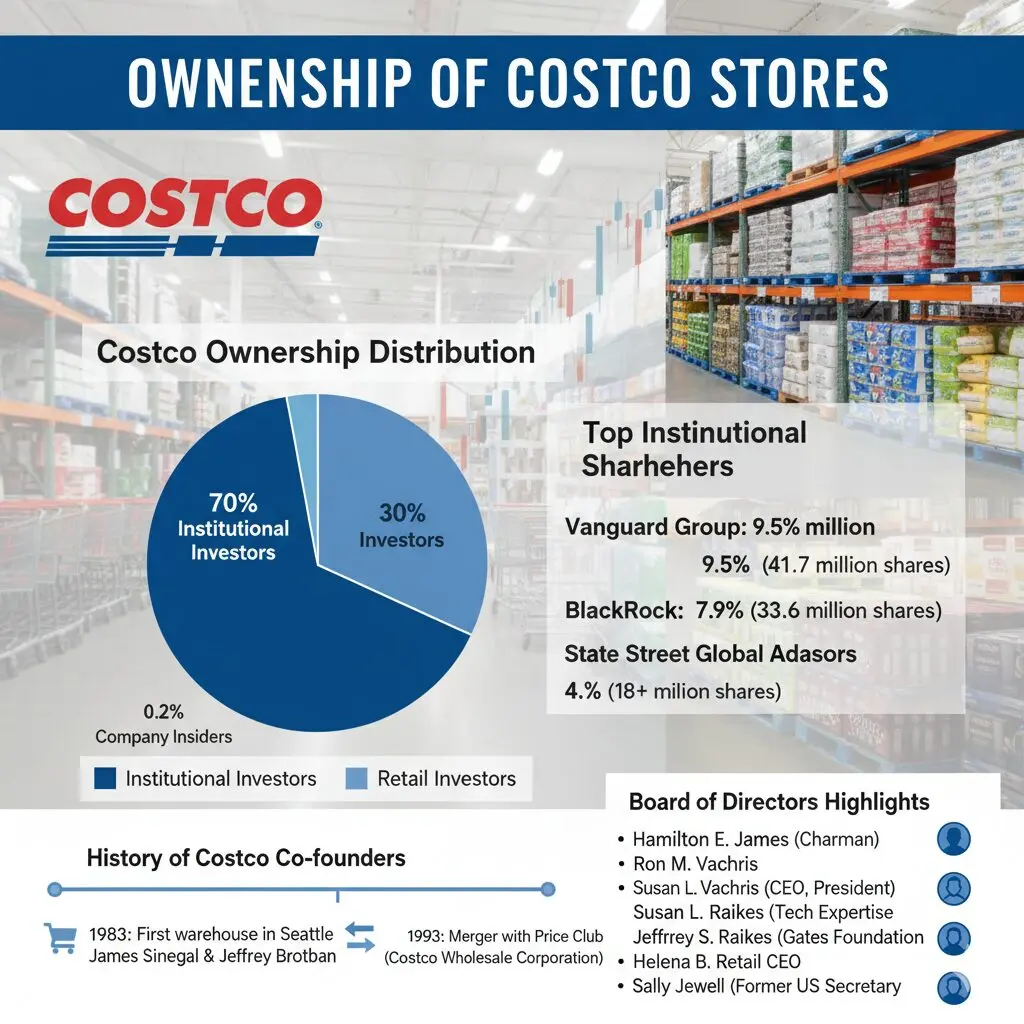
Costco’s ownership is primarily segmented into two broad categories: institutional investors and individual investors. Institutional investors, which often represent the lion’s share of ownership in large public companies, include mutual funds, pension funds, hedge funds, endowments, and other financial organizations. These entities manage vast pools of capital on behalf of their own clients or beneficiaries and invest strategically in companies like Costco to meet their financial objectives. Individual investors, on the other hand, are ordinary people who purchase shares directly, often through brokerage accounts, as part of their personal investment portfolios. While individual stakes are typically smaller, their cumulative holdings can still be substantial. Understanding the balance between these groups offers insight into the company’s stability and its potential susceptibility to market sentiment or activist investor pressures.
The Financial Engines Behind the Retail Giant
The sheer scale of Costco’s market capitalization – often in the hundreds of billions of dollars – necessitates the involvement of significant financial players. These “financial engines” not only provide the capital that fuels Costco’s operations and growth but also exert influence through their collective voting power and their demands for consistent financial performance. For any publicly traded entity, the roster of major shareholders acts as a barometer of institutional confidence and a reflection of the company’s perceived value within the broader financial markets.
Institutional Investors: The Titans of Capital
When one examines the largest owners of Costco stock, institutional investors overwhelmingly dominate the list. Firms like Vanguard Group, BlackRock, State Street Corporation, and Fidelity Investments frequently appear as top shareholders. These investment giants manage trillions of dollars in assets and typically hold shares in hundreds, if not thousands, of companies. Their ownership in Costco isn’t just about passive investment; it represents strategic allocations within diversified portfolios, often mirroring broad market indices or specific investment themes (e.g., consumer staples, value investing). These institutional holders, by virtue of their massive stakes, wield significant voting power, influencing the election of board members and key corporate policy decisions. Their presence provides a degree of stability and long-term focus, as many of these funds are designed for sustained growth rather than short-term speculative gains.
The Power of Retail Investors: A Collective Stake
While institutional investors hold the largest blocks of shares, individual, or “retail,” investors constitute a vital and increasingly influential segment of Costco’s ownership. Millions of ordinary investors, from retirees seeking dividend income to younger individuals building wealth, hold Costco stock directly or through their retirement accounts and brokerage platforms. Though each individual stake might be relatively small, their combined ownership is substantial. The collective action of retail investors can significantly impact stock prices, especially in times of high trading volume or when social sentiment surrounding a company shifts. Furthermore, the long-term commitment of many retail investors, who often buy and hold shares in companies they trust and understand, contributes to market stability and reflects broader public confidence in Costco’s business model and financial health.
The Board, Leadership, and Shareholder Alignment
While shareholders are the ultimate owners, the day-to-day management and strategic direction of Costco are entrusted to its executive leadership team and overseen by its Board of Directors. This crucial interplay between ownership and management is a cornerstone of corporate governance and is designed to ensure that the company operates in the best interests of its shareholders, aiming to maximize long-term value.

Stewardship and Accountability: Managing Shareholder Wealth
The Board of Directors at Costco is elected by its shareholders and holds the primary responsibility for corporate governance. Their role is one of stewardship: they are tasked with overseeing the company’s management, approving major strategic initiatives, ensuring financial integrity, and making decisions that protect and enhance shareholder wealth. The board typically comprises a mix of independent directors (outside experts) and internal directors (current or former executives), bringing diverse perspectives to the table. This structure is designed to foster accountability, ensuring that management’s actions align with the financial objectives of the company’s owners. Regular financial reporting, transparent communication, and adherence to regulatory standards are all mechanisms through which this accountability is maintained.
Executive Compensation and Insider Holdings
Costco’s executive leadership, including its CEO and other top officers, are not only employees but often significant shareholders themselves. Executive compensation packages typically include a mix of base salary, performance-based bonuses, and equity awards (stock options or restricted stock units). This structure is intentionally designed to align the interests of management with those of the broader shareholder base. When executives hold a substantial amount of company stock, their personal financial success becomes directly tied to the company’s stock performance and overall profitability. This “insider holding” motivates leadership to make decisions that drive sustainable growth, efficiency, and ultimately, a higher stock price, thereby benefiting all shareholders. For investors, monitoring insider trading activity can sometimes offer insights into management’s confidence in the company’s future prospects.
Shareholder Value Creation: Costco’s Financial Philosophy
Costco’s success in the retail sector is not merely measured by sales figures or membership growth but, from a financial perspective, by its ability to consistently create value for its shareholders. This involves a strategic approach to capital allocation, profit distribution, and long-term growth initiatives that resonate with the demands of the financial markets. For investors, understanding this philosophy is key to evaluating Costco as a potential investment.
Dividends, Buybacks, and Long-Term Growth Strategies
Creating shareholder value manifests in several ways. One direct method is through dividends, where a portion of the company’s profits is distributed periodically to shareholders. Costco has a history of not only paying regular quarterly dividends but also occasionally issuing special dividends, reflecting strong cash flow and a commitment to returning capital to its owners. Another common strategy is share buybacks (or stock repurchases), where the company buys back its own shares from the open market. This reduces the number of outstanding shares, which can boost earnings per share and, in turn, the stock price. Beyond these direct returns, Costco’s long-term growth strategy—focused on international expansion, e-commerce integration, and optimizing its supply chain—is designed to increase its intrinsic value, leading to sustained appreciation in its stock price over time. These strategies are carefully balanced to ensure immediate returns don’t compromise future growth potential.
The Membership Model: A Unique Driver of Investor Returns
Costco’s distinctive membership-based business model is not just an operational strategy; it is a profound financial advantage that directly contributes to shareholder value. Membership fees provide a highly predictable, high-margin revenue stream that largely insulates the company from the volatility of retail sales. These fees act as a stable profit base, contributing significantly to the company’s bottom line. This predictable revenue stream also allows Costco to operate with thinner merchandise margins, offering competitive prices that attract and retain members, creating a virtuous cycle. For investors, the recurring nature of membership income, coupled with high renewal rates, signals a resilient and financially stable business model, often leading to a premium valuation compared to traditional retailers. This unique financial structure underpins Costco’s ability to consistently generate strong cash flow and, by extension, deliver robust returns to its diverse base of owners.
Investing in Costco: What Potential Shareholders Should Know
For individuals and institutions considering an investment in Costco, understanding its ownership structure is merely the first step. A comprehensive financial analysis involves scrutinizing its performance, market position, and future outlook, all within the context of the broader economic environment. Investing in a company like Costco requires diligence and an appreciation for both its strengths and potential vulnerabilities.
Analyzing Financial Performance and Market Position
Prospective investors will meticulously examine Costco’s financial statements, including its income statement, balance sheet, and cash flow statement. Key metrics such as revenue growth, profit margins, return on equity, and debt levels are critical indicators of financial health. Its market position, including its competitive advantages (e.g., scale, brand loyalty, membership model), market share, and growth opportunities in both domestic and international markets, also weigh heavily in investment decisions. Analysts will compare Costco’s performance against its peers and the broader retail sector to determine its relative strength and future potential. The company’s consistent track record of growth and profitability, even amidst economic challenges, often makes it an attractive proposition for long-term investors seeking stability.

Evaluating Risks and Opportunities for Investment
No investment is without risk. For Costco, potential risks could include increased competition from e-commerce giants and other discount retailers, economic downturns impacting consumer spending, supply chain disruptions, and inflationary pressures. Regulatory changes or shifts in consumer preferences could also pose challenges. Conversely, significant opportunities lie in its continued international expansion, further penetration into e-commerce, and the potential to deepen its relationship with its loyal member base through new services or offerings. Investors must weigh these risks and opportunities carefully, conducting their own due diligence or consulting with financial advisors. Ultimately, investing in Costco means buying into a piece of a well-established, financially robust, and strategically sound business, whose ownership is shared by a vast network of individuals and institutions committed to its sustained success.
aViewFromTheCave is a participant in the Amazon Services LLC Associates Program, an affiliate advertising program designed to provide a means for sites to earn advertising fees by advertising and linking to Amazon.com. Amazon, the Amazon logo, AmazonSupply, and the AmazonSupply logo are trademarks of Amazon.com, Inc. or its affiliates. As an Amazon Associate we earn affiliate commissions from qualifying purchases.