
Social Security serves as a foundational pillar of the American retirement landscape. For many, it represents the difference between a precarious financial future and a stable, dignified retirement. However, the system is governed by a complex web of rules, age requirements, and credit systems that can make determining your exact eligibility feel like a moving target. Understanding when you can claim benefits—and, perhaps more importantly, when you should claim them—is a critical component of modern financial planning.
To navigate this landscape effectively, one must look beyond the simple question of “when” and examine the mathematical implications of timing. Eligibility is not a singular event but a series of windows that open at different stages of your life, each carrying distinct financial consequences for your long-term portfolio.
The Foundation of Eligibility: Understanding Credits and Work History
Before discussing age, we must address the fundamental prerequisite for Social Security: the credit system. You do not become eligible for Social Security simply by reaching a certain age; you must “buy in” through years of covered employment.
How You Earn Social Security Credits
The Social Security Administration (SSA) uses a credit system to determine eligibility for retirement benefits. As of 2024, you earn one credit for every $1,730 in self-employment or wages. Once you have earned $6,920, you have reached the maximum of four credits for the year. This dollar amount is adjusted annually to keep pace with inflation and average wage growth.
It is a common misconception that high earners gain eligibility faster. Regardless of whether you earn $7,000 or $700,000 in a calendar year, you can never earn more than four credits annually. This levels the playing field in terms of basic eligibility, ensuring that the system focuses on the duration of your participation in the workforce rather than just the magnitude of your salary.
The 40-Credit Milestone
To be fully insured and eligible for retirement benefits, most workers need 40 credits. In practical terms, this equates to ten years of work. These years do not need to be consecutive. If you leave the workforce to raise a family or pursue higher education and then return, your previously earned credits remain on your record.
While 40 credits grant you entry into the system, your actual benefit amount is calculated based on your 35 highest-earning years. If you have fewer than 35 years of earnings, the SSA averages in “zeros” for the missing years, which can significantly lower your monthly payout. Therefore, eligibility is the first step, but “work longevity” is the key to maximizing the value of that eligibility.
Deciphering the Age Equation: Early, Full, and Delayed Retirement
Once you have secured your 40 credits, the next phase of eligibility is determined by your chronological age. The SSA recognizes three primary milestones: age 62, your Full Retirement Age (FRA), and age 70.
Claiming Early at Age 62: The Cost of Early Access
Age 62 is the earliest point at which most workers can claim retirement benefits. While the allure of early cash flow is strong, it comes at a permanent financial cost. If you choose to claim at 62, your monthly benefit is reduced by up to 30% compared to what you would have received at your Full Retirement Age.
From a personal finance perspective, claiming at 62 is often viewed as a “liquidity vs. total value” trade-off. If you are in poor health or have an immediate need for capital to cover living expenses, early eligibility is a vital safety net. However, if you have other retirement assets (such as a 401(k) or IRA), it is often mathematically advantageous to draw from those first and allow your Social Security benefit to grow.
Finding Your Full Retirement Age (FRA)
Your Full Retirement Age is the point at which you are eligible to receive 100% of your calculated benefit, known as the Primary Insurance Amount (PIA). For anyone born in 1960 or later, the FRA is 67. For those born earlier, the FRA ranges between 66 and 67, depending on the birth year.
Reaching your FRA is a significant financial milestone because it removes the “Earnings Test” restrictions. Before your FRA, if you earn over a certain threshold while receiving benefits, the SSA will temporarily withhold a portion of your checks. Once you hit your FRA, you can earn an unlimited amount of income without any reduction in your Social Security payments.
The Power of Patience: Delayed Retirement Credits
Eligibility does not end at your FRA. If you choose to delay claiming benefits beyond your Full Retirement Age, the SSA rewards your patience with “Delayed Retirement Credits.” For every year you wait—up to age 70—your benefit increases by approximately 8% in simple interest.
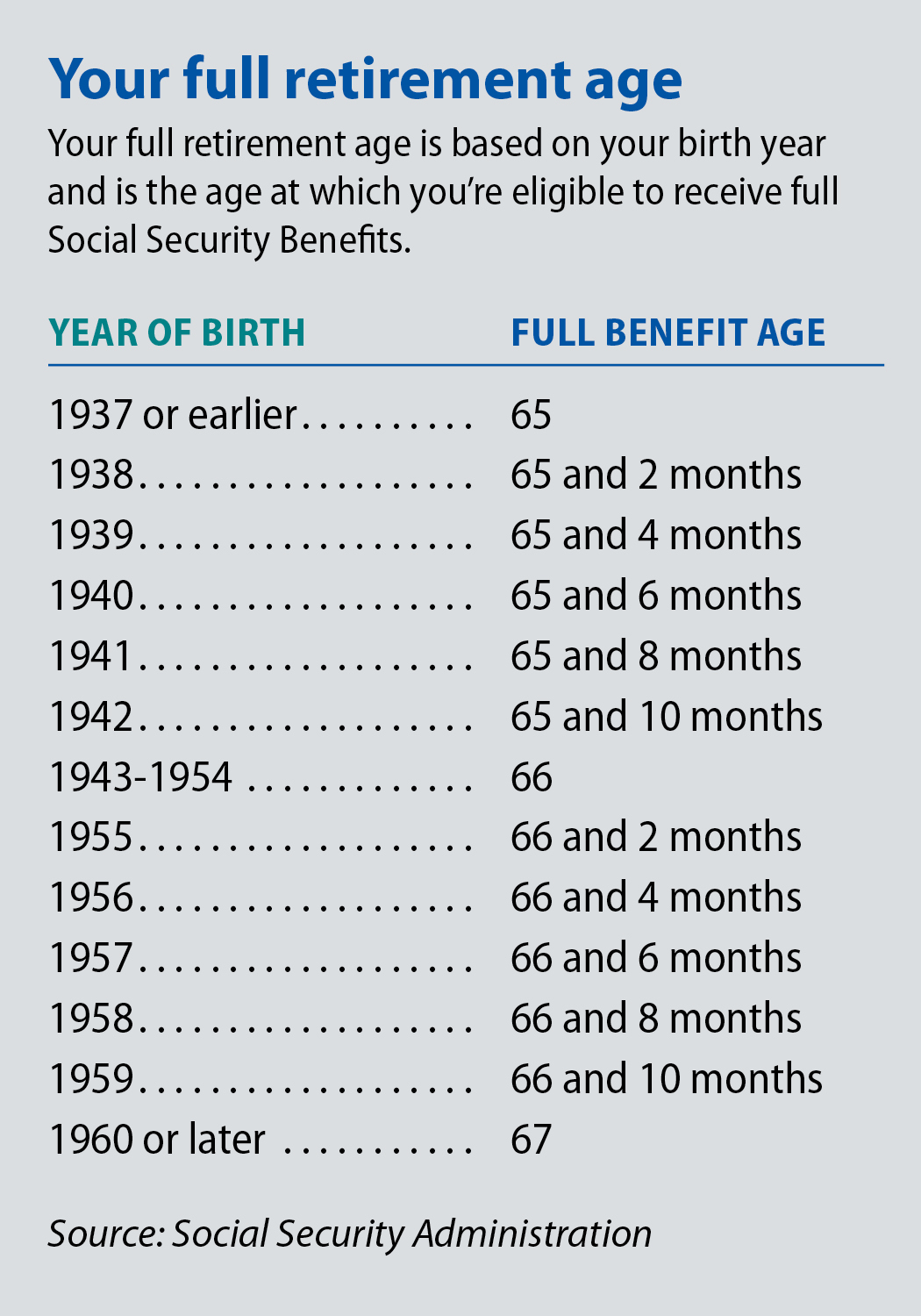
This means that by waiting until age 70, a person with an FRA of 67 could receive 124% of their base benefit. In the world of investing, a guaranteed 8% annual return is virtually unheard of, making the decision to delay one of the most effective “low-risk, high-reward” strategies available to retirees. After age 70, there is no further financial incentive to delay, as credits stop accumulating.
Alternative Paths: Spousal, Divorced, and Survivor Benefits
Social Security eligibility extends beyond your own work record. The system is designed to provide financial security for families, meaning you might be eligible for benefits based on someone else’s earnings history.
Eligibility for Spousal Benefits
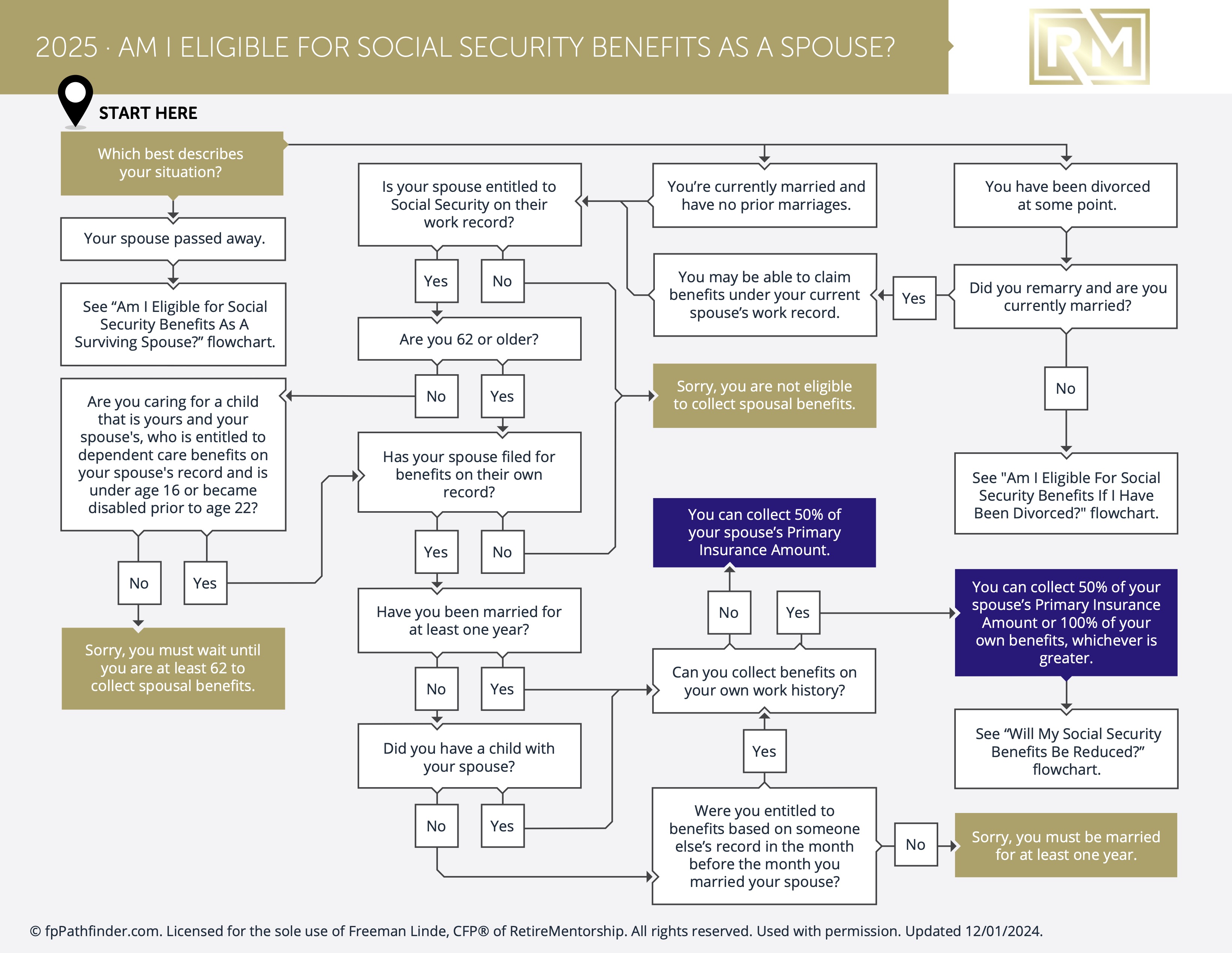
If you are married, you may be eligible for a spousal benefit even if you have never worked a day in your life. A spouse can receive up to 50% of the worker’s Full Retirement Age benefit. To be eligible, the worker must have already filed for their own benefits, and the spouse must generally be at least 62 years old.
Crucially, if you are eligible for both your own benefit and a spousal benefit, the SSA does not “double” your pay. Instead, they pay your own benefit first and then add an amount to bring the total up to the higher spousal rate. This ensures that the household’s total income is optimized based on the higher-earning spouse’s record.
Divorced Spouse Benefits
Many people are unaware that divorce does not necessarily terminate your eligibility for benefits based on an ex-spouse’s record. If your marriage lasted at least ten years and you have been divorced for at least two years, you may be eligible for benefits based on your ex-spouse’s record, provided you are currently unmarried. The best part? Your claim does not affect the benefit amount your ex-spouse (or their current spouse) receives.
Survivor Benefits: Providing for the Future
Survivor benefits are a critical component of life insurance planning within the Social Security framework. Widows and widowers are eligible to receive benefits as early as age 60 (or age 50 if disabled). In this scenario, the survivor is typically eligible for 100% of the deceased spouse’s benefit. This form of eligibility is vital for maintaining the standard of living for the surviving partner, particularly if the deceased was the primary breadwinner.
Strategic Considerations: When Should You Actually Apply?
Determining eligibility is a matter of law, but determining the application date is a matter of strategy. High-net-worth individuals and savvy investors often treat Social Security as a volatile asset that needs to be hedged against inflation and longevity risk.
Assessing Health and Longevity
The “break-even” point—the age at which the total value of higher monthly payments from waiting surpasses the total value of lower payments started earlier—is typically in the late 70s or early 80s. If your family history suggests a long life, waiting until age 70 is almost always the superior financial move. Conversely, if you have chronic health issues, claiming earlier may be the more pragmatic choice to ensure you recoup the “investment” you made into the system over your working life.
The Impact of Continued Employment
If you are still working and have not yet reached your FRA, your eligibility for full checks is limited. In 2024, the SSA deducts $1 from your benefits for every $2 you earn above $22,320. While these “lost” benefits are eventually returned to you in the form of higher monthly checks once you reach FRA, the immediate cash flow reduction can be a shock. If you plan to remain in the workforce, it often makes sense to wait until your FRA to avoid this earnings test altogether.
Tax Implications of Social Security
Eligibility for benefits also brings eligibility for taxation. Depending on your “combined income” (adjusted gross income + tax-exempt interest + half of your Social Security benefits), up to 85% of your Social Security income may be subject to federal income tax. For those with significant distributions from traditional IRAs or 401(k)s, the tax bite can be substantial. Integrating Social Security into a tax-efficient withdrawal strategy is essential for preserving your total wealth.
Next Steps: Auditing Your Retirement Readiness
The journey toward Social Security eligibility should not be a passive wait. It requires active management of your earnings record and a clear-eyed view of your projected income.
How to Check Your Social Security Statement
The most important tool at your disposal is the “my Social Security” account on the SSA website. This digital portal provides a “Social Security Statement” that lists your year-by-year earnings record. It is vital to audit this for errors; if an employer failed to report your income correctly, your future eligibility and benefit amount could be compromised.

Integrating Social Security into Your Portfolio
Social Security should be viewed as the “fixed income” or “bond” portion of your retirement portfolio. Because it is inflation-adjusted via Cost-of-Living Adjustments (COLA) and backed by the federal government, it provides a unique hedge against market volatility. By understanding exactly when you become eligible and how those benefits scale, you can more aggressively manage your other investments, knowing that a guaranteed floor of income awaits you.
Ultimately, eligibility for Social Security is a milestone that marks the transition from wealth accumulation to wealth distribution. By mastering the rules of credits, age requirements, and spousal provisions, you can transform a government program into a powerful tool for financial independence.
aViewFromTheCave is a participant in the Amazon Services LLC Associates Program, an affiliate advertising program designed to provide a means for sites to earn advertising fees by advertising and linking to Amazon.com. Amazon, the Amazon logo, AmazonSupply, and the AmazonSupply logo are trademarks of Amazon.com, Inc. or its affiliates. As an Amazon Associate we earn affiliate commissions from qualifying purchases.