
In the complex world of personal finance, investing, and business operations, the ability to dissect and understand numerical relationships is paramount. While many financial concepts appear sophisticated, their bedrock often lies in fundamental mathematical principles. Among the most crucial of these are fractions, and at the heart of every fraction are two indispensable components: the numerator and the denominator. Far from being mere academic constructs, these elements are the foundational language through which we comprehend everything from budget allocation and investment returns to equity stakes and financial ratios.
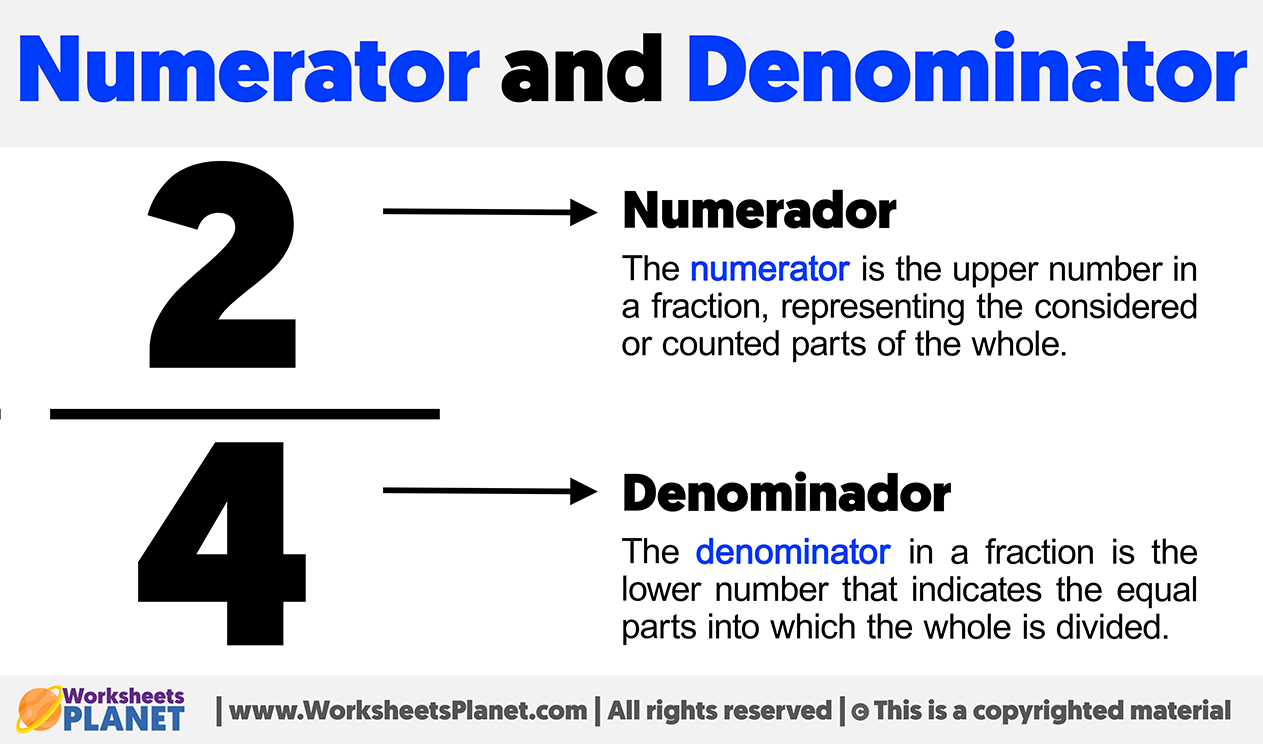
Understanding what the numerator represents—the specific portion or number of units in question—and what the denominator signifies—the total number of equal parts that make up the whole—is not just about basic arithmetic; it’s about gaining clarity over your financial landscape. This deep dive will explore these core concepts, illustrating how a firm grasp of the numerator and denominator empowers individuals and businesses to make informed, strategic financial decisions, manage risk, and identify opportunities in an increasingly data-driven financial environment.
The Pillars of Fractional Finance: Numerator and Denominator Defined
Every fraction tells a story of division, a narrative of parts composing a whole. In finance, this story is particularly vivid, as we constantly deal with distributing resources, measuring portions, and evaluating shares. The numerator and denominator are the key characters in this narrative, each playing a distinct yet interconnected role that is vital for accurate financial comprehension.
Understanding the Numerator: Your Share and Your Claim
The numerator is the top number in a fraction. Conceptually, it represents the specific number of parts we are considering out of the total. In the realm of finance, the numerator often quantifies the portion that is relevant to a particular analysis or decision. It is your specific claim, your allocated portion, or the measured segment of a larger financial entity.
Consider a simple fraction like 1/4. Here, ‘1’ is the numerator. If this represents “1/4 of your monthly income allocated to savings,” the numerator ‘1’ highlights the one specific part of your income that you intend to save. Similarly, if a company has “3/5 of its shares owned by institutional investors,” the ‘3’ is the numerator, indicating the three parts of ownership that belong to this specific group. The numerator is always about the what—what specific quantity or segment are we focusing on?
From budgeting for expenses (e.g., 2/7 of your budget for utilities) to calculating profit shares (e.g., 1/3 of the profit allocated to a partner), the numerator consistently points to the subject of your financial attention. It’s the ‘piece of the pie’ you’re holding, measuring, or analyzing, and understanding its value relative to the whole is the first step toward insightful financial management.
Deciphering the Denominator: The Total Financial Pie
The denominator is the bottom number in a fraction. It represents the total number of equal parts into which the whole has been divided. In financial terms, the denominator defines the ‘whole’ or the ‘total universe’ from which the numerator is drawn. It sets the context, providing the full scope of the financial resource, asset, or liability being discussed.
Returning to our 1/4 example, where ‘4’ is the denominator. If this is “1/4 of your monthly income,” the ‘4’ signifies that your entire monthly income has been conceptually divided into four equal parts. This ‘4’ is the ‘whole pie’ of your income. In the company shares example, “3/5 of shares,” the ‘5’ denotes the total number of equal parts into which the company’s ownership has been divided. This ‘5’ represents the entirety of the company’s shares.
The denominator is crucial because it gives meaning to the numerator. Without knowing the total, the part is ambiguous. If someone tells you they made $50, you might not be impressed. But if they clarify it was “$50 out of a total possible $100 profit” (50/100), you understand it’s half. If it was “$50 out of a total possible $55 profit” (50/55), that’s nearly the whole amount and much more significant. In finance, the denominator defines the total budget, total assets, total market value, or total possible return, providing the critical baseline against which specific financial figures are measured.
Fractions in Personal Finance: Mastering Budgeting and Savings
For individuals, the journey to financial stability and wealth creation is often paved with thoughtful budgeting and consistent saving. Fractions, through their inherent ability to represent parts of a whole, become invaluable tools in this endeavor, offering a clear framework for allocating resources and tracking progress.
Budgeting with Fractional Precision
Budgeting is, at its core, an exercise in fractional allocation. Every dollar earned needs a designation, a purpose. By conceptualizing your income as a ‘whole,’ you can then assign fractions of it to different categories of expenses, savings, and investments. For instance, the popular 50/30/20 rule for budgeting is fundamentally a fractional model: 1/2 (50%) of your after-tax income for needs, 3/10 (30%) for wants, and 1/5 (20%) for savings and debt repayment.
Understanding the numerator (the specific percentage you’re allocating) and the denominator (your total income, represented as 100 parts) allows for precise financial planning. If your monthly income is $4,000, and you allocate 1/2 of it to needs, the numerator ‘1’ refers to $2,000, while the denominator ‘2’ refers to the two halves of your income, totaling $4,000. This clear fractional breakdown ensures that every dollar has a job, preventing overspending in one area and underfunding in another. It brings an undeniable clarity to where your money is going and where it should be.
Calculating Savings and Debt Proportions
Fractions are equally essential when tracking savings goals or managing debt repayment. When you aim to save 1/10 of your monthly income, the numerator ‘1’ dictates the amount to set aside, while the denominator ’10’ reminds you of your total income baseline. Over time, as your savings grow, you can express your progress as a fraction of your ultimate goal. For example, if your goal is $10,000 and you’ve saved $2,500, you’ve achieved 1/4 of your target.
Similarly, managing debt involves understanding what fraction of the total outstanding amount you’ve repaid. If you owe $10,000 and have paid back $2,000, you’ve paid off 1/5 of your debt. This fractional perspective provides a tangible sense of accomplishment and helps visualize the remaining challenge. It simplifies complex financial figures into relatable proportions, fostering better decision-making and motivating progress towards financial freedom.

Fractions in Investing and Business Finance: Strategic Allocations and Performance Metrics
Beyond personal finance, fractions are the bedrock of sophisticated financial analysis in investing and business. They quantify ownership, evaluate returns, and illuminate the health and performance of ventures, enabling strategic decision-making on a grander scale.
Share Ownership and Equity: A Fractional View
In the corporate world, ownership is fundamentally fractional. When you buy shares in a company, you are purchasing a fraction of its total equity. If a company issues 1,000,000 shares, and you own 10,000 of them, your ownership stake is 10,000/1,000,000, which simplifies to 1/100 or 1% of the company. Here, the numerator (10,000) represents your specific claim, and the denominator (1,000,000) denotes the total available ownership.
Understanding these fractional relationships is critical for investors assessing their influence, calculating potential dividends (often distributed per share, i.e., per fraction of ownership), and understanding their proportionate share of profits or assets in case of liquidation. For business owners, knowing the fractional distribution of ownership is crucial for governance, voting rights, and managing stakeholder expectations.
Investment Returns and Portfolio Allocation
Investors constantly deal with fractions, often disguised as percentages. A 5% return on investment is effectively 5/100. If your portfolio has 1/4 in stocks, 1/2 in bonds, and 1/4 in real estate, you’re making fractional allocations based on risk tolerance and financial goals. The numerator dictates the portion dedicated to each asset class, while the denominator (the total portfolio) provides the necessary context for diversification.
Calculating compound interest, understanding dividend yields, or even assessing the performance of a mutual fund against its benchmark often boils down to comparing fractional values. A deeper understanding of numerators and denominators allows investors to critically evaluate return figures, ensuring they comprehend the ‘part’ (the return) in relation to the ‘whole’ (the initial investment or the market benchmark).
Financial Ratios and Performance Analysis
Business finance heavily relies on financial ratios, which are essentially fractions designed to provide insights into a company’s liquidity, profitability, solvency, and efficiency. For example:
- Current Ratio: Current Assets / Current Liabilities. This fraction indicates a company’s ability to meet short-term obligations.
- Debt-to-Equity Ratio: Total Debt / Shareholder Equity. This ratio reveals the proportion of debt used to finance assets relative to the value of shareholders’ equity.
- Profit Margin: Net Profit / Revenue. This fraction shows how much profit a company makes for every dollar of revenue.
In each ratio, the numerator represents a specific financial metric (e.g., current assets, total debt, net profit), while the denominator provides the context (e.g., current liabilities, shareholder equity, total revenue). A clear understanding of what each number signifies (numerator as the ‘focus,’ denominator as the ‘baseline’) is indispensable for interpreting these ratios accurately and making informed business or investment decisions. Misinterpreting these fractions can lead to skewed analyses and potentially disastrous financial outcomes.
Beyond Basic Arithmetic: The Strategic Power of Fractions in Money Management
The foundational understanding of numerators and denominators transcends basic arithmetic; it forms the core of strategic financial thinking. It equips individuals and businesses with the ability to contextualize financial data, make comparisons, and anticipate outcomes, proving invaluable in a dynamic economic landscape.
Percentages and Decimals: Fractional Relatives
Most financial calculations involving percentages and decimals are simply fractions expressed in different forms. A percentage is a fraction where the denominator is always 100 (e.g., 25% = 25/100 = 1/4). A decimal is a fraction where the denominator is a power of 10 (e.g., 0.5 = 5/10 = 1/2; 0.75 = 75/100 = 3/4).
A firm grasp of numerators and denominators simplifies the conversion between these forms, which is essential for various financial tasks: calculating interest rates, understanding discounts, comparing investment returns, or interpreting economic data. If you know that 0.05 is 5/100, or 5%, it immediately becomes clear how a 5% interest rate impacts your loan or savings. This interconnected understanding is a powerful tool for navigating the numerical intricacies of finance.
Avoiding Financial Misinterpretations
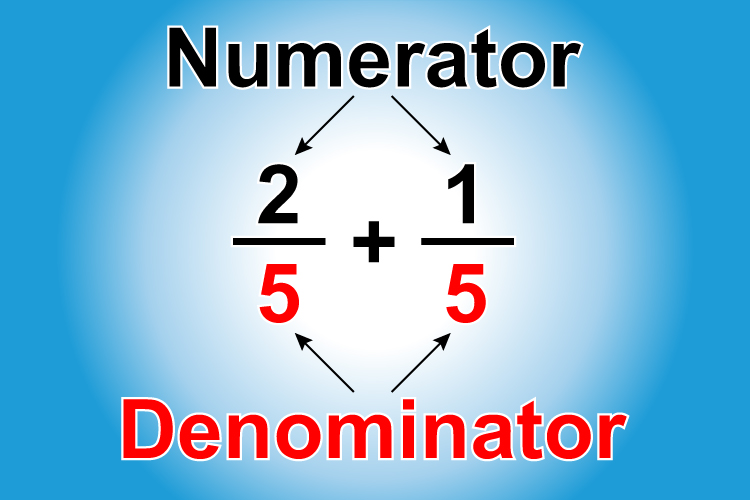
Perhaps one of the greatest powers of truly understanding numerators and denominators is the ability to avoid costly financial misinterpretations. Without this clarity, a single number can be misleading. For instance, knowing a company’s revenue increased by $1 million sounds great, but if that $1 million is a small numerator compared to a huge denominator of total market size or previous revenue, its significance might be minimal. Conversely, $1 million on a small base could be monumental.
Whether it’s evaluating a stock split, comprehending loan interest calculations, or negotiating profit-sharing agreements, a precise understanding of the parts relative to the whole ensures transparency and accuracy. It allows you to question, analyze, and verify financial information with confidence, protecting against potential pitfalls and empowering you to seize genuine opportunities.
In conclusion, the seemingly simple concepts of the numerator and denominator are anything but trivial in the financial world. They are the essential building blocks for understanding every facet of money management, from personal budgeting and savings to complex investment strategies and corporate financial analysis. By mastering these foundational mathematical tools, individuals and businesses unlock a deeper, more intuitive understanding of their financial realities, paving the way for more informed decisions and greater financial success. They provide the fundamental language for translating raw numbers into meaningful insights, transforming financial data into actionable intelligence.
aViewFromTheCave is a participant in the Amazon Services LLC Associates Program, an affiliate advertising program designed to provide a means for sites to earn advertising fees by advertising and linking to Amazon.com. Amazon, the Amazon logo, AmazonSupply, and the AmazonSupply logo are trademarks of Amazon.com, Inc. or its affiliates. As an Amazon Associate we earn affiliate commissions from qualifying purchases.