
For millions of Americans, Social Security represents a cornerstone of their financial security in retirement. Yet, despite its pervasive presence, many individuals find themselves grappling with a fundamental question: “How much will I truly make in Social Security?” This isn’t merely a matter of curiosity; it’s a critical component of retirement planning, influencing everything from when you decide to stop working to how much you need to save independently. Understanding your potential Social Security benefits is the first step toward crafting a robust and realistic retirement strategy.
Social Security benefits are not a one-size-fits-all proposition. They are a complex calculation based on a lifetime of earnings, age of claiming, and even marital status. Dispel any notions of a fixed payout; your individual circumstances will dictate the figures. In this comprehensive guide, we’ll demystify the intricacies of Social Security, exploring the key factors that determine your benefit amount, how to accurately estimate your future income, and strategic approaches to maximize what you receive. By the end, you’ll possess a clearer understanding of this vital program and how to integrate it effectively into your personal finance journey.
Decoding Social Security: The Foundation of Your Retirement Benefits
Before delving into the specifics of “how much,” it’s crucial to understand the fundamental nature of Social Security itself. Often misunderstood, it’s far more than just a government handout; it’s an earned benefit system designed to provide a safety net for retirees, the disabled, and survivors.
What is Social Security?
Established in 1935, Social Security is a federal insurance program that provides benefits to millions of Americans. It’s primarily funded through payroll taxes, known as Federal Insurance Contributions Act (FICA) taxes, which are withheld from most workers’ paychecks. Both employees and employers contribute a percentage of earnings up to a certain annual limit. These taxes are not held in individual accounts but are paid into a trust fund that, in turn, pays out current benefits. This “pay-as-you-go” system ensures a continuous flow of funds, albeit one that faces ongoing demographic challenges. Its primary objective is to offer a baseline income replacement, protecting beneficiaries from poverty in old age, disability, or after the death of a primary earner.
Eligibility Requirements
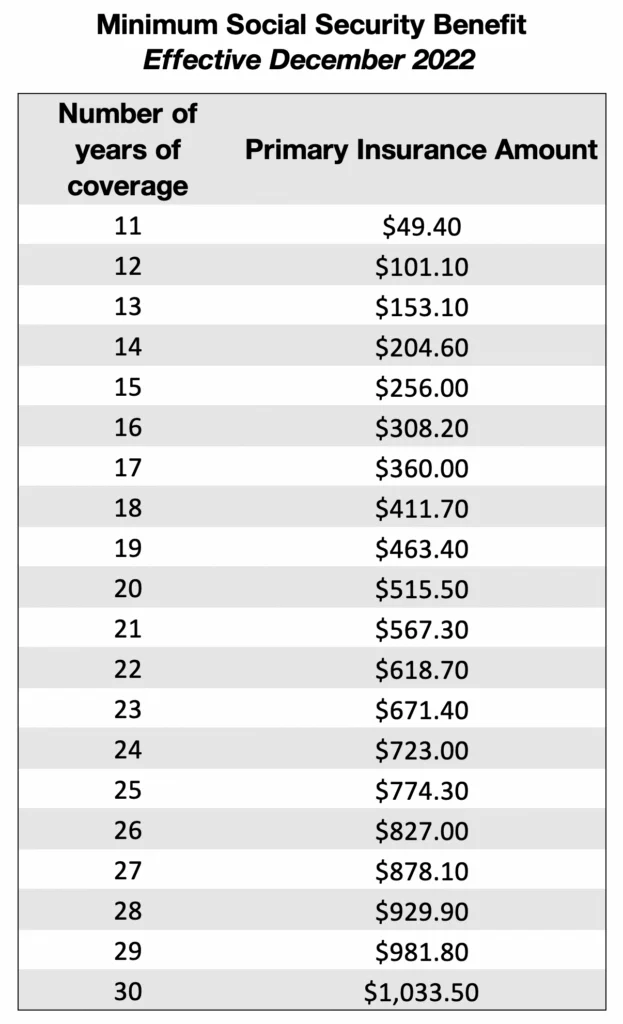
To qualify for Social Security retirement benefits, you generally need to accumulate a certain number of “work credits.” These credits are earned through covered employment – jobs where you pay Social Security taxes. In 2024, you earn one credit for every $1,730 in earnings, up to a maximum of four credits per year. Most people need 40 credits, equivalent to 10 years of work, to be eligible for retirement benefits. Once you’ve earned 40 credits, you are “fully insured” and qualify for benefits based on your earnings record. It’s important to note that these credits only establish eligibility; they do not directly determine your benefit amount, which is a function of your average indexed lifetime earnings.
Key Determinants of Your Social Security Benefit Amount
While eligibility is a simple pass/fail, calculating your actual benefit amount is a more nuanced process. Several critical factors come into play, each significantly impacting the size of your monthly Social Security check.
Your Earnings History: The AIME Calculation
The cornerstone of your Social Security benefit is your earnings history. The Social Security Administration (SSA) calculates your “Average Indexed Monthly Earnings” (AIME) based on your highest 35 years of earnings, adjusted for changes in average wages over time.
Here’s how it generally works:
- Inflation Indexing: Your past earnings are indexed to account for increases in the national average wage level, bringing earlier earnings up to a comparable present-day value. This ensures that the purchasing power of your early career earnings is recognized.
- Top 35 Years: The SSA takes your 35 highest-earning years after indexing. If you have fewer than 35 years of earnings, the remaining years will be counted as zeros, which can significantly lower your AIME.
- Monthly Average: These 35 years of indexed earnings are then summed and divided by 420 (35 years x 12 months) to arrive at your AIME.
A higher AIME directly translates to a higher primary insurance amount (PIA), which is the benefit you would receive if you claim at your full retirement age.
Age of Claiming: Full Retirement Age (FRA) and Beyond
Perhaps the most impactful decision affecting your Social Security benefit is when you choose to start receiving it.
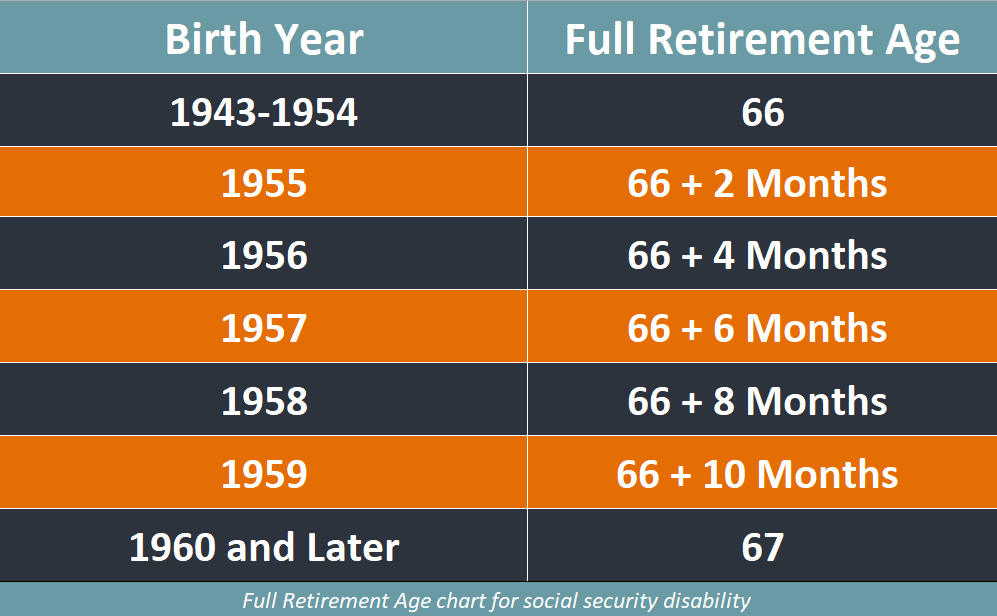
- Full Retirement Age (FRA): This is the age at which you are entitled to 100% of your primary insurance amount (PIA). Your FRA depends on your birth year. For those born in 1960 or later, FRA is 67. For those born between 1943 and 1959, it ranges from 66 to 66 and 10 months.
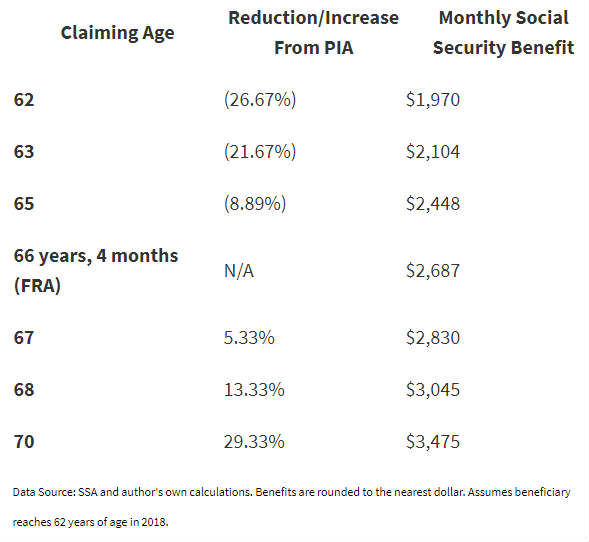
- Claiming Early (as early as age 62): You can begin receiving benefits as early as age 62, but your monthly payment will be permanently reduced. The reduction can be substantial, up to 30% if you claim at 62 with an FRA of 67.
- Delaying Benefits (up to age 70): Conversely, for each year you delay claiming beyond your FRA, your benefit amount increases by a certain percentage, known as “delayed retirement credits.” This increase is 8% per year for those born in 1943 or later. You can continue earning these credits until age 70, at which point your benefit is maximized. Delaying from FRA 67 to age 70 can result in a 24% increase in your monthly benefit.
Spousal and Survivor Benefits
Social Security isn’t just for primary workers. It also provides crucial benefits for spouses, divorced spouses, and survivors of eligible workers.
- Spousal Benefits: If you are married, you may be eligible to receive benefits based on your spouse’s work record. This benefit can be up to 50% of your spouse’s primary insurance amount (PIA). You generally cannot claim spousal benefits until your spouse has started receiving their benefits, or until they reach their FRA, depending on the strategy.
- Divorced Spousal Benefits: If you were married for at least 10 years, are currently unmarried, and are age 62 or older, you may be able to claim benefits on your ex-spouse’s record. The benefit amount is also up to 50% of your ex-spouse’s PIA, and your ex-spouse does not need to be collecting benefits for you to claim, provided you have been divorced for at least two years.
- Survivor Benefits: If your spouse or ex-spouse passes away, you may be eligible for survivor benefits, which can be up to 100% of the deceased worker’s PIA. The specific percentage depends on your age and whether you are caring for the deceased’s children.
Cost-of-Living Adjustments (COLAs)
To help maintain the purchasing power of benefits in the face of inflation, Social Security benefits are typically adjusted each year through a Cost-of-Living Adjustment (COLA). The COLA is determined by the increase in the Consumer Price Index for Urban Wage Earners and Clerical Workers (CPI-W). While not a factor in the initial calculation of your benefit, COLAs ensure that your monthly checks generally keep pace with rising costs over time.
Tools and Strategies for Estimating Your Future Benefits
Given the complexity, how can you get a concrete idea of what your Social Security benefit will look out for you? Fortunately, the SSA provides several invaluable resources, complemented by professional guidance.
Using Your Social Security Statement
Your annual Social Security Statement is arguably the single most important document for understanding your future benefits. The SSA mails these statements to individuals aged 60 and over who are not yet receiving benefits, but everyone can access theirs online.
Your statement provides:
- Estimated Benefits: Projections of your retirement benefits at age 62, your full retirement age, and age 70.
- Earnings Record: A detailed history of your reported earnings throughout your career. It is crucial to review this carefully for any discrepancies, as errors could negatively impact your future benefits.
- Disability and Survivor Benefits: Estimates of benefits for you if you become disabled, and for your family if you pass away.
Accessing your statement regularly through your my Social Security account at ssa.gov allows you to monitor your earnings record and gain a clear picture of your projected benefits.
Online Calculators and Planners
Beyond your official statement, several online tools can help you model different claiming scenarios.
- SSA’s Online Calculators: The SSA website offers various calculators, including a retirement estimator that allows you to input different claiming ages and see the corresponding benefit amounts. This is an excellent tool for “what-if” planning.
- Third-Party Financial Calculators: Many financial planning websites and software programs incorporate Social Security calculators that can be integrated into your broader retirement planning. These often allow for more complex scenarios, such as comparing different claiming strategies for married couples. While useful, always cross-reference their projections with your official SSA statement.
Professional Financial Advice
For those with complex financial situations, unique family dynamics, or simply a desire for tailored guidance, consulting a financial advisor is highly recommended. A Certified Financial Planner (CFP®) or another qualified financial professional specializing in retirement planning can:
- Analyze your specific earnings history and family situation.
- Help you understand the trade-offs of different claiming ages.
- Assist married couples in coordinating their benefits for maximum household income.
- Integrate your Social Security strategy into your overall investment, tax, and estate plans.
Maximizing Your Social Security Benefits
Understanding how benefits are calculated is one thing; strategizing to get the most out of the system is another. There are several proactive steps you can take to potentially increase your lifetime Social Security income.
The Power of Delaying: Waiting Until Age 70
As mentioned, delaying your claim beyond your full retirement age (FRA) is one of the most powerful ways to increase your monthly benefit. For every year you delay, up to age 70, your benefit increases by 8%. This amounts to a significant boost – a 24% increase if you delay from FRA 67 to age 70. This strategy is particularly beneficial for individuals who are in good health, have sufficient other income or savings to cover expenses in their early retirement years, or are the higher-earning spouse in a couple. The guaranteed, inflation-adjusted return from delaying is often superior to what many conservative investments offer.
Working Longer and Earning More
Since your Social Security benefit is based on your highest 35 years of indexed earnings, working longer can have a dual benefit:
- Replace Low-Earning Years: If you have years with low or no earnings in your top 35, continuing to work can replace those zeros or low figures with higher-earning years, thereby increasing your AIME.
- Increase Your Overall Average: Even if you already have 35 years of earnings, continued work at a high salary can displace an earlier, lower-earning year from your calculation, further boosting your average. This strategy is especially effective if your current earnings are significantly higher than those from earlier in your career.
Strategic Spousal Claiming
For married couples, coordinating when each spouse claims benefits can significantly enhance their combined lifetime income. While the “file and suspend” strategy has largely been eliminated for those born after January 1, 1954, other coordination strategies remain:
- Higher Earner Delays: Often, the optimal strategy involves the higher-earning spouse delaying their claim until age 70 to maximize their benefit. This provides the largest possible income stream for the couple and, importantly, the highest survivor benefit for the remaining spouse.
- Lower Earner Claims Early (or at FRA): The lower-earning spouse might claim their benefits earlier, perhaps at age 62 or their FRA, to provide some income while the higher earner’s benefit grows.
- Restricted Application (for those born before 1/2/1954): If you were born before January 2, 1954, you may still have the option to file a “restricted application” at your FRA, claiming only your spousal benefits while allowing your own retirement benefits to continue growing until age 70. This allows for a period of receiving spousal benefits before switching to your maximized personal benefit.
Careful analysis of your joint earnings, age differences, and health statuses is crucial for couples to choose the most advantageous claiming strategy.
Navigating Taxation of Benefits
It’s important to recognize that Social Security benefits are not always tax-free. A portion of your benefits may be subject to federal income tax if your “combined income” exceeds certain thresholds. Combined income is defined as your adjusted gross income (AGI) plus non-taxable interest plus one-half of your Social Security benefits.
- Single Filers: If your combined income is between $25,000 and $34,000, up to 50% of your benefits may be taxable. Above $34,000, up to 85% may be taxable.
- Married Filing Jointly: If your combined income is between $32,000 and $44,000, up to 50% of your benefits may be taxable. Above $44,000, up to 85% may be taxable.
Planning for potential taxation is an integral part of understanding your net Social Security income and your overall retirement tax strategy.
Integrating Social Security into Your Broader Retirement Plan
While Social Security is an invaluable asset, it’s crucial to view it as just one piece of your overall retirement puzzle, not the entire solution. A holistic approach ensures true financial security.
Social Security as One Leg of the Stool
Financial planners often liken retirement income to a three-legged stool, with each leg representing a different source: Social Security, personal savings/investments, and pensions (for those fortunate enough to have them). For most Americans today, the stool relies heavily on Social Security and personal savings. Expecting Social Security alone to fully fund a comfortable retirement is unrealistic, as it’s designed to replace only about 40% of the average worker’s pre-retirement income. It serves as a vital base, but rarely a complete income stream.
Complementary Savings and Investments
This brings us to the importance of robust personal savings and investments. Retirement accounts such as 401(k)s, IRAs (Traditional and Roth), and taxable brokerage accounts are essential complements to Social Security. These funds provide the flexibility and additional income needed to cover discretionary spending, unexpected costs, and a higher quality of life in retirement. The earlier you start saving and investing, and the more consistently you contribute, the more powerful compounding growth becomes.
Healthcare Costs and Medicare
Retirement isn’t just about income; it’s also about expenses, and healthcare is often the largest variable. Medicare, the federal health insurance program for those 65 and older, becomes available around the same time many people consider claiming Social Security. It’s important to understand that Medicare premiums (particularly for Part B and D) are often deducted directly from your Social Security benefit check. Furthermore, Medicare doesn’t cover all healthcare costs, making supplemental insurance (Medigap) or Medicare Advantage plans, along with out-of-pocket expenses, critical considerations in your retirement budget.
Regular Review and Adaptability
Life is dynamic, and so too should be your retirement plan. Your estimated Social Security benefits can change based on future earnings, legislative adjustments, or economic factors. Your personal circumstances – health, marital status, financial goals – will also evolve. It’s imperative to regularly review your Social Security statement, re-evaluate your claiming strategy, and adjust your broader financial plan as needed. A flexible and informed approach will serve you best in navigating the complexities of retirement income planning and ensure that you maximize what you make in Social Security, while securing a comfortable future.
aViewFromTheCave is a participant in the Amazon Services LLC Associates Program, an affiliate advertising program designed to provide a means for sites to earn advertising fees by advertising and linking to Amazon.com. Amazon, the Amazon logo, AmazonSupply, and the AmazonSupply logo are trademarks of Amazon.com, Inc. or its affiliates. As an Amazon Associate we earn affiliate commissions from qualifying purchases.