
Social Security stands as a cornerstone of retirement planning for millions of Americans, providing a vital income stream that can significantly impact financial well-being in later life. Yet, for many, the intricate process by which these benefits are determined remains a mystery. Understanding how your Social Security benefit is calculated is not merely an academic exercise; it’s a crucial step in effective financial planning, allowing individuals to make informed decisions about their retirement age, savings strategies, and overall financial security. This article aims to demystify the complex formulas and factors that converge to establish your monthly Social Security check, offering insights into how your work history translates into future income.

Understanding the Foundation of Social Security Benefits
At its core, Social Security is a social insurance program designed to provide financial protection to retirees, the disabled, and survivors of deceased workers. It’s funded through dedicated payroll taxes paid by workers and their employers, often referred to as FICA taxes. While many perceive it simply as a retirement benefit, its scope is much broader, offering a safety net across various life stages.
What is Social Security?
Established in 1935, the Social Security Act was a landmark piece of legislation designed to provide a minimum level of income to older Americans who could no longer work. Over the decades, it has expanded to include disability benefits and survivor benefits, evolving into a comprehensive system that touches nearly every American family. The system operates on a “pay-as-you-go” basis, meaning today’s workers’ contributions primarily fund today’s beneficiaries. However, a trust fund also exists to help manage surpluses and deficits. For individuals, their future benefits are directly tied to their earnings history, specifically the amount of income on which they paid Social Security taxes.
The Role of Your Earnings Record
Your personal earnings record is the bedrock upon which your Social Security benefit is built. Every year you work and pay FICA taxes, the Social Security Administration (SSA) records your earnings. These annual earnings are crucial because they form the basis of the calculation. The higher your taxed earnings over your career, generally, the higher your potential benefit. It’s important to note that only earnings up to a certain annual limit—the Social Security wage base—are subject to FICA taxes and counted toward your benefit calculation. This limit changes annually and is designed to reflect changes in average wages. Therefore, even if you earn significantly more than the wage base in a given year, only the amount up to that limit will be credited to your Social Security record for that year. Regularly checking your Social Security statement (available online at ssa.gov) is vital to ensure your earnings record is accurate, as errors could negatively impact your future benefits.
The Core Calculation: AIME and PIA
The journey from your cumulative earnings to your monthly benefit involves two key calculations: the Average Indexed Monthly Earnings (AIME) and the Primary Insurance Amount (PIA). These represent the mathematical heart of the Social Security benefit formula.
Average Indexed Monthly Earnings (AIME)
The first significant step is calculating your Average Indexed Monthly Earnings (AIME). The SSA doesn’t simply average your raw earnings over your entire career. Instead, it adjusts your past earnings to account for changes in average wages since the year you earned them. This “indexing” process ensures that benefits reflect the general increase in the standard of living and purchasing power over time.
Here’s a simplified breakdown of the AIME calculation:
- Identify High-Earning Years: The SSA takes your highest 35 years of indexed earnings. If you have fewer than 35 years of earnings, the missing years are counted as zeros, which can significantly reduce your AIME.
- Index Earnings: Earnings from past years are indexed to reflect wage levels in the year you turn 60. For example, if you earned $20,000 in 1985, that amount would be multiplied by an indexing factor to bring it up to its equivalent value in a more recent year. Earnings from age 60 onwards are generally used at their nominal (actual) value, as they are close enough to retirement age not to require significant indexing.
- Sum and Divide: The indexed earnings from your highest 35 years are summed up and then divided by 420 (the number of months in 35 years) to arrive at your Average Indexed Monthly Earnings (AIME).
The AIME is a crucial input because it acts as the “income” figure that is fed into the next stage of the calculation, determining your basic benefit amount.
Primary Insurance Amount (PIA)
Once your AIME is determined, the SSA uses a progressive formula to calculate your Primary Insurance Amount (PIA). The PIA is the monthly benefit you are entitled to receive if you claim benefits at your Full Retirement Age (FRA). The formula is “progressive” because it replaces a higher percentage of earnings for lower-income workers than for higher-income workers, reflecting Social Security’s goal of providing a safety net.
The PIA formula uses three “bend points” that change annually based on the national average wage index. For earnings up to the first bend point, a high percentage is replaced (currently 90%). For earnings between the first and second bend points, a lower percentage is replaced (currently 32%). For earnings above the second bend point, up to the maximum taxable earnings limit, an even lower percentage is replaced (currently 15%).
For instance, for someone becoming eligible in 2024, the PIA formula might look like this (these are illustrative bend points, actual points change annually):
- 90% of the first $1,174 of AIME
- Plus 32% of AIME between $1,174 and $7,078
- Plus 15% of AIME over $7,078
The sum of these three calculations yields your PIA. This progressive structure means that while high earners receive a larger dollar amount in benefits, lower earners replace a greater proportion of their pre-retirement income.
The Benefit Formula’s Bending Points
The bend points are critical elements of the PIA formula. They are specific dollar amounts in the AIME calculation that determine where the different percentage replacement rates apply. As mentioned, these bend points are adjusted annually based on the National Average Wage Index (NAWI) to ensure that the benefit formula keeps pace with general wage growth. This adjustment prevents the benefit formula from becoming outdated and ensures that new retirees receive benefits that reflect contemporary economic conditions, rather than being based on an older, lower wage structure. Understanding how these bend points function highlights Social Security’s progressive nature, where individuals with lower lifetime earnings receive a proportionately higher benefit relative to their contributions.
Factors Influencing Your Final Benefit Amount
While AIME and PIA form the core, several other critical factors can significantly alter the final monthly benefit you receive. These include your claiming age, annual cost-of-living adjustments, and eligibility for spousal or survivor benefits.
The Impact of Claiming Age
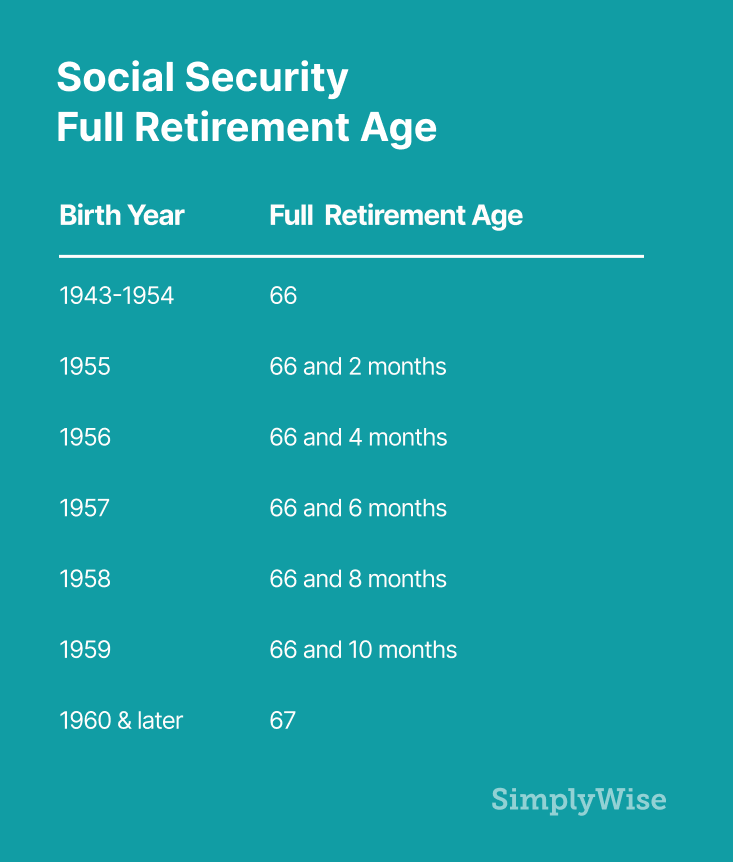
One of the most significant decisions affecting your Social Security benefit is when you choose to start receiving it. You can claim benefits as early as age 62, but this comes with a permanent reduction in your monthly payment. Your Full Retirement Age (FRA), typically between 66 and 67 depending on your birth year, is the age at which you receive 100% of your PIA.
- Early Claiming: If you claim benefits before your FRA, your monthly payment will be reduced. The reduction can be substantial; for someone with an FRA of 67, claiming at age 62 results in a permanent reduction of about 30%. This decision should be carefully weighed against your financial needs, health status, and other retirement income sources.
- Delayed Claiming: Conversely, if you delay claiming benefits beyond your FRA, you can earn Delayed Retirement Credits (DRCs). These credits increase your monthly benefit by a certain percentage for each year you delay, up to age 70. The increase is typically 8% per year. For someone with an FRA of 67, delaying until age 70 can result in a benefit that is 124% higher than their PIA, a significant boost that can be invaluable for longevity planning.
The decision of when to claim is highly personal and should involve a thorough analysis of your expected lifespan, other retirement assets, and family situation.
Cost-of-Living Adjustments (COLAs)
Once you begin receiving Social Security benefits, your monthly payment isn’t static. To help maintain purchasing power against inflation, the SSA applies annual Cost-of-Living Adjustments (COLAs). These adjustments are based on the Consumer Price Index for Urban Wage Earners and Clerical Workers (CPI-W). If the CPI-W increases from the third quarter of the previous year to the third quarter of the current year, a COLA is announced and applied to benefits starting in January of the following year. This mechanism ensures that your fixed income stream from Social Security doesn’t erode too rapidly due to rising prices, providing a degree of financial stability in retirement. While COLAs can vary from year to year, they are a crucial component of the benefit system’s ability to provide ongoing financial security.
Spousal and Survivor Benefits
Social Security extends beyond individual worker benefits, offering crucial protections for families.
- Spousal Benefits: If you are married, you may be eligible to receive benefits based on your spouse’s earnings record, even if you never worked or had low earnings. A spouse can receive up to 50% of the working spouse’s PIA, provided they claim at their own FRA. If claimed earlier, this benefit is also reduced. This can be a vital component of retirement income for couples, especially when there’s a significant earnings disparity.
- Survivor Benefits: Should a working spouse or parent pass away, Social Security provides benefits to eligible survivors, including widows, widowers, and minor children. A surviving spouse can receive up to 100% of the deceased worker’s benefit at their FRA, or a reduced amount if claimed earlier. Children may also be eligible for benefits. These provisions are an essential safety net, offering financial support during difficult times and underscoring the insurance aspect of the Social Security program.
Maximizing Your Social Security and Planning for Retirement
Understanding the calculation methodology is just the first step. The true value lies in using this knowledge to make strategic decisions that can significantly enhance your financial future. Proactive planning is key to optimizing this critical retirement asset.
Estimating Your Future Benefits
The most straightforward way to estimate your future Social Security benefits is through the SSA’s official channels.
- Online Account: Create an account at ssa.gov/myaccount. Here, you can view your complete earnings record, get personalized estimates of your retirement, disability, and survivor benefits at various claiming ages, and access your Social Security statement. This is an invaluable tool for planning.
- Social Security Statement: The SSA periodically mails statements to workers who are not yet receiving benefits, providing a snapshot of their earnings history and estimated future benefits. While the online account provides more up-to-date and interactive information, the mailed statement serves a similar purpose.
- Benefit Calculators: Numerous online calculators, including those offered by the SSA and reputable financial planning sites, allow you to input various scenarios (e.g., different claiming ages, future earnings projections) to see their impact on your benefit.
Regularly reviewing these estimates allows you to track your progress and adjust your retirement strategy as needed.
Strategies for Boosting Your Retirement Income
With a clear understanding of how benefits are calculated, several strategies emerge for potentially increasing your Social Security income:
- Work at Least 35 Years: Since benefits are based on your highest 35 years of indexed earnings, working for at least this many years is crucial. If you work fewer than 35 years, each missing year is counted as a zero, which will significantly lower your AIME and, consequently, your PIA.
- Increase Your Earnings: The higher your earnings (up to the annual wage base), the higher your potential AIME. If you have years with low earnings, finding ways to boost your income in later career stages can replace those lower-earning years with higher ones in your top 35.
- Delay Claiming Benefits: This is arguably the most powerful strategy. As discussed, delaying benefits past your FRA up to age 70 can result in substantial increases due to Delayed Retirement Credits. For many, this offers a guaranteed, inflation-adjusted return on their deferred benefits that is hard to match elsewhere.
- Coordinate with a Spouse: Couples have additional strategies, such as one spouse claiming early while the other delays, or one spouse claiming spousal benefits while deferring their own worker benefits. Navigating these options requires careful analysis, often with the help of a financial advisor.

The Importance of Comprehensive Financial Planning
While Social Security provides a foundation, it is rarely sufficient to fund a comfortable retirement on its own. For most people, it will replace only about 40% of their pre-retirement income, and even less for higher earners. Therefore, understanding your Social Security benefits is just one piece of a broader retirement puzzle.
Integrating your Social Security strategy with other components of your financial plan is essential. This includes:
- Personal Savings: Building a robust retirement nest egg through 401(k)s, IRAs, and other investment accounts.
- Pension Plans: If applicable, understanding how your pension fits into your overall income strategy.
- Healthcare Costs: Planning for significant healthcare expenses, which Social Security does not fully cover (though Medicare is tied to it).
- Tax Planning: Understanding how Social Security benefits are taxed and how this interacts with other income streams.
By taking an active role in understanding “how is the Social Security benefit calculated” and applying that knowledge to your broader financial planning, you can make more informed decisions, optimize your retirement income, and move closer to achieving your financial goals for a secure and comfortable retirement.
aViewFromTheCave is a participant in the Amazon Services LLC Associates Program, an affiliate advertising program designed to provide a means for sites to earn advertising fees by advertising and linking to Amazon.com. Amazon, the Amazon logo, AmazonSupply, and the AmazonSupply logo are trademarks of Amazon.com, Inc. or its affiliates. As an Amazon Associate we earn affiliate commissions from qualifying purchases.