
Social Security is more than just a government program; it’s a foundational pillar of financial security for millions of Americans, providing retirement income, disability support, and survivor benefits. For many, it represents a significant portion of their financial planning, especially as they approach retirement. Yet, despite its widespread impact, the precise methods by which Social Security payments are calculated remain a mystery to many. Understanding this complex formula is not just an academic exercise; it’s a vital step in making informed decisions about your financial future, including when to retire, how to plan for potential disabilities, and how to ensure your loved ones are protected. This guide aims to demystify the calculation process, offering a professional, insightful, and engaging exploration of the factors that determine your Social Security benefits.

The Foundation of Your Future: Understanding Social Security Benefits
Before diving into the intricate calculations, it’s essential to grasp the fundamental nature and purpose of Social Security, as well as who is eligible to receive its varied benefits. This context provides a crucial backdrop for appreciating the mechanics of payment determination.
A Brief History and Purpose of Social Security
Established in 1935 as part of President Franklin D. Roosevelt’s New Deal, Social Security was designed primarily to provide a safety net for workers and their families during economic hardship, particularly in old age. Its inception marked a pivotal shift in government responsibility towards its citizens’ financial well-being. Over the decades, its scope expanded to include disability insurance and survivor benefits, evolving into a comprehensive social insurance program. It operates on a “pay-as-you-go” system, where current workers’ contributions fund the benefits of current retirees and beneficiaries. This intergenerational contract underscores its importance as a collective effort to provide basic financial security. Understanding this history helps underscore why the calculation methods are designed to reflect a lifetime of contributions and to adjust for various life circumstances.
Who is Eligible for Social Security Benefits?
Eligibility for Social Security benefits hinges primarily on your work history and the contributions you’ve made through payroll taxes. As you work and pay Social Security taxes, you earn “credits.” For 2024, you earn one credit for every $1,730 of earnings, up to a maximum of four credits per year. Most people need 40 credits, earned over at least 10 years, to be eligible for retirement benefits. However, eligibility for disability and survivor benefits can sometimes require fewer credits, particularly for younger individuals. For example, younger workers may qualify for disability benefits with fewer credits, provided those credits were earned recently. This credit system ensures that those who have contributed to the system are the ones who ultimately benefit from it, tying the individual’s work effort directly to their future financial security through the program.
Decoding the Calculation: Key Factors and Formulas
The core of Social Security benefit calculation is a multi-step process that takes into account your lifetime earnings, adjusts them for inflation, and applies a specific formula to arrive at your primary benefit amount. This section unravels these critical steps.
Your Earnings History: The Cornerstone of Benefits
The first and arguably most critical component in determining your Social Security benefit is your earnings record. The Social Security Administration (SSA) keeps a meticulous record of all your earnings subject to Social Security taxes throughout your working life. When calculating your retirement benefit, the SSA looks at your entire earnings history, typically selecting your 35 highest-earning years. If you have fewer than 35 years of earnings, the missing years are filled in with zeroes, which can significantly reduce your average earnings and, consequently, your benefit amount. This emphasizes the importance of consistent employment and the impact of periods out of the workforce on your future benefits. It also highlights why monitoring your earnings record, available through your “my Social Security” account, is crucial to ensure accuracy.
Indexing Your Earnings for Inflation
Simply looking at your raw earnings from decades ago wouldn’t be fair, given the impact of inflation. To account for changes in wage levels over time, the SSA “indexes” your past earnings. This process converts your past earnings into today’s dollars, making them comparable to current wage levels. The indexing factor is based on the national average wage index for the year you turn 60. For example, if you earned $10,000 in 1985, that amount might be indexed to a much higher figure in current dollars, reflecting the general increase in wages and prices since then. This adjustment ensures that your benefits accurately reflect the economic value of your work contributions, rather than being diminished by historical inflation. After indexing, these 35 highest earning years are summed up and divided by 420 (the number of months in 35 years) to arrive at your Average Indexed Monthly Earnings (AIME). The AIME is a crucial intermediate step, representing your average monthly earnings over your highest 35 years, adjusted for inflation.
From Indexed Earnings to Primary Insurance Amount (PIA)
The AIME is then used to calculate your Primary Insurance Amount (PIA), which is the monthly benefit you would receive if you start collecting Social Security benefits at your Full Retirement Age (FRA). The PIA calculation uses a progressive benefit formula designed to replace a higher percentage of earnings for lower-income workers compared to higher-income workers. This is achieved through “bend points.”
For individuals becoming eligible for retirement benefits in 2024, the PIA is calculated using the following formula:
- 90% of the first $1,174 of your AIME.
- 32% of your AIME over $1,174 up to $7,078.
- 15% of your AIME over $7,078.
These “bend points” (the $1,174 and $7,078 thresholds for 2024) are adjusted annually for inflation. For instance, someone with a lower AIME would have a larger portion of their earnings replaced at the 90% rate, resulting in a higher replacement ratio. Conversely, someone with a very high AIME would see a significant portion of their earnings fall into the 15% bracket, leading to a lower overall replacement ratio relative to their lifetime earnings. This progressive structure is a fundamental aspect of Social Security, reflecting its goal of providing a safety net for all income levels.
Types of Social Security Benefits and Their Specific Calculations
While the PIA is the foundational amount, the actual benefit you receive can vary significantly based on the type of benefit you’re claiming and the age at which you begin receiving it.
Retirement Benefits: Age and Claiming Strategies
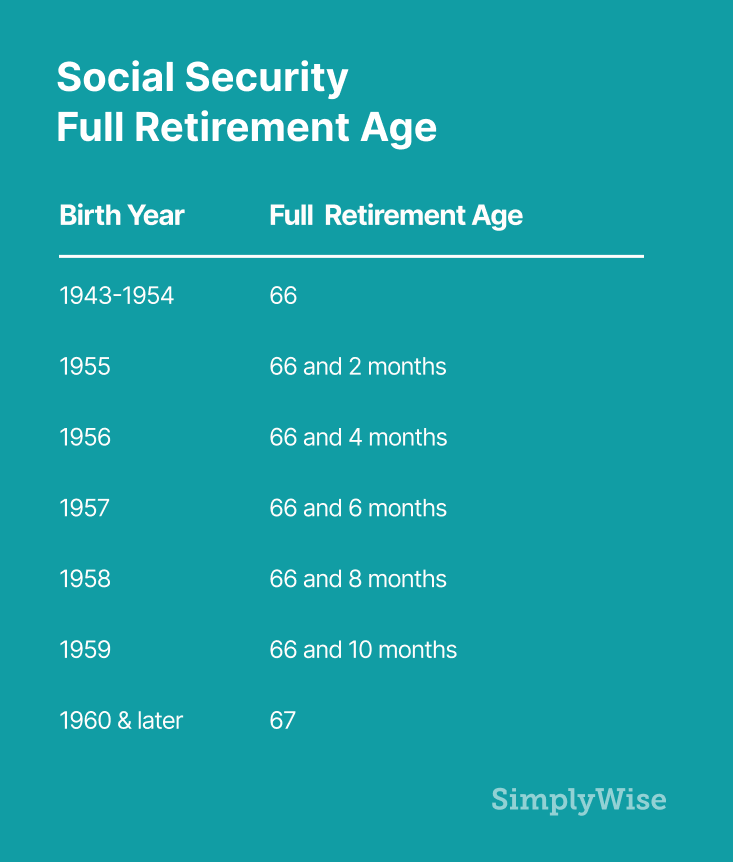
Your Full Retirement Age (FRA) is the age at which you are entitled to 100% of your PIA. The FRA depends on your birth year; for those born in 1960 or later, it is 67.
- Early Retirement (Reduced Benefits): You can start receiving retirement benefits as early as age 62, but your monthly benefit will be permanently reduced. The reduction is approximately 5/9 of 1% for each month before your FRA, up to 36 months, and 5/12 of 1% for each month beyond 36 months. For someone with an FRA of 67, claiming at 62 means a reduction of about 30% of their PIA. This reduction is permanent and aims to balance the longer period over which benefits are received.
- Delayed Retirement (Increased Benefits): Conversely, if you delay claiming benefits past your FRA, up to age 70, you can earn Delayed Retirement Credits (DRCs). These credits permanently increase your monthly benefit by a certain percentage for each month you delay, typically 8% per year (or 2/3 of 1% per month). Claiming at age 70 for someone with an FRA of 67 can result in a benefit that is 24% higher than their PIA. This strategy is often employed by those who are financially able to defer income and wish to maximize their guaranteed lifetime income.
Disability Benefits: How Impairment Affects Payments
Social Security Disability Insurance (SSDI) provides benefits to individuals who are unable to work due to a severe medical condition expected to last at least a year or result in death. The calculation for disability benefits is generally very similar to retirement benefits. If approved, your disability benefit is typically equal to your full Primary Insurance Amount (PIA). The primary difference lies in the earnings history used. For disability benefits, the SSA often uses fewer years of earnings in the AIME calculation, as the disability may occur earlier in a person’s working life. The eligibility criteria also include recent work requirements, meaning you must have worked a certain number of years recently and paid Social Security taxes. This ensures that benefits are tied to recent contributions for those who become disabled before accruing a full working history.
Survivor Benefits: Protecting Your Loved Ones
Survivor benefits provide financial support to the family members of a deceased worker who had earned enough Social Security credits. Eligible family members can include widows, widowers, children, and dependent parents. The amount of survivor benefits is based on the deceased worker’s PIA.
- A widow or widower who has reached full retirement age (or is at least 60) can receive 100% of the deceased worker’s PIA.
- A widow or widower caring for the deceased’s child (under 16 or disabled) can receive 75% of the PIA.
- Children can also receive 75% of the PIA, typically until age 18 (or 19 if still in secondary school) or at any age if disabled before age 22.
There are limits to the total amount of benefits that can be paid to a family on one worker’s record, known as the “family maximum,” which typically ranges from 150% to 180% of the deceased worker’s PIA. This ensures a safety net for families facing the loss of a primary wage earner.
Maximizing Your Benefits and Planning for Retirement
Understanding the calculation methodology empowers you to make strategic decisions that can significantly impact the total benefits you receive over your lifetime.
The Impact of Cost-of-Living Adjustments (COLAs)
Once you start receiving Social Security benefits, your payments are subject to annual Cost-of-Living Adjustments (COLAs). COLAs are designed to ensure that the purchasing power of your benefits is not eroded by inflation. Each year, the Social Security Administration announces a COLA, which is typically based on the Consumer Price Index for Urban Wage Earners and Clerical Workers (CPI-W). For example, if the CPI-W shows a 3% increase, your Social Security benefit will also increase by 3% starting in January of the following year. These adjustments are a critical feature, helping beneficiaries maintain their standard of living throughout retirement, particularly in periods of high inflation.
Understanding Maximum and Minimum Benefits
While there’s no official “minimum” Social Security benefit in the traditional sense, the progressive PIA formula ensures that low-wage earners receive a proportionately higher replacement rate of their earnings. However, there is a maximum benefit amount. For workers retiring at full retirement age in 2024, the maximum monthly benefit is $3,822. This maximum applies to individuals who have consistently earned the maximum taxable earnings ($168,600 in 2024) for at least 35 years. It’s important to understand that even if your earnings exceed the taxable maximum, only earnings up to that limit are considered for benefit calculation and subject to Social Security taxes.
How to Estimate and Monitor Your Social Security
The best way to understand your personal Social Security benefit projection is to use the resources provided by the SSA:
- The Social Security Statement: This annual statement (or available online) provides a detailed summary of your earnings record and estimates of your retirement, disability, and survivor benefits at various ages and scenarios. It’s a critical tool for planning.
- Online Accounts (“my Social Security”): Creating a secure online account at ssa.gov allows you to access your earnings record, get personalized benefit estimates, and review the accuracy of your reported earnings. This is an indispensable tool for proactive financial management.
- Using Online Calculators: The SSA website also offers various retirement and benefit calculators that can help you model different claiming scenarios and understand the impact of working longer or delaying benefits.
Strategic Considerations for Claiming Benefits
The decision of when to claim Social Security is a complex one, influenced by various personal financial factors.
- Health and Longevity: If you expect to live a long life, delaying benefits can significantly increase your total lifetime payout. Conversely, if health issues suggest a shorter lifespan, claiming early might be more advantageous.
- Other Income Sources: Your other retirement savings (401(k), IRA, pensions), investments, and current income will play a role. If you have substantial other income, delaying Social Security might be a viable strategy.
- Spousal Benefits: Married couples often have complex claiming strategies involving one spouse delaying benefits while the other claims, or using “file and suspend” (now mostly phased out) or “restricted application” strategies (also largely phased out for those born after 1953) to maximize combined benefits. Consulting with a financial advisor specializing in Social Security can be invaluable for optimizing these strategies.
Beyond the Basics: Important Considerations and Future Outlook
While understanding the core calculation is vital, broader financial and governmental aspects also influence the real-world impact of your Social Security benefits.
Taxation of Social Security Benefits
It’s a common misconception that Social Security benefits are tax-free. Depending on your “provisional income” (which includes adjusted gross income, tax-exempt interest, and half of your Social Security benefits), a portion of your benefits may be subject to federal income tax. Up to 50% of your benefits may be taxable if your provisional income is between $25,000 and $34,000 for an individual, or $32,000 and $44,000 for a married couple filing jointly. Above these thresholds, up to 85% of your benefits can be taxed. Some states also tax Social Security benefits, so it’s crucial to understand the tax implications relevant to your specific financial situation.
The Future of Social Security
Social Security faces long-term financial challenges, primarily due to demographic shifts, including lower birth rates and increased longevity. While the program is not expected to “run out of money,” projections indicate that the trust funds may be able to pay only a portion of scheduled benefits in the coming decades without legislative changes. Ongoing discussions about solvency often involve potential reforms such as increasing the full retirement age, adjusting the COLA formula, raising the Social Security tax rate, or increasing the earnings cap subject to Social Security taxes. While these are political decisions, being aware of these discussions is important for long-term financial planning and advocacy.
Integrating Social Security into Your Overall Financial Plan
Ultimately, Social Security should be viewed as one component of a holistic financial plan, not the sole source of retirement income. While it provides a guaranteed income stream, it is designed to replace only a portion of your pre-retirement earnings – roughly 40% for the average worker. Therefore, personal savings, investments, and other retirement vehicles remain crucial for achieving a comfortable retirement. Understanding how your benefits are calculated allows you to accurately factor this income stream into your overall financial projections, ensuring you have a realistic picture of your future financial security.

Conclusion
The calculation of Social Security payments, while intricate, is a logical and systematic process designed to provide a tailored benefit based on your lifetime contributions. From the indexing of past earnings to the application of bend points in determining your Primary Insurance Amount, every step serves to create a fair and progressive system. By understanding your earnings history, appreciating the impact of age on claiming strategies, and leveraging the resources available through the Social Security Administration, you can gain clarity on your future financial landscape. Social Security remains an indispensable safety net, and an informed approach to its benefits is a cornerstone of robust personal finance. Take the time to monitor your records, estimate your benefits, and strategically plan your claiming age to maximize this vital component of your financial well-being.
aViewFromTheCave is a participant in the Amazon Services LLC Associates Program, an affiliate advertising program designed to provide a means for sites to earn advertising fees by advertising and linking to Amazon.com. Amazon, the Amazon logo, AmazonSupply, and the AmazonSupply logo are trademarks of Amazon.com, Inc. or its affiliates. As an Amazon Associate we earn affiliate commissions from qualifying purchases.