
Understanding the intricacies of Supplemental Security Income (SSI) payments is crucial for current recipients, potential applicants, and financial advisors alike. Unlike Social Security benefits, which are based on an individual’s work history and contributions to the system, SSI is a needs-based federal program designed to provide financial assistance to eligible elderly, blind, and disabled individuals with limited income and resources. Its calculation methodology is often misunderstood, leading to confusion and, at times, frustration. This article delves into the precise mechanisms that determine how SSI payments are calculated, demystifying the various factors that influence the final benefit amount.
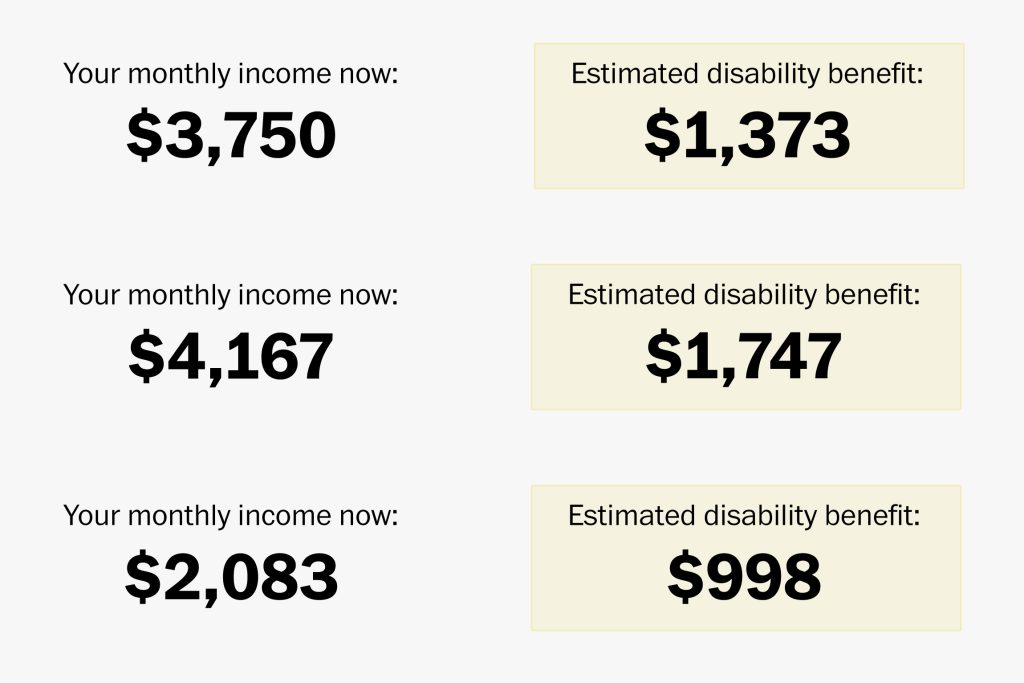
Understanding Supplemental Security Income (SSI): What It Is and Who It Serves
Before dissecting the calculation process, it’s essential to grasp the fundamental nature of SSI itself. This foundational understanding sets the stage for appreciating why certain factors weigh so heavily in the payment determination.
Defining SSI: A Federal Safety Net
Supplemental Security Income (SSI) is a federal income supplement program funded by general tax revenues (not Social Security taxes). It is administered by the Social Security Administration (SSA) but is distinct from Social Security retirement, disability (SSDI), or survivor benefits. Its primary purpose is to provide a minimum level of income to eligible individuals who have little to no other means of financial support. It acts as a critical safety net, ensuring a basic living standard for some of the nation’s most vulnerable populations.
The Target Population: Elderly, Blind, and Disabled Individuals
Eligibility for SSI is narrowly defined and focused on specific demographic groups. To qualify, an individual must be:
- Aged 65 or older: Without meeting disability or blindness criteria.
- Blind: With vision no better than 20/200 in the better eye with the use of a correcting lens, or with a visual field limitation such that the widest diameter of the visual field subtends an angle no greater than 20 degrees.
- Disabled: Unable to engage in any substantial gainful activity (SGA) due to a medically determinable physical or mental impairment that is expected to result in death, or has lasted or is expected to last for a continuous period of not less than 12 months.
Crucially, meeting one of these criteria is only the first step; financial need is paramount.
Key Distinctions: SSI vs. Social Security Disability Insurance (SSDI)
It’s vital to differentiate SSI from Social Security Disability Insurance (SSDI). While both are administered by the SSA and provide benefits to disabled individuals, their underlying principles and eligibility criteria differ significantly:
- SSDI: An entitlement program based on an individual’s work history and contributions to Social Security taxes. It requires a certain number of “work credits.”
- SSI: A welfare-based program based on financial need, regardless of work history. It has strict income and resource limits.
An individual can receive both SSI and SSDI if their SSDI benefit is low enough to allow them to also meet SSI’s income limits. In such cases, the SSDI benefit counts as unearned income for SSI calculation purposes.
The Foundation of SSI Payments: Federal Benefit Rate and Eligibility
The bedrock of any SSI payment calculation begins with the maximum federal benefit rate and the fundamental eligibility criteria related to age, disability, or blindness, combined with financial need.
The Maximum Federal Benefit Rate (FBR)
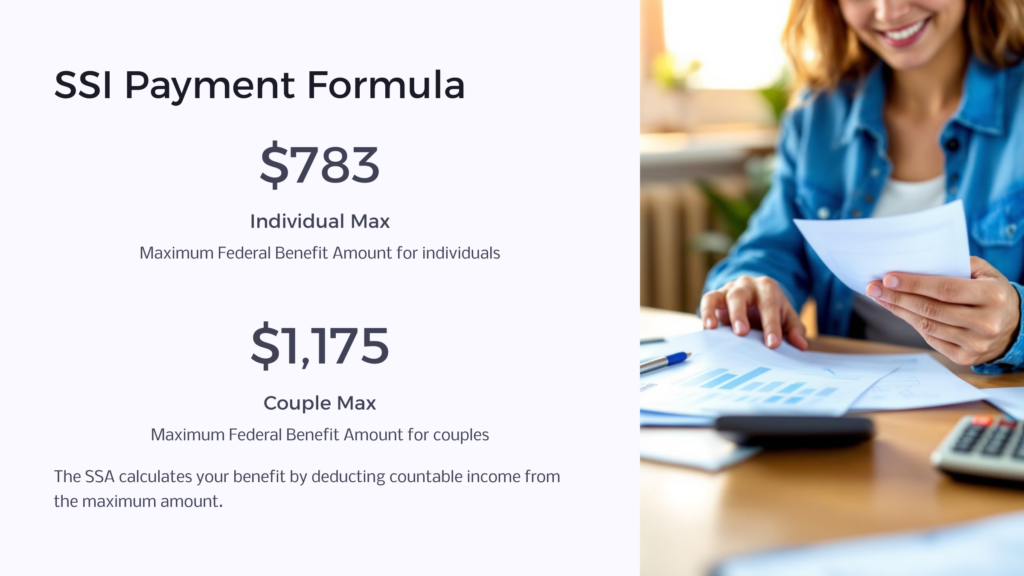
The Federal Benefit Rate (FBR) is the maximum monthly SSI payment an eligible individual can receive if they have no other countable income. This rate is set annually by Congress and typically adjusts with the cost-of-living increases (COLA) that apply to Social Security benefits. For 2024, the FBR is $943 for an eligible individual and $1,415 for an eligible individual with an eligible spouse. This figure represents the absolute ceiling before any income, living arrangements, or state supplements are factored in. It’s the starting point from which deductions are made, rather than an amount that can be exceeded by federal payments.
Core Eligibility Requirements: Age, Disability, Blindness, and Financial Need
As discussed, meeting the age, blindness, or disability definition is non-negotiable. However, the most challenging hurdle for many applicants is demonstrating significant financial need. This is assessed through strict income and resource limits:
- Income Limit: Generally, your countable income must be below the FBR. The definition of “countable income” is complex and will be explored in detail.
- Resource Limit: An individual’s countable resources (assets) must not exceed $2,000, and a couple’s resources must not exceed $3,000. Resources include cash, bank accounts, stocks, bonds, and other liquid assets. Certain assets, such as a primary residence, one vehicle, and household goods, are typically excluded.
Citizenship and Residency Rules
Beyond age, disability, and financial need, applicants must also meet specific citizenship and residency requirements. Generally, SSI is available to U.S. citizens or nationals, and certain categories of non-citizens who are lawfully present in the U.S. and meet other specific conditions. Most non-citizens must also meet the “7-year rule” (meaning they were legally admitted for permanent residence and resided in the U.S. for at least 7 years), though there are exceptions for refugees, asylees, and other specific groups.
Deciphering Income: How Earnings and Resources Impact Your Benefit
The most complex and variable part of the SSI payment calculation involves how different types of income and resources are assessed and counted. This is where the FBR gets reduced to determine the actual payment.
Countable vs. Excluded Income: A Critical Distinction
Not all income is treated equally by the SSA when calculating SSI benefits. The SSA has specific rules for what counts as “countable income” and what is “excluded.” Only countable income reduces your SSI payment.
- Excluded Income Examples: The first $20 of most income received in a month, the first $65 of earned income plus half of the remainder, certain infrequent or irregular income, most food assistance, and some portions of student financial aid.
- Countable Income: This is the income remaining after all exclusions and deductions are applied.
Earned Income: The General Income Exclusion and Earned Income Exclusion
Earned income refers to wages, net earnings from self-employment, and certain other income received from work. The SSA applies specific exclusions to earned income to encourage work:
- General Income Exclusion: The first $20 of most income (earned or unearned) received in a month is excluded. If you have unearned income, this $20 is applied there first.
- Earned Income Exclusion: After the general income exclusion, the first $65 of earned income is excluded.
- Half of Remaining Earned Income Exclusion: After the first $65, one-half of the remaining earned income is excluded.
Example Calculation: If an individual earns $400 in a month and has no other income:
- $400 (Gross Earned Income)
- -$20 (General Income Exclusion) = $380
- -$65 (Earned Income Exclusion) = $315
- -$157.50 (Half of Remaining Earned Income: $315 / 2) = $157.50 (Countable Earned Income)
- Result: $157.50 is the amount subtracted from the FBR. So, $943 (FBR) – $157.50 = $785.50 (SSI Payment).
Unearned Income: Pensions, VA Benefits, and Other Sources
Unearned income includes money received from sources other than work, such as Social Security benefits (like SSDI), pensions, veterans’ benefits, unemployment benefits, interest, dividends, and cash from friends or relatives.
- Calculation: For unearned income, after applying the $20 general income exclusion (if not already used for earned income), nearly all of the remaining unearned income is counted dollar-for-dollar against the FBR.
Example Calculation: If an individual receives a $500 pension and has no earned income:
- $500 (Unearned Income)
- -$20 (General Income Exclusion) = $480 (Countable Unearned Income)
- Result: $480 is the amount subtracted from the FBR. So, $943 (FBR) – $480 = $463 (SSI Payment).
In-Kind Support and Maintenance (ISM): Valuing Non-Cash Support
In-kind support and maintenance (ISM) refers to food or shelter that an individual receives for free or for less than its fair market value. This non-cash support is also considered income and can reduce SSI payments.
- Valuation: The SSA generally values ISM at one-third of the FBR plus $20 (the one-third reduction rule) or by using the Presumed Maximum Value (PMV) rule, which is capped at one-third of the FBR plus $20. This rule applies when someone lives in another person’s household and receives food and shelter from them, or when someone receives food or shelter from someone else while living in their own household.
- Impact: If applicable, this reduction is applied before other countable income is subtracted from the FBR.
Resource Limits: What You Own Matters
As mentioned, an individual’s countable resources must not exceed $2,000 ($3,000 for a couple). Resources are assets that you own and could convert to cash to pay for food or shelter.
- Exclusions: A primary residence, one vehicle (regardless of value if used for transportation for you or a member of your household), household goods and personal effects, and generally, up to $1,500 in burial funds per person are excluded. Life insurance policies with a face value of $1,500 or less are also excluded.
- Impact: If an individual or couple exceeds these resource limits, they are generally ineligible for SSI payments until their resources fall below the threshold. The SSA may also require certain resources to be “disposed of” (sold or spent down) to meet the limits.
Beyond Income: Living Arrangements and Other Factors Affecting Payment
The calculation of SSI payments extends beyond just income and resources, taking into account an individual’s living situation and other unique circumstances.
Impact of Living Alone vs. With Others
An individual’s living arrangements significantly influence their SSI payment. The FBR assumes a standard living arrangement. However:
- Living in another person’s household and receiving support: This triggers the “one-third reduction rule” (or PMV) for In-Kind Support and Maintenance, reducing the FBR by approximately one-third before any other income is subtracted.
- Living in a public institution: If Medicaid pays for more than 50% of the cost of care in a medical treatment facility, the SSI payment is typically reduced to a small personal needs allowance (e.g., $30 per month).
- State supplementary payments: Some states provide an additional payment on top of the federal SSI payment, which can vary based on living arrangements (e.g., living independently, in an adult foster home, or with an essential person).
The Deeming Process: Income and Resources of Spouses and Parents
SSI is a family-based welfare program, meaning the income and resources of certain family members can be “deemed” (counted) as available to the SSI applicant or recipient, even if they don’t directly receive it.
- Spousal Deeming: If an eligible individual has an ineligible spouse, a portion of the spouse’s income and resources may be deemed available, potentially reducing or eliminating the SSI payment.
- Parental Deeming: For eligible children under age 18 who live with their parents, a portion of their parents’ income and resources may be deemed available, affecting the child’s SSI eligibility and payment amount. This is a common reason why children from middle-income families may not qualify for SSI, despite severe disabilities.
- Sponsor Deeming: For certain non-citizens, the income and resources of the person who sponsored them to enter the U.S. can be deemed available for a period, even if they are no longer living together.
State Supplementary Payments: Boosting the Federal Rate
Many states recognize that the federal SSI payment, while helpful, often falls short of covering the actual cost of living. To address this, 43 states and the District of Columbia provide state supplementary payments.
- Variation: These supplements vary widely by state, and often by an individual’s living arrangements within the state. Some states administer their own supplements, while others have the SSA administer them on their behalf.
- Impact: If an individual lives in a state that offers a supplement, their total monthly SSI payment will be the federal FBR minus countable income, plus the applicable state supplement. This is why the maximum benefit can differ significantly from state to state.
Special Circumstances: Medical Treatment and Institutionalization
Specific situations can alter SSI payments. For instance, if a child receives home care under a Medicaid waiver program, a portion of parental income might be excluded. For those institutionalized, the “medical facility payment rate” (currently $30/month) applies if Medicaid covers more than 50% of their care. Other nuanced rules apply to temporary institutionalization or those in correctional facilities.
Navigating the System: Application, Reporting, and Maximizing Your Benefit
The complexity of SSI calculations necessitates careful attention during the application process and ongoing diligence in reporting.
The Application Process: Steps to Take
Applying for SSI is a multi-step process:
- Contact the SSA: You can start an application online, by phone, or in person at a local Social Security office.
- Provide Documentation: Gather essential documents, including proof of age, citizenship, income, resources, and for disability applications, medical records.
- Interview: An SSA representative will conduct an interview to gather detailed information about your financial situation and living arrangements.
- Disability Determination (if applicable): If applying due to disability or blindness, your medical condition will be reviewed by state Disability Determination Services (DDS).
- Wait for a Decision: The process can take several months, especially for disability claims.
The Importance of Accurate and Timely Reporting
Once approved for SSI, recipients have an ongoing responsibility to report changes to the SSA. Failing to report changes accurately and on time can lead to serious consequences, including overpayments that must be repaid.
- What to Report: Changes in income (earned or unearned), resources, living arrangements, marital status, absence from the U.S., correctional facility confinement, or improvements in medical condition must be reported.
- Reporting Methods: Changes can typically be reported online, by phone, mail, or in person.
Understanding Overpayments and Underpayments
- Overpayments: Occur when the SSA pays you more SSI than you were entitled to receive. This often happens due to unreported changes in income or living arrangements. The SSA will typically seek to recover overpayments, which can involve reducing future SSI benefits.
- Underpayments: Occur when the SSA pays you less than you were entitled to. If an underpayment is identified, the SSA will issue the additional funds owed.

Seeking Assistance: Resources and Advocacy
Navigating the SSI system can be challenging. If you are struggling with an application, understanding your benefits, or appealing a decision, consider seeking help:
- Social Security Administration: They are the primary source of information and assistance.
- Legal Aid Societies: Many offer free or low-cost legal assistance for SSI cases.
- Advocacy Groups: Organizations dedicated to disability rights or elder care can provide guidance and support.
- Benefit Specialists: Some social service agencies have specialists who can help with applications and appeals.
In conclusion, the calculation of SSI payments is a nuanced process, heavily influenced by a combination of federal benefit rates, an individual’s countable income (both earned and unearned), their countable resources, and their specific living arrangements. While the core principle is to provide a safety net for those with limited means, the application of various exclusions, deductions, and deeming rules can make the final benefit amount seem complex. By understanding these components, individuals can better anticipate their eligibility and potential payment, ensuring they receive the support they are entitled to.
aViewFromTheCave is a participant in the Amazon Services LLC Associates Program, an affiliate advertising program designed to provide a means for sites to earn advertising fees by advertising and linking to Amazon.com. Amazon, the Amazon logo, AmazonSupply, and the AmazonSupply logo are trademarks of Amazon.com, Inc. or its affiliates. As an Amazon Associate we earn affiliate commissions from qualifying purchases.