
In the intricate world of personal finance, business operations, and investment strategies, understanding percentages is not merely an academic exercise—it is a foundational skill that empowers individuals and organizations to make informed, strategic decisions. From evaluating a sales discount to calculating interest on a loan, assessing investment returns, or understanding tax obligations, percentages are the universal language of financial comparison and change. This article will delve deep into the mechanics of calculating percentages, illustrating their profound importance across various financial contexts and equipping you with the knowledge to navigate your financial landscape with confidence and precision.

The Foundation: Understanding Percentages in Finance
At its core, a percentage is a way of expressing a number as a fraction of 100. The term “percent” literally means “per hundred,” derived from the Latin “per centum.” This simple concept is profoundly powerful because it standardizes comparisons, allowing us to easily evaluate proportions and changes regardless of the absolute values involved.
What Exactly is a Percent?
Imagine you’re dealing with different currencies, varying market sizes, or disparate investment amounts. Comparing raw numbers directly can be misleading. A percentage offers a common benchmark: how much of something do you have if the total were broken down into 100 equal parts? For instance, 50% means 50 out of 100, 25% means 25 out of 100, and so forth. This standardization is why percentages are so vital in finance—they provide a clear, universally understood metric for comparison, whether you’re comparing the interest rate on a savings account from one bank to another, or assessing the quarterly growth of two different companies.
The Universal Formula: Part / Whole x 100
The most fundamental formula for calculating a percentage is elegantly simple:
Percentage = (Part / Whole) x 100
Here, ‘Part’ represents the specific quantity you are interested in, and ‘Whole’ is the total quantity against which the part is being compared. Multiplying by 100 converts the resulting decimal or fraction into a percentage.
Let’s consider a basic financial example. If you spend $30 on groceries from a total budget of $500 for the month, how much of your budget did you spend on groceries?
Part = $30 (spent on groceries)
Whole = $500 (total budget)
Percentage = ($30 / $500) x 100 = 0.06 x 100 = 6%
This tells you that 6% of your monthly budget was allocated to groceries. This simple calculation provides instant insight, allowing for better budgeting and financial planning.
Why Percentage Fluency is Essential for Your Wallet
A strong grasp of percentage calculations is not just a nice-to-have skill; it’s a financial imperative. It allows you to:
- Evaluate Deals: Is that 30% off sale really a good deal given the original price?
- Understand Debts: What is the true cost of borrowing money with a 19.99% Annual Percentage Rate (APR)?
- Assess Investments: How well is your portfolio performing with a 7% annual return?
- Plan for the Future: How much do you need to save to reach a certain percentage of your retirement goal?
- Manage Taxes: What percentage of your income goes to taxes, and how does that affect your take-home pay?
Without this fundamental understanding, individuals often make suboptimal financial decisions, missing opportunities for savings or incurring unnecessary costs due to a lack of clarity.
Everyday Financial Scenarios: Applying Percentage Calculations
Percentages permeate nearly every aspect of our financial lives. Mastering their calculation in these common scenarios can lead to significant financial advantages and greater peace of mind.
Unlocking Savings: Discounts and Sales
One of the most frequent encounters with percentages is during shopping. Sales, promotions, and discounts are ubiquitous. To calculate the final price after a discount:
- Calculate the discount amount: Original Price x Discount Percentage (as a decimal).
- Subtract the discount from the original price: Original Price – Discount Amount.
Example: A jacket costs $150 and is advertised with a 20% discount.
Discount amount = $150 x 0.20 = $30
Final price = $150 – $30 = $120
Alternatively, if you’re getting a 20% discount, you’re paying 80% of the original price. So, $150 x 0.80 = $120. This shortcut is often quicker.
Navigating Debt and Growth: Interest Rates
Interest rates are arguably one of the most critical financial percentages, impacting everything from the cost of loans to the growth of savings and investments.
- Simple Interest: Calculated only on the principal amount.
Formula: Interest = Principal x Rate x Time
Example: A $1,000 loan at 5% simple interest for 1 year accrues $1,000 x 0.05 x 1 = $50 in interest. - Compound Interest: The interest is calculated on the initial principal and also on the accumulated interest of previous periods. This is often called “interest on interest” and is a powerful force for both debt accumulation (like credit cards) and wealth growth (like retirement savings). Most financial products use compound interest. Understanding its exponential growth is key to smart financial planning. The formula for compound interest is more complex, often requiring financial calculators or spreadsheets for multi-period calculations, but the underlying principle is a percentage applied iteratively.
Understanding Your Obligations: Taxes and Tips
- Sales Tax: Added to the price of goods and services. If an item costs $50 and the sales tax is 8%, the tax amount is $50 x 0.08 = $4. The total cost is $50 + $4 = $54.
- Income Tax: A percentage of your income paid to the government. Different income brackets may have different percentage rates (marginal tax rates). Understanding how these percentages apply to your gross income is crucial for budgeting and tax planning.
- Tipping: Common in service industries. A 15-20% tip is standard. For a $75 restaurant bill, a 18% tip would be $75 x 0.18 = $13.50.
Measuring Performance: Financial Gains and Losses
For investors and business owners, percentages are indispensable for tracking performance.
- Investment Returns: If you invested $10,000 and it grew to $11,500, your percentage gain is (($11,500 – $10,000) / $10,000) x 100 = 15%.
- Profit Margins: Businesses calculate gross profit margin ((Revenue – Cost of Goods Sold) / Revenue x 100) and net profit margin (Net Income / Revenue x 100) to gauge efficiency and profitability.
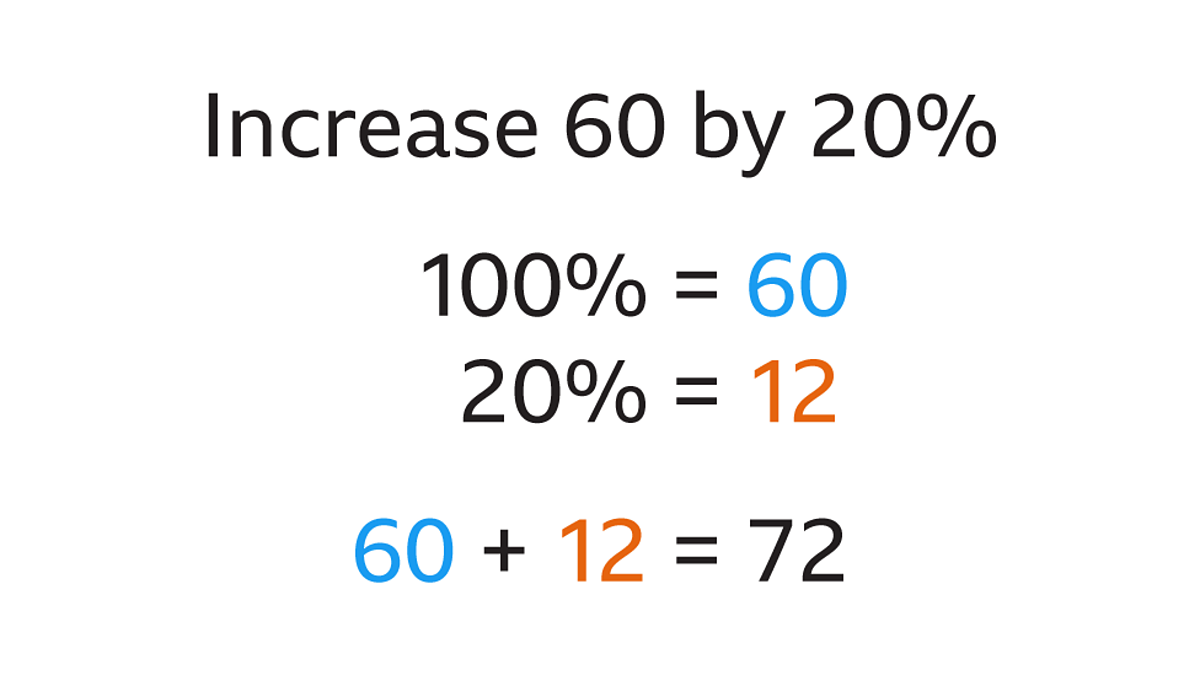
- Salary Increases: A 3% raise on a $60,000 salary means an additional $60,000 x 0.03 = $1,800 per year.
Beyond Basic Calculation: Advanced Applications and Considerations
While the basic percentage formula covers many scenarios, finance often requires a deeper understanding of how percentages interact and transform.
The Art of Reverse Percentage Calculations
Sometimes you know the final amount after a percentage change and need to find the original amount.
Example 1: Finding the Original Price Before a Discount.
A jacket is on sale for $120 after a 20% discount. What was its original price?
If it was discounted by 20%, the current price represents 100% – 20% = 80% of the original price.
Original Price = Current Price / (1 – Discount Percentage as a decimal)
Original Price = $120 / 0.80 = $150.
Example 2: Finding Pre-Tax Income.
If your take-home pay is $3,500 and 15% was deducted for taxes and other withholdings, what was your gross income?
Your take-home pay is 100% – 15% = 85% of your gross income.
Gross Income = Take-Home Pay / (1 – Deduction Percentage as a decimal)
Gross Income = $3,500 / 0.85 = $4,117.65 (approximately).
Percentage Change: Tracking Financial Evolution
Percentage change measures the relative difference between an old value and a new value. This is critical for assessing growth, inflation, market volatility, or budget deviations.
Formula: Percentage Change = ((New Value – Old Value) / Old Value) x 100
If the result is positive, it’s a percentage increase; if negative, it’s a percentage decrease.
Example: Your stock portfolio was worth $50,000 at the start of the year and $53,000 at the end.
Percentage Change = (($53,000 – $50,000) / $50,000) x 100 = ($3,000 / $50,000) x 100 = 0.06 x 100 = 6% increase.
Compound Interest: The Eighth Wonder of the World
Albert Einstein is often attributed with calling compound interest the “eighth wonder of the world,” and for good reason. For long-term savings and investments, even small percentage rates can lead to substantial growth over time due to the compounding effect. Conversely, high-interest debt, such as credit card balances, can spiral out of control if only minimum payments are made, as interest is continually calculated on the growing principal and accrued interest. Understanding its power underscores the importance of saving early and managing debt proactively. Financial planning tools heavily rely on calculating compound interest over various periods to project future wealth or debt burdens.
Tools and Strategies for Mastering Percentage Math
While the formulas are straightforward, real-world financial scenarios can become complex. Fortunately, various tools and strategies can simplify these calculations.
Leveraging Financial Calculators and Spreadsheets
For complex calculations involving compound interest, multiple variables, or large datasets, financial calculators and spreadsheet software (like Microsoft Excel or Google Sheets) are invaluable.
- Financial Calculators: Many handheld calculators have dedicated percentage functions, simplifying calculations for discounts, markups, and tax. Specialized financial calculators can handle time value of money (TVM) calculations, essential for investments and loans.
- Spreadsheets: Offer unparalleled power for financial analysis. Functions like
=(A2/B2)*100for basic percentages, or built-in functions for calculating interest (e.g.,FVfor Future Value,PMTfor loan payments) make complex financial modeling accessible. Learning basic spreadsheet skills can dramatically enhance your financial analysis capabilities.
Mental Math Shortcuts for Quick Estimates
While precision is paramount for financial planning, quick mental estimates can be incredibly useful for everyday decisions, like figuring out a tip or a discount on the fly.
- 10% Rule: To find 10% of a number, simply move the decimal point one place to the left (e.g., 10% of $75 is $7.50).
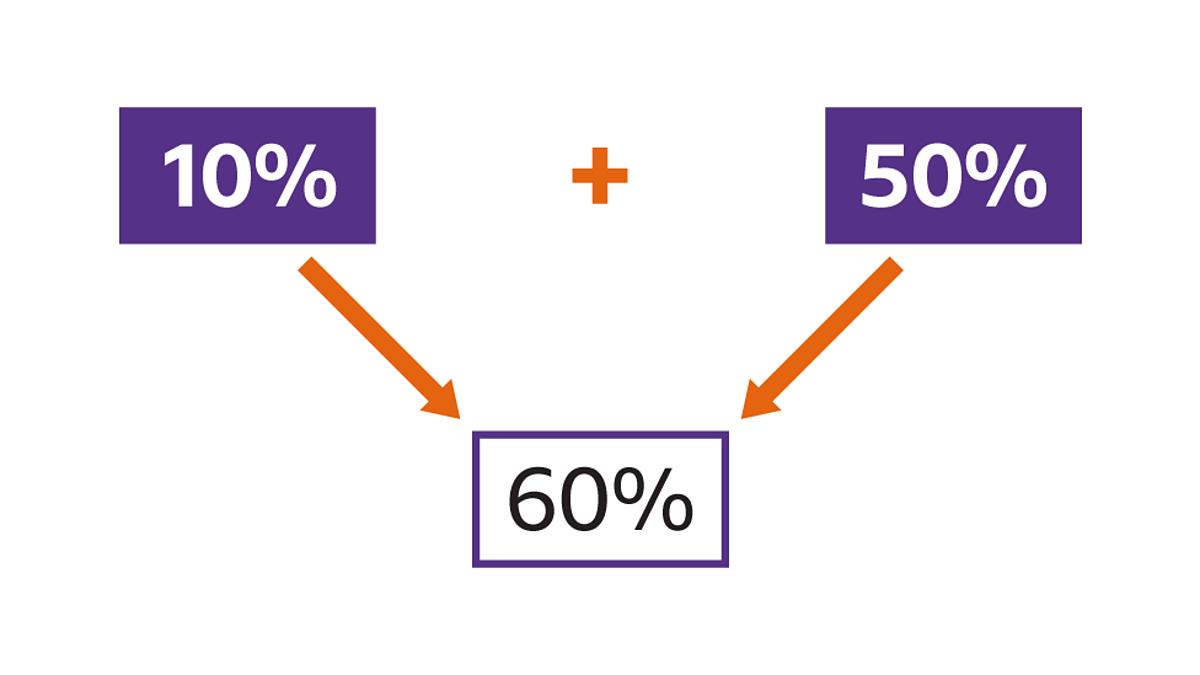
- Combine and Adjust: For 20%, double the 10% amount ($7.50 x 2 = $15). For 5%, halve the 10% amount ($7.50 / 2 = $3.75). For 15%, add 10% and 5% ($7.50 + $3.75 = $11.25).
- Rounding: Round numbers to make mental math easier. If a shirt is $47.99 and 25% off, round it to $48. 25% is one-quarter, so $48 / 4 = $12 discount.
Avoiding Common Percentage Pitfalls
Even seasoned professionals can fall victim to common percentage errors.
- The Base Error: Always be clear about what the “whole” or “base” is for your percentage calculation. For example, if a stock drops 10% then rises 10%, it does not return to its original value. If it starts at $100, drops to $90 (10% of $100), then rises 10% of $90 (which is $9), it ends up at $99. The base changed.
- Averages of Percentages: Averaging percentages directly can be misleading if the underlying bases are different. Always go back to the original values.
- Misinterpreting “Percentage Points”: A change from 5% to 7% is a 2 percentage point increase, but a ((7-5)/5) * 100 = 40% relative increase. These are different and often confused in financial news.
Conclusion: Empowering Your Financial Future with Percentage Mastery
The ability to calculate percentages is more than just a mathematical skill; it’s a fundamental pillar of financial literacy. From the smallest daily purchases to major life investments, percentages provide the context and clarity needed to make sound decisions. By understanding what a percentage represents, mastering the core calculation formula, and recognizing its diverse applications in discounts, interest, taxes, and financial performance, you equip yourself with an invaluable tool.
Whether you’re leveraging mental math shortcuts for quick estimates or employing advanced spreadsheet functions for detailed financial planning, developing your percentage fluency will undoubtedly lead to greater financial control and confidence. Embrace this essential skill, and empower yourself to navigate the complexities of money with insight, precision, and a clear path toward your financial goals.
aViewFromTheCave is a participant in the Amazon Services LLC Associates Program, an affiliate advertising program designed to provide a means for sites to earn advertising fees by advertising and linking to Amazon.com. Amazon, the Amazon logo, AmazonSupply, and the AmazonSupply logo are trademarks of Amazon.com, Inc. or its affiliates. As an Amazon Associate we earn affiliate commissions from qualifying purchases.