
In the intricate world of personal finance and business, few concepts are as pervasive and critical as the percentage. From the daily decisions of shopping and budgeting to the long-term strategies of investing and debt management, understanding “how to find the percent” is not just a mathematical exercise; it’s a fundamental pillar of financial literacy. Percentages offer a universal language to compare, evaluate, and forecast, enabling individuals and organizations to make informed decisions that impact their monetary well-being. This article delves into the core mechanics of percentage calculation, its myriad applications within the financial realm, and the tools that empower you to wield this crucial skill effectively.
The Ubiquity of Percentages in Finance
Percentages are the silent architects behind many of the financial interactions we encounter daily. They quantify change, proportion, and rates, providing a standardized way to interpret financial data regardless of the absolute numbers involved. Without a solid grasp of percentage calculations, navigating the complexities of modern finance can feel like deciphering a foreign language, leading to missed opportunities or costly misunderstandings.
Why Every Dollar Has a Percentage Attached
Consider your income. A certain percentage goes to taxes, another to savings, and the rest to various expenses. When you take out a loan, the cost of borrowing is expressed as an interest rate – a percentage. If you invest, your gains or losses are typically reported as a percentage return. Even seemingly simple transactions like a discount at a store or sales tax added to a purchase rely on percentage calculations. These ubiquitous applications underscore why mastering this skill is not merely academic but profoundly practical for anyone managing money.
From Discounts to Dividends
The scope of percentages in finance is vast. On one end, they dictate the immediate impact of a sale (“20% off!”) or the extra cost of an impulse buy (“7% sales tax”). On the other, they shape the trajectory of your wealth over decades, influencing the growth of your investments through compound interest or the erosion of your purchasing power due to inflation. Understanding how these percentages are derived and what they truly signify empowers you to make smarter choices, whether you’re saving for a down payment, planning for retirement, or evaluating a business opportunity.
Deconstructing the Percent: The Core Formula and Beyond
At its heart, a percentage represents a portion of a whole expressed as a number out of 100. The word “percent” literally means “per one hundred.” This foundational understanding is key to unlocking all other percentage-related calculations.
The Fundamental Equation: Part / Whole * 100
The most basic way to find a percentage is to divide the “part” by the “whole” and then multiply the result by 100.
Formula: Percentage = (Part / Whole) * 100
Let’s illustrate with a simple example: If you earned $20,000 in profit from a $100,000 investment, what percentage is your profit?
Percentage = ($20,000 / $100,000) * 100 = 0.2 * 100 = 20%
This formula serves as the bedrock for understanding many financial metrics. Whether you’re determining what percentage of your income goes to housing or calculating the profit margin on a product, this basic structure remains consistent.
Understanding Percentage Increase and Decrease
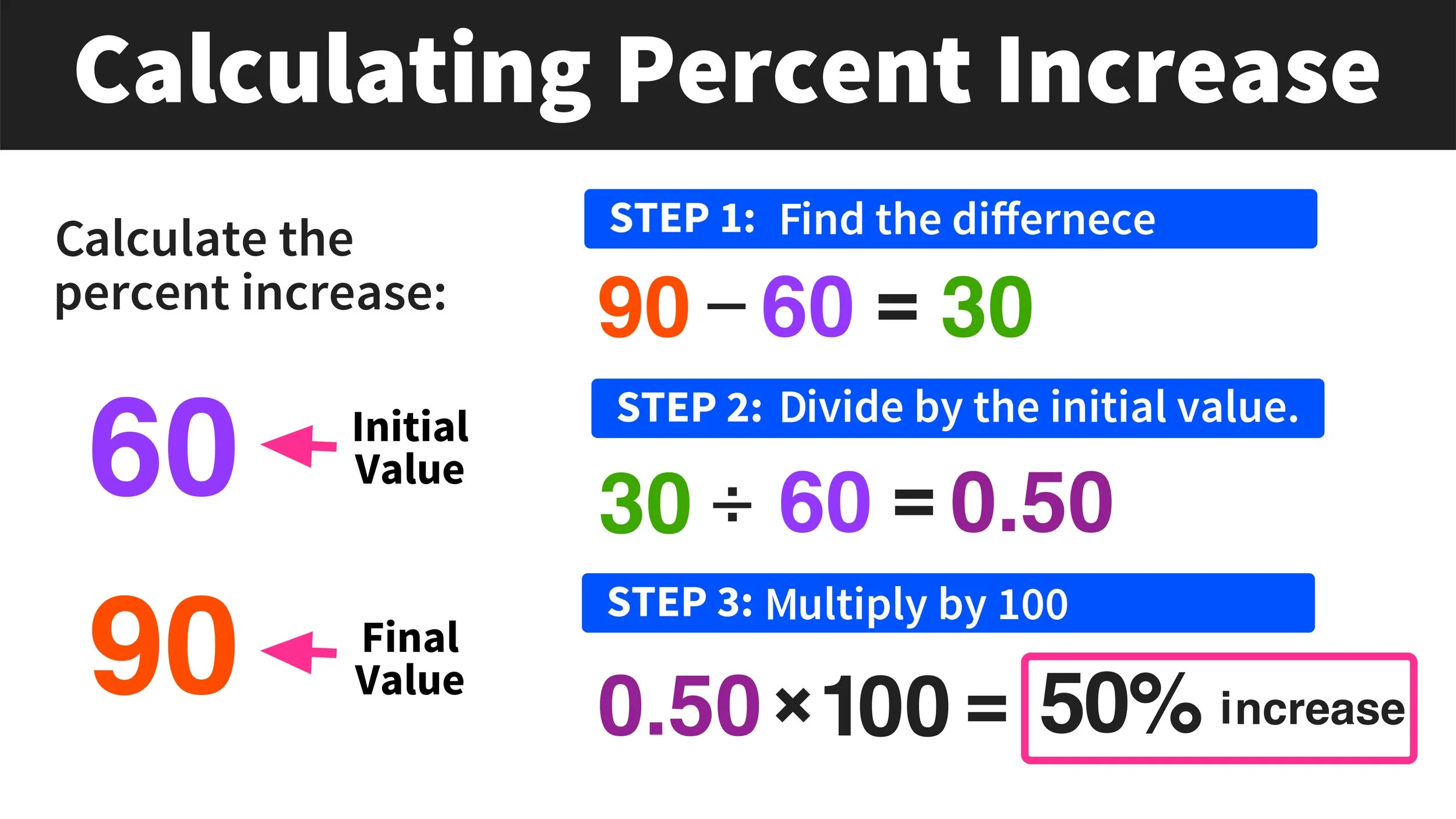
Often, in finance, we need to understand how much something has changed relative to its original value. This is where percentage increase and decrease come into play.
Percentage Increase Formula: ((New Value - Original Value) / Original Value) * 100
Example: If your investment grew from $10,000 to $12,000:
Percentage Increase = (($12,000 - $10,000) / $10,000) * 100 = ($2,000 / $10,000) * 100 = 0.2 * 100 = 20%
Percentage Decrease Formula: ((Original Value - New Value) / Original Value) * 100
Example: If a stock price fell from $50 to $40:
Percentage Decrease = (($50 - $40) / $50) * 100 = ($10 / $50) * 100 = 0.2 * 100 = 20%
These calculations are vital for tracking asset performance, analyzing market trends, or understanding the impact of inflation on purchasing power.
Percentage Points vs. Percent Change: A Crucial Distinction
A common pitfall in financial discussions is confusing “percentage points” with “percent change.” While they sound similar, they represent very different things, especially when dealing with interest rates or other rates already expressed as percentages.
- Percentage Points: Refers to the absolute difference between two percentages.
- Example: If an interest rate increases from 5% to 7%, it has increased by 2 percentage points (7% – 5% = 2%).
- Percent Change: Refers to the relative change of a percentage, calculated using the percentage increase/decrease formula.
- Example: An increase from 5% to 7% is a 40% increase in the rate itself ( (7 – 5) / 5 ) * 100 = (2 / 5) * 100 = 0.4 * 100 = 40%).
Understanding this distinction is crucial when interpreting financial news, loan terms, or investment reports, as misinterpreting it can lead to significantly different conclusions about financial impacts.
Practical Applications: Unlocking Financial Wisdom
With the foundational formulas in hand, let’s explore how percentages are applied across various essential financial domains.
Budgeting and Expense Analysis: Where Does Your Money Go?
Creating and sticking to a budget is a cornerstone of personal finance, and percentages are your best friend here. By expressing your expenses as a percentage of your total income, you gain a clearer picture of your financial allocations and identify areas for adjustment.

- Example: If your monthly take-home pay is $4,000 and you spend $1,200 on rent, your rent accounts for (
$1,200 / $4,000) * 100 = 30% of your income. Comparing this to general guidelines (like the 50/30/20 rule) helps you assess your financial health. Similarly, calculating what percentage of your spending goes to dining out or entertainment can highlight areas for potential savings.
Navigating Sales, Discounts, and Taxes
Every time you shop, percentages are at play. Discounts reduce the original price, while sales tax adds to it.
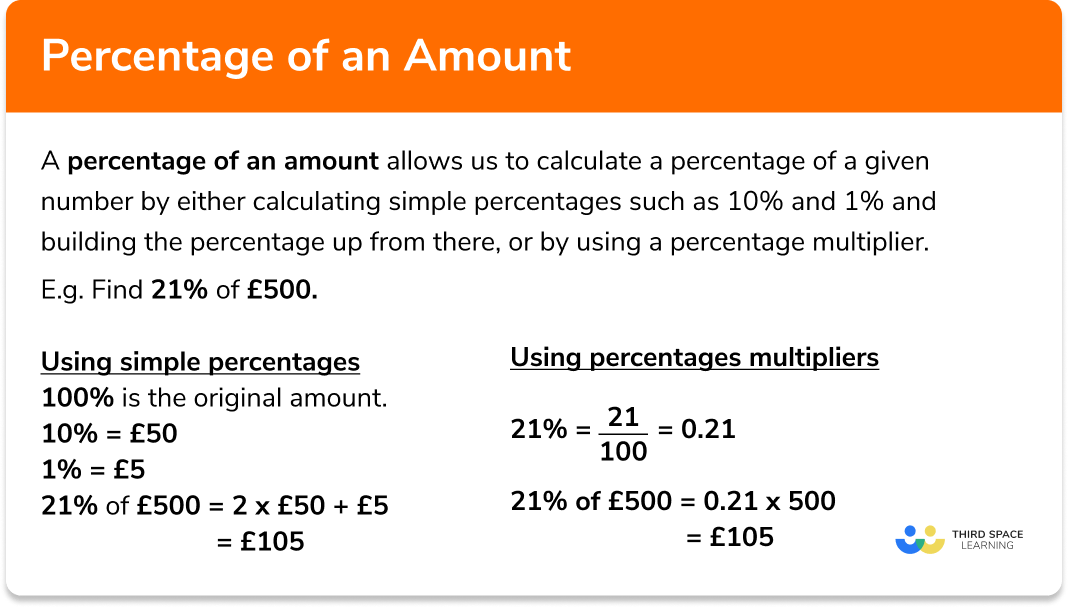
- Example 1 (Discount): An item costs $200 with a 25% discount.
- Discount amount =
25% of $200 = 0.25 * $200 = $50. - Final price =
$200 - $50 = $150. - Alternatively, you’re paying
100% - 25% = 75%of the original price. So,0.75 * $200 = $150.
- Discount amount =
- Example 2 (Sales Tax): You buy an item for $150, and the sales tax is 8%.
- Tax amount =
8% of $150 = 0.08 * $150 = $12. - Total cost =
$150 + $12 = $162. - Alternatively, you’re paying
100% + 8% = 108%of the item’s price. So,1.08 * $150 = $162.
- Tax amount =
These calculations ensure you know the true cost of items and can make wise purchasing decisions.
Demystifying Interest Rates: Loans, Savings, and Investments
Interest rates, always expressed as percentages, are perhaps the most impactful application in finance, governing everything from the growth of your savings to the cost of your debt.
- Simple Interest:
Interest = Principal * Rate * Time- Example: A $1,000 loan at 5% simple interest for 1 year accrues
Interest = $1,000 * 0.05 * 1 = $50.
- Example: A $1,000 loan at 5% simple interest for 1 year accrues
- Compound Interest: This is where percentages truly shine their power. Interest earned is added back to the principal, and future interest is calculated on this new, larger amount.
- Example: A $1,000 deposit earning 5% interest compounded annually for 2 years.
- Year 1:
$1,000 * 0.05 = $50. New balance =$1,050. - Year 2:
$1,050 * 0.05 = $52.50. New balance =$1,102.50.
The total interest earned is$50 + $52.50 = $102.50, which is more than simple interest, demonstrating the power of compounding. This concept is critical for understanding mortgages, credit card debt, and investment growth.
- Year 1:
- Example: A $1,000 deposit earning 5% interest compounded annually for 2 years.
Evaluating Investment Performance and Return on Investment (ROI)
When assessing how well your investments are doing, percentages are the standard metric. Return on Investment (ROI) is a common ratio used to evaluate the profitability of an investment.
ROI Formula: ((Current Value of Investment - Cost of Investment) / Cost of Investment) * 100
- Example: You bought stocks for $5,000, and they are now worth $6,500.
ROI = (($6,500 - $5,000) / $5,000) * 100 = ($1,500 / $5,000) * 100 = 0.3 * 100 = 30%.
This 30% ROI gives you a clear, comparable measure of your investment’s success, allowing you to compare it against other investment opportunities or market benchmarks.
Tools and Techniques for Accurate Calculation
While understanding the underlying formulas is crucial, you don’t always need to perform calculations manually. Various tools can simplify the process and ensure accuracy.
Everyday Calculators and Smartphone Apps
For quick, straightforward percentage calculations, a basic calculator or the calculator app on your smartphone is often sufficient. Many modern calculators even have a dedicated ‘%’ button that can simplify steps like finding a percentage of a number or adding/subtracting a percentage.
Leveraging Spreadsheets for Complex Scenarios
For more complex financial analysis, such as budgeting, tracking multiple investments, or forecasting scenarios, spreadsheet programs like Microsoft Excel or Google Sheets are invaluable. They allow you to set up formulas once and apply them across large datasets, making it easy to see the impact of changing variables (e.g., adjusting your savings rate or interest rate).
- Example in Excel: To calculate 20% of a value in cell A1, you would simply type
=A1*0.20or=A1*20%into another cell. For percentage change, you could use=(B1-A1)/A1*100.
The Role of Online Financial Calculators
The internet is replete with specialized financial calculators for mortgages, loan amortization, retirement planning, compound interest, and more. These tools are pre-programmed with complex formulas, allowing you to input specific variables and instantly see the results, often presented with charts and detailed breakdowns. While they simplify the process, a foundational understanding of percentages helps you interpret their output correctly and verify the reasonableness of the results.
Avoiding Common Percentage Pitfalls
Even with the formulas and tools, certain nuances can lead to misinterpretations if not handled carefully.
The Importance of the Correct Base
A common error is using the wrong “whole” or “base” in your calculation. For instance, when calculating profit margin, you must divide profit by revenue, not cost, to get the correct percentage relative to sales. When tracking changes, always ensure you’re dividing by the original value for an accurate percentage increase or decrease.
Misinterpreting Compounding Effects
The power of compound interest is a double-edged sword. While it dramatically boosts savings and investments, it can equally amplify debt, especially on high-interest credit cards. Failing to understand how frequently interest is compounded (annually, monthly, daily) can lead to significant underestimations of debt accumulation or overestimations of investment growth.
Double-Checking Your Work
Financial calculations, especially those involving percentages, often have significant real-world consequences. Always take the time to double-check your calculations, whether manually or using a tool. A small error in a percentage can lead to large discrepancies in financial outcomes over time.
Mastering how to find the percent is more than just learning a math trick; it’s acquiring a vital financial superpower. It equips you with the analytical ability to dissect financial statements, compare offers, plan for the future, and ultimately take greater control over your financial destiny. By understanding the core formulas, applying them diligently, and leveraging available tools, you transform complex numbers into clear, actionable insights, paving the way for sounder financial decision-making.
aViewFromTheCave is a participant in the Amazon Services LLC Associates Program, an affiliate advertising program designed to provide a means for sites to earn advertising fees by advertising and linking to Amazon.com. Amazon, the Amazon logo, AmazonSupply, and the AmazonSupply logo are trademarks of Amazon.com, Inc. or its affiliates. As an Amazon Associate we earn affiliate commissions from qualifying purchases.