
In an increasingly complex financial world, the ability to accurately calculate and apply percentages is not merely a mathematical exercise; it’s a fundamental skill for sound financial decision-making. From understanding the sales tax on your purchases to calculating interest on your savings, or even projecting the growth of your investments, percentages are omnipresent. Failing to grasp this basic operation can lead to miscalculations that impact your budget, investments, and overall financial health. This article will demystify the process of adding a percentage to a number, framing it within the crucial context of personal finance, investing, and business finance, ensuring you’re equipped to navigate your monetary landscape with confidence and precision.
The Core Mechanics: Deconstructing Percentage Addition
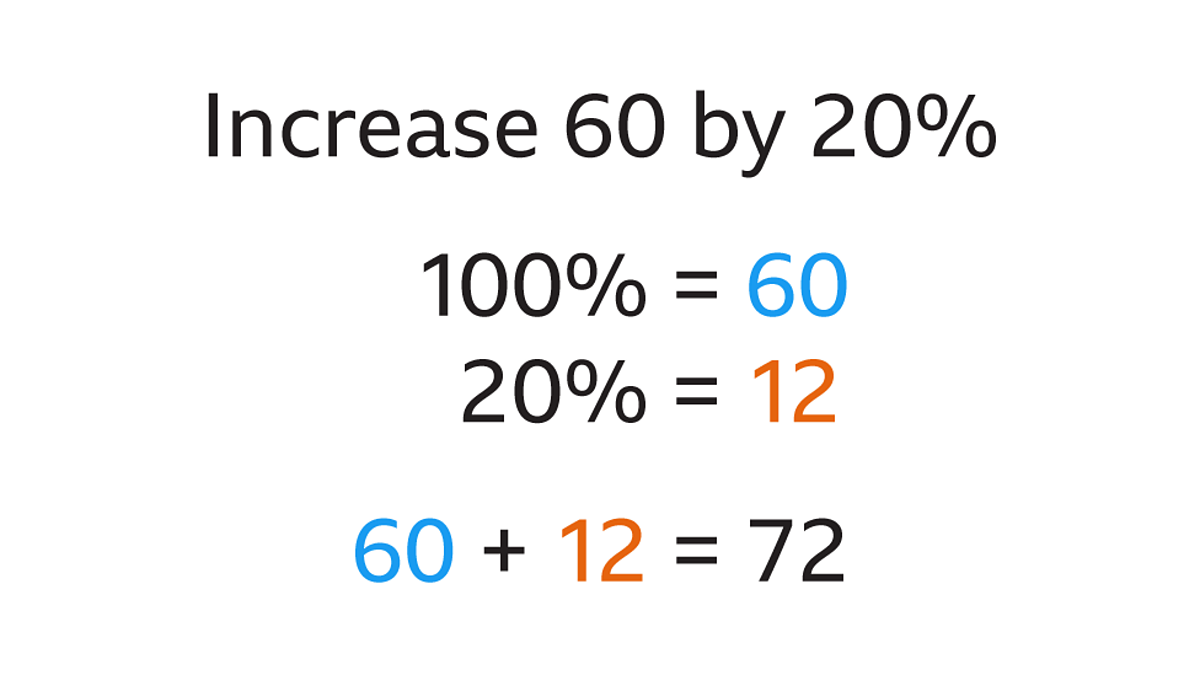
At its heart, adding a percentage to a number means increasing that original number by a certain proportion of its own value. This isn’t about simply adding the percentage figure itself; it’s about adding the value that percentage represents. Understanding this distinction is the first step toward mastering financial calculations.
The Fundamental Formula
The basic formula for adding a percentage to a number involves two primary steps:
- Calculate the percentage value: Convert the percentage into a decimal and multiply it by the original number.
- Formula: Percentage Value = (Percentage / 100) * Original Number
- Add this value to the original number:
- Formula: New Number = Original Number + Percentage Value
Alternatively, a more streamlined approach is to calculate the total percentage directly:
- Formula: New Number = Original Number * (1 + (Percentage / 100))
Let’s illustrate with a simple example: If you want to add 10% to 100:
- Step 1 (Traditional): Percentage Value = (10 / 100) * 100 = 0.10 * 100 = 10
- Step 2 (Traditional): New Number = 100 + 10 = 110
- Streamlined: New Number = 100 * (1 + (10 / 100)) = 100 * (1 + 0.10) = 100 * 1.10 = 110
Step-by-Step Calculation Breakdown
To ensure clarity, let’s break down the process with a financial scenario. Suppose you have a product priced at $50, and you need to calculate the total cost after a 7% sales tax.
- Identify the Original Number: This is your base price, which is $50.
- Identify the Percentage: This is the sales tax rate, which is 7%.
- Convert the Percentage to a Decimal: Divide the percentage by 100. So, 7% becomes 0.07.
- Calculate the Percentage Value: Multiply the decimal by the original number.
- 0.07 * $50 = $3.50 (This is the sales tax amount).
- Add the Percentage Value to the Original Number:
- $50 + $3.50 = $53.50 (This is the total cost including tax).
Using the streamlined method:
- Original Number = $50
- Percentage as Decimal = 0.07
- Add 1 to the decimal = 1 + 0.07 = 1.07
- Multiply Original Number by this factor = $50 * 1.07 = $53.50
Both methods yield the same accurate result, but the streamlined approach often proves more efficient for repeated calculations or when using financial software.
Understanding the “Whole”
A critical conceptual point when adding percentages is to always remember that the original number represents the “whole,” or 100%. When you add a percentage, you are essentially increasing that whole. For instance, if you increase a number by 20%, you are now looking at 120% of the original number. This perspective is vital when dealing with financial concepts like markups, where a retailer might want to price an item to be 30% above its cost, effectively selling it for 130% of what they paid.
Mastering Everyday Financial Scenarios with Percentages
The ability to add percentages to numbers extends far beyond basic math; it’s a practical skill applied daily in personal and business finance. Let’s explore some common scenarios.
Calculating Sales Tax and Gratuities
Perhaps the most common application in personal finance is calculating sales tax. Whether you’re buying groceries, electronics, or a new car, understanding how to add local sales tax to the base price is essential for budgeting accurately and avoiding surprises at the checkout.
- Example (Sales Tax): You purchase a new appliance for $750, and the local sales tax is 6.5%.
- Tax amount = $750 * (6.5 / 100) = $750 * 0.065 = $48.75
- Total cost = $750 + $48.75 = $798.75
- Streamlined: $750 * (1 + 0.065) = $750 * 1.065 = $798.75
Similarly, when dining out, calculating a tip (gratuity) involves adding a percentage to your bill. If your service was excellent, you might opt for a 20% tip.
- Example (Gratuity): Your restaurant bill is $62. If you want to leave a 20% tip.
- Tip amount = $62 * (20 / 100) = $62 * 0.20 = $12.40
- Total paid = $62 + $12.40 = $74.40
- Streamlined: $62 * (1 + 0.20) = $62 * 1.20 = $74.40
Navigating Price Increases and Markups
For consumers, understanding price increases helps in budgeting for future expenses. For businesses, calculating markups is fundamental to profitability. A markup is the amount added to the cost price of a good to cover overheads and generate profit.
-
Example (Price Increase – Consumer): Your favorite coffee shop announces a 5% price increase on all beverages. Your regular latte currently costs $4.
- Increase amount = $4 * 0.05 = $0.20
- New price = $4 + $0.20 = $4.20
- Streamlined: $4 * 1.05 = $4.20
-
Example (Markup – Business): A retail business buys a product for $25 and wants to apply a 40% markup to determine the selling price.
- Markup amount = $25 * 0.40 = $10
- Selling price = $25 + $10 = $35
- Streamlined: $25 * 1.40 = $35
Understanding Interest Accrual on Loans and Investments
Interest is arguably one of the most significant financial applications of percentages. Whether it’s the interest you pay on a loan (like a mortgage or credit card) or the interest you earn on savings and investments, percentages determine the growth or cost of money over time. Simple interest calculations directly involve adding a percentage.

- Example (Simple Interest on Savings): You have $1,000 in a savings account that earns 2% simple annual interest. How much will you have after one year (ignoring compounding for simplicity)?
- Interest earned = $1,000 * 0.02 = $20
- Total after one year = $1,000 + $20 = $1,020
- Streamlined: $1,000 * 1.02 = $1,020
While compound interest is more complex (as it involves adding interest to the principal, and then calculating interest on the new, larger principal), the foundation of each compounding period still relies on adding a percentage to the current balance.
Strategic Applications in Personal Finance and Investing
Beyond day-to-day transactions, adding percentages to numbers plays a crucial role in long-term financial planning and investment strategy.
Projecting Investment Growth and Returns
For investors, understanding how to add percentages allows for projecting the potential growth of portfolios, calculating annual returns, and evaluating the impact of different investment strategies. When an investment reports an annual return of 8%, you can apply this percentage to your principal to estimate future values.
- Example: You invest $5,000 in a mutual fund with an average annual return of 7%. What could your investment be worth after one year (again, simplifying for illustrative purposes without compounding)?
- Growth amount = $5,000 * 0.07 = $350
- Total value = $5,000 + $350 = $5,350
- Streamlined: $5,000 * 1.07 = $5,350
This simple calculation helps visualize the power of even modest returns over time. For multi-year projections, each year’s growth is often calculated on the new total, highlighting the power of compounding, which fundamentally builds upon sequential percentage additions.
Budgeting for Inflation and Future Expenses
Inflation, the rate at which the general level of prices for goods and services is rising, erodes purchasing power. When planning for future expenses, especially significant ones like retirement or college tuition, it’s vital to account for inflation. This involves adding an estimated inflation rate (a percentage) to current costs to project future costs.
- Example: A college education currently costs $20,000 per year. If you estimate an average annual inflation rate of 3% for educational costs, what will the cost be in one year?
- Inflation increase = $20,000 * 0.03 = $600
- Projected cost = $20,000 + $600 = $20,600
- Streamlined: $20,000 * 1.03 = $20,600
This calculation becomes more complex over multiple years, often requiring financial calculators or spreadsheets, but the principle of adding a percentage annually remains consistent.
Analyzing Salary Increases and Benefit Calculations
Your annual salary review, bonus calculations, and employer benefit contributions all rely heavily on percentages. Understanding how these figures are derived empowers you to negotiate effectively and understand your total compensation package.
-
Example (Salary Increase): You receive a 4% raise on your current annual salary of $60,000.
- Raise amount = $60,000 * 0.04 = $2,400
- New salary = $60,000 + $2,400 = $62,400
- Streamlined: $60,000 * 1.04 = $62,400
-
Example (Employer Contribution): Your employer contributes 3% of your salary to your retirement plan.
- Contribution amount = $60,000 * 0.03 = $1,800 annually
These calculations are critical for personal budgeting, understanding take-home pay, and assessing the value of your benefits.
Common Pitfalls and Best Practices for Financial Accuracy
While the process of adding a percentage to a number seems straightforward, common mistakes can lead to significant financial inaccuracies. Being aware of these pitfalls and adopting best practices will enhance your financial literacy and decision-making.
Distinguishing Between Percentage Points and Percentage Change
A frequent point of confusion, particularly in financial news and reports, is the difference between “percentage points” and “percentage change.” If an interest rate increases from 5% to 6%, it’s an increase of 1 percentage point. However, the percentage change is calculated relative to the original rate: (6-5)/5 = 1/5 = 20%. This is a 20% increase in the interest rate, not a 1% increase. Always be clear about which metric is being discussed, as misinterpreting this can have massive financial implications, especially when dealing with large sums or market movements.
Leveraging Financial Tools: Spreadsheets and Calculators
While understanding the manual calculation is essential, for speed and accuracy, especially with complex or repeated financial calculations, leveraging tools like financial calculators or spreadsheet software (e.g., Microsoft Excel, Google Sheets) is highly recommended.
- Spreadsheet Example (Excel/Google Sheets):
- In cell A1, enter your Original Number (e.g., 50).
- In cell B1, enter your Percentage as a decimal (e.g., 0.07 for 7%).
- In cell C1, enter the formula
=A1*(1+B1)to get the new total. - Alternatively, to show the added value: In cell D1, enter
=A1*B1(for the percentage value), then in cell E1, enter=A1+D1.
These tools not only perform calculations rapidly but also allow for easy scenario analysis (e.g., “What if the interest rate was 2.5% instead of 2%?”).
Double-Checking for Decimal Errors
One of the most common errors in percentage calculations is incorrect decimal placement. Remember that a percentage like “7%” must be converted to “0.07” before multiplication. A common mistake is to use “0.7” (which is 70%) or just “7” (which would result in a value 7 times the original number). Always perform a quick mental check to see if your result makes sense. If you add 7% to $100 and get $700, you know something is wrong.

Conclusion
The ability to accurately add a percentage to a number is more than just a mathematical skill; it’s a cornerstone of financial literacy. From navigating daily transactions like sales tax and tips to strategically planning for long-term investments and understanding salary adjustments, percentages permeate every aspect of our financial lives. By understanding the core formula, practicing its application in various financial scenarios, and adopting best practices for accuracy, you empower yourself to make informed decisions, manage your money effectively, and build a more secure financial future. Mastering this fundamental concept is not just about avoiding errors; it’s about unlocking opportunities and taking confident control of your financial destiny.
aViewFromTheCave is a participant in the Amazon Services LLC Associates Program, an affiliate advertising program designed to provide a means for sites to earn advertising fees by advertising and linking to Amazon.com. Amazon, the Amazon logo, AmazonSupply, and the AmazonSupply logo are trademarks of Amazon.com, Inc. or its affiliates. As an Amazon Associate we earn affiliate commissions from qualifying purchases.