
Understanding how to calculate monthly interest is a cornerstone of financial literacy, impacting virtually every aspect of our monetary lives, from the growth of our savings to the cost of our debts. Whether you’re planning to take out a loan, evaluating a credit card offer, or simply trying to make sense of your bank statement, a firm grasp of interest calculations empowers you to make informed decisions, optimize your financial strategy, and ultimately take control of your financial future. This article delves into the intricacies of monthly interest, breaking down the essential concepts, formulas, and real-world applications within the realm of personal finance.
Understanding the Fundamentals of Interest
Before we dive into the calculations, it’s crucial to establish a solid understanding of what interest is and the fundamental distinctions that govern its behavior. This foundational knowledge will serve as your compass in navigating the complex landscape of financial products and their associated costs or benefits.
What is Interest? The Cost and Reward of Money
At its core, interest is the cost of borrowing money or the reward for lending it. When you borrow money from a bank for a car loan or a mortgage, the interest is the additional amount you pay back above the principal sum. This acts as compensation for the lender taking the risk and forgoing the use of that money themselves. Conversely, when you deposit money into a savings account, the bank pays you interest for the privilege of using your funds, essentially rewarding you for lending them your money.
Interest is typically expressed as a percentage of the principal amount over a specific period, most commonly an annual rate (Annual Percentage Rate or APR). However, when we talk about “monthly interest,” we’re translating that annual rate into a per-month figure that dictates how much is accrued or charged each billing cycle.
Simple vs. Compound Interest: A Crucial Distinction
The single most important distinction in understanding interest calculations lies between simple and compound interest. This difference can dramatically alter the total amount paid or earned over time.
- Simple Interest: Simple interest is calculated only on the initial principal amount of a loan or deposit. It’s a straightforward calculation and is often used for short-term loans or very basic financial products. The interest earned or charged does not become part of the principal for subsequent interest calculations.
- Compound Interest: Compound interest, often called “interest on interest,” is far more prevalent in modern finance and has a profound impact. With compound interest, the interest earned or charged in each period is added to the principal amount before the next interest calculation. This means that as time passes, you begin to earn or pay interest not only on your original principal but also on the accumulated interest from previous periods. This accelerating effect is what makes compound interest so powerful for investors (who benefit from it) and so dangerous for debtors (who can be overwhelmed by it).
The frequency of compounding also plays a critical role. Interest can be compounded annually, semi-annually, quarterly, monthly, daily, or even continuously. For our purposes, we will focus on monthly compounding, which is common for mortgages, credit cards, and many savings accounts.
Deconstructing Monthly Interest Calculations
Now that we understand the basics, let’s break down the actual calculations for both simple and compound monthly interest. These formulas are your primary tools for deciphering financial statements and making informed decisions.
Calculating Simple Monthly Interest
Simple monthly interest is the easiest to calculate because it doesn’t involve the accumulated interest affecting future calculations. It’s often used for straightforward scenarios where the interest is calculated once and applied.
The general formula for simple interest is:
I = P * r * t
Where:
- I = Total Interest
- P = Principal amount (the initial sum of money)
- r = Annual interest rate (as a decimal)
- t = Time period (in years)
To find the simple monthly interest, you first need to convert the annual interest rate to a monthly rate and then apply it to the principal for one month.
1. Convert Annual Rate to Monthly Rate:
Monthly Rate (r_m) = Annual Interest Rate (r) / 12
2. Calculate Simple Monthly Interest:
Monthly Interest = Principal (P) * Monthly Rate (r_m)
Practical Example: Simple Interest Personal Loan
Imagine you take out a short-term personal loan of $10,000 at a simple annual interest rate of 6%. You want to know the simple interest charged each month.
- Principal (P) = $10,000
- Annual Interest Rate (r) = 6% = 0.06
- Monthly Rate (r_m) = 0.06 / 12 = 0.005
Simple Monthly Interest = $10,000 * 0.005 = $50
So, you would be charged $50 in simple interest each month. This amount would remain constant each month as long as the principal doesn’t change.
Mastering Compound Monthly Interest
Compound monthly interest is where the magic (or misery) of interest truly unfolds. Most financial products, from mortgages to credit cards and savings accounts, use compound interest. The key difference is that the interest you owe or earn is added to the principal before the next month’s interest is calculated.
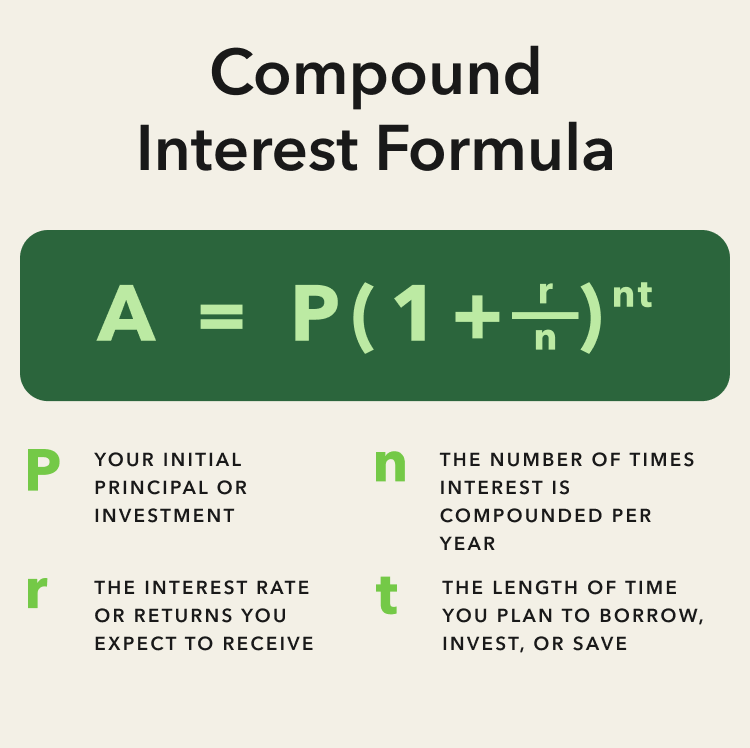
The general formula for compound interest is:
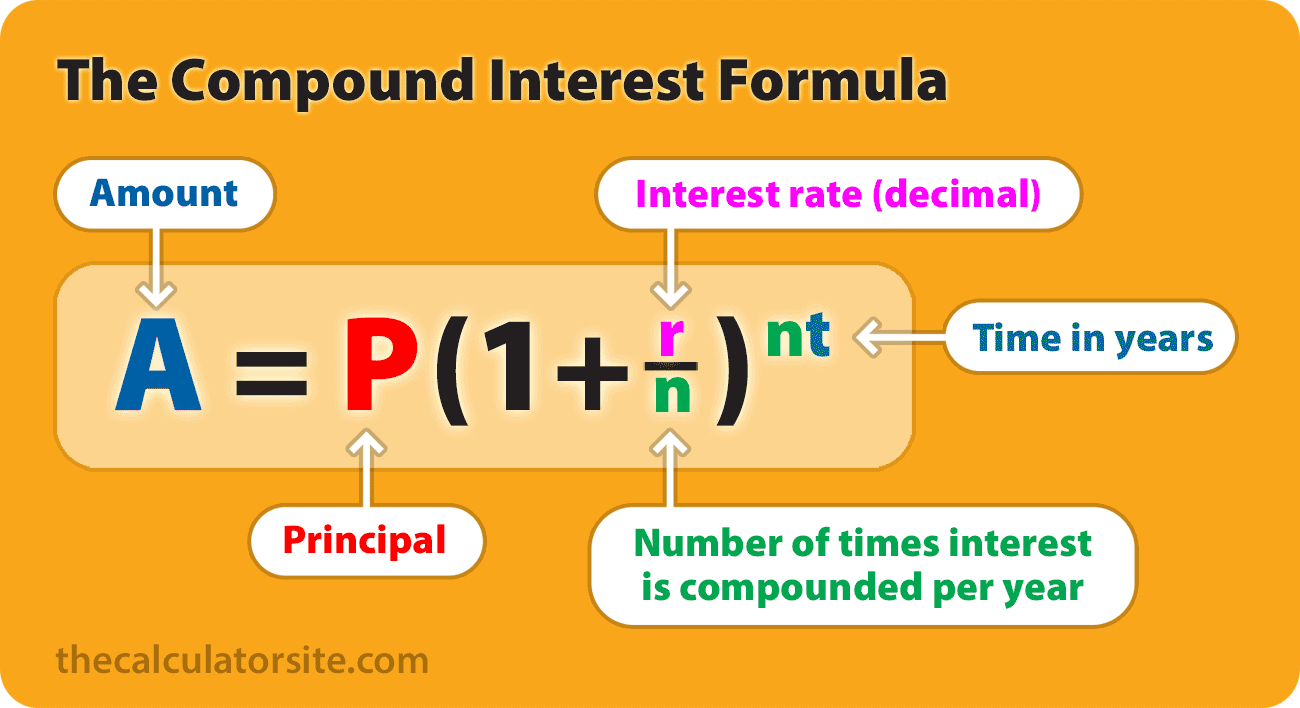
A = P (1 + r/n)^(nt)
Where:
- A = The future value of the investment/loan, including interest
- P = The principal investment amount (the initial deposit or loan amount)
- r = The annual interest rate (as a decimal)
- n = The number of times that interest is compounded per year (for monthly, n=12)
- t = The number of years the money is invested or borrowed for
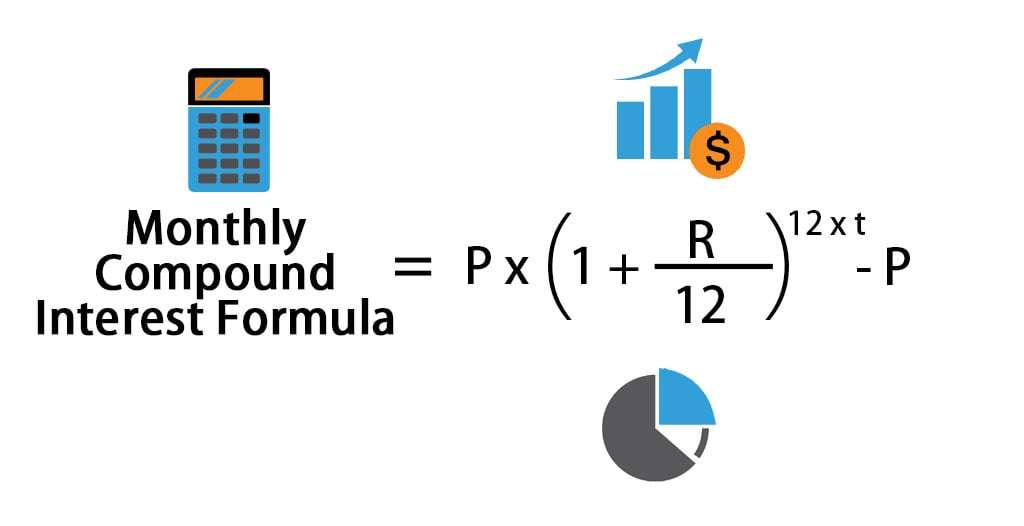
To calculate the interest for a single month when it’s compounded monthly, it’s slightly different than calculating total future value. You calculate the interest on the current balance (principal + any accumulated interest) for that specific month.
1. Determine the Monthly Interest Rate:
Monthly Interest Rate = Annual Interest Rate / 12
2. Calculate Interest for the Current Month:
Interest for the Month = Current Balance * Monthly Interest Rate
3. Update Balance for Next Month:
New Balance = Current Balance + Interest for the Month
Practical Example: Savings Account with Monthly Compounding
You have a savings account with $5,000 that earns an annual interest rate of 2.4%, compounded monthly.
- Principal (P) = $5,000
- Annual Interest Rate (r) = 2.4% = 0.024
- Monthly Interest Rate = 0.024 / 12 = 0.002
Month 1:
- Interest for Month 1 = $5,000 * 0.002 = $10
- New Balance after Month 1 = $5,000 + $10 = $5,010
Month 2:
- Interest for Month 2 = $5,010 * 0.002 = $10.02
- New Balance after Month 2 = $5,010 + $10.02 = $5,020.02
Notice how the interest earned in Month 2 ($10.02) is slightly higher than in Month 1 ($10.00) because it’s calculated on a slightly larger principal ($5,010 vs. $5,000). This is the power of compounding at work.
Real-World Applications and Scenarios
Understanding these calculations isn’t just theoretical; it has profound implications for various financial products we encounter daily. Let’s explore how monthly interest plays out in common scenarios.
Loans and Mortgages: Your Largest Interest Burden
For significant debts like mortgages, auto loans, and student loans, monthly interest calculations dictate a substantial portion of your payments. With a mortgage, for instance, your monthly payment covers both a portion of the principal and the interest accrued that month on the outstanding balance. Early in a loan term, a larger percentage of your payment goes towards interest because the principal balance is highest. As you pay down the principal, the interest component of your payment gradually decreases, and more of your payment goes towards reducing the principal. This is illustrated by an amortization schedule.
Savings and Investments: Growing Your Wealth
On the flip side, monthly interest compounding is your best friend when it comes to savings and investments. High-yield savings accounts, Certificates of Deposit (CDs), and many investment vehicles benefit immensely from compounding. The more frequently interest is compounded (e.g., monthly vs. annually), the faster your money grows, assuming all other factors are equal. This is why understanding the Annual Percentage Yield (APY) is crucial for savings; APY accounts for compounding, giving you a truer picture of your actual annual returns.
Credit Cards: The Detrimental Effect of High Monthly Interest Rates
Credit cards often carry very high annual interest rates, typically ranging from 15% to 25% or even higher. When these rates are compounded daily or monthly on a revolving balance, the cost of carrying a balance can quickly become exorbitant. If you only make minimum payments on a high-interest credit card, a significant portion of that payment will go towards interest, leaving very little to reduce the principal. This can trap individuals in a cycle of debt, making understanding monthly interest calculations vital for managing credit card debt effectively.
Amortization Schedules: A Glimpse into Payment Breakdown
An amortization schedule is a table detailing each periodic payment on a loan. It shows how much of each payment is applied to the interest versus the principal, and the remaining balance after each payment. This tool clearly demonstrates how monthly interest affects your loan repayment over its entire term, highlighting how interest front-loads many loans and gradually diminishes over time. While complex to build manually, understanding its concept helps demystify monthly loan payments.
Practical Tools and Strategies for Managing Interest
Calculating monthly interest can seem daunting, especially with varying balances and compounding frequencies. Fortunately, there are tools and strategies to simplify the process and empower you to manage interest effectively.
Leveraging Online Interest Calculators and Spreadsheets
You don’t need to be a math whiz to calculate monthly interest accurately. Numerous online interest calculators are readily available, often specialized for different types of loans (mortgage, auto, personal) or savings accounts. These tools allow you to input the principal, interest rate, and term, and they instantly provide monthly payments, total interest paid, or future values.
For more personalized or complex scenarios, a spreadsheet program like Microsoft Excel or Google Sheets is invaluable. You can set up your own formulas for simple or compound interest, track changing balances, and even create mini-amortization schedules. This hands-on approach offers greater flexibility and a deeper understanding of the numbers.
Strategies for Minimizing Interest Paid
For debtors, minimizing interest paid is a critical financial goal.
- Pay More Than the Minimum: Even a small extra payment each month can significantly reduce the principal balance, leading to less interest paid over the life of a loan due to compounding.
- Make Extra Payments: Applying extra funds directly to the principal can shave years off a loan term and save thousands in interest.
- Refinance Loans: If interest rates have dropped or your credit score has improved, refinancing a loan (especially mortgages) can secure a lower interest rate, reducing your monthly interest burden.
- Debt Consolidation: Combining multiple high-interest debts into a single loan with a lower interest rate can simplify payments and reduce overall interest costs.
- Snowball or Avalanche Method: These debt repayment strategies prioritize paying off debts strategically to reduce overall interest and build momentum.
Strategies for Maximizing Interest Earned
For savers and investors, the goal is to maximize the interest earned.
- High-Yield Savings Accounts: Seek out banks offering competitive Annual Percentage Yields (APYs), which reflect the effect of compounding.
- Certificates of Deposit (CDs): Lock in higher interest rates for a fixed period.
- Understand APR vs. APY: Remember, APR (Annual Percentage Rate) typically doesn’t account for compounding, while APY (Annual Percentage Yield) does. For savings, always compare APYs to get the true picture of your earnings. For loans, APR gives you the base cost, but understanding how frequently it compounds is crucial.
- Invest Early and Consistently: The longer your money has to compound, the greater the returns. Regular contributions to investment accounts further accelerate this growth.
Conclusion
Mastering the calculation of monthly interest is not merely an academic exercise; it is a fundamental skill that underpins sound personal finance. By understanding the distinction between simple and compound interest, familiarizing yourself with the core formulas, and recognizing how these principles apply to various financial products, you gain the power to make intelligent financial choices. Whether you are aiming to minimize debt costs, maximize investment returns, or simply understand your monthly statements, a clear grasp of monthly interest empowers you to take proactive steps towards achieving your financial goals and securing a more prosperous future. Armed with this knowledge, you can confidently navigate the financial world, turning complex numbers into actionable insights for your wealth and well-being.
aViewFromTheCave is a participant in the Amazon Services LLC Associates Program, an affiliate advertising program designed to provide a means for sites to earn advertising fees by advertising and linking to Amazon.com. Amazon, the Amazon logo, AmazonSupply, and the AmazonSupply logo are trademarks of Amazon.com, Inc. or its affiliates. As an Amazon Associate we earn affiliate commissions from qualifying purchases.