
The vibrant, often frenetic world of financial markets seems to operate with an unyielding pulse during trading hours. Billions of dollars exchange hands, companies are valued and re-valued, and fortunes are made or lost with dizzying speed. Yet, for all its dynamism, the stock market isn’t a 24/7 entity like some other global exchanges or digital currencies. It regularly observes periods of silence, times when the screens go dark, and the trading floors fall quiet. Understanding why the stock market closes is not merely a point of trivia; it’s fundamental to grasping the intricate mechanics, regulatory frameworks, and human elements that underpin global finance. These closures, whether scheduled or unexpected, serve critical functions from maintaining market integrity to protecting investors and allowing essential operational processes to unfold.

The Rhythmic Pauses: Scheduled Closures of Financial Markets
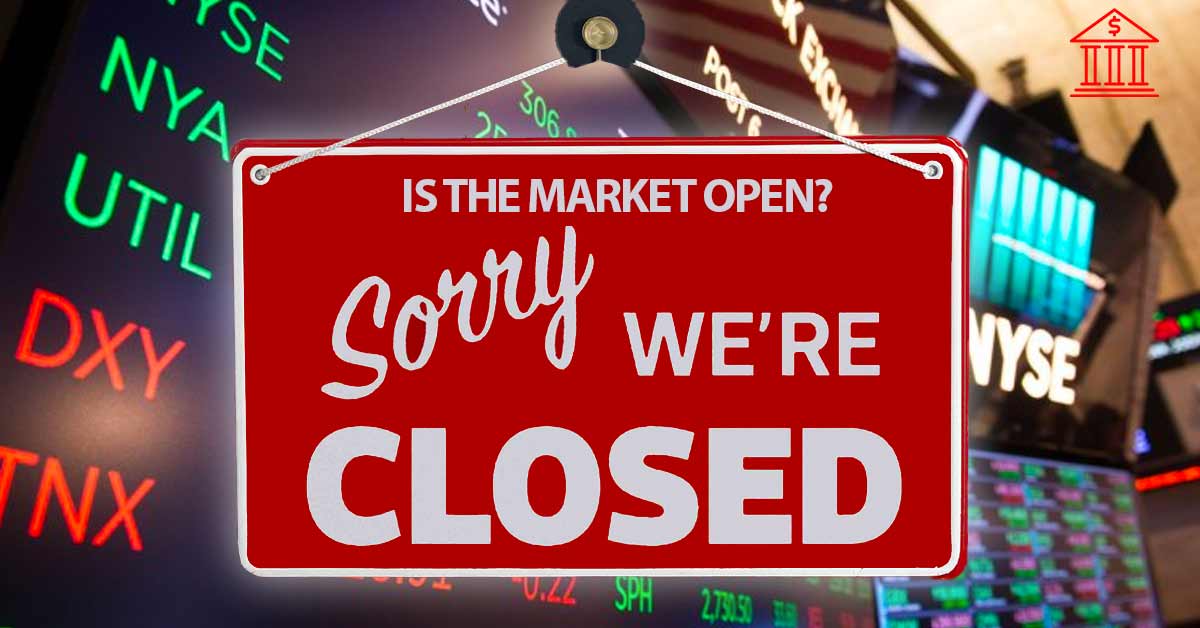
The most common and predictable reasons for the stock market to close are weekends and public holidays. These aren’t arbitrary breaks but rather deliberate pauses built into the fabric of financial systems, serving multiple vital purposes.
Weekends: The Essential Breathing Room
Every Saturday and Sunday, stock exchanges across most of the world cease trading. This two-day hiatus is far more than just a convenience for traders and brokers; it’s an operational necessity. Firstly, it provides a crucial period for market participants – from institutional investors to individual traders – to step back, analyze market movements from the previous week, and strategize for the week ahead. The constant flow of information and decision-making during trading hours can be exhausting, and a dedicated break allows for clearer, more considered planning.
Secondly, and perhaps more importantly from an infrastructure perspective, weekends allow for the critical back-office operations to catch up. While electronic trading makes transactions appear instantaneous, the actual settlement and clearing of trades – the process of transferring ownership of securities and funds between buyers and sellers – is a complex undertaking. Weekends provide a buffer for these processes to complete efficiently and accurately, ensuring that all accounts are reconciled and ready for the next trading week. It’s a time for system maintenance, software updates, and rigorous checks to ensure the technological backbone of the market is robust and secure. Without this scheduled downtime, the potential for operational bottlenecks, errors, and system failures would significantly increase, jeopardizing market stability.
Public and Federal Holidays: Observing National Commemorations
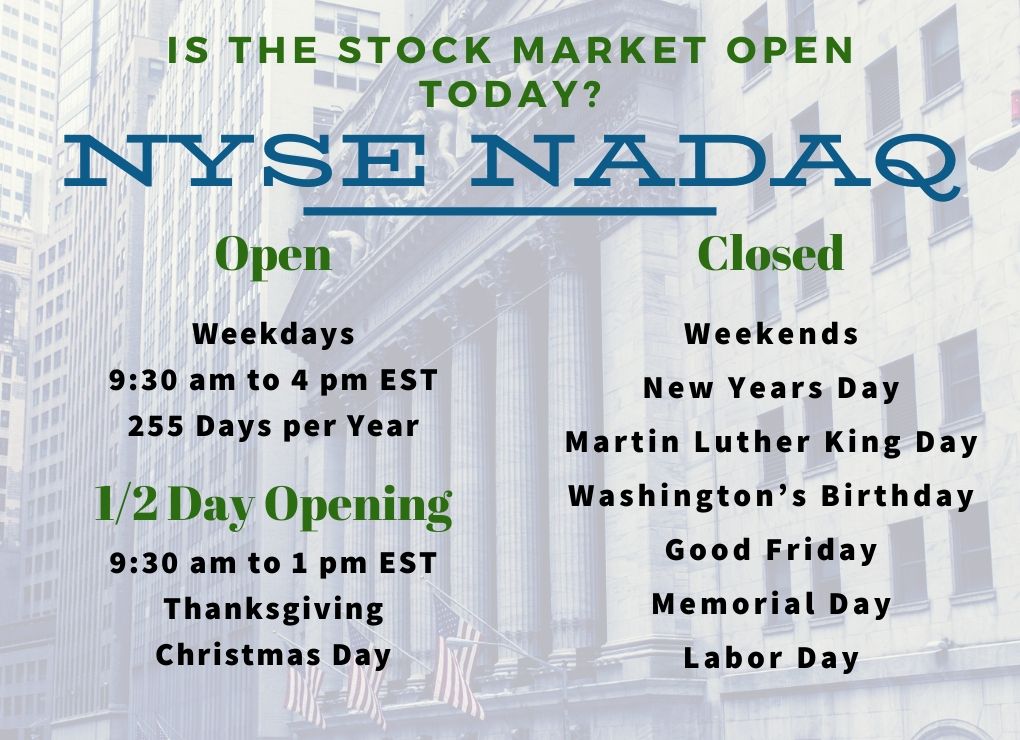
Beyond weekends, stock markets observe a number of public and federal holidays. In the United States, for instance, major holidays like New Year’s Day, Martin Luther King, Jr. Day, Presidents’ Day, Good Friday, Memorial Day, Juneteenth National Independence Day, Independence Day, Labor Day, Thanksgiving Day, and Christmas Day typically see the NYSE and NASDAQ closed. Similar schedules are followed in other countries, reflecting their own national calendars.
These closures are deeply rooted in cultural and historical traditions. Financial markets are integral parts of national economies and societies, and observing these holidays aligns them with the broader rhythm of civic life. While the immediate economic impact of a single holiday closure might seem minimal, the cumulative effect of ignoring national observances could detach the market from the very society it serves. Furthermore, many financial institutions, banks, and supporting services also close on these days, making it impractical to conduct full-scale trading operations effectively. The interconnectivity of the financial ecosystem means that if key components are offline, the entire system cannot function optimally.
Operational Necessity: Beyond Just Rest
The scheduled breaks for weekends and holidays also contribute to market efficiency by creating defined trading periods. This concentration of activity helps in price discovery and liquidity. If markets were open all the time, trading volume might be too thinly spread, leading to wider bid-ask spreads and less efficient price formation. The concentrated activity within fixed hours ensures greater depth and liquidity, which are crucial for fair and orderly markets. It also reduces the likelihood of “stale” pricing during periods of very low volume, which could mislead investors.
Unforeseen Halts: Unexpected Market Closures and Their Triggers
While scheduled closures are predictable, markets can also come to an abrupt halt due to unforeseen circumstances. These exceptional closures are typically invoked to maintain stability, protect assets, or respond to broader societal emergencies.
Extreme Weather and Natural Disasters: Prioritizing Safety
Severe weather events or natural disasters can force market closures. In instances like hurricanes, blizzards, or widespread power outages, the physical safety of market participants and the operational integrity of trading facilities can be compromised. For example, the New York Stock Exchange (NYSE) notably closed for two full days during Hurricane Sandy in 2012, marking its first weather-related multi-day closure in 27 years. Such decisions are made not just for the direct safety of personnel on the trading floor but also due to the logistical challenges faced by employees, the potential for communication disruptions, and the inability of critical support staff to reach their workplaces. In an increasingly interconnected world, even remote trading needs reliable infrastructure, which can be jeopardized by large-scale disasters.
National Emergencies and Mourning: Reflecting Societal Impact
In times of profound national tragedy or mourning, stock markets may close as a mark of respect and to allow the nation to grieve. Historic examples include the closure of the NYSE following the assassination of President John F. Kennedy in 1963 and, more recently, for several days after the September 11, 2001, terrorist attacks. These closures reflect a recognition that financial markets are not isolated entities but are deeply intertwined with the social and emotional fabric of a nation. During such periods of immense shock or sorrow, the focus shifts away from economic activity, and a closure allows for collective reflection and healing. Furthermore, the operational challenges stemming from such events, including potential disruptions to transportation, communication, and security, can also necessitate a pause in trading.
Technical Glitches and System Failures: Maintaining Market Integrity
In an era dominated by electronic trading, technical issues can pose a significant threat to market integrity. While rare, system malfunctions, software glitches, or cyber-attacks can disrupt trading platforms, leading to chaotic conditions or an inability to process orders accurately. When such issues arise, an exchange may temporarily halt trading in specific securities or even close the entire market to prevent erroneous trades, ensure fairness, and allow time for technical teams to resolve the problem. The goal is to prevent situations where some participants might have an unfair advantage or where the market could become unmanageably volatile due to technical rather than economic factors. For example, in 2015, the NYSE experienced a technical glitch that halted trading for several hours, underscoring the fragility of even the most sophisticated systems.
Financial Crises and Volatility: The Circuit Breaker Mechanism
While not always leading to a full-day closure, periods of extreme market volatility, particularly those stemming from financial crises, can trigger “circuit breakers.” These are pre-defined mechanisms designed to temporarily halt trading across the entire market (or for specific securities) when prices fall or rise by a certain percentage within a short timeframe. The purpose of circuit breakers is to give investors time to absorb information, reconsider their decisions, and prevent panic selling or buying that could lead to a freefall or bubble. While a circuit breaker might only pause trading for 15 minutes, 30 minutes, or an hour, in extreme cases of cascading sell-offs, they can effectively lead to a market closure for the remainder of the day if triggered late in the trading session. These mechanisms are crucial tools for regulators to manage systemic risk and maintain orderly markets during periods of acute stress.
The Deeper Purpose: Why Closures Matter
The myriad reasons for market closures coalesce around several fundamental objectives that are critical for healthy, fair, and stable financial markets.
Protecting Investors and Ensuring Fair Play
Market closures, whether scheduled or sudden, play a direct role in investor protection. Scheduled breaks prevent fatigue and allow for thorough research, reducing the likelihood of impulsive, ill-informed decisions. Unexpected closures, on the other hand, actively shield investors from undue risk during times of crisis, system failure, or physical danger. By pausing trading, regulators and exchanges prevent market participants from making decisions based on incomplete information, panic, or under duress. This ensures a level playing field and protects against potential manipulation or exploitation during chaotic periods.
Facilitating Orderly Operations and Settlement
The back-end machinery of the financial world is complex. Every trade initiated during market hours requires a series of post-trade processes, including confirmation, clearing, and settlement. These processes ensure that securities are correctly transferred to buyers and cash to sellers. Closures provide dedicated windows for these critical operations to occur without the pressure of live trading. This structured approach minimizes errors, reduces operational risk, and maintains the integrity of financial transactions, which is paramount for investor confidence and systemic stability.
Preventing Panic and Information Overload
Imagine a scenario where a major geopolitical event or a catastrophic natural disaster unfolds, and the stock market remains open. The immediate reaction would likely be intense panic selling or buying, fueled by speculation and incomplete information. Market closures act as a “cooling-off” period, allowing for the dissemination of verified information, for emotions to subside, and for rational assessment to prevail. This prevents irrational exuberance or fear from completely overwhelming the market’s fundamental valuation mechanisms, thus safeguarding against exacerbated volatility and potential market crashes.
Navigating the Non-Trading Hours: Implications for Investors
For investors, market closures aren’t just about taking a break; they carry significant implications for portfolio management and risk.
The Challenge of Information Flow
During closures, global events, company announcements, or economic data releases can occur. Investors cannot react immediately by buying or selling. This creates “gap risk,” where asset prices might significantly open higher or lower than their closing price on the last trading day, reflecting the accumulated news and sentiment during the non-trading period. Investors must be prepared for this potential volatility when markets reopen.
Managing Portfolio Risk During Closure
The inability to trade during closures means investors cannot adjust their portfolios in response to new information. This amplifies the importance of thoughtful portfolio construction and risk management strategies. Diversification, setting stop-loss orders (though these are only executable when the market is open), and understanding the underlying fundamentals of one’s investments become even more critical when one cannot directly intervene in response to market movements.
Exploring Alternatives: Global Markets and After-Hours Trading
While the primary stock exchanges close, some limited trading opportunities might exist. After-hours and pre-market trading sessions allow institutional investors and some retail brokers to execute trades outside standard hours, though liquidity is typically much lower. Furthermore, investors in global markets might find that when one major market is closed, another is open. For example, if Wall Street is closed for a holiday, the Tokyo Stock Exchange or London Stock Exchange might be active, allowing for a form of continuous global trading in some assets. This global interconnectedness offers avenues for risk management and opportunity, albeit with different market dynamics and liquidity profiles.
The Future of Market Availability: A Shifting Landscape
The debate about whether stock markets should operate on a 24/7 basis is an ongoing one, especially with the rise of always-on digital asset markets like cryptocurrencies.
Technological Advancements and 24/7 Aspirations
Modern technology, particularly high-frequency trading platforms and cloud computing, theoretically makes continuous stock market operations more feasible than ever before. Some argue that a 24/7 market would increase accessibility for global investors, eliminate gap risk, and potentially increase overall liquidity. The infrastructure to support such continuous trading is becoming increasingly sophisticated.
Balancing Accessibility with Stability
However, the arguments against a fully continuous stock market are compelling. The human element – the need for analysts, traders, and regulators to rest and strategize – remains paramount. Moreover, the operational complexities of maintaining perfect system integrity without any downtime, coupled with the potential for increased volatility and reduced liquidity during traditional off-hours, are significant deterrents. Regulators and exchanges prioritize stability and investor protection, and for now, the benefits of scheduled closures in fostering orderly, fair, and robust financial markets continue to outweigh the perceived advantages of round-the-clock trading for traditional equities. The balance between accessibility and stability will continue to be a key consideration as technology evolves and market structures adapt.
In conclusion, the stock market closes for a complex tapestry of reasons, ranging from the mundane necessity of rest and operational maintenance to critical measures for investor protection and systemic stability. These pauses are not arbitrary interruptions but carefully considered elements that ensure the integrity, fairness, and long-term health of the global financial system. For investors, understanding these closures is crucial for effective risk management and navigating the dynamic world of finance.
aViewFromTheCave is a participant in the Amazon Services LLC Associates Program, an affiliate advertising program designed to provide a means for sites to earn advertising fees by advertising and linking to Amazon.com. Amazon, the Amazon logo, AmazonSupply, and the AmazonSupply logo are trademarks of Amazon.com, Inc. or its affiliates. As an Amazon Associate we earn affiliate commissions from qualifying purchases.