
For both seasoned investors and curious newcomers, understanding the precise operating hours of global stock markets is not merely a matter of trivia; it’s a foundational element of effective trading strategy, risk management, and overall financial literacy. The perception of the stock market as a perpetually churning entity, often depicted with frantic traders shouting orders, only partially reflects reality. While major financial centers around the world ensure a near-continuous flow of trading, each individual exchange adheres to specific opening and closing times, punctuated by holidays and special events. Knowing these schedules is crucial for timing trades, reacting to news, and even managing your personal well-being by avoiding unnecessary market anxiety outside active hours.
This comprehensive guide will demystify the intricacies of market hours, starting with the dominant U.S. exchanges, expanding to a global perspective, and delving into the critical implications for your investment decisions.
The Core Trading Day: Understanding U.S. Stock Market Hours
The United States boasts two of the world’s largest and most influential stock exchanges: the New York Stock Exchange (NYSE) and the Nasdaq Stock Market. While distinct in their origins and operational mechanisms, they largely share common trading hours, forming the backbone of the North American trading day.
The Standard Session: NYSE and Nasdaq
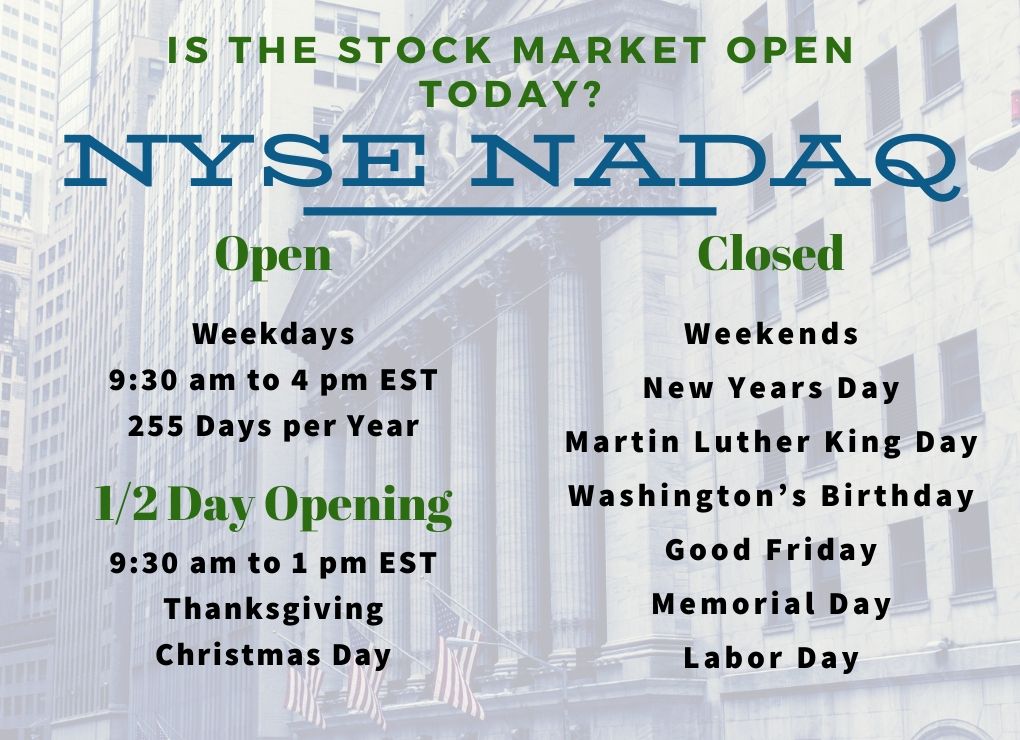
The regular trading session for both the NYSE and Nasdaq runs from 9:30 AM Eastern Time (ET) to 4:00 PM ET on weekdays. This seven-and-a-half-hour window is considered the primary period for market activity, characterized by the highest liquidity, tightest bid-ask spreads, and typically, the most significant price discovery. Billions of shares change hands daily during this session, driven by institutional investors, algorithmic trading, and individual retail participants.
During these hours, major economic data releases are often scheduled, corporate earnings reports are digested, and global events ripple through asset prices. For many investors, especially those focused on long-term positions or daily trading, these are the hours when their primary attention is directed towards market movements. Deviating from these hours, as we’ll explore, introduces different dynamics and considerations.
Beyond Regular Hours: Pre-Market and After-Hours Trading
The financial markets are increasingly interconnected and reactive, leading to the rise of extended-hours trading. This allows participants to buy and sell securities outside the standard 9:30 AM to 4:00 PM ET window, typically facilitated by electronic communication networks (ECNs) rather than the traditional exchange floors.
- Pre-Market Trading: This session usually begins as early as 4:00 AM ET and extends up to the regular market open at 9:30 AM ET. Investors often utilize pre-market trading to react to news released overnight, such as international market movements, geopolitical developments, or early-morning corporate announcements (e.g., earnings reports issued before the market opens).
- After-Hours Trading: Following the 4:00 PM ET close, after-hours trading can continue until 8:00 PM ET. This period is frequently used to respond to news released after the market closes, such as quarterly earnings calls, analyst downgrades or upgrades, or significant late-day corporate news that could impact a stock’s valuation.
While extended-hours trading offers flexibility, it comes with inherent risks. Liquidity is generally much lower than during the regular session, leading to wider bid-ask spreads and potentially greater price volatility. This means it can be harder to execute large orders without significantly moving the price, and there’s a higher chance of your order not being filled at your desired price. It’s an environment often dominated by institutional traders and sophisticated algorithms, making it challenging for individual investors without advanced tools and real-time data.
Weekend and Holiday Closures: When the Markets Rest
The stock market, despite its high-octane image, observes a strict five-day work week, Monday through Friday. It is closed on Saturdays and Sundays, providing a crucial pause for reflection, re-evaluation, and planning. These weekend breaks allow investors to step back from the daily fluctuations, process the week’s events, and strategize for the coming week without the immediate pressure of market movements.
In addition to weekends, U.S. stock exchanges observe a number of federal holidays, during which they remain entirely closed. These typically include:
- New Year’s Day
- Martin Luther King, Jr. Day
- Washington’s Birthday (Presidents’ Day)
- Good Friday
- Memorial Day
- Juneteenth National Independence Day
- Independence Day
- Labor Day
- Thanksgiving Day
- Christmas Day
Occasionally, the market may also have early closures on days preceding or following certain holidays, such as the day after Thanksgiving or Christmas Eve. These shortened sessions usually conclude at 1:00 PM ET. It’s imperative for investors to consult the official calendars published by the NYSE and Nasdaq well in advance, especially around holiday periods, to avoid missing trading opportunities or being caught off guard by unexpected market closures.
A Global Perspective: International Market Operating Times
While the U.S. markets are often the primary focus for many North American investors, the world of finance never truly sleeps. As one market closes, another is preparing to open, creating a continuous, almost 24/5 cycle of trading across different time zones. Understanding this global rhythm is key for diversified portfolios, international investors, and those tracking global economic trends.
Major Global Exchanges: A Time Zone Tour
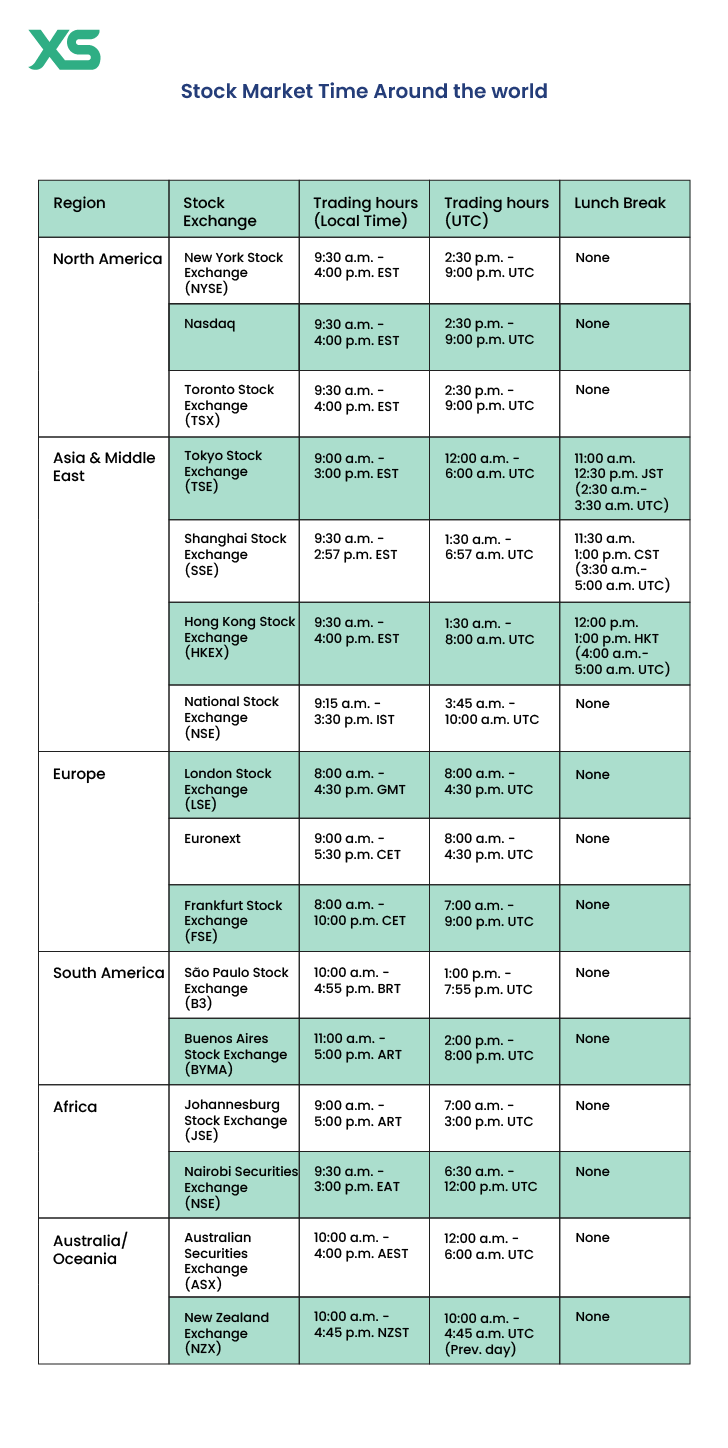
Different continents and countries have their own primary stock exchanges, each with unique operating hours dictated by local business customs and time zones. Here’s a brief overview of some of the world’s major exchanges and their approximate local trading hours (which then need to be converted to your local time zone):
- Asia-Pacific:
- Tokyo Stock Exchange (TSE): 9:00 AM – 11:30 AM JST (Japan Standard Time) and 12:30 PM – 3:00 PM JST (with a midday lunch break).
- Shanghai Stock Exchange (SSE): 9:30 AM – 11:30 AM CST (China Standard Time) and 1:00 PM – 3:00 PM CST.
- Hong Kong Stock Exchange (HKEX): 9:30 AM – 12:00 PM HKT (Hong Kong Time) and 1:00 PM – 4:00 PM HKT.
- Australian Securities Exchange (ASX): 10:00 AM – 4:00 PM AEST (Australian Eastern Standard Time).
- Europe:
- London Stock Exchange (LSE): 8:00 AM – 4:30 PM GMT/BST (Greenwich Mean Time/British Summer Time).
- Euronext (Paris, Amsterdam, Brussels, Lisbon): 9:00 AM – 5:30 PM CET/CEST (Central European Time/Central European Summer Time).
- Frankfurt Stock Exchange (XETRA): 9:00 AM – 5:30 PM CET/CEST.
- North America (beyond U.S.):
- Toronto Stock Exchange (TSX): 9:30 AM – 4:00 PM ET, aligning with U.S. markets.
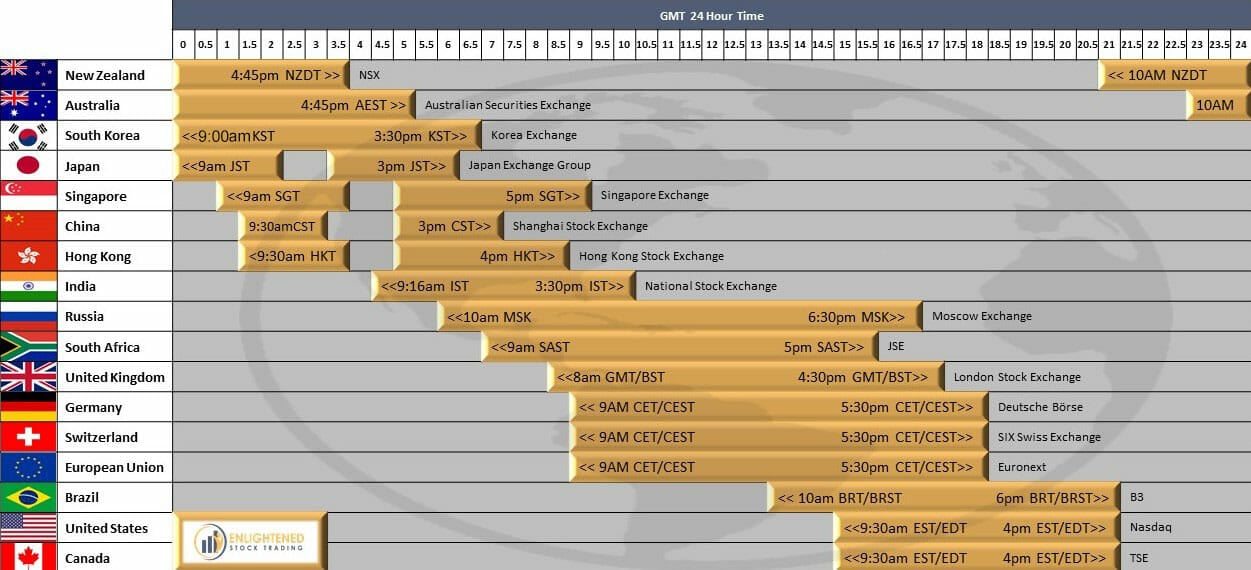
These hours highlight the staggered nature of global trading. When the U.S. market is asleep, Asian and European markets are actively trading, reacting to their own local news and global developments. This interconnectedness means that events unfolding in one part of the world can significantly influence market sentiment and prices by the time other exchanges open.
The Concept of 24/5 Trading: Continuous Opportunities
While no single stock exchange is open 24 hours a day, the continuous cycle of global markets creates an effective 24/5 trading environment for financial instruments like currencies (forex), commodities, and to some extent, global equity ETFs and derivatives. As the major Asian markets begin their day, they pass the baton to European markets, which then hand off to North American markets. By the time North America closes, Asia is typically preparing to reopen.
This continuous flow is particularly important for macroeconomic news and global events. A major policy announcement in China could impact European markets hours before U.S. markets open, and a European central bank decision could affect U.S. futures even before their regular session begins. For sophisticated traders and institutional investors, this 24/5 environment necessitates constant monitoring and often involves trading teams operating across different time zones. For individual investors, it emphasizes the importance of understanding how global events can shape local market openings.
Why Market Hours Matter: Implications for Investors
Understanding market hours goes beyond mere scheduling; it directly impacts investment strategies, risk management, and overall trading efficiency. The dynamics within and outside standard trading sessions can present both unique opportunities and significant pitfalls.
Strategic Trading: Adapting to Market Schedules
Different trading styles often align with specific market hours:
- Day Traders: These individuals thrive within the standard 9:30 AM to 4:00 PM ET session, relying on high liquidity and volatility for short-term gains. They typically avoid holding positions overnight due to unpredictable after-hours news.
- Swing Traders: Holding positions for a few days to several weeks, swing traders must be aware of overnight risks but may also capitalize on momentum built during extended hours or anticipate reactions to news released outside standard hours.
- Long-Term Investors: For those focused on buy-and-hold strategies, the minute-by-minute fluctuations during trading hours are less critical. However, they still need to be aware of major market closures for planning dividends, rebalancing portfolios, or executing large orders when liquidity is optimal.
- News Traders: These investors actively seek to profit from market reactions to corporate announcements (earnings, mergers) or economic data. Knowing when these releases typically occur (often before market open or after market close) is paramount to their strategy.
Managing Risk and Opportunity Outside Standard Hours
The pre-market and after-hours sessions, while offering flexibility, introduce distinct risks and opportunities:
- Lower Liquidity and Higher Volatility: As discussed, fewer participants mean orders can have a disproportionately larger impact on prices, leading to wider price swings and less favorable execution for retail investors. This can be an opportunity for those who correctly anticipate news reactions but a significant risk for others.
- Information Asymmetry: Major news, particularly earnings reports, is often released during extended hours. Professional traders with access to fast information feeds and automated systems can react quicker than retail investors, creating an uneven playing field.
- Unexpected Gaps: A stock might close at one price at 4:00 PM ET and then open significantly higher or lower the next morning due to after-hours news, creating a “gap” that can surprise investors holding positions overnight.
Prudent investors often exercise caution during extended hours, especially with significant capital. Understanding these dynamics helps in setting appropriate stop-loss orders or choosing to only trade during peak liquidity.
Leveraging Technology for Market Monitoring
Modern financial technology plays a crucial role in navigating complex market hours. Investors can utilize:
- Trading Platforms with Extended-Hours Access: Many brokerage platforms offer the ability to place orders during pre-market and after-hours sessions, though with specific order types (e.g., limit orders are highly recommended).
- Real-time News Feeds: Subscribing to financial news services that provide immediate alerts on economic data and company announcements is vital for reacting promptly, regardless of market hours.
- Market Data Apps and Websites: Tools that track global market indices, futures, and currency movements can provide early indicators of how different regions are reacting to news, giving insight into potential U.S. market openings.
- Alerts and Notifications: Setting up price alerts or news alerts on your preferred stocks can keep you informed without needing constant screen time, especially during extended hours.
These technological aids empower investors to stay connected and informed, but they also necessitate disciplined use to avoid information overload or impulsive decision-making.
Key Considerations for Informed Trading
Beyond the mechanics of opening and closing times, several overarching factors are intertwined with market hours, impacting investor behavior and strategy.
Market Volatility and Liquidity Across Sessions
The interplay between volatility and liquidity is a constant theme across all market sessions. During the standard trading hours, high liquidity typically dampens extreme volatility, as there are always buyers and sellers willing to absorb large orders. However, specific periods within the standard session, such as the opening and closing hours, tend to exhibit higher volatility. The first 30-60 minutes after the open often see rapid price movements as traders react to overnight news and pre-market activity. Similarly, the last hour before the close can be volatile due to institutional “window dressing,” rebalancing, and last-minute order execution.
Conversely, extended-hours sessions are characterized by lower liquidity and potentially higher volatility. Small orders can move prices significantly, making it challenging for retail investors to get favorable fills. Understanding these liquidity variations helps investors decide when to enter or exit positions, prioritizing periods where their orders are most likely to be executed efficiently and fairly.
The Impact of Economic Announcements
Economic data releases are pivotal events that can trigger significant market movements. Many key announcements from governments and central banks (e.g., inflation reports, interest rate decisions, employment figures) are strategically scheduled outside regular trading hours or shortly after market open to give participants time to digest the information and prevent immediate, knee-jerk reactions from disrupting the entire market.
For example, the U.S. jobs report (Non-Farm Payrolls) is typically released at 8:30 AM ET on the first Friday of each month, 60 minutes before the market opens. This allows institutional traders and algorithms to prepare their strategies, and for retail investors to assess the data’s implications before the regular session begins. Awareness of these schedules is critical for any trader whose strategy is sensitive to macroeconomic news.
Planning Around Holidays and Early Closures
Overlooking market holidays or early closures can lead to missed opportunities or, more critically, an inability to react to unforeseen events. Imagine needing to sell shares urgently due to breaking news, only to find the market is closed for a holiday. Similarly, forgetting an early close can lead to positions being held overnight against your will, exposing you to unexpected price gaps the next morning.
Financial platforms and reliable financial news sources consistently publish market holiday calendars well in advance. Incorporating these dates into your personal trading calendar is a simple but effective risk management practice. It allows you to plan order executions, manage liquidity, and ensure you have access to the market when you need it most.
Conclusion
The question “when does the stock market open and close?” unravels a complex tapestry of global financial activity, revealing far more than just a set of fixed hours. It underscores the interconnectedness of international markets, the strategic importance of various trading sessions, and the critical need for investors to be informed, adaptable, and technologically savvy.
From the concentrated liquidity of the U.S. standard session to the risk-reward dynamics of extended-hours trading, and the continuous relay of global exchanges, each aspect plays a role in shaping investment outcomes. By thoroughly understanding these rhythms—when to engage, when to pause, and when to prepare for the next wave of activity—investors can enhance their decision-making, manage risks more effectively, and ultimately navigate the intricate world of finance with greater confidence and strategic insight. Staying abreast of market schedules isn’t just about knowing when you can trade; it’s about knowing when you should trade, and when it’s best to observe and plan.
aViewFromTheCave is a participant in the Amazon Services LLC Associates Program, an affiliate advertising program designed to provide a means for sites to earn advertising fees by advertising and linking to Amazon.com. Amazon, the Amazon logo, AmazonSupply, and the AmazonSupply logo are trademarks of Amazon.com, Inc. or its affiliates. As an Amazon Associate we earn affiliate commissions from qualifying purchases.