
In the evolving landscape of air travel, understanding the true cost of your journey has become an increasingly complex endeavor, particularly when flying with ultra-low-cost carriers (ULCCs) like Spirit Airlines. What appears to be an incredibly attractive base fare can quickly escalate once ancillary services, such as a carry-on bag, are factored into the equation. For the financially savvy traveler, deciphering these charges isn’t just about avoiding a surprise at the gate; it’s about mastering the art of budget travel and making informed economic decisions. This comprehensive guide will dissect Spirit’s carry-on bag fees, exploring their dynamic pricing structure, the financial implications for passengers, and strategic approaches to minimize your overall travel expenditure.
Understanding Spirit Airlines’ Business Model and Its Impact on Your Wallet
Spirit Airlines operates on a distinct business model designed to offer the lowest possible base airfares. This strategy, while enticing to budget-conscious travelers, necessitates a different approach to revenue generation compared to traditional full-service carriers. Understanding this model is the first step in financially navigating your Spirit flight effectively.
The “Unbundled” Fare Strategy: A Deep Dive into Cost Components
Spirit Airlines pioneered the “unbundled” fare strategy, a concept that has since been adopted in varying degrees by many other airlines. In essence, the base ticket price covers only the absolute essentials: your seat on the plane. Every additional service, from seat selection to in-flight beverages, and crucially, baggage, is treated as an optional add-on, each with its own separate charge.
This unbundling allows Spirit to advertise incredibly low headline fares, which often appear significantly cheaper than competitors. However, the catch lies in the fact that many of these “optional” services are considered necessities by most travelers. A carry-on bag is a prime example. While some travelers might manage with just a personal item, the vast majority require additional luggage for their trip. By separating these costs, Spirit empowers passengers to customize their travel experience, theoretically paying only for what they need. From a financial perspective, this shifts the burden of cost management onto the consumer, requiring diligent pre-planning to avoid unexpected expenses.
Revenue Generation Beyond the Base Fare: The Ancillary Services Playbook
Ancillary services—anything beyond the basic transportation from point A to point B—are a critical pillar of Spirit Airlines’ financial success. These services, which include everything from baggage fees and seat assignments to priority boarding and even printing your boarding pass at the airport, contribute a substantial portion of the airline’s total revenue. For Spirit, these ancillary revenues often exceed the revenue generated from the base fares themselves.
This “ancillary services playbook” is a masterclass in monetizing every touchpoint of the travel journey. By maintaining a low base fare, Spirit attracts a large volume of passengers. Once these passengers are “in the funnel,” they are presented with a menu of options, each designed to improve their travel experience for an additional fee. For the airline, this strategy provides a robust and diversified revenue stream, less susceptible to fluctuations in fuel prices or base fare competition alone. For the traveler, it means every decision, from how you pack to when you check-in, has a direct financial implication. This necessitates a proactive approach to budgeting and a deep understanding of what constitutes a “free” service versus a paid one.
The Trade-off: Low Base Fares vs. Potentially Higher Total Costs
The primary trade-off inherent in Spirit’s model is the dynamic between advertised low base fares and the potential for a higher total cost of travel. While the initial ticket price might be incredibly attractive, adding on a carry-on bag, a checked bag, seat selection, and perhaps an in-flight snack can quickly push the final expenditure past what a more “all-inclusive” fare on a legacy carrier might have cost.
This trade-off places a significant responsibility on the traveler to perform a thorough cost-benefit analysis before booking. It’s not enough to compare the base fare of Spirit with a competitor; one must factor in all anticipated ancillary charges. For a minimalist traveler who can fit everything into a personal item, Spirit genuinely offers an unbeatable value. For someone requiring a carry-on and a specific seat, the financial advantage diminishes, and in some cases, can even reverse. This means the savvy traveler must calculate the fully loaded price of their Spirit flight and compare it against competitors’ fully loaded prices to determine the truly most economical option. The “low base fare” is a powerful psychological anchor, but financial prudence demands looking beyond it.
Deconstructing Spirit’s Carry-On Bag Fees: What You Really Pay
The question “how much is a carry-on bag with Spirit?” does not have a single, fixed answer. Spirit employs a highly dynamic pricing model for its baggage fees, meaning the cost can vary significantly based on several factors. Understanding these variables is crucial for accurate budgeting.
The Dynamic Pricing Algorithm: Factors Influencing Your Carry-On Cost
Spirit Airlines utilizes a sophisticated dynamic pricing algorithm for its baggage, much like it does for its flight tickets. This means that the price you pay for a carry-on bag is not static but fluctuates based on a range of factors:
- Booking Channel: The cheapest way to add a carry-on bag is almost always during your initial flight booking on Spirit’s website. Purchasing a bag through Spirit’s mobile app might offer similar rates. However, if you wait until check-in online, the price typically increases. The most expensive options are usually purchasing at the airport kiosk, at the check-in counter, or, prohibitively, at the boarding gate. This tiered pricing structure incentivizes passengers to commit to their baggage needs early in the booking process.
- Booking Time: The earlier you purchase your carry-on bag, the cheaper it tends to be. Prices are lowest during the initial booking process. They then progressively increase as you get closer to your departure date. This encourages passengers to finalize their travel plans and ancillary purchases well in advance, providing Spirit with greater predictability and an additional revenue stream from last-minute decisions.
- Route and Demand Sensitivity: Just like flight fares, baggage fees can also be influenced by the specific route you are flying and the demand for that route. High-demand routes or peak travel times might see higher baggage fees. This market-based pricing ensures that Spirit optimizes its revenue potential across its network.
- Spirit Saver$ Club Membership Benefits: For frequent Spirit flyers, membership in the Spirit Saver$ Club can significantly reduce baggage fees, including carry-ons. This paid membership program offers discounts on fares and ancillary services, essentially functioning as a loyalty program that provides direct financial benefits. For those who fly Spirit regularly, the annual membership fee can quickly pay for itself through bag fee savings alone, making it a valuable financial tool.
Carry-On vs. Personal Item: The Critical Distinction for Cost Savings
One of the most vital distinctions for any Spirit Airlines passenger is understanding the difference between a “personal item” and a “carry-on bag,” as this directly impacts whether you incur a fee.
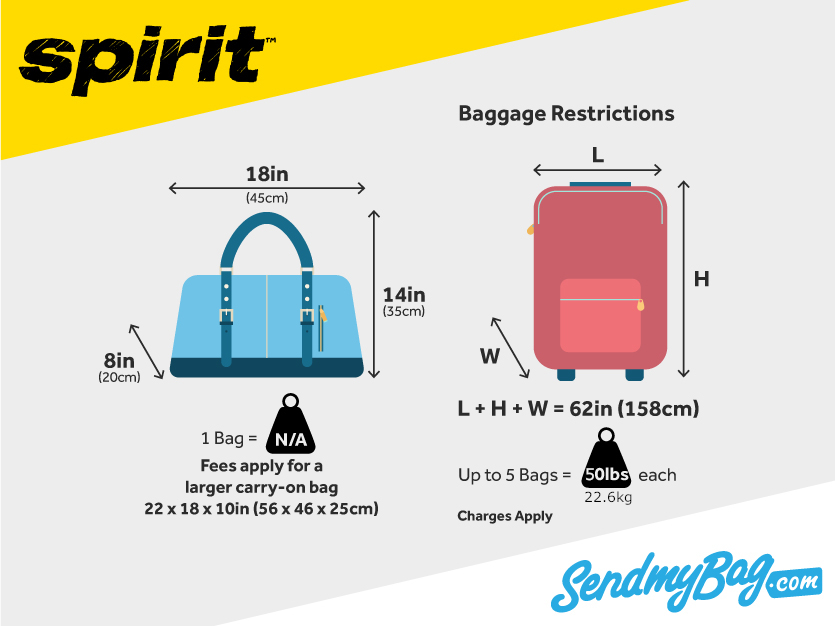
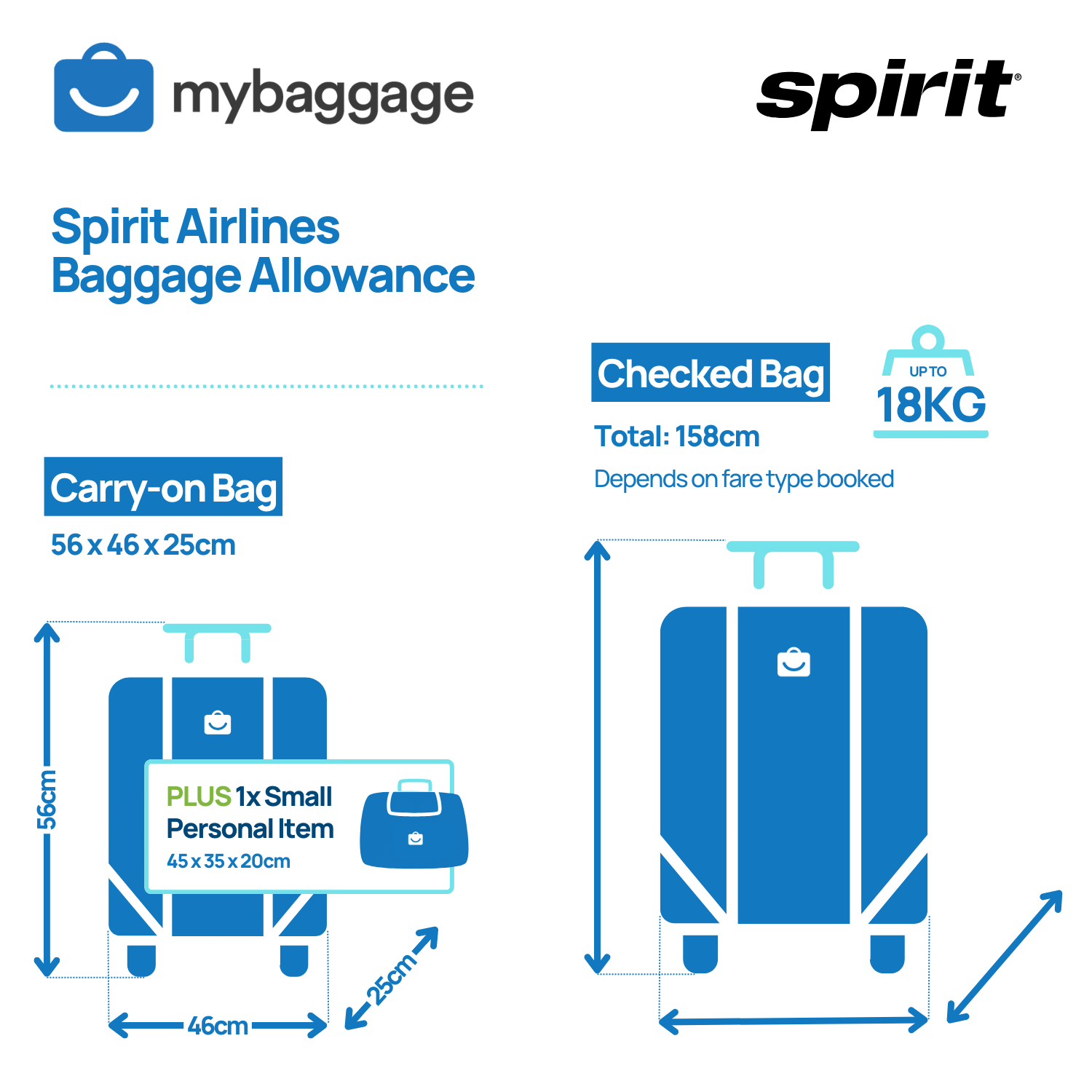
- Personal Item: Spirit Airlines allows one free personal item per passenger. This item must fit under the seat in front of you and typically has maximum dimensions (e.g., 18 x 14 x 8 inches). Examples include a small backpack, a laptop bag, a purse, or a brief case. The key is that it must be compact enough to be stowed without encroaching on another passenger’s space or requiring overhead bin access. This is your primary opportunity for free storage.
- Carry-On Bag: A carry-on bag is larger than a personal item and is designed to be stowed in the overhead bin. Spirit’s maximum dimensions for a carry-on are typically 22 x 18 x 10 inches, including handles and wheels. This is the item for which Spirit charges a fee.
Misunderstanding this distinction is a common pitfall that leads to unexpected charges at the airport. Travelers accustomed to other airlines where a “carry-on” is often included with the base fare may assume the same for Spirit, only to be hit with a hefty fee at the gate. Financial planning for Spirit must begin with a clear understanding of what you can bring for free versus what will cost you.
The Hidden Costs of Misunderstanding Bag Dimensions
Beyond the distinction between personal item and carry-on, the exact dimensions of your bags are paramount. Spirit Airlines is known for strictly enforcing its baggage size limits. They have sizing bins at check-in counters and boarding gates, and if your bag does not fit, you will be subject to additional fees.
These fees are not only higher than if you had paid for the bag online, but they can also be significantly more expensive if you are forced to pay at the gate. An oversized personal item will be treated as a carry-on, incurring a carry-on fee. An oversized carry-on might even be forced to be checked, potentially incurring both an oversized bag fee and a checked bag fee, often at the highest possible airport rates. This is a classic example of a “hidden cost” that arises from a lack of diligent pre-planning and adherence to airline rules. For the financially prudent traveler, measuring and weighing bags at home is not just a recommendation; it’s a critical step in avoiding unnecessary expenditure.
Financial Strategies to Minimize Spirit Carry-On Expenses
Successfully navigating Spirit’s fee structure requires proactive financial planning and strategic decision-making. By implementing specific tactics, travelers can significantly reduce or even eliminate carry-on bag expenses.
Mastering the Personal Item: Maximize Your Free Allowance
The most effective strategy to save on carry-on fees is to avoid them entirely by utilizing only your free personal item. This requires a minimalist packing approach but is entirely feasible for short trips or those who pack efficiently. Invest in a personal item bag designed to maximize space within Spirit’s dimensions (e.g., a “travel backpack” specifically designed to fit under an airline seat). Learn packing hacks like rolling clothes, using compression cubes, and wearing your bulkiest items to conserve space. Treating your personal item as a financial asset—something that saves you money—can shift your mindset towards more efficient packing.
Strategic Bag Purchase Timing: Locking in Lower Rates
As established, the timing of your bag purchase directly impacts its cost. Always aim to purchase your carry-on bag during your initial flight booking on Spirit’s website. If you are unsure whether you will need a carry-on, err on the side of caution and add it during booking. You might be able to remove it later (though refunds for ancillary services can be complex) or, at the very least, you avoid the significantly higher fees if you decide last minute that you do need it. Proactive financial commitment to your baggage needs yields the lowest possible price.
The Value Proposition of Spirit Saver$ Club for Frequent Fliers
For individuals who fly Spirit Airlines three or more times a year, or even just for a family taking one round-trip flight, the Spirit Saver$ Club can present a compelling financial advantage. The annual membership fee provides discounted fares and, more importantly for this discussion, significantly reduced baggage fees, including for carry-ons. Before booking, calculate if the sum of your anticipated bag fee savings (and potential fare discounts) exceeds the annual membership cost. If it does, then the Saver$ Club becomes a shrewd financial investment, turning potential expenses into savings. It’s a classic example of a “subscription model” delivering value to the frequent customer.
Weighing the Checked Bag Option: A Cost-Benefit Analysis
Sometimes, a carry-on bag is not the most economical choice. Spirit’s baggage fees can sometimes make a checked bag a cheaper alternative, especially if your carry-on is at the higher end of the price spectrum or if you are traveling with very specific items that are cheaper to check. For example, if you’re flying for a week and plan to buy souvenirs, a checked bag might be a better financial decision than trying to cram everything into a paid carry-on, particularly if the checked bag allowance provides more overall volume for a comparable or lower price. Always compare the price of a carry-on versus a checked bag during your booking process. For longer trips, or those requiring more items, a single checked bag might be a more cost-effective solution than multiple paid carry-ons.
The Broader Financial Implications of Choosing Ultra-Low-Cost Carriers
While carry-on bag fees are a significant component of Spirit’s ULCC model, understanding the full financial impact requires looking beyond just baggage. The choice to fly Spirit has broader financial implications that extend to budgeting, travel planning, and overall value assessment.
Total Cost of Travel: Beyond the Ticket Price and Bag Fees
The truly financially savvy traveler evaluates the total cost of travel, not just the sum of the ticket and bag fees. This includes costs for:
- Seat Selection: Spirit charges for specific seat assignments. If you need to sit with family or prefer an aisle, this is an additional cost.
- Printing Boarding Pass: While often avoidable by using the app or printing at home, it’s a potential airport fee.
- In-flight amenities: Snacks and drinks are not free.
- Transportation to/from airport: Consider if Spirit flies to airports further from your destination, potentially increasing ground transportation costs.
- Time Value: While not a direct monetary cost, extensive layovers or less convenient flight times (often a trade-off for lower fares) can have an opportunity cost.
A comprehensive financial analysis requires summing all these potential expenditures to get a true “all-in” price, allowing for a genuine comparison with other airlines.
Budgeting for the Unexpected: Flexibility and Hidden Fees
Flying ULCCs requires a robust travel budget that includes a contingency fund. While diligent planning can mitigate many ancillary fees, unexpected situations can still arise. A bag that is unexpectedly deemed too large at the gate, a sudden need to change flight dates, or missing a flight could lead to significant financial penalties. Spirit, like many ULCCs, has strict change and cancellation policies that often come with substantial fees. Building a buffer into your travel budget for such eventualities is a hallmark of sound financial planning when dealing with airlines that monetize every service.
Spirit vs. Full-Service Carriers: A Comparative Financial Analysis
The decision to choose Spirit or a full-service carrier (FSC) often boils down to a comparative financial analysis. For a short, direct flight with minimal baggage, Spirit can still be the unequivocally cheaper option. However, as the complexity of your travel increases—longer flights, multiple bags, specific seating needs, desire for in-flight amenities, or a need for flexibility—the financial gap between Spirit and an FSC narrows, or even reverses.
FSCs often bundle services like a carry-on bag, checked bag, seat selection, and even meals into their base fare, especially on longer routes. While their initial advertised price might be higher, the final cost might be comparable or even lower when all services are accounted for. This comparison is particularly important for business travelers or families for whom certain “optional” services are essentially mandatory.

Empowering the Traveler: Smart Financial Planning for Air Travel
Ultimately, mastering the art of flying with Spirit Airlines, and indeed any ULCC, is about empowering yourself with smart financial planning. It means being proactive, meticulous, and informed. It involves:
- Researching all fees thoroughly before booking.
- Accurately assessing your personal travel needs and baggage requirements.
- Calculating the total “all-in” cost of your journey, including all potential ancillary fees.
- Comparing this total cost against the fully loaded costs of competing airlines.
- Adhering strictly to bag size and weight limits to avoid gate fees.
By adopting these financial strategies, travelers can transform the seemingly complex fee structure of Spirit Airlines into a predictable and manageable part of their budget, ensuring that their journey truly remains ultra-low-cost, not just in advertised fare but in final expenditure. The power to save money lies squarely in the hands of the informed and prepared consumer.
aViewFromTheCave is a participant in the Amazon Services LLC Associates Program, an affiliate advertising program designed to provide a means for sites to earn advertising fees by advertising and linking to Amazon.com. Amazon, the Amazon logo, AmazonSupply, and the AmazonSupply logo are trademarks of Amazon.com, Inc. or its affiliates. As an Amazon Associate we earn affiliate commissions from qualifying purchases.