
In the modern economic landscape, the question of what business is “best” to start has shifted from a search for a passion-project to a rigorous analysis of financial viability, scalability, and return on investment (ROI). With inflation fluctuating and the cost of capital remaining a significant hurdle for many, the ideal business model in the current era is one that prioritizes high profit margins, low overhead, and the ability to scale without a linear increase in expenses. For the aspiring entrepreneur focused on wealth creation and financial independence, the answer lies in understanding the intersection of market demand and capital efficiency.
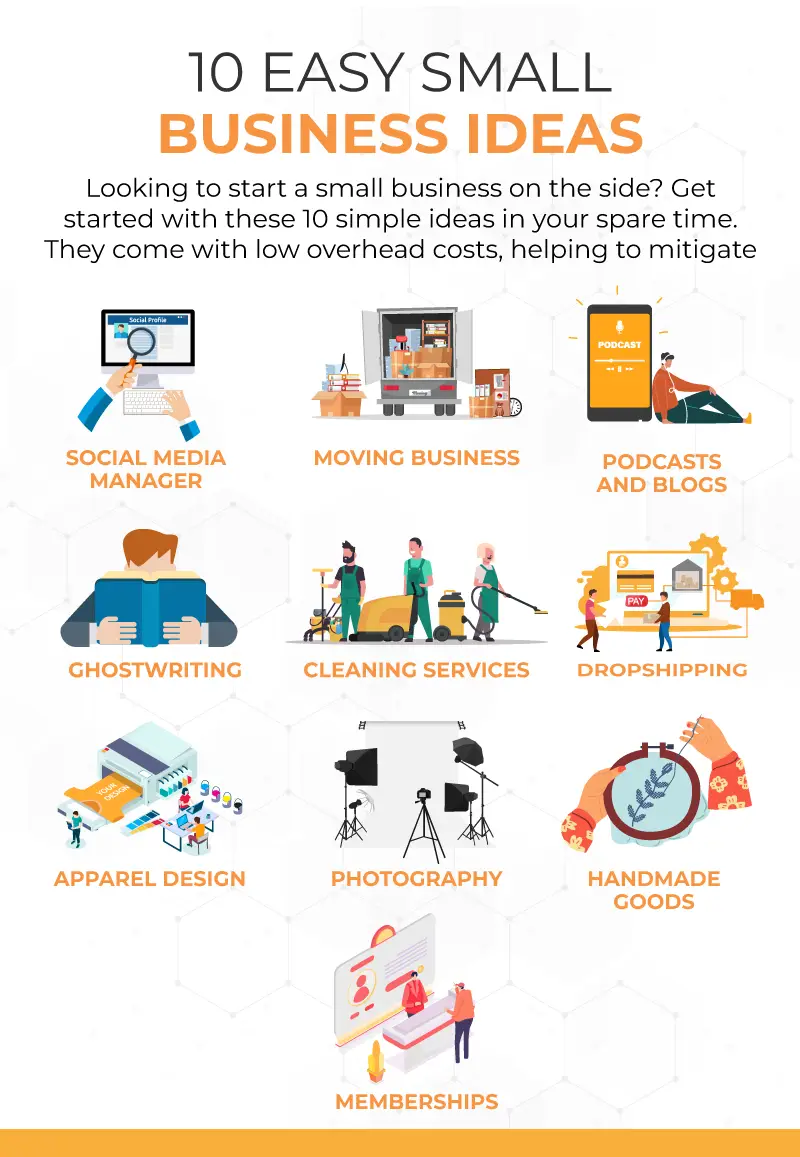
The most successful ventures today are rarely those that require massive upfront investment in physical infrastructure. Instead, they are businesses that leverage intellectual property, digital ecosystems, and specialized skill sets. Whether you are looking to build a side hustle to supplement your primary income or seeking to launch a full-scale enterprise, evaluating your options through a financial lens is the only way to ensure long-term sustainability.
Evaluating High-Yield, Low-Capital Business Models
When assessing the financial merit of a potential business, the first metric to consider is the barrier to entry versus the potential for high-yield returns. Traditionally, businesses like manufacturing or retail required significant “bricks and mortar” investment. Today, the most financially prudent start-ups are those that operate with a “lean” methodology, minimizing the burn rate while maximizing the lifetime value (LTV) of each customer.
Service-Based Agencies and Specialized Consulting
From a purely financial perspective, a service-based agency is often the best business to start for those with a high-value skill set. The primary reason is the immediate positive cash flow. Unlike product-based businesses that require inventory and shipping logistics, a service business sells expertise. This results in profit margins that can often exceed 70% or 80%, as the primary cost of goods sold (COGS) is simply the founder’s time.
Specialized consulting—ranging from financial advisory and tax strategy to specialized marketing and operations management—allows an entrepreneur to charge premium rates. By positioning yourself as a “high-ticket” provider, you reduce the number of clients needed to reach significant monthly revenue targets. This model is highly attractive because it requires nearly zero initial capital, allowing the founder to reinvest early profits into marketing or hiring subcontractors to facilitate growth.
Digital Product Creation and Information Arbitrage
Another powerhouse in the “Money” category is the creation of digital products. This includes everything from online courses and proprietary research reports to subscription-based newsletters and templates. The financial beauty of a digital product lies in its scalability. Once the asset is created, the cost of selling it to the 1,000th customer is virtually the same as selling it to the first.
This is what economists call “zero marginal cost of reproduction.” In a traditional business, to double your sales, you often have to nearly double your costs. In digital products, your profit margins expand exponentially as you scale. This makes it one of the most effective vehicles for building significant wealth with minimal recurring overhead.
The Rise of the Lean Side Hustle: Maximizing Cash Flow with Minimal Risk
For many individuals, the best business to start is one that can be managed alongside a full-time career, providing a secondary stream of income that can eventually be transitioned into a primary wealth-building vehicle. These “lean” side hustles focus on cash flow and rapid testing of market assumptions without risking one’s life savings.
E-commerce and Strategic Drop-servicing
While traditional e-commerce has become increasingly competitive, strategic “drop-servicing” or high-ticket niche e-commerce remains highly profitable. Drop-servicing involves acting as the middleman between a client who needs a specialized service (like video editing or copywriting) and a vetted freelancer who performs the work. Financially, this functions like a brokerage. You capture the spread between what the client pays and what the freelancer charges, without the need to perform the manual labor yourself.
On the product side, focusing on high-ticket items (products with a high price point) allows for better margins even with rising advertising costs. Selling ten items at a $500 profit each is often more sustainable for a small business than selling 500 items at a $10 profit each, primarily due to the reduced administrative and customer service burden.
Content Monetization and Affiliate Ecosystems

The “Creator Economy” is often dismissed as a hobby, but when viewed through a financial lens, it is a sophisticated affiliate marketing and media business. By building an audience around a specific financial or niche interest, an entrepreneur can monetize through affiliate commissions, sponsorships, and lead generation.
The financial advantage here is the “compounding” nature of content. A well-written article or a strategic video can generate leads and revenue for years after its initial publication. This creates a form of “passive” income that, while requiring significant upfront work (sweat equity), offers a return on time invested that far outpaces traditional hourly wages.
Investing in Scalability: Moving from Solopreneur to Enterprise
Starting a business is about more than just surviving the first year; it is about building an asset that has value beyond the owner’s daily involvement. To transition a business from a “job you own” to a true financial asset, you must focus on systems, automation, and profit margin protection.
Understanding Unit Economics and Overhead
To determine the best business to start, you must perform a deep dive into unit economics. This means understanding exactly how much it costs to acquire a single customer (Customer Acquisition Cost, or CAC) compared to how much revenue that customer generates over their lifetime. A business with a high CAC and a low LTV is a financial trap, regardless of how popular the product might be.
The most profitable businesses are those that can maintain a CAC-to-LTV ratio of at least 1:3. If you spend $100 to get a customer, they should bring in at least $300 in profit. As you scale, you must also be wary of “lifestyle creep” within the business—increasing overhead, such as expensive office leases or unnecessary software subscriptions, can quickly erode the gains made through increased sales.
Leveraging Automation for Financial Efficiency
In the current technological climate, automation is a primary driver of business profitability. By using software to handle lead generation, customer onboarding, billing, and follow-ups, a small team can operate with the efficiency of a much larger corporation. This keeps the “revenue per employee” metric high, which is a key indicator of a healthy, scalable business. When choosing a business model, ask yourself: “How much of this can be automated?” The more “hands-off” the operational side becomes, the more time the owner can spend on high-level financial strategy and growth.
Future-Proofing Your Business: Trends in the Financial Landscape
The best business to start is one that will still be relevant and profitable a decade from now. This requires an understanding of long-term economic trends, including the shift toward decentralized work, the increasing importance of data, and the changing ways in which consumers manage their personal finances.
The Sustainability Factor and Long-term Equity
From a wealth-building perspective, you should aim to build a business that is “sellable.” This means the business has value to an outside investor or buyer. Service businesses that depend entirely on the founder’s personality are harder to sell than those with established brands, proprietary systems, and recurring revenue models.
Subscription models (SaaS or membership sites) are particularly highly valued by investors because of the predictability of their cash flow. When evaluating a business idea, consider the “exit strategy.” Even if you never intend to sell, building a business that is ready to be sold ensures that you are creating real equity and a robust financial foundation.

Navigating Market Volatility and Inflation
Finally, the best business to start in an inflationary environment is one with “pricing power.” This is the ability to raise prices in response to rising costs without losing your customer base. Businesses that provide essential services or high-ROI outcomes for their clients have the most pricing power.
If your business helps a client save $10,000 or earn an additional $50,000, they will be much more willing to accept a price increase than if you are selling a luxury consumer good that can be easily cut from a budget. Focusing on B2B (business-to-business) services or products that directly impact a customer’s bottom line is often the safest financial bet during periods of market volatility.
In conclusion, the best business to start is defined by its financial resilience and its ability to turn time and capital into significant, scalable profit. By prioritizing high margins, leveraging digital assets, and focusing on unit economics, an entrepreneur can build a venture that not only provides immediate cash flow but also serves as a long-term vehicle for wealth accumulation. Success in business is not just about the “what,” but about the “how”—how you manage your capital, how you scale your operations, and how you protect your profit in an ever-changing financial world.
aViewFromTheCave is a participant in the Amazon Services LLC Associates Program, an affiliate advertising program designed to provide a means for sites to earn advertising fees by advertising and linking to Amazon.com. Amazon, the Amazon logo, AmazonSupply, and the AmazonSupply logo are trademarks of Amazon.com, Inc. or its affiliates. As an Amazon Associate we earn affiliate commissions from qualifying purchases.