
In an era of unprecedented financial complexity and opportunity, the question “How do you manage money?” transcends a simple inquiry; it becomes a fundamental pillar of personal well-being, freedom, and future security. Effective money management is not an innate talent but a learnable skill, a discipline that empowers individuals to navigate economic currents, achieve their aspirations, and mitigate the inevitable financial shocks of life. It’s about more than just earning and spending; it’s about understanding, strategizing, protecting, and growing your resources with intention and foresight.
For many, the concept of managing money evokes feelings of dread or overwhelm, often associated with tight budgets, complicated investments, or the burden of debt. However, at its core, sound financial management is about gaining control, making informed choices, and aligning your financial actions with your personal values and goals. It’s a journey, not a destination, requiring continuous learning and adaptation. This comprehensive guide will dissect the essential elements of effective money management, offering insights and actionable strategies to empower you on your path to financial mastery.
I. Laying the Foundation: Understanding Your Financial Landscape
Before you can effectively manage your money, you must first understand where you stand. This involves taking an honest, detailed look at your current financial situation, much like a doctor performs a diagnosis before prescribing treatment. Without this foundational understanding, any attempts at financial improvement will be akin to sailing without a compass.
A. The Power of Budgeting: Tracking Every Dollar
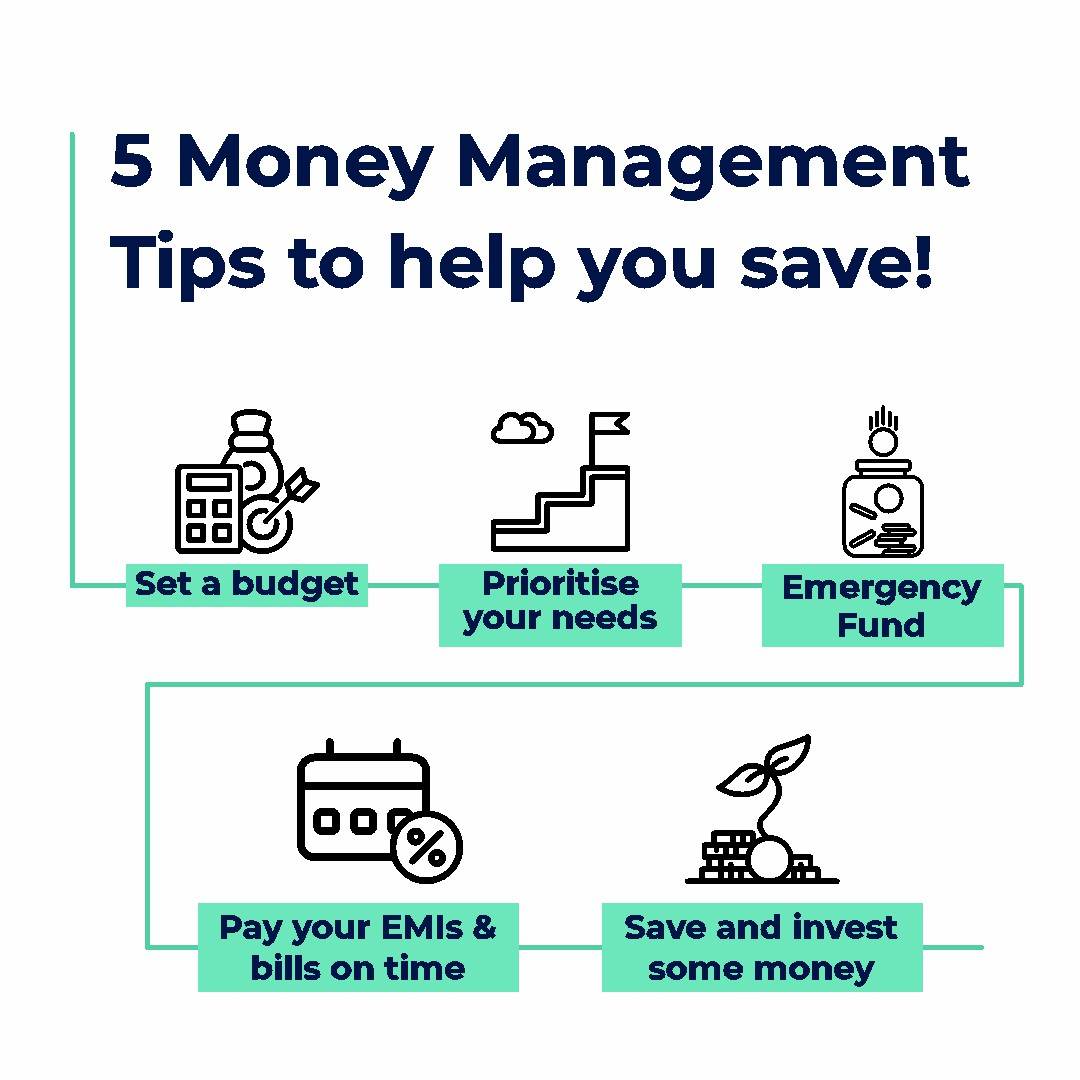
Budgeting is often perceived as restrictive, but it is, in fact, the ultimate tool for financial freedom. A budget is simply a plan for how you will spend and save your money. It brings clarity to your cash flow, revealing exactly where your money comes from and, more importantly, where it goes. The goal is not to deprive yourself but to ensure that your spending aligns with your priorities and goals.
There are various budgeting methods, each with its own merits. The 50/30/20 rule is a popular starting point: 50% of your after-tax income for needs (housing, utilities, groceries), 30% for wants (dining out, entertainment, hobbies), and 20% for savings and debt repayment. For those who prefer granular control, zero-based budgeting assigns every dollar a “job,” ensuring that income minus expenses (and savings) equals zero. The envelope system (or its digital equivalent) involves allocating specific amounts for variable expenses into separate categories, preventing overspending. Regardless of the method chosen, consistency is paramount. Regularly tracking your income and expenses – whether through spreadsheets, budgeting apps, or traditional pen and paper – is the bedrock of financial awareness. This practice not only highlights areas where you might be overspending but also identifies opportunities to reallocate funds towards your financial goals. It transforms abstract numbers into tangible insights, empowering you to make conscious decisions about your money rather than letting it slip away unnoticed.
B. Calculating Your Net Worth: A Snapshot of Your Financial Health
While budgeting focuses on cash flow, calculating your net worth provides a holistic view of your financial health at a specific point in time. Your net worth is simply the difference between what you own (assets) and what you owe (liabilities). Assets include cash, savings accounts, investments (stocks, bonds, mutual funds), retirement accounts, real estate, and even valuable personal possessions. Liabilities encompass mortgages, car loans, student loans, credit card debt, and any other outstanding debts.
Regularly calculating your net worth (e.g., quarterly or annually) offers invaluable insights. A positive and growing net worth indicates financial progress, while a stagnant or declining figure signals a need for adjustment. This exercise moves beyond the monthly budget to show your overall trajectory. It’s a powerful metric for long-term planning, demonstrating the cumulative effect of your financial decisions. Understanding your net worth helps you gauge how far you are from your long-term goals, whether it’s retirement, purchasing a home, or achieving financial independence. It provides a clear, objective measure of your financial position, motivating you to increase assets, decrease liabilities, and build lasting wealth.
II. Strategic Planning: Setting Goals and Conquering Debt
Once you have a clear understanding of your financial landscape, the next critical step is to chart your course. This involves setting specific, measurable goals and developing robust strategies to achieve them, particularly in the realm of debt management and consistent saving.
A. Defining Your Financial Goals: The Roadmap to Success
Without clear goals, financial management can feel aimless. Goals provide direction, motivation, and a framework for decision-making. These goals should be categorized into short-term (e.g., building an emergency fund, saving for a vacation), mid-term (e.g., saving for a down payment on a home, paying off a specific debt), and long-term (e.g., retirement, children’s education, financial independence).
For maximum effectiveness, financial goals should be SMART:
- Specific: Clearly defined, not vague. “Save for a down payment” is better than “save money.”
- Measurable: Quantifiable targets. “Save $20,000 for a down payment.”
- Achievable: Realistic given your income and expenses.
- Relevant: Aligned with your personal values and broader life objectives.
- Time-bound: A deadline creates urgency and accountability. “Save $20,000 for a down payment in 3 years.”
Setting SMART goals allows you to break down large aspirations into manageable steps, making the journey feel less daunting. Each small success builds momentum and reinforces positive financial habits, transforming abstract desires into concrete plans of action.
B. Mastering Debt: Strategies for Freedom
Debt, particularly high-interest consumer debt like credit cards, can be a significant impediment to financial progress. Conquering debt is often the most impactful step you can take to improve your financial health and free up cash flow for savings and investments.
Two popular strategies for debt repayment are the debt avalanche and the debt snowball. The debt avalanche method prioritizes debts with the highest interest rates first. You make minimum payments on all debts except the one with the highest interest rate, on which you pay as much as possible. Once that debt is paid off, you roll the payment amount into the next highest interest rate debt. This method saves you the most money in interest over time. Conversely, the debt snowball method prioritizes debts with the smallest balances first, regardless of interest rate. You pay minimums on all other debts and aggressively pay off the smallest one. Once it’s gone, you take the amount you were paying on that debt and add it to the payment of the next smallest debt. This method provides psychological wins, as smaller debts are paid off quickly, building motivation. Additionally, exploring options like debt consolidation, where multiple debts are combined into a single loan with a lower interest rate, can simplify repayment and reduce monthly costs. Avoiding new debt is equally crucial; focusing on paying cash or using credit cards responsibly (paying off balances in full each month) prevents a recurrence of the problem.
C. Automating Savings: The “Pay Yourself First” Principle
One of the most powerful strategies in money management is the “pay yourself first” principle. This involves making saving a priority, treating it as a non-negotiable expense rather than an afterthought. The easiest way to implement this is through automation. Set up automatic transfers from your checking account to your savings, investment, or retirement accounts immediately after each payday.
By automating your savings, you remove the temptation to spend the money before it can be saved. It ensures that a portion of your income consistently goes towards your financial goals, whether it’s building your emergency fund, contributing to your retirement, or saving for a down payment. Over time, these consistent contributions, combined with the power of compound interest, can lead to substantial wealth accumulation with minimal effort once the system is in place. This approach builds financial discipline effortlessly, making saving a natural and integral part of your financial routine.
III. Growing Your Wealth: Smart Investing for the Future
Once you have a solid foundation of budgeting and debt management, and a consistent savings habit, the next frontier is investing. Investing is where your money starts working for you, building wealth over the long term and helping you achieve significant financial milestones.
A. The Fundamentals of Investing: Building Compound Returns
Investing can seem intimidating, but understanding a few core principles can demystify the process. At the heart of long-term wealth creation is compound interest – the concept that your earnings generate their own earnings. The earlier you start investing, the more time your money has to compound, leading to exponential growth. Even small, consistent investments can grow into substantial sums over decades.
Another critical concept is risk tolerance and diversification. Every investment carries some level of risk. Your risk tolerance is your willingness and ability to take on that risk, which typically correlates with your investment horizon and personality. Diversification is the strategy of spreading your investments across various asset classes, industries, and geographies to reduce risk. Instead of putting all your eggs in one basket, you spread them out, so if one investment performs poorly, others might perform well, mitigating the overall impact. Common investment vehicles include stocks (ownership in companies), bonds (loans to governments or corporations), mutual funds and ETFs (Exchange Traded Funds), which are professionally managed portfolios of stocks, bonds, or other assets, offering instant diversification. Real estate can also be a powerful investment, offering potential for appreciation and rental income. Starting with low-cost index funds or ETFs is often recommended for beginners as they offer broad market exposure and diversification at a minimal cost.

B. Retirement Planning: Securing Your Golden Years
Retirement planning is arguably one of the most vital aspects of long-term financial management. The goal is to accumulate enough wealth to live comfortably without relying solely on employment income in your later years. The earlier you begin, the less you need to contribute monthly, thanks to compound interest.
Key retirement vehicles include 401(k)s (employer-sponsored plans, often with matching contributions, which are essentially free money) and IRAs (Individual Retirement Arrangements). Within IRAs, you typically choose between a Traditional IRA (contributions may be tax-deductible now, but withdrawals are taxed in retirement) and a Roth IRA (contributions are made with after-tax money, but qualified withdrawals in retirement are tax-free). Understanding the tax advantages and rules of each is crucial for optimizing your retirement savings. Maximizing contributions, especially to accounts with employer matches, is a cornerstone of effective retirement planning.
C. Diversification: Spreading Risk and Maximizing Potential
Beyond simply owning different types of investments, strategic diversification involves thoughtful asset allocation. This means deciding how to distribute your investment capital among various asset classes (e.g., stocks, bonds, cash, real estate) based on your age, financial goals, and risk tolerance. A younger investor with a long time horizon might allocate more towards stocks (higher potential return, higher risk), while an older investor nearing retirement might favor a more conservative mix with more bonds (lower risk, lower returns).
Regularly rebalancing your portfolio is also essential. Over time, market fluctuations can cause your initial asset allocation to drift. Rebalancing involves periodically adjusting your portfolio back to your target allocations by selling assets that have overperformed and buying assets that have underperformed. This disciplined approach helps manage risk, keeps your portfolio aligned with your strategy, and can even involve a “buy low, sell high” dynamic without requiring market timing. A well-diversified and regularly rebalanced portfolio is resilient and better positioned for long-term growth.
IV. Safeguarding Your Assets: Protecting Against the Unexpected
Effective money management isn’t just about accumulating wealth; it’s also about protecting it from unforeseen circumstances that can derail your financial plans. A robust financial strategy includes safeguards to mitigate risks and ensure stability.
A. The Essential Emergency Fund: Your Financial Safety Net
One of the most critical components of financial security is an adequately funded emergency fund. This is a dedicated savings account specifically designed to cover unexpected expenses like job loss, medical emergencies, or significant home repairs. The general recommendation is to save at least three to six months’ worth of essential living expenses. For those with less stable income or dependents, a larger fund of 9-12 months might be more appropriate.
The emergency fund should be easily accessible but separate from your everyday checking account, typically held in a high-yield savings account where it can earn a modest return without being exposed to market volatility. The primary purpose of this fund is peace of mind and to prevent you from going into debt (e.g., credit cards) when unexpected events occur. It acts as a buffer, allowing you to weather financial storms without jeopardizing your long-term goals.
B. The Role of Insurance: Shielding Against Life’s Uncertainties
Insurance is a critical, yet often overlooked, element of financial protection. It acts as a financial safety net, transferring the risk of significant financial loss from you to an insurance company in exchange for regular premiums. Different types of insurance protect against various risks:
- Health Insurance: Essential for covering medical expenses, which can be astronomically high without coverage.
- Life Insurance: Provides financial support to your dependents if you pass away prematurely, ensuring their financial stability. Term life insurance is often the most cost-effective option for most families.
- Disability Insurance: Replaces a portion of your income if you become unable to work due to illness or injury. Your ability to earn an income is your greatest asset; protecting it is paramount.
- Homeowner’s/Renter’s Insurance: Protects your dwelling and belongings against damage, theft, and liability.
- Auto Insurance: Required in most places, it covers damages and liability arising from car accidents.
Carefully assessing your insurance needs and ensuring adequate coverage is a proactive step in protecting your financial health from potentially devastating setbacks. It’s not an expense; it’s an investment in your financial security.
C. Basic Estate Planning: Ensuring Your Legacy
While often postponed, basic estate planning is an integral part of responsible money management, regardless of your wealth level. It ensures that your assets are distributed according to your wishes and that your loved ones are protected in the event of your incapacitation or death.
Key documents include a Will, which dictates how your assets will be distributed and who will care for minor children. A Trust can offer more control over asset distribution, potentially avoid probate, and provide tax advantages. A Durable Power of Attorney designates someone to make financial decisions on your behalf if you’re unable to, and an Advance Healthcare Directive (or Living Will) outlines your medical wishes. Neglecting estate planning can lead to legal complexities, family disputes, and your assets being distributed according to state laws rather than your intentions. Taking these steps provides peace of mind, knowing that your financial legacy and loved ones are taken care of.
V. The Journey Continues: Lifelong Financial Vigilance
Money management is not a one-time task but an ongoing process that evolves with your life stages, income changes, and economic conditions. Continuous learning, regular reviews, and a willingness to adapt are crucial for sustaining financial health.
A. Regular Reviews and Adaptations: Staying on Track
Your financial plan, much like a living organism, needs regular check-ups and adjustments. Life is dynamic: you might get a new job, start a family, buy a home, or experience unexpected expenses. These events necessitate revisiting your budget, savings goals, investment strategy, and insurance coverage.
Schedule annual or semi-annual financial reviews. During these reviews, assess your progress towards your goals, scrutinize your spending patterns, evaluate your investment performance, and ensure your insurance policies are still adequate. Are your goals still relevant? Has your risk tolerance changed? Are there new financial products or strategies that could benefit you? This proactive approach ensures your financial plan remains aligned with your current circumstances and future aspirations, preventing drift and keeping you on the path to financial success.
B. Seeking Expert Guidance: When to Consult a Professional
While many aspects of personal finance can be managed independently, there are times when professional guidance is invaluable. A financial advisor can provide personalized advice, help you develop a comprehensive financial plan, optimize your investments, and navigate complex financial decisions, such as retirement planning, estate planning, or tax strategies.
When choosing a financial advisor, look for a fiduciary, someone legally obligated to act in your best interest. Consider their credentials (e.g., Certified Financial Planner™ – CFP®), their fee structure (fee-only advisors avoid commission-based conflicts of interest), and their experience. A good advisor doesn’t just manage your money; they educate you and empower you to make smarter financial decisions. They can offer a valuable external perspective and specialized knowledge that can significantly enhance your financial journey.
C. Cultivating Financial Literacy: Empowering Your Decisions
Ultimately, the most effective money managers are those who commit to lifelong learning and cultivate their financial literacy. The financial world is constantly evolving, with new products, regulations, and economic trends emerging regularly. Staying informed empowers you to make better decisions, recognize opportunities, and avoid costly mistakes.
Engage with financial education resources: read reputable financial books and articles, listen to podcasts, follow trusted financial news sources, and attend workshops. Understand basic economic principles, learn about different investment products, and grasp the implications of policy changes. The more knowledgeable you become, the more confident and capable you will be in managing your money. Financial literacy is an ongoing commitment to empowering yourself, transforming financial management from a chore into a source of continuous growth and personal development.
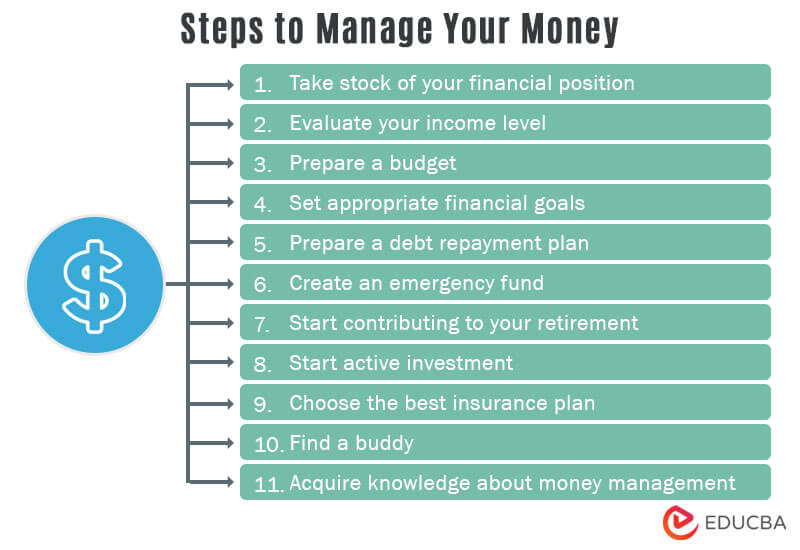
In conclusion, managing money effectively is a journey that requires discipline, education, and adaptability. By laying a strong foundation with budgeting and net worth tracking, setting clear financial goals, strategically tackling debt, consistently investing for growth, safeguarding against risks, and committing to continuous learning, you can build a robust financial future. It’s about taking control, making conscious choices, and ultimately, achieving the financial peace and freedom you deserve.
aViewFromTheCave is a participant in the Amazon Services LLC Associates Program, an affiliate advertising program designed to provide a means for sites to earn advertising fees by advertising and linking to Amazon.com. Amazon, the Amazon logo, AmazonSupply, and the AmazonSupply logo are trademarks of Amazon.com, Inc. or its affiliates. As an Amazon Associate we earn affiliate commissions from qualifying purchases.