
For both seasoned investors and those new to the world of equities, understanding the operating hours of the stock market is fundamental. It’s not a 24/7 enterprise, and knowing when the doors are open, and more importantly, when they are shut, is crucial for effective trading, portfolio management, and financial planning. The rhythmic opening and closing bell define the parameters of market activity, dictating when buy and sell orders can be executed and when the financial world takes a pause. This guide delves into the specifics of stock market closures, exploring the reasons behind them, their impact on investors, and what happens when the trading day ends.
Understanding Standard Market Operating Hours
The perception of constant market activity, fuelled by real-time news and global finance, often belies the structured reality of exchange operating hours. The major stock exchanges around the world operate within defined windows, and understanding these is the first step in comprehending market closures.
The Rhythms of NYSE and NASDAQ
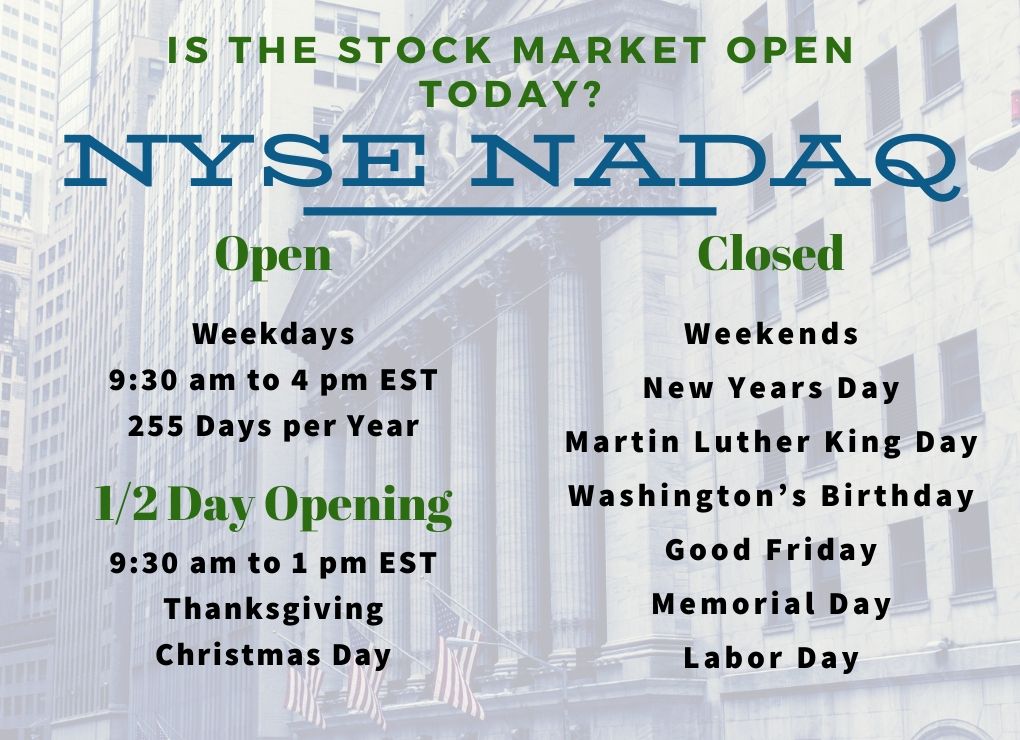
In the United States, the two primary stock exchanges, the New York Stock Exchange (NYSE) and the NASDAQ, share largely identical trading hours. Their regular session typically runs from 9:30 AM to 4:00 PM Eastern Time (ET), Monday through Friday. This seven-and-a-half-hour window is when the bulk of trading activity occurs, characterized by high liquidity and price discovery.
The opening and closing bells are iconic symbols of this daily ritual. The opening bell signifies the start of a new trading day, often accompanied by heightened volatility as pre-market orders are processed and the market reacts to overnight news. The closing bell marks the end of regular trading, at which point orders cease to be executed at standard market prices until the next session.
It’s important to differentiate this regular trading session from “pre-market” and “after-hours” trading. Pre-market trading typically begins around 4:00 AM ET and extends until the market opens at 9:30 AM ET. After-hours trading, conversely, usually starts immediately after the 4:00 PM ET close and can run until 8:00 PM ET. While these extended hours offer flexibility, they often come with significantly lower liquidity, wider bid-ask spreads, and increased volatility, making them a different beast altogether compared to the regular session. Investors trading during these periods must be acutely aware of these differences and the associated risks.
Global Market Variations: A Brief Overview
While the NYSE and NASDAQ hours provide a baseline, it’s vital for global investors or those with diversified portfolios to recognize that trading hours vary significantly across different international exchanges. For instance, European markets like the London Stock Exchange (LSE) and Euronext (which operates exchanges in Paris, Amsterdam, Brussels, and Lisbon) typically open and close earlier in the Greenwich Mean Time (GMT) or Central European Time (CET) zones, aligning with their local business hours.
Asian markets, such as the Tokyo Stock Exchange (TSE) and the Shanghai Stock Exchange (SSE), operate even further ahead in terms of time zones, often opening when U.S. markets are winding down for the day or are completely closed. The unique aspect of some Asian markets is their lunch breaks, during which trading is temporarily halted—a practice not common in major Western exchanges.
Understanding these variations is critical for anyone engaging in international investing, as it impacts when and how news from one market might influence another, and how an investor can manage their global portfolio effectively without being caught off guard by unexpected closures or time zone discrepancies. The continuous cycle of global markets means that while one market rests, another is bustling, creating a nearly 24-hour global trading environment, even if individual exchanges adhere to strict operating hours.
Key Holidays and Unexpected Closures
Beyond the regular Monday-Friday schedule, the stock market observes a number of holidays throughout the year, during which all trading ceases. Additionally, unforeseen circumstances can lead to early closures or complete shutdowns.
Federal Holidays: A Calendar of Market Downtime
The U.S. stock market adheres to a specific calendar of federal holidays, closing completely on these days to observe national commemorations and allow market participants to rest. These holidays include:
- New Year’s Day: January 1st (or the closest weekday if it falls on a weekend).
- Martin Luther King, Jr. Day: Third Monday in January.
- Washington’s Birthday (Presidents’ Day): Third Monday in February.
- Good Friday: The Friday before Easter Sunday (a Christian holiday, but observed by the stock market).
- Memorial Day: Last Monday in May.
- Juneteenth National Independence Day: June 19th (or the closest weekday if it falls on a weekend).
- Independence Day: July 4th (or the closest weekday if it falls on a weekend).
- Labor Day: First Monday in September.
- Thanksgiving Day: Fourth Thursday in November.
- Christmas Day: December 25th (or the closest weekday if it falls on a weekend).
It is imperative for investors to consult the official holiday schedule published by the NYSE and NASDAQ at the beginning of each year, as slight variations or specific circumstances can sometimes alter these dates. For example, if a holiday falls on a Saturday, the market might close on the preceding Friday. If it falls on a Sunday, the market might close on the following Monday. Being aware of these closures prevents missed trading opportunities or confusion regarding order execution.
Early Closings and Special Circumstances
In addition to full-day holidays, the stock market sometimes observes early closings. These are less frequent but typically occur on the day before or after certain major holidays. For instance, the market often closes early on the day before Independence Day or Christmas Eve, if it falls on a weekday. On these days, trading usually concludes at 1:00 PM ET, rather than the standard 4:00 PM ET. Such early closures allow market participants to begin their holiday celebrations sooner while still accommodating a portion of the trading day.
Beyond scheduled early closings, the market can also experience unexpected or emergency closures. These are rare but have occurred historically during significant national events or crises. Examples include:
- National Mourning: Markets may close to honor a deceased national figure. The market closed for four days after 9/11 and for a day after President George H.W. Bush’s death.
- Natural Disasters: Extreme weather events, such as hurricanes that significantly impact New York City, have led to temporary closures or delayed openings to ensure the safety of personnel and the functionality of trading infrastructure.
- Technical Glitches: While less common for full closures, significant technical issues can lead to temporary trading halts across an entire exchange or specific securities.
Such emergency closures, while disruptive, are often implemented to maintain market integrity, ensure orderly trading, and protect investors during periods of extreme uncertainty or operational challenges.
Weekend Realities: The Default Closure
Perhaps the most consistent and widely understood closure of the stock market is over the weekend. From 4:00 PM ET on Friday until 9:30 AM ET on Monday (or Tuesday, if a holiday falls on Monday), the U.S. stock market is completely closed. This weekend pause is a fundamental aspect of market structure globally, offering a necessary break for market participants to analyze the week’s events, plan for the next, and for companies to release earnings reports or other significant news without direct, immediate market reaction during trading hours.
The weekend also serves as a crucial period for the market infrastructure to undergo maintenance and updates, ensuring smooth operation when trading resumes. While the market is physically closed, financial news continues to unfold, geopolitical events can occur, and companies can make announcements. This often leads to “gap ups” or “gap downs” in stock prices at Monday’s open, as the market collectively processes the weekend’s information. Investors must therefore remain vigilant even during off-hours, especially regarding their longer-term holdings, as news released over the weekend can significantly impact their portfolios.
The Investor’s Perspective: Navigating Closed Markets
Market closures are not merely periods of inactivity; they significantly influence investor behavior, trading strategies, and risk management. Understanding how to navigate these periods is a critical skill for any market participant.
Impact on Trading Strategies and Order Execution
For active traders, market closures mean a temporary halt to strategy execution. Day traders, by definition, cannot operate during closed hours. Swing traders and long-term investors also need to adjust. Orders placed when the market is closed are typically queued and executed at the opening bell of the next trading session. This can lead to unexpected execution prices if significant news breaks overnight or over a holiday period, causing a stock’s price to “gap” up or down from its previous closing price.
Consider a “market order” placed while the market is closed. This order would be executed at whatever the prevailing market price is when trading resumes, which could be substantially different from the price at which the market last closed. For this reason, many investors prefer to use “limit orders” when placing trades outside of regular hours, specifying the maximum price they are willing to pay (for a buy) or the minimum price they are willing to accept (for a sell). This provides a degree of control over execution price, though it carries the risk that the order may not be filled if the market moves beyond the specified limit.
Beyond the Bell: After-Hours and Pre-Market Trading
While the regular trading session defines the core market hours, technology has enabled “extended-hours trading” through electronic communication networks (ECNs). Pre-market and after-hours trading sessions allow investors to react to news released outside of standard hours, such as earnings reports or major economic data.
However, trading in these sessions comes with unique challenges:
- Lower Liquidity: Fewer participants mean fewer buyers and sellers, which can make it harder to execute trades quickly and at desired prices.
- Wider Spreads: The difference between the bid (highest price a buyer is willing to pay) and ask (lowest price a seller is willing to accept) can be much larger, making trades more expensive.
- Increased Volatility: Prices can fluctuate more dramatically on thinner volume, increasing risk.
- Limited Order Types: Not all order types available during regular hours may be supported in extended sessions.
Investors engaging in after-hours or pre-market trading must be sophisticated and understand these elevated risks. It’s often where institutional investors and professional traders operate, using it to front-run potential moves in the regular session.
Why Market Closures Are Essential
The practice of closing stock markets for weekends and holidays is not arbitrary; it serves several critical functions that contribute to the overall health and stability of the financial system:
- Time for Reflection and Analysis: Closures provide a necessary pause for investors, analysts, and companies to absorb news, process information, and strategize without the immediate pressure of active trading. This can help prevent rash decisions driven by short-term emotional responses.
- Operational Maintenance: The physical and digital infrastructure of stock exchanges is complex. Downtime allows for essential system maintenance, upgrades, and security checks, ensuring reliable and secure operations when the market reopens.
- Fair Information Dissemination: Companies often release significant news, such as earnings reports or merger announcements, after market close or before market open. This ensures that all market participants have equal access to the information before trading resumes, theoretically creating a more level playing field and reducing the potential for insider trading based on staggered information.
- Reduced Volatility and Herd Mentality: Continuous trading could exacerbate volatility, especially during periods of crisis. Breaks allow for a cooling-off period, potentially preventing panic selling or irrational exuberance from spiraling out of control.
- Work-Life Balance: While highly driven, even finance professionals need time away from the screens. Market closures contribute to a degree of work-life balance for all participants in the financial ecosystem.
The Future of Trading: Towards 24/7 Accessibility?
The concept of a market that never sleeps is a recurring topic of discussion, particularly with advancements in technology and the increasing globalization of finance.
Technological Advancements and Global Integration
The rise of cryptocurrencies, which trade 24/7/365, has ignited conversations about whether traditional stock markets will eventually follow suit. Electronic trading platforms and sophisticated algorithms have already largely replaced the physical trading floor, making continuous operation a technological possibility. Furthermore, the interconnectedness of global markets means that news from Asia can impact Europe, which in turn influences North America. A truly global investor might benefit from being able to adjust their portfolio at any hour.
Some brokerages already offer access to a limited selection of exchange-traded funds (ETFs) or foreign exchange (forex) trading around the clock, blurring the lines of traditional market hours. The trend towards fractional shares and democratized investing also suggests a future where accessibility is paramount.
Pros and Cons of Continuous Trading
While 24/7 stock trading offers potential benefits, it also presents significant challenges:
Pros:
- Immediate Reaction to News: Investors could react to global news or company announcements instantly, potentially reducing overnight gaps.
- Increased Flexibility: Greater convenience for investors in different time zones or with demanding schedules.
- Improved Liquidity: Potentially higher liquidity across all hours if trading activity spreads out.
Cons:
- Investor Burnout: The constant need to monitor markets could lead to mental and physical fatigue, especially for retail investors.
- Market Volatility: Continuous trading could amplify volatility, making markets more unpredictable and harder to manage.
- Regulatory Challenges: Supervising and regulating a 24/7 market poses significant challenges for financial authorities.
- Operational Strain: Maintaining the infrastructure and human support for continuous trading would be immensely complex and costly.
For now, the structured closures of the stock market remain a fundamental characteristic of the financial landscape. While technological advancements continue to push the boundaries of what’s possible, the inherent benefits of planned pauses for reflection, maintenance, and stability ensure that the closing bell will likely continue to signal an important break in the rhythm of global finance for the foreseeable future. Investors must therefore remain informed about these critical windows of operation, treating them not as inconveniences, but as integral components of a robust and orderly market system.
aViewFromTheCave is a participant in the Amazon Services LLC Associates Program, an affiliate advertising program designed to provide a means for sites to earn advertising fees by advertising and linking to Amazon.com. Amazon, the Amazon logo, AmazonSupply, and the AmazonSupply logo are trademarks of Amazon.com, Inc. or its affiliates. As an Amazon Associate we earn affiliate commissions from qualifying purchases.