
The S&P 500 is more than just a number; it is a fundamental pillar of the global financial landscape, a barometer for the health of the U.S. economy, and a benchmark for countless investment strategies. For many investors, economists, and even the general public, the S&P 500 is synonymous with the stock market itself. Its daily fluctuations are headline news, its long-term performance a testament to market resilience, and its composition a snapshot of American corporate power. Yet, despite its omnipresence, the precise origins of this influential index often remain obscure, hidden behind the patina of its enduring legacy. Understanding when and how the S&P 500 was created is not merely an academic exercise; it offers crucial insights into the evolution of financial markets, the development of sophisticated investment tools, and the very concept of tracking economic progress through corporate performance.

This deep dive will unravel the history of the S&P 500, tracing its lineage from nascent attempts to measure market activity to its formal establishment as the comprehensive index we know today. We will explore the motivations behind its creation, the key methodological advancements that set it apart, and the profound impact it has had on investing, economic analysis, and financial decision-making worldwide. By understanding its genesis, we can better appreciate its enduring relevance and its continuous role in shaping our financial understanding.
The Genesis of a Market Icon
The S&P 500 did not spring fully formed into existence. Its creation was the culmination of decades of efforts to accurately represent the broader market, evolving from simpler, more limited indicators. The need for a robust, broad-based index became increasingly apparent as the U.S. economy grew, companies diversified, and the stock market became a more complex and critical component of national wealth.
From Humble Beginnings: Early Market Barometers
Before the S&P 500, financial professionals and investors relied on other indices to gauge market performance. The most famous of these, and indeed a predecessor in spirit, was the Dow Jones Industrial Average (DJIA), created by Charles Dow in 1896. Initially comprising just 12 industrial companies, the DJIA provided a valuable, albeit limited, snapshot of the market. While revolutionary for its time, the DJIA’s small number of components and its price-weighted methodology meant it often struggled to truly reflect the breadth and depth of the burgeoning American economy. As the 20th century progressed, the U.S. economy diversified beyond heavy industry, encompassing sectors like technology, retail, and services. The limitations of a narrow index became evident, prompting a search for a more comprehensive and representative measure.
Other early attempts at market indices included various state-level or industry-specific measures, but none achieved the national scope or methodological sophistication that would eventually characterize the S&P 500. The challenge was to create an index that could capture the aggregate performance of a vast and dynamic market without being overwhelmed by its complexity. This quest for a more accurate and representative benchmark laid the groundwork for the eventual creation of what would become the S&P 500.
The Birth of a Modern Index: 1957 and Beyond
The direct lineage of the S&P 500 can be traced to the Cowles Commission for Research in Economics, which developed a daily stock price index of 500 common stocks in 1933. However, the immediate precursor to today’s S&P 500 was launched by Standard & Poor’s (S&P) as a 90-stock index in 1926. This “Composite Index” represented a significant step forward, offering a broader measure than the DJIA and employing a market-value-weighted methodology, which would become a hallmark of the S&P 500.
The pivotal year for the S&P 500 as we know it was 1957. It was in this year that Standard & Poor’s expanded its existing 90-stock index to include 500 large-cap U.S. companies, rebranding it as the S&P 500 Stock Composite Index. This expansion was a monumental undertaking, driven by the growing need for a more comprehensive and robust indicator of the U.S. stock market’s performance and, by extension, the broader economy. By including 500 of the largest publicly traded companies, spanning all major sectors, the S&P 500 immediately became a far more accurate and influential gauge of market sentiment and economic health than any index before it. Its debut marked a turning point, ushering in an era of more sophisticated market analysis and index-based investing.
Evolution and Methodology: Crafting a Representative Benchmark
The enduring power of the S&P 500 lies not just in its broad coverage but also in its meticulously crafted methodology, which has evolved over time to maintain its relevance and accuracy. Unlike simple averages, the S&P 500 employs a sophisticated approach to company selection and weighting, ensuring it remains a true reflection of the market’s pulse.
Weighting and Selection: The Criteria for Inclusion
The S&P 500 is a market-capitalization-weighted index. This means that companies with larger market values (share price multiplied by the number of outstanding shares) have a greater impact on the index’s movements. This methodology inherently provides a more realistic representation of the market, as larger companies typically have a greater influence on the overall economy and investor portfolios. In contrast, a price-weighted index like the DJIA gives more weight to stocks with higher share prices, regardless of their total market value. The market-cap weighting of the S&P 500 ensures that a 1% move in a trillion-dollar company like Apple or Microsoft affects the index much more than a 1% move in a smaller, albeit still large, constituent.
Inclusion in the S&P 500 is not automatic. Companies must meet stringent criteria set by S&P Dow Jones Indices, the entity that maintains the index. These criteria typically include:
- U.S. Company: The company must be domiciled in the United States.
- Market Cap: A minimum unadjusted market capitalization threshold (which changes over time).
- Liquidity: Shares must be highly liquid, ensuring they can be easily bought and sold.
- Public Float: A significant portion of the company’s shares must be available for public trading (not held by insiders or large institutional investors for long periods).
- Profitability: Companies must demonstrate a track record of positive earnings in the most recent quarter and over the preceding four quarters.
- Sector Representation: The S&P Dow Jones Indices committee also considers sector balance to ensure the index broadly reflects the sector composition of the U.S. economy.
These criteria are regularly reviewed and updated, ensuring that the S&P 500 remains composed of leading U.S. companies that are truly representative of the investable universe.
A Dynamic Index: Adapting to Economic Shifts
One of the S&P 500’s greatest strengths is its dynamism. It is not a static list of 500 companies but rather a constantly evolving index, adapting to the ebbs and flows of the economy and corporate landscape. The S&P Dow Jones Indices committee meets regularly to review its constituents, adding new companies that meet the criteria and removing those that no longer qualify (due to declining market cap, mergers, acquisitions, bankruptcies, or a shift away from U.S. domicile).
This active management ensures that the S&P 500 remains a relevant and accurate reflection of the current economic environment. For instance, companies that once dominated the index, such as General Motors or IBM in their heyday, have seen their weighting diminish over time, while technology giants like Amazon, Google (Alphabet), and Meta (Facebook) have risen to prominence, reflecting the shift from an industrial to a knowledge-based and digital economy. This continuous rebalancing and re-weighting is crucial for the index’s long-term utility as a benchmark and an investment tool, allowing it to capture emerging trends and discard obsolete ones, thus preventing stagnation and maintaining its analytical power.
The S&P 500’s Indispensable Role in Investing
Since its expansion to 500 companies in 1957, the S&P 500 has grown to become arguably the most important stock market index in the world. Its significance extends far beyond simply tracking stock prices; it has fundamentally reshaped how individuals and institutions invest, analyze the market, and manage risk.
A Bellwether for the U.S. Economy
The S&P 500 is widely regarded as the best single gauge of large-cap U.S. equities and a leading indicator of U.S. economic health. Because it encompasses 500 of the largest publicly traded companies across all major sectors, its performance provides a comprehensive snapshot of corporate America’s profitability, growth prospects, and investor sentiment. A rising S&P 500 often signals a robust economy, increasing consumer confidence, and expanding corporate earnings. Conversely, a declining S&P 500 can indicate economic slowdowns, recessionary pressures, or periods of uncertainty.
Economists, policymakers, and business leaders closely monitor the S&P 500’s movements to inform their decisions. Its broad representation makes it a more reliable economic indicator than narrower indices, as it captures trends across a vast swath of industries and geographic regions within the U.S. It serves as a real-time report card on the health and direction of the nation’s financial and economic engine.
The Foundation of Passive Investing
Perhaps one of the most revolutionary impacts of the S&P 500 has been its role in popularizing passive investing. The index became the basis for the first publicly available index fund, launched by Vanguard in 1976 (originally the First Index Investment Trust, now the Vanguard 500 Index Fund). This innovation allowed individual investors to gain diversified exposure to the entire U.S. large-cap stock market at a very low cost, simply by investing in a fund that tracked the S&P 500’s performance.
Before index funds, achieving broad market exposure required significant capital and complex portfolio construction. The S&P 500 index fund democratized investing, making it accessible and affordable for millions. Today, trillions of dollars are invested in S&P 500 index funds and exchange-traded funds (ETFs), making it the most commonly tracked index globally. This shift towards passive investing, largely facilitated by the S&P 500, has profoundly altered the asset management industry, emphasizing low costs, diversification, and long-term holding strategies.
Risk Assessment and Portfolio Diversification
For portfolio managers and financial advisors, the S&P 500 serves as an essential benchmark against which the performance of actively managed funds and individual portfolios is measured. If an actively managed fund consistently underperforms the S&P 500 over a long period, investors often question its value. This benchmark function creates accountability and transparency in the investment world.
Moreover, the S&P 500 is a critical tool for diversification and risk management. Investing in an S&P 500-tracking fund provides instant diversification across 500 companies and numerous sectors, reducing the idiosyncratic risk associated with holding only a few individual stocks. While it doesn’t eliminate market risk, it smooths out the impact of any single company’s poor performance, offering a more stable long-term growth trajectory. It allows investors to participate in the overall growth of the U.S. economy without needing to pick individual winners, making it a cornerstone of prudent financial planning.
Key Milestones and Historical Performance
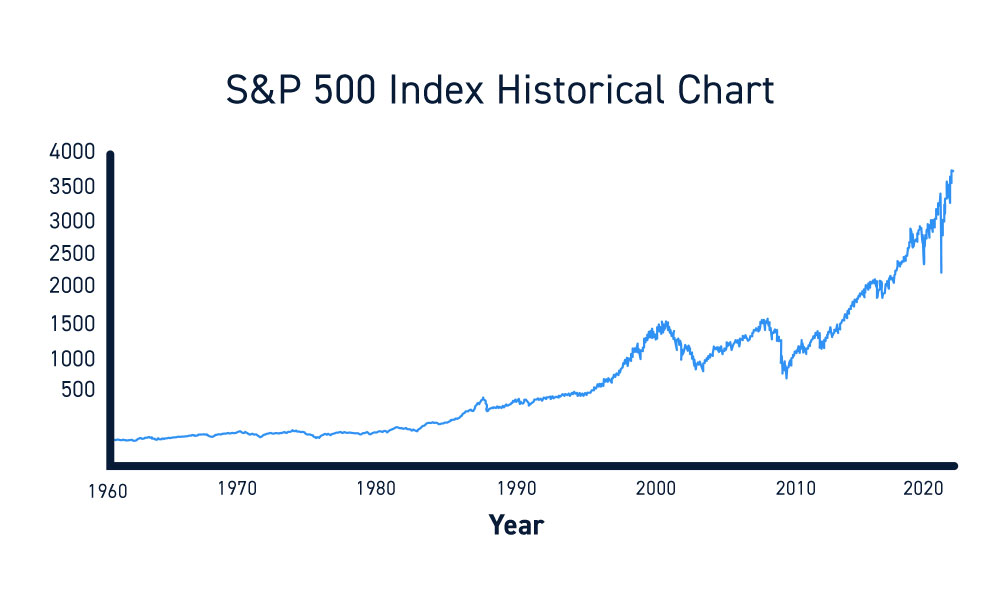
The history of the S&P 500 is interwoven with the economic narrative of the past six decades, reflecting periods of remarkable growth, challenging downturns, and transformative shifts. Its journey is a testament to the resilience of the American economy and the long-term upward trend of equity markets.
Navigating Market Booms and Busts
Since its formal inception in 1957, the S&P 500 has witnessed numerous market cycles. It has soared during periods of economic expansion, technological innovation (such as the dot-com boom of the late 1990s), and corporate prosperity. Conversely, it has endured significant downturns, reflecting economic crises, geopolitical events, and financial contagions. Notable periods of volatility include:
- The 1970s energy crises: A decade marked by inflation and stagflation.
- Black Monday in 1987: A dramatic one-day crash that saw the index lose over 20%.
- The dot-com bust of the early 2000s: A sharp correction after speculative excesses in technology stocks.
- The Global Financial Crisis (GFC) of 2008: A severe recession and credit market freeze that led to significant market declines.
- The COVID-19 pandemic shock of 2020: A rapid, albeit short-lived, market downturn followed by a strong recovery.
Each of these events tested the resilience of the S&P 500, yet in the long run, the index has always recovered and reached new highs, demonstrating the underlying growth potential of the U.S. economy. These historical episodes highlight the cyclical nature of markets and the importance of a long-term perspective for investors.
The Long-Term Perspective
Despite the volatility, the long-term performance of the S&P 500 has been remarkably consistent, offering attractive returns to patient investors. Historically, the annualized average return of the S&P 500 has been approximately 10-12% (including dividends) over extended periods, though past performance is not indicative of future results. This robust long-term growth has made S&P 500 index investing a cornerstone strategy for retirement planning, wealth accumulation, and achieving various financial goals.
The index’s ability to consistently generate returns over decades, even after accounting for significant drawdowns, underscores the power of compounding and the underlying innovation and productivity of the corporations it represents. It serves as a compelling argument for staying invested through market fluctuations, reinforcing the principle that time in the market often outweighs timing the market. The S&P 500’s journey through economic history provides valuable lessons about market dynamics, risk, and the enduring rewards of investing in a broad basket of high-quality companies.
Beyond the Numbers: The S&P 500’s Broader Impact
The S&P 500’s influence extends beyond mere investment metrics, permeating various aspects of finance, economics, and even public discourse. Its conceptual framework has become a template for market analysis globally.
Influencing Global Financial Markets
The S&P 500 is not just a U.S. phenomenon; its methodology and impact ripple across international borders. Many other countries and regions have developed their own market-capitalization-weighted indices based on the S&P 500’s success, creating a standardized way to measure and compare market performance globally. Indices like the S&P/TSX Composite (Canada), FTSE 100 (UK), DAX (Germany), and Nikkei 225 (Japan) all serve similar roles in their respective economies, often drawing conceptual inspiration from the S&P 500’s comprehensive and robust design.
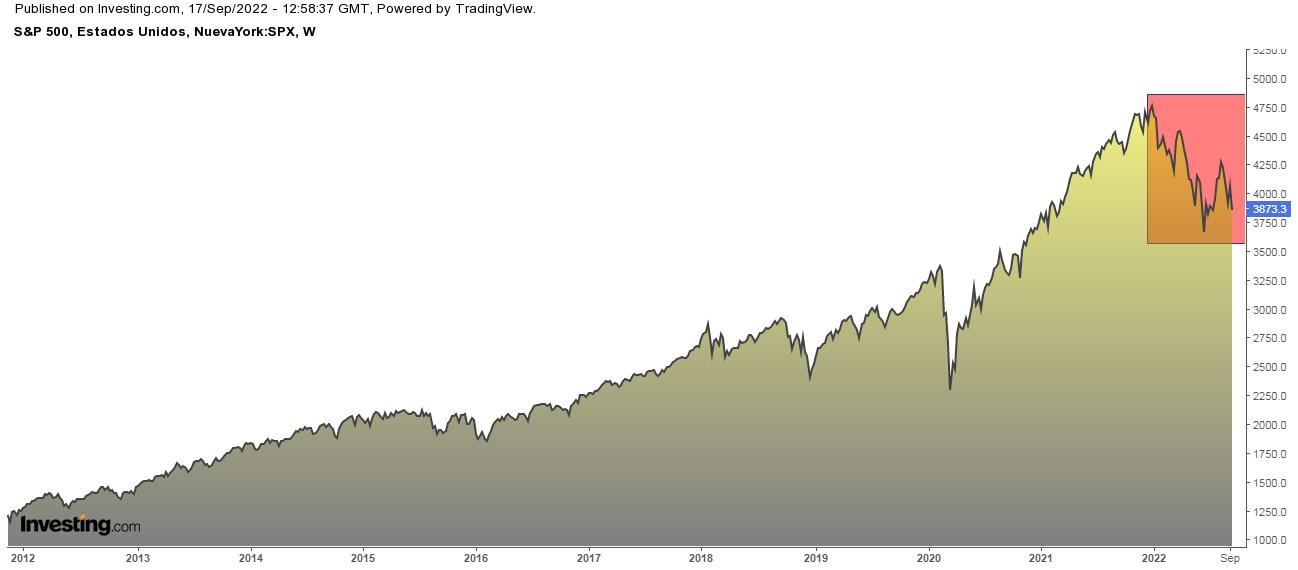
Furthermore, the S&P 500’s performance often has a direct impact on global market sentiment. A strong S&P 500 can boost investor confidence worldwide, encouraging investment in other markets, while a significant downturn in the S&P 500 can trigger sell-offs in Asia, Europe, and emerging markets, demonstrating the interconnectedness of global finance and the U.S. market’s central role.
A Tool for Economic Analysis and Forecasting
Beyond its use by investors, the S&P 500 is a vital instrument for economic analysis and forecasting. Academics and economists use its historical data to study market efficiency, test financial theories, and model economic cycles. Its constituents’ financial reports and earnings calls provide rich data points for understanding sector trends, corporate health, and consumer spending patterns, offering granular insights into the broader economy.
Government agencies and central banks also pay close attention to the S&P 500 as an indicator of financial stability and economic sentiment. Its movements can influence monetary policy decisions, fiscal strategies, and regulatory approaches. For example, a prolonged decline in the S&P 500 might signal a need for stimulus measures, while sustained growth could indicate an economy overheating. In essence, the S&P 500 acts as a continuous public opinion poll of the corporate world, providing invaluable data for both backward-looking analysis and forward-looking projections, cementing its status as an irreplaceable component of modern financial infrastructure.
In conclusion, the S&P 500 was formally expanded to its 500-company format in 1957, building upon earlier, narrower indices. From its roots as a means to track market activity, it has blossomed into an indispensable financial tool that informs investment decisions, measures economic health, and serves as a bedrock for passive investing strategies. Its dynamic nature, rigorous methodology, and long-term resilience underscore its position as a true icon of the financial world, whose legacy continues to shape the future of global markets.
aViewFromTheCave is a participant in the Amazon Services LLC Associates Program, an affiliate advertising program designed to provide a means for sites to earn advertising fees by advertising and linking to Amazon.com. Amazon, the Amazon logo, AmazonSupply, and the AmazonSupply logo are trademarks of Amazon.com, Inc. or its affiliates. As an Amazon Associate we earn affiliate commissions from qualifying purchases.