
Facing a tax bill can be a source of anxiety for many individuals and businesses. Whether you’ve underestimated your quarterly payments, encountered an unexpected financial gain, or received an audit notice, owing taxes to the government is a reality for millions. The crucial step isn’t to panic, but to understand your options and act decisively. This comprehensive guide will navigate the various methods available for settling your tax obligations, explain what to do if you can’t pay immediately, and offer best practices for maintaining financial compliance and peace of mind. Prompt and informed action can help you avoid costly penalties, minimize stress, and secure your financial standing.
Understanding Your Tax Liability and Payment Deadlines
Before you can pay your owed taxes, it’s essential to first accurately understand the amount you owe and the deadlines associated with it. Misinterpreting your liability or missing critical dates can lead to additional penalties and interest.
Deciphering Your Tax Bill or Notice
If you’ve received a notice from the IRS or your state tax authority indicating an amount due, it’s vital to carefully review it. Common IRS notices include CP14 (Balance Due) or LT11 (Notice of Intent to Levy). These documents detail the original tax, any penalties, and accrued interest, as well as the due date for payment. Do not ignore these notices; open them promptly and read them thoroughly. If you disagree with the amount or believe there’s an error, you have the right to challenge it, but this typically requires a written response and supporting documentation within a specified timeframe. It’s often beneficial to consult a tax professional if the notice is complex or if you believe there’s a significant error.
Self-Calculated Owed Amounts
For many, the realization of owing taxes comes during the preparation of their annual income tax return. If your calculations show a balance due, it’s imperative to pay it by the filing deadline to avoid failure-to-pay penalties, even if you file for an extension. An extension to file (Form 4868 for federal taxes) grants you more time to submit your return, but it does not extend the time to pay your taxes. If you anticipate owing money, you should estimate and pay that amount by the original due date. If you discover a mistake after filing and realize you owe more, you can file an amended return (Form 1040-X) and pay the additional amount owed.
Key Payment Deadlines
The most widely known tax payment deadline for federal income tax is April 15th (or the next business day if April 15th falls on a weekend or holiday). However, this isn’t the only deadline. If you are self-employed or have significant income not subject to withholding, you are likely required to pay estimated taxes quarterly using Form 1040-ES. These payments have their own specific deadlines: April 15, June 15, September 15, and January 15 of the following year. Missing these can result in underpayment penalties. Always mark these dates on your calendar and plan your payments accordingly to maintain good standing with tax authorities.
Streamlined Methods for Making Your Payment
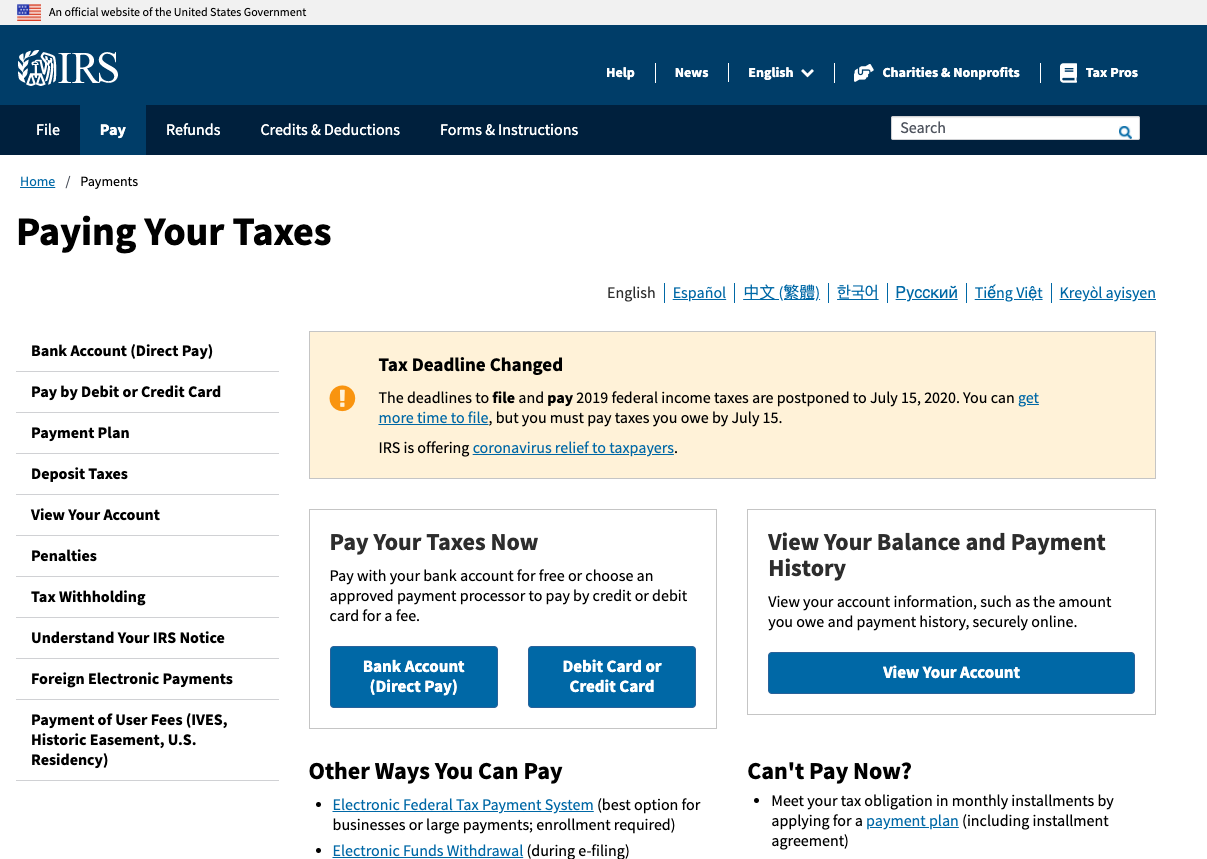
The IRS and state tax agencies offer a variety of convenient methods to pay your owed taxes, ranging from digital solutions to more traditional options. Choosing the right method often depends on your preference for speed, record-keeping, and security.
Electronic Payment Options
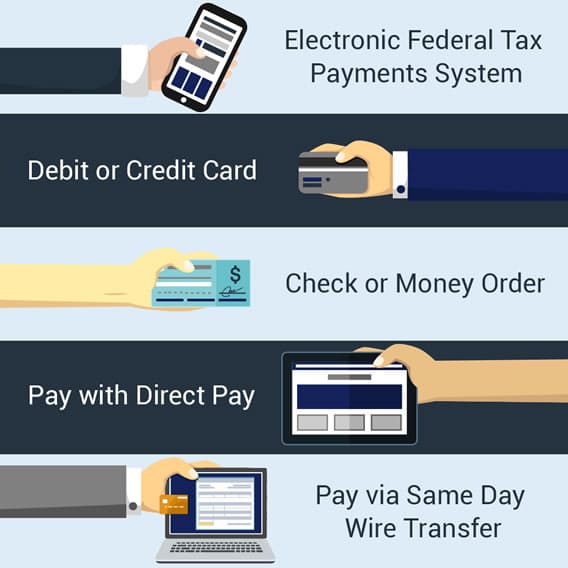
Electronic payment is often the quickest and most secure way to pay your federal taxes. The IRS provides several popular online tools:
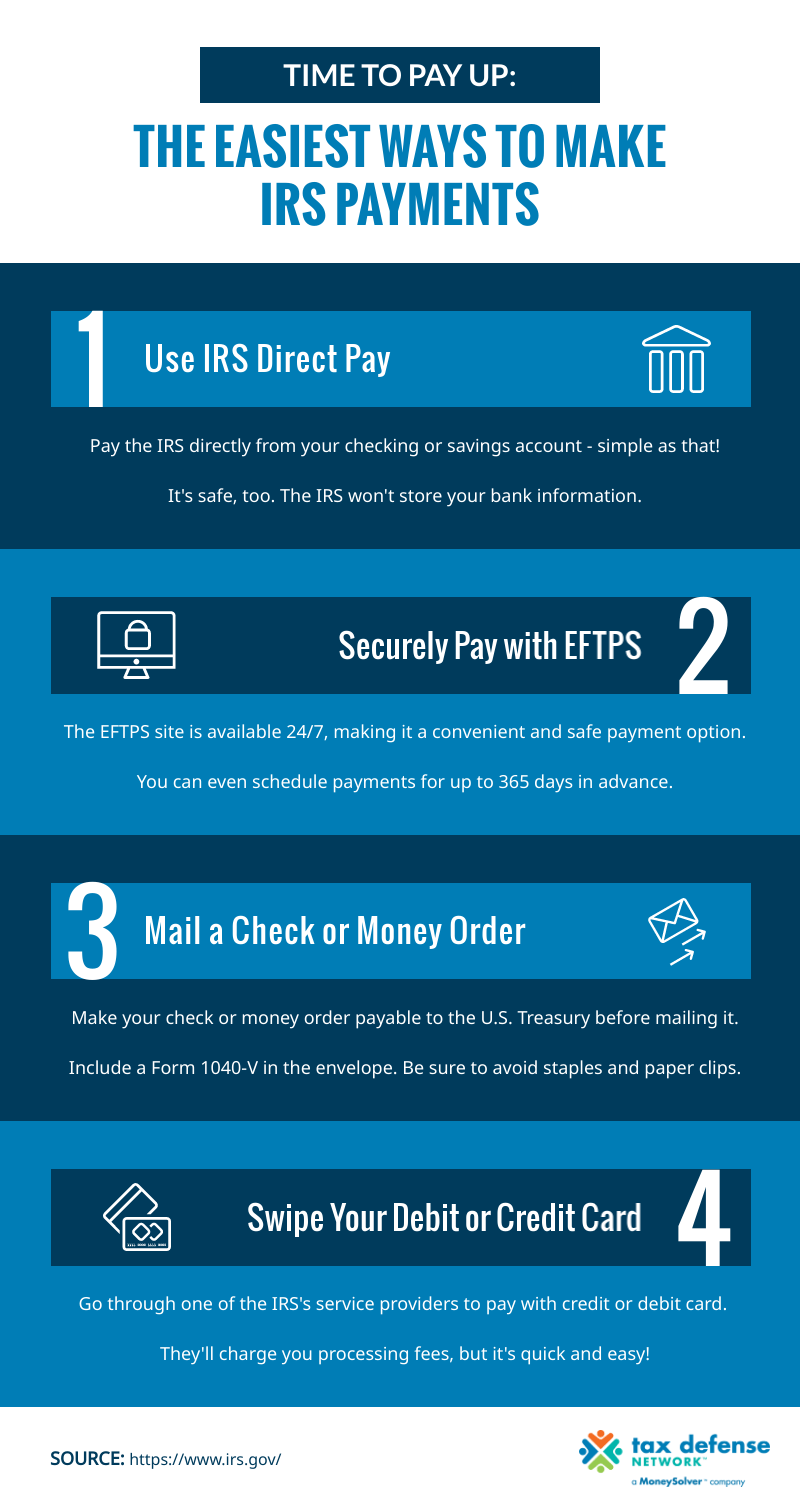
- IRS Direct Pay: This free service allows you to pay directly from your checking or savings account. You can schedule payments up to 365 days in advance and receive immediate confirmation. It’s ideal for individual and business tax payments, including estimated taxes, and offers a straightforward user experience.
- Electronic Federal Tax Payment System (EFTPS): This is a free service specifically designed for businesses and individuals who need to make federal tax payments electronically. It requires prior enrollment and allows for scheduling payments up to 365 days in advance. EFTPS is particularly useful for those who make frequent business tax payments (e.g., payroll taxes, corporate income tax).
- IRS2Go App: The official IRS mobile app allows you to make payments via IRS Direct Pay or through a third-party processor. It’s a convenient option for managing your taxes on the go.
Card Payments and Digital Wallets
For those who prefer to pay with a debit card, credit card, or digital wallet (such as PayPal or Click to Pay), the IRS partners with several third-party payment processors. While convenient, these services typically charge a processing fee based on the amount paid. These fees can vary, so it’s wise to compare them before choosing a processor. Paying with a credit card can be beneficial if you need to delay cash outflow or earn rewards points, but ensure you can pay off the credit card balance quickly to avoid high interest charges that could outweigh any benefits.
Traditional Payment Methods
While electronic payments are encouraged, traditional methods remain available:
- Payment by Check or Money Order: If you prefer to mail your payment, ensure your check or money order is made payable to “U.S. Treasury.” You should include your name, address, daytime phone number, Social Security number (or Employer Identification Number for businesses), the tax year, and the related tax form or notice number on the payment. For federal income tax, detach and include a payment voucher (Form 1040-V) with your payment. Always mail your payment to the correct IRS address, which can be found in the instructions for your tax form or on the IRS website.
- Cash Payments: While less common for large amounts, you can pay cash through retail partners participating in the IRS’s Pay with Cash program. This usually involves generating a payment barcode online and taking it to a participating retail location. This method can be useful for those without bank accounts or who prefer cash transactions, but it requires careful record-keeping.
Payment for State and Local Taxes
It’s important to remember that state and local tax authorities have their own separate payment systems and requirements. While many states offer similar electronic payment options, it is crucial to visit your specific state’s Department of Revenue or tax agency website for accurate information regarding acceptable payment methods, mailing addresses, and deadlines. Do not attempt to pay state taxes through federal payment portals, and vice-versa.
Navigating Financial Hardship: When You Can’t Pay
Discovering you owe taxes you cannot afford to pay immediately can be daunting. However, the IRS and state tax agencies offer various programs and relief options to help taxpayers in genuine financial hardship. Ignoring the problem will only lead to greater penalties and more aggressive collection actions.
Requesting a Payment Plan (Installment Agreement)
If you can’t pay your full tax bill by the deadline, one of the most common solutions is to request an installment agreement. This allows you to make monthly payments for up to 72 months (six years). While interest and late-payment penalties still apply, they are typically lower than if no payment arrangement is made.
- Short-Term Payment Plan (up to 180 days): You may be granted up to 180 additional days to pay your tax liability in full, though interest and penalties still accrue.
- Long-Term Payment Plan (Installment Agreement): If you need more time, you can apply for a long-term plan. Individuals typically qualify if they owe $50,000 or less in combined tax, penalties, and interest, and have filed all required returns. Businesses typically qualify if they owe $25,000 or less. You can apply online via the IRS website or by mailing Form 9465, Installment Agreement Request.
Offer in Compromise (OIC)
An Offer in Compromise (OIC) allows certain taxpayers to resolve their tax liability with the IRS for a lower amount than what they originally owe. An OIC is generally granted when there’s “doubt as to collectibility” (meaning you can’t pay the full amount due to your current financial situation), “doubt as to liability” (meaning there’s a genuine disagreement about whether you owe the tax), or “effective tax administration” (meaning collecting the full amount would cause economic hardship or be unfair). OICs are highly scrutinized, and the IRS considers your ability to pay, income, expenses, and asset equity. The application process is complex and often requires the assistance of a tax professional.
Temporary Delay in Collection (Currently Not Collectible – CNC)
In cases of extreme financial distress, where paying your taxes would leave you unable to meet basic living expenses, the IRS may temporarily delay collection by placing your account in “Currently Not Collectible” (CNC) status. This is not a forgiveness of the debt; rather, it postpones collection efforts until your financial situation improves. Interest and penalties continue to accrue while in CNC status, and the IRS will periodically review your financial condition. To qualify for CNC, you must provide detailed financial information and demonstrate a genuine inability to pay.
Understanding Penalties and Interest
It’s crucial to understand the costs associated with not paying your taxes on time.
- Failure-to-Pay Penalty: This penalty is usually 0.5% of the unpaid taxes for each month or part of a month that taxes remain unpaid, up to a maximum of 25% of your unpaid tax.
- Failure-to-File Penalty: If you don’t file your return on time, the penalty is typically 5% of the unpaid taxes for each month or part of a month that a return is late, capped at 25% of your unpaid tax. If both penalties apply, the failure-to-file penalty is reduced by the failure-to-pay penalty.
- Interest: Interest is charged on underpayments and unpaid taxes, including penalties. The interest rate can change quarterly but generally hovers around the federal short-term rate plus 3 percentage points.
In certain situations, such as reasonable cause (e.g., natural disaster, serious illness), you may be able to request penalty abatement. However, interest cannot typically be abated unless the underlying tax is abated.
Proactive Strategies and Best Practices for Tax Compliance
While the focus has been on paying owed taxes, preventing a large tax bill in the first place, or at least being prepared for one, is the ideal scenario. Proactive planning and diligent record-keeping are your best defenses.
Accurate Record Keeping
Maintaining meticulous financial records throughout the year is perhaps the most fundamental best practice. Keep track of all income, expenses, deductions, credits, and prior tax payments. Organize bank statements, receipts, W-2s, 1099s, and any other relevant tax documents. Good records not only simplify tax preparation but are also essential if you need to verify amounts owed, support claims for deductions, or address any inquiries from tax authorities. Digital record-keeping via cloud storage or accounting software can be particularly effective for easy access and security.
Utilizing Tax Professionals
Don’t hesitate to seek professional assistance when dealing with complex tax matters. A qualified tax professional, such as a Certified Public Accountant (CPA) or an Enrolled Agent (EA), can provide invaluable guidance. They can help you accurately prepare your taxes, understand notices from the IRS, negotiate payment plans, or represent you during an audit. Their expertise can save you time, reduce stress, and potentially identify deductions or strategies you might have overlooked, ultimately ensuring compliance and minimizing your tax burden.
Effective Tax Planning
Tax planning is an ongoing process, not just an annual event. Regularly review your financial situation, especially if you experience significant life changes like marriage, a new job, starting a business, or purchasing a home. Adjust your W-4 withholdings with your employer to ensure enough tax is being withheld from your paycheck. If you are self-employed or have other non-wage income, make sure to set aside funds and make timely estimated tax payments. Understanding and leveraging available tax credits and deductions can significantly reduce your tax liability. A little planning throughout the year can prevent a major shock at tax time.
Conclusion
Paying owed taxes is an unavoidable responsibility, but it doesn’t have to be an overwhelming ordeal. By understanding your tax liability, utilizing the various payment methods available, and proactively addressing any financial difficulties, you can navigate the process efficiently and avoid unnecessary penalties. The key is to act promptly, remain informed, and seek professional guidance when needed. With proper planning and adherence to tax regulations, you can ensure financial peace of mind and maintain a healthy relationship with tax authorities.
aViewFromTheCave is a participant in the Amazon Services LLC Associates Program, an affiliate advertising program designed to provide a means for sites to earn advertising fees by advertising and linking to Amazon.com. Amazon, the Amazon logo, AmazonSupply, and the AmazonSupply logo are trademarks of Amazon.com, Inc. or its affiliates. As an Amazon Associate we earn affiliate commissions from qualifying purchases.