
For investors tracking the pulsatile rhythm of the stock market, few events carry as much weight and generate as much anticipation as a company’s quarterly earnings announcement. When it comes to a titan like NVIDIA (NVDA), whose innovations profoundly shape the future of technology and command a significant presence in global indices, pinpointing these dates and understanding their implications becomes paramount. This guide is designed to equip both seasoned and novice investors with the knowledge to track, interpret, and strategize around NVIDIA’s earnings announcements, firmly placing it within the realm of prudent financial planning and investing.

Understanding the Significance of Earnings Announcements
Earnings announcements are quarterly financial reports released by public companies, detailing their performance over the preceding three months. They typically include revenues, net income, earnings per share (EPS), and future guidance. For a company of NVIDIA’s stature, these reports are not merely administrative disclosures; they are critical market events that can significantly influence stock prices, investor sentiment, and even broader market trends.
Why NVIDIA’s Earnings Matter to the Market
NVIDIA is far more than just a chipmaker; it’s an innovation powerhouse at the epicenter of several transformative technologies. From its dominance in high-performance gaming GPUs to its pivotal role in artificial intelligence (AI), data centers, professional visualization, and autonomous vehicles, NVIDIA’s performance is often seen as a bellwether for the broader tech sector and, increasingly, for global economic health. Its enormous market capitalization means that shifts in NVDA’s stock price can have a ripple effect across major indices like the S&P 500 and Nasdaq.
Investors eagerly await NVIDIA’s earnings because they offer a granular look at the health of these critical growth sectors. Strong results from NVIDIA can signal robust demand for AI infrastructure, continued growth in cloud computing, and resilience in consumer electronics. Conversely, any signs of weakness can trigger concerns about the pace of technological advancement or broader economic headwinds. Analysts pore over these reports to update their financial models and price targets, influencing countless investment decisions.
The Impact of Financial Disclosures on Stock Performance
The immediate aftermath of an NVIDIA earnings announcement can often be characterized by significant stock price volatility. The market’s reaction hinges primarily on how the company’s reported figures compare to analyst consensus estimates and, perhaps more crucially, on the future guidance provided by management.
- Earnings Beat: If NVIDIA reports revenue and EPS that exceed analyst expectations, the stock typically experiences an upward surge, reflecting investor optimism.
- Earnings Miss: Conversely, if the figures fall short of estimates, the stock often declines as investors re-evaluate their positions.
- Guidance: Beyond past performance, management’s outlook for the upcoming quarter and year can be an even more powerful driver of stock movement. Strong guidance, even with a slight miss on past earnings, can propel the stock higher, as investors focus on future growth potential. Weak guidance, even with an earnings beat, can cause a sell-off as future expectations are tempered.
This short-term volatility highlights the speculative nature of trading around earnings. However, for long-term investors, the reports offer essential insights into the company’s fundamental health, strategic direction, and competitive positioning, allowing them to make informed decisions about their continued investment.
Pinpointing NVIDIA’s Earnings Release Dates
Knowing when NVIDIA announces its earnings is the first step in preparing for these critical events. While the exact dates can vary slightly from quarter to quarter, there are reliable patterns and official sources to ensure you have the most up-to-date information.
Official Sources for Earnings Calendars
The most authoritative source for NVIDIA’s earnings dates is the company itself.
- NVIDIA Investor Relations Website: The dedicated investor relations section of NVIDIA’s official website (investor.nvidia.com) is the primary destination. Here, you’ll find an “Events & Presentations” or “Financial Calendar” section that lists upcoming earnings call dates, webcast details, and links to past reports and transcripts. This is always the most accurate and timely source.
- SEC Filings: Publicly traded companies in the U.S. are required to file periodic reports with the Securities and Exchange Commission (SEC). The Form 10-Q (quarterly report) and Form 10-K (annual report) provide comprehensive financial data. While these filings are typically submitted after the earnings release, the company’s announcements often precede them and are posted on the investor relations site. However, the filings confirm the official reporting period.
Reliable Financial News and Data Platforms
Beyond NVIDIA’s own channels, numerous financial media outlets and data providers track and publish earnings calendars. These platforms often aggregate information from thousands of companies, making them convenient resources for investors.
- Major Financial News Outlets: Websites like Bloomberg, Reuters, The Wall Street Journal, and Yahoo Finance feature robust earnings calendars. A quick search for “NVIDIA earnings date” on these platforms will typically yield the upcoming schedule.
- Dedicated Financial Data Providers: Services such as Investing.com, EarningsWhispers, Nasdaq.com, and brokerage platforms (e.g., Fidelity, Schwab, E*TRADE) offer detailed earnings calendars, often including historical data, analyst estimates, and conference call details.
- Brokerage Platforms: If you have an investment account, your brokerage’s platform usually provides an integrated earnings calendar and research tools that can automatically alert you to upcoming announcements for stocks in your portfolio or watchlist.
Typical Reporting Cadence and Scheduling Patterns
NVIDIA, like most public companies, reports its earnings on a quarterly basis. While there’s no fixed day of the week or date, there’s a predictable pattern based on the fiscal calendar.
- Fiscal Quarters: NVIDIA’s fiscal year often differs from the calendar year. For example, its Q1 might end in April, Q2 in July, Q3 in October, and Q4 in January.
- Announcement Window: Earnings are typically announced a few weeks after the close of the fiscal quarter. Historically, NVIDIA tends to release its results in mid-February (for Q4/fiscal year-end), mid-May (for Q1), mid-August (for Q2), and mid-November (for Q3).
- Specific Day and Time: Announcements usually occur after the market closes (4:00 PM ET) or before the market opens (before 9:30 AM ET) on a weekday, often a Wednesday or Thursday, to allow investors and analysts time to digest the information without disrupting active trading hours. An earnings call with management typically follows the release, where executives discuss the results and answer questions from analysts.
By consulting these sources and understanding the general cadence, investors can reliably anticipate NVIDIA’s earnings announcements and integrate them into their investment planning.
Decoding NVIDIA’s Earnings Report: Key Metrics for Investors
Once the earnings report is released, it’s crucial to go beyond the headlines and delve into the specifics. A thorough understanding of NVIDIA’s financial metrics provides deeper insights into its operational health and future prospects.
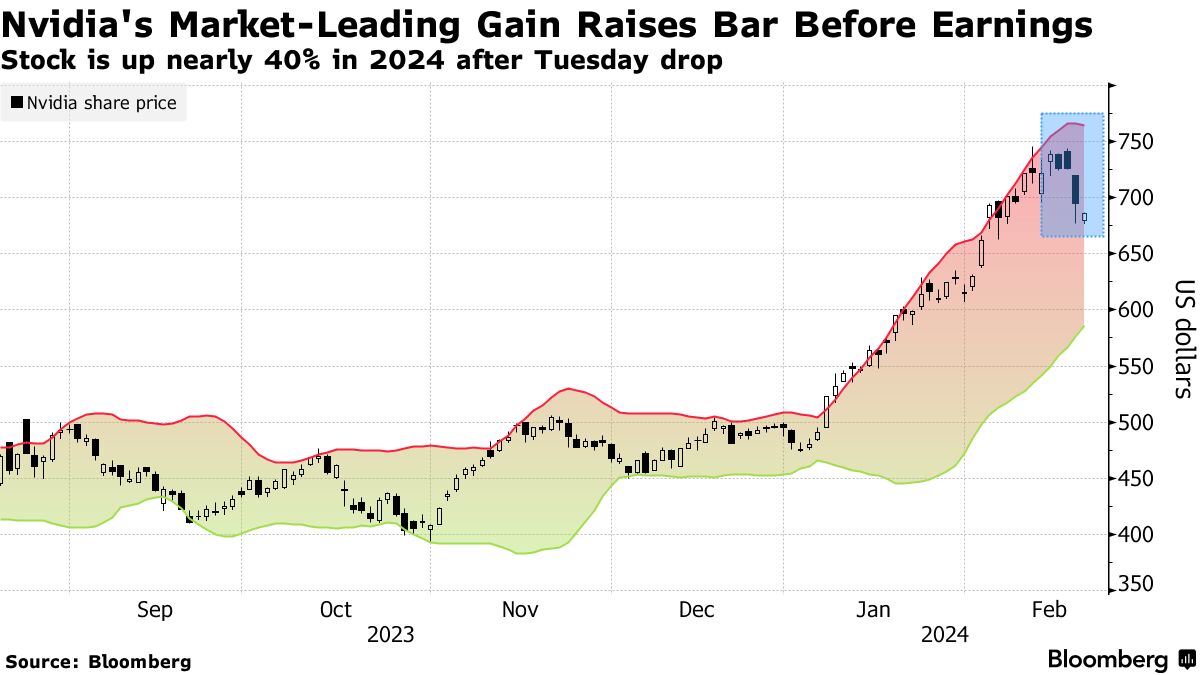
Revenue and Earnings Per Share (EPS): The Headline Figures
These are the two most watched numbers in any earnings report, and for NVIDIA, they are indicative of its market penetration and profitability.
- Revenue (Sales): This metric represents the total money generated from the sale of NVIDIA’s products and services (GPUs, software, licenses, etc.) over the quarter. Investors look for consistent revenue growth, ideally exceeding analyst expectations and year-over-year comparisons. Strong revenue growth signals robust demand for NVIDIA’s innovations.
- Earnings Per Share (EPS): This figure represents a company’s profit allocated to each outstanding share of common stock. It’s calculated by dividing net income by the number of outstanding shares. EPS growth is a key indicator of profitability and efficiency. Analysts provide consensus EPS estimates, and an “earnings beat” (actual EPS > estimated EPS) is often a positive catalyst for the stock.
Guidance and Future Outlook: A Forward-Looking Perspective
While past performance is informative, the market is inherently forward-looking. Management’s guidance for the upcoming period is often the most impactful element of an earnings report.
- Revenue and EPS Projections: NVIDIA’s management will typically provide revenue and EPS forecasts for the next fiscal quarter, and sometimes for the full fiscal year. These projections reflect the company’s internal expectations based on current market conditions, product pipeline, and strategic initiatives.
- Management Commentary: Beyond specific numbers, the earnings call features commentary from the CEO and CFO, discussing market trends, new product launches, competitive landscape, supply chain dynamics, and capital allocation strategies. This qualitative insight provides context for the numbers and signals management’s confidence and strategic direction. Strong guidance suggests management sees continued growth and demand, while conservative guidance can signal caution or potential headwinds.
Segment Performance: Unpacking NVIDIA’s Diverse Business Units
NVIDIA is a diversified technology company, and its financial reports break down revenue and profitability by key business segments. Understanding these segments is vital to identifying growth drivers and potential areas of concern.
- Data Center: This segment, powering AI, cloud computing, and enterprise solutions, has become NVIDIA’s most critical growth engine. Investors scrutinize its revenue growth, gross margins, and customer adoption rates.
- Gaming: Historically NVIDIA’s largest segment, it remains a significant contributor. Performance here reflects consumer demand for high-end GPUs, trends in PC gaming, and the impact of new product cycles.
- Professional Visualization: This segment caters to designers, engineers, and content creators using NVIDIA’s powerful GPUs for workstations. Its performance indicates demand in industries like architecture, media, and manufacturing.
- Automotive: This emerging segment focuses on AI platforms for autonomous vehicles, infotainment systems, and robotics. While smaller in revenue, its long-term potential makes it a key area of interest for future growth.
Analyzing segment-specific performance allows investors to understand which parts of NVIDIA’s business are thriving and which might face challenges, providing a more nuanced view than consolidated figures alone.
Profit Margins and Cash Flow: Indicators of Financial Health
Beyond revenue and EPS, these metrics offer deeper insights into NVIDIA’s operational efficiency and financial stability.
- Gross Margin: This is the percentage of revenue remaining after deducting the cost of goods sold. A high and stable gross margin indicates strong pricing power and efficient manufacturing.
- Operating Margin: This represents the profitability of NVIDIA’s core operations before interest and taxes. It reflects how well the company manages its operating expenses.
- Free Cash Flow (FCF): FCF is the cash generated by operations minus capital expenditures. It’s a critical measure of a company’s ability to fund growth, pay dividends, repurchase shares, and reduce debt without external financing. Strong and growing FCF is a hallmark of a healthy, self-sustaining business.
- Share Buybacks and Dividends: Management’s decisions regarding capital allocation, such as share repurchase programs or dividend payouts, can also be found in the earnings report and signal confidence in future earnings and shareholder returns.
Investor Strategies Around NVIDIA’s Earnings Calls
Navigating the period around an earnings announcement requires a thoughtful approach, balancing potential opportunities with inherent risks.
Pre-Earnings Analysis: Setting Expectations
Before NVIDIA’s report drops, investors can engage in several preparatory steps to inform their strategy.
- Review Analyst Consensus: Aggregated analyst estimates for revenue, EPS, and segment performance provide a baseline expectation. Understanding these estimates helps gauge whether the actual results constitute a “beat” or “miss.”
- Monitor Industry Trends: Keep an eye on broader market trends relevant to NVIDIA – demand for AI servers, semiconductor supply chain health, PC market dynamics, and competition. This contextual information can help anticipate the earnings outcome.
- Examine Historical Performance: Look at NVIDIA’s past earnings beats/misses and the subsequent stock reactions. While past performance doesn’t guarantee future results, it can offer insights into patterns.
- Consider Implied Volatility: Options markets often price in significant volatility around earnings. High implied volatility suggests traders anticipate a large price swing, either up or down.
Post-Earnings Reaction: Interpreting Market Movements
The immediate market reaction to NVIDIA’s earnings can be swift and sometimes irrational.
- Analyze the “Why”: Don’t just react to the headline stock movement. Delve into why the market reacted as it did. Was it the EPS beat, the strong guidance, a specific segment’s performance, or a cautious tone from management?
- Listen to the Conference Call: The earnings conference call, where management discusses results and answers analyst questions, is invaluable. It provides color, context, and insights that numbers alone cannot convey. Transcripts are usually available shortly after.
- Avoid Hasty Decisions: While initial reactions can be dramatic, it’s often wise to let the dust settle. Allow a day or two for the market to fully digest the information and for analysts to issue their updated reports before making significant investment decisions.
Long-Term vs. Short-Term Trading Considerations
The approach to earnings varies significantly based on one’s investment horizon.
- Short-Term Traders: Those looking for quick gains might try to predict the earnings outcome, often using options strategies to capitalize on volatility. This is a high-risk approach, often akin to gambling, given the unpredictable nature of market reactions. The “buy the rumor, sell the news” phenomenon is common, where the stock rallies into earnings on anticipation and then falls even on good news, as the actual event doesn’t live up to hyped expectations.
- Long-Term Investors: For investors focused on NVIDIA’s fundamental growth story, earnings reports are moments for re-evaluation. They’ll assess if the company’s long-term thesis remains intact, if its competitive advantages are strengthening or weakening, and if its financial health supports continued growth. Volatility around earnings might present opportunities to add to a position at a lower price or trim if fundamentals deteriorate, but often, the best strategy is to remain patient and focus on the broader picture.
Historical Context and Future Implications
NVIDIA’s journey from a niche graphics card company to an AI behemoth has been marked by a relentless pursuit of innovation and impressive financial performance. Understanding this context helps appreciate the importance of each earnings announcement.
NVIDIA’s Track Record of Innovation and Growth
NVIDIA has consistently demonstrated its ability to pivot and capitalize on emerging technological paradigms, from PC gaming to professional visualization, and most notably, to artificial intelligence and data centers. Its history of strong execution and market leadership makes each earnings report a testament to its ongoing ability to innovate and capture market share in high-growth areas. Past earnings surprises have often been linked to breakthroughs in new markets or significant product cycles, reinforcing investor confidence in its future potential.
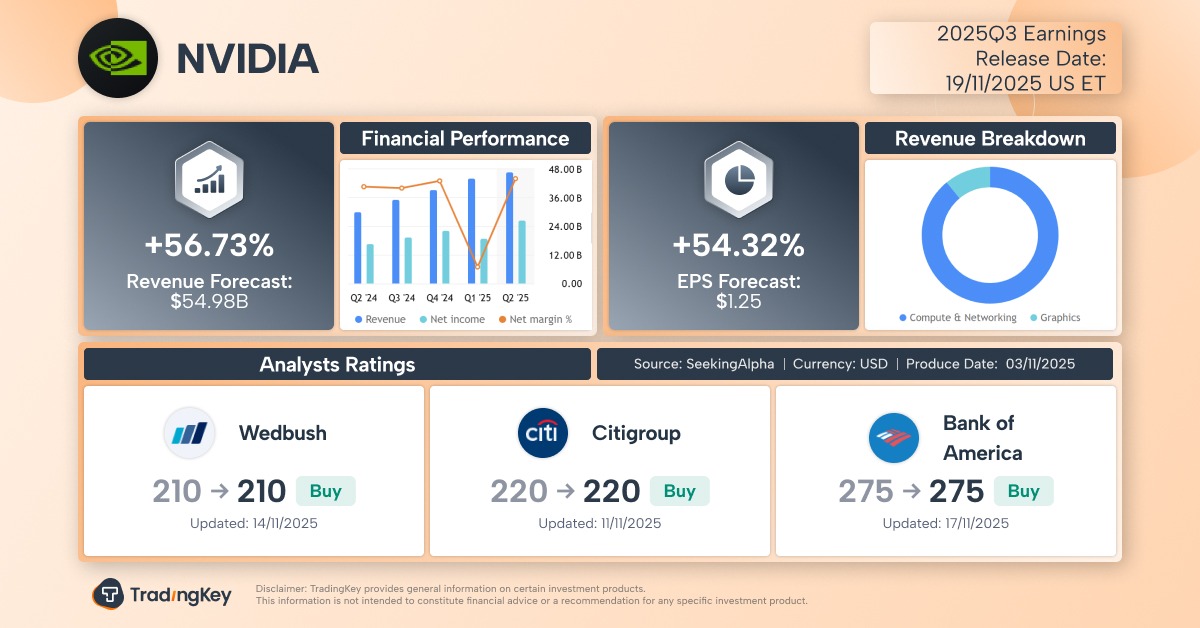
Navigating Market Volatility and Risk Management
Investing in individual stocks, especially those in high-growth sectors like semiconductors and AI, comes with inherent volatility. NVIDIA’s earnings announcements frequently exacerbate this. Therefore, sound risk management is crucial.
- Diversification: Never put all your investment capital into a single stock, regardless of its perceived strength. A diversified portfolio helps cushion the impact of adverse events related to any one company.
- Position Sizing: Invest an amount in NVIDIA that aligns with your overall portfolio strategy and risk tolerance. Avoid overexposure to any single equity.
- Long-Term Perspective: For most investors, focusing on NVIDIA’s long-term growth trajectory and fundamental strengths, rather than short-term earnings reactions, is a more prudent strategy. Market noise often obscures the true value drivers over an extended period.
In conclusion, knowing when NVIDIA announces earnings is the starting point for a deeper dive into its financial health and strategic direction. By utilizing official sources, understanding key metrics, and adopting a disciplined investment approach, investors can effectively integrate these critical disclosures into their broader financial strategy, contributing to more informed and potentially more successful outcomes in the dynamic world of investing.
aViewFromTheCave is a participant in the Amazon Services LLC Associates Program, an affiliate advertising program designed to provide a means for sites to earn advertising fees by advertising and linking to Amazon.com. Amazon, the Amazon logo, AmazonSupply, and the AmazonSupply logo are trademarks of Amazon.com, Inc. or its affiliates. As an Amazon Associate we earn affiliate commissions from qualifying purchases.