
For investors, analysts, and anyone tracking the pulsating heart of the technology sector, NVIDIA’s (NVDA) earnings reports are not merely a quarterly financial disclosure; they are pivotal market events. These reports offer a granular look into the performance of a company that has become synonymous with cutting-edge advancements in artificial intelligence, high-performance computing, and digital transformation. Understanding when these reports are released, what key metrics to scrutinize, and how to interpret their implications is crucial for making informed investment decisions and comprehending broader market trends.
NVIDIA, a semiconductor giant, has transcended its origins in graphics processing units (GPUs) to become an indispensable infrastructure provider for the AI revolution. Its financial health, therefore, serves as a significant bellwether for the technology sector, the semiconductor industry, and the burgeoning AI economy. Each earnings call provides a snapshot of this trajectory, revealing not just past performance but also future guidance that can send ripples across global markets.

The Significance of NVIDIA’s Earnings for Investors
NVIDIA’s earnings reports are highly anticipated events on Wall Street for several compelling reasons. Beyond the direct impact on its stock price, the company’s performance is often seen as a proxy for the health and direction of several critical, high-growth sectors. Investors, from individual retail traders to large institutional funds, eagerly await these disclosures to validate their investment theses, adjust portfolios, and identify emerging opportunities or risks.
Understanding Earnings Reports: Beyond the Headline Numbers
An earnings report is far more than just a press release detailing revenue and earnings per share (EPS). It’s a comprehensive financial statement that includes an income statement, balance sheet, and cash flow statement, often accompanied by a management discussion and analysis (MD&A) and an investor presentation. For NVIDIA, this typically involves segment-specific breakdowns—Data Center, Gaming, Professional Visualization, and Automotive—each offering insights into different market dynamics.
While the headline numbers like revenue and EPS grab immediate attention, savvy investors delve deeper. They examine year-over-year and sequential growth, gross margins, operating expenses, and free cash flow. A robust gross margin, for instance, signals strong pricing power and cost efficiency, while healthy free cash flow indicates the company’s ability to fund operations, invest in future growth, or return capital to shareholders. Missing or beating analyst expectations on these metrics can trigger significant stock price movements, making pre-earnings anticipation and post-earnings analysis critical.
Why NVIDIA’s Performance Resonates Across the Market
NVIDIA is not just a company; it’s an ecosystem enabler. Its GPUs power everything from gaming consoles and professional workstations to supercomputers and autonomous vehicles. Crucially, its specialized AI chips and software platforms are the backbone of today’s generative AI boom. Consequently, NVIDIA’s financial performance offers unique insights into:
- The Semiconductor Industry: As a leading chip designer, NVIDIA’s results often foreshadow trends for foundries like TSMC and other chipmakers.
- Artificial Intelligence Growth: Its Data Center segment, which includes AI accelerators, is a direct indicator of enterprise and cloud spending on AI infrastructure. Strong growth here suggests widespread AI adoption.
- Cloud Computing Expansion: Hyperscalers like Amazon, Microsoft, and Google are massive customers for NVIDIA’s data center products. Their investment patterns are often reflected in NVIDIA’s order books.
- Gaming Market Health: While AI dominates headlines, NVIDIA’s core gaming GPU business remains significant, providing clues about consumer spending on high-end hardware.
Therefore, an NVIDIA earnings report is not just about NVDA; it’s about the broader technological and economic landscape that investors navigate.
Key Metrics to Watch in NVIDIA’s Financial Disclosures
When NVIDIA steps into the earnings spotlight, a specific set of financial and operational metrics take center stage. These indicators offer the most telling insights into the company’s current health and future trajectory, guiding investor sentiment and market reactions. Understanding what these numbers represent and how they tie into the company’s strategic vision is paramount.
Revenue Growth: Data Center, Gaming, and Professional Visualization
NVIDIA’s revenue is segmented, providing a clear picture of where growth is accelerating and where it might be decelerating. For the past few years, and particularly with the rise of generative AI, the Data Center segment has become the undisputed star. This segment includes sales of GPUs and networking solutions for AI, high-performance computing (HPC), and enterprise applications. Analysts meticulously track its year-over-year and sequential growth, looking for signs of continued demand from hyperscalers, enterprises, and research institutions investing heavily in AI infrastructure. Any deviation from robust growth in this area can trigger significant market movements, given its status as the primary growth engine.
The Gaming segment, historically NVIDIA’s bread and butter, remains important. It reflects consumer spending on PC gaming hardware and often correlates with economic conditions and the release cycle of new GPU architectures. While not growing at the explosive rates of the Data Center business, its stability and profitability contribute significantly to overall financial health.
Other segments, such as Professional Visualization (workstation GPUs for designers and engineers) and Automotive (AI platforms for autonomous vehicles), while smaller, offer insights into diversification efforts and long-term growth vectors in emerging markets. Investors monitor these for signs of traction and potential future scale.
Profitability and Margins: Gross Margin, Operating Income, and EPS
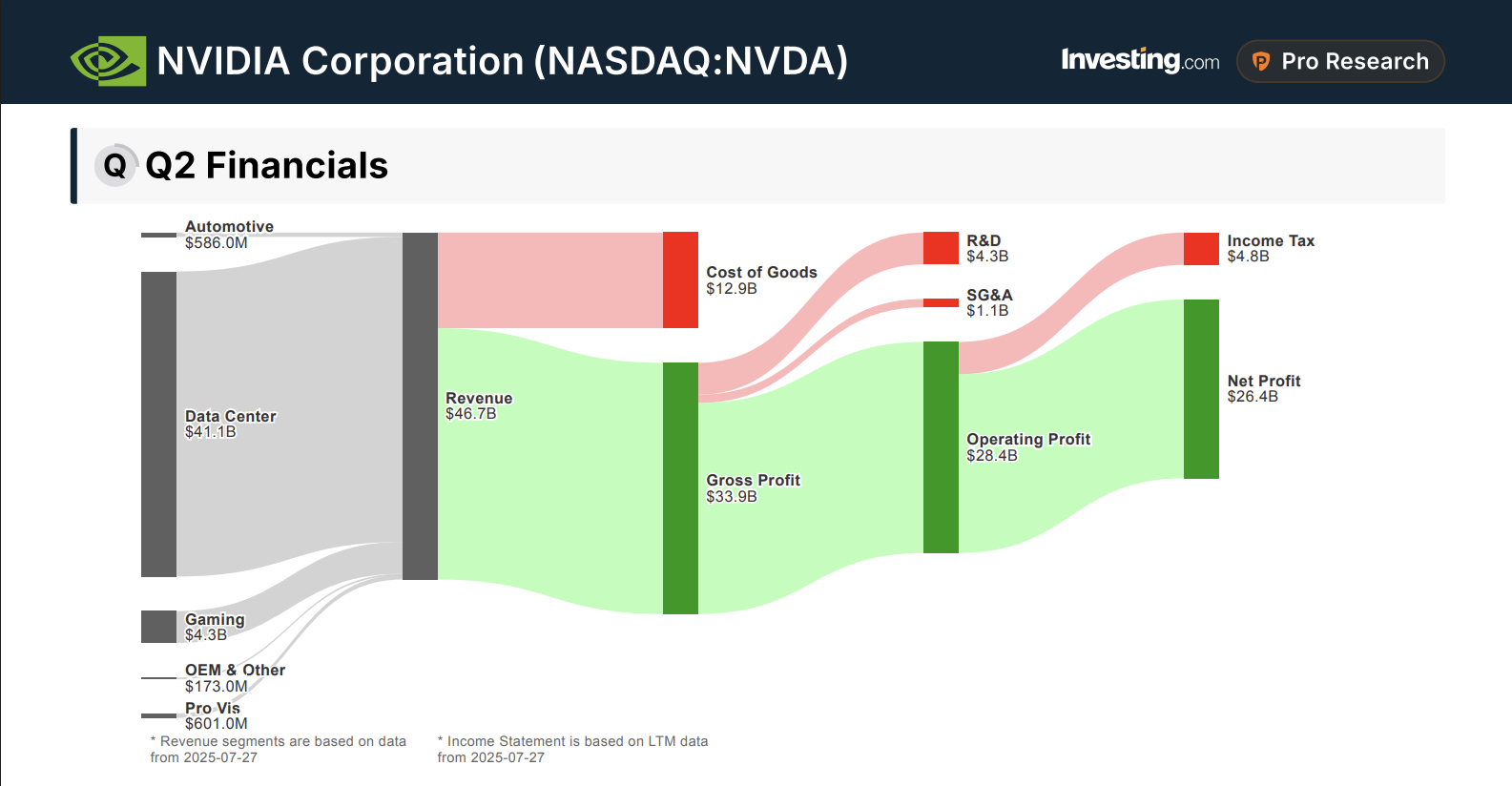
Beyond top-line revenue, profitability metrics are crucial. The Gross Margin is particularly critical for a hardware-focused company like NVIDIA. It represents the percentage of revenue left after deducting the cost of goods sold. A high and improving gross margin signals strong pricing power, efficient manufacturing, and a favorable product mix (e.g., selling more high-value AI accelerators). Declining gross margins, conversely, can indicate increased competition, inventory issues, or shifts towards lower-margin products.
Operating Income provides insight into the company’s efficiency in managing its core business operations, after accounting for research and development (R&D) and selling, general, and administrative (SG&A) expenses. NVIDIA invests heavily in R&D to maintain its technological lead, so investors look for a healthy balance between innovation spending and operational profitability.
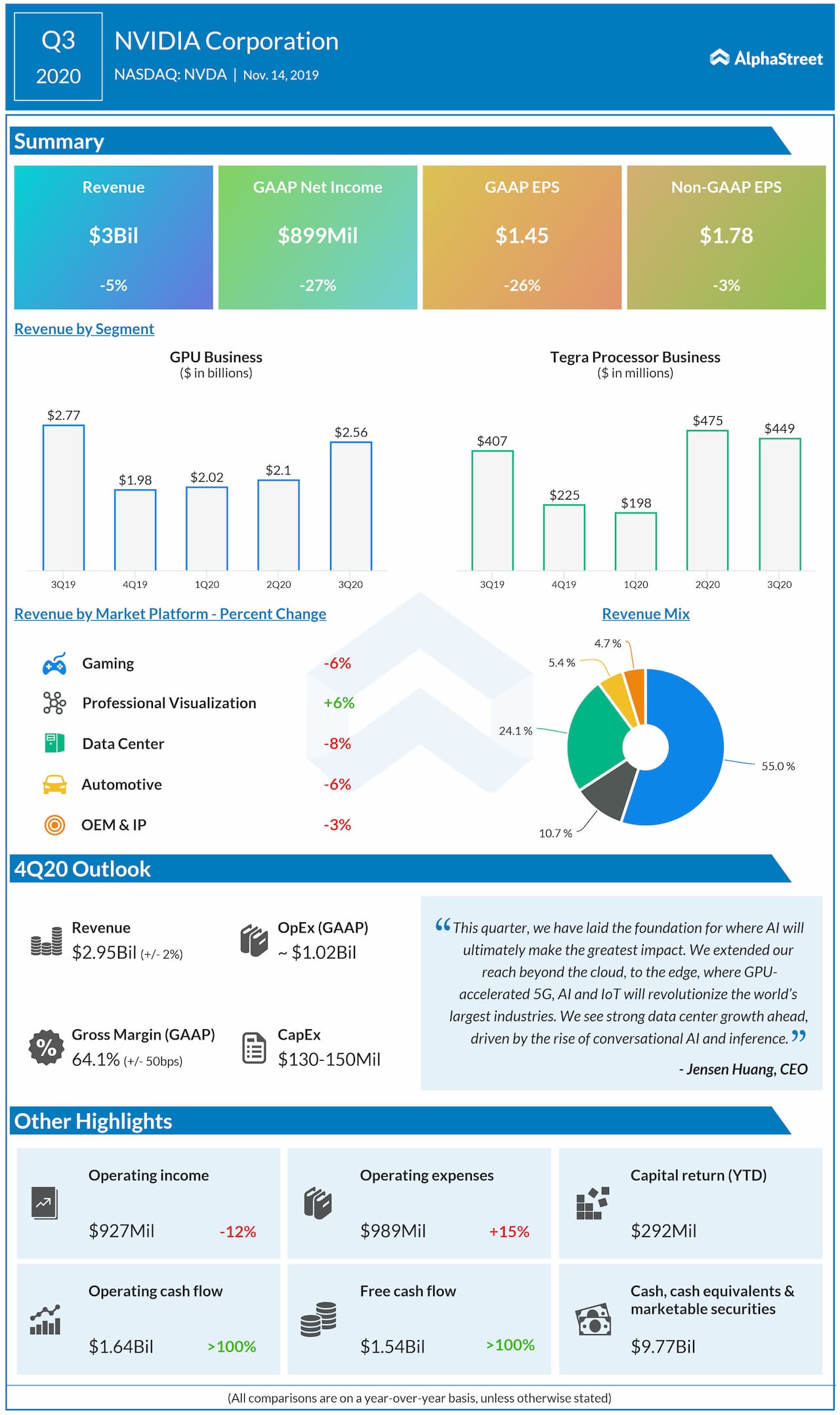
Finally, Earnings Per Share (EPS), both GAAP and non-GAAP, is often the most cited profitability metric. It indicates how much profit the company generated per outstanding share. Analysts usually provide estimates for both revenue and EPS, and the company’s ability to “beat” or “miss” these estimates often dictates immediate stock price reactions. Investors also scrutinize the quality of earnings—whether they are driven by sustainable operational improvements or one-time gains.
Future Guidance and Capital Allocation
Perhaps the most forward-looking aspect of an earnings report is the company’s Future Guidance. Management provides projections for the upcoming quarter’s revenue, gross margin, and operating expenses. This guidance often holds more sway than past performance, as it reflects management’s confidence and outlook on market demand, supply chain conditions, and competitive landscape. Strong guidance can propel a stock higher even if current results are merely in line with expectations, while conservative guidance can lead to declines despite a solid quarter.
Capital Allocation strategies are also closely watched. This includes plans for stock buybacks, dividend payments, and capital expenditures. A substantial stock buyback program can signal management’s belief that the stock is undervalued and can support EPS by reducing the share count. Investments in capital expenditures (CapEx) indicate plans for expanding production or R&D capabilities, hinting at future growth. Investors assess whether the company’s cash flow is being effectively utilized to create long-term shareholder value.
Market Reaction and Investor Strategies Post-Earnings
The moment NVIDIA’s earnings report hits the wire, markets react. This reaction can be swift and dramatic, often leading to significant volatility in the company’s stock price, which then reverberates across related sectors. For investors, navigating this post-earnings landscape requires a clear strategy and a deep understanding of market psychology and fundamental valuation.
Short-Term Volatility vs. Long-Term Value
In the immediate aftermath of an earnings announcement, NVIDIA’s stock can swing wildly. This short-term volatility is often driven by algorithmic trading, options expiring, and retail investors reacting to headline numbers and management’s tone during the conference call. A beat on revenue and EPS, coupled with strong guidance, can send the stock soaring, sometimes by double-digit percentages. Conversely, a miss or conservative outlook can lead to sharp declines.
However, long-term investors are encouraged to look beyond this immediate noise. While short-term fluctuations are inevitable, they don’t necessarily alter the fundamental investment thesis for a company like NVIDIA. A momentary dip might present a buying opportunity for those confident in the company’s long-term growth drivers, such as its dominance in AI infrastructure. Conversely, a dramatic surge might prompt some long-term holders to trim positions, especially if the valuation appears stretched. The key is to differentiate between fleeting market sentiment and enduring business value.
Strategies for Current Shareholders and Prospective Investors
For current shareholders, the post-earnings period is a time for reassessment. If the report aligns with or strengthens their original investment thesis, they might choose to hold, or even add to their position on a dip. If the report reveals fundamental weaknesses or a significant shift in the competitive landscape, it might trigger a re-evaluation and potential trimming or selling of shares. It’s crucial not to panic sell or buy based purely on emotion but to re-evaluate the company’s fundamentals and future prospects against the new information provided.
Prospective investors face a different challenge. They might use a post-earnings pullback as an entry point if they believe the market overreacted negatively to what they perceive as minor issues or temporary headwinds. Conversely, if the stock rockets upward, they might decide to wait for a more favorable entry point or reassess whether the current valuation still offers an attractive risk-reward profile. Strategies might include using options to gain exposure with defined risk, or dollar-cost averaging into a position over time to mitigate the impact of short-term volatility. Regardless of the immediate price action, a thorough due diligence process, involving a deep dive into the earnings report, transcript, and analyst commentary, is indispensable.
The Broader Economic Impact of NVIDIA’s Results
NVIDIA’s quarterly performance extends far beyond its own balance sheet and shareholder value. Given its critical role in enabling foundational technologies, its earnings report offers a powerful barometer for the health of several key economic sectors and provides insights into the pace of technological transformation globally.
NVIDIA as a Bellwether for the Tech Sector and AI
NVIDIA has firmly established itself as a bellwether for the broader technology sector, particularly for companies operating in artificial intelligence and high-performance computing. When NVIDIA reports strong growth in its Data Center segment, it often signals robust investment by cloud providers and enterprises into AI capabilities. This positive sentiment can uplift other AI-adjacent stocks, including software companies, data infrastructure providers, and even other semiconductor firms that contribute to the AI supply chain.
Conversely, any slowdown or cautious guidance from NVIDIA concerning AI spending can send a ripple of concern through the entire tech ecosystem. It might suggest a potential deceleration in enterprise AI adoption or capital expenditure reductions by cloud giants, impacting a vast array of companies that rely on this investment cycle. Therefore, the NVIDIA earnings call is closely monitored by investors interested in the overall health and future trajectory of the tech market, making it a critical indicator for future trends and investment opportunities in the space.
Implications for Supply Chains and Global Semiconductor Demand
NVIDIA’s results also offer crucial insights into the intricate global semiconductor supply chain. Its demand for cutting-edge manufacturing capacity directly impacts major foundries like Taiwan Semiconductor Manufacturing Company (TSMC), which produces NVIDIA’s advanced GPUs. Strong orders from NVIDIA can indicate high utilization rates and robust revenue for these foundries, while weaker demand could signal oversupply or a slowdown in overall chip consumption.
Furthermore, NVIDIA’s performance provides a gauge of global semiconductor demand across various end markets. High gaming revenue suggests healthy consumer electronics spending, while strong automotive segment growth points to increasing adoption of advanced driver-assistance systems (ADAS) and autonomous driving technologies. These indicators are vital for economists and policy makers assessing global economic trends, industrial output, and potential inflationary pressures or deflationary risks within the technology sector. The company’s commentary on lead times, inventory levels, and production capacity during its earnings calls can provide unparalleled transparency into the real-time dynamics of one of the world’s most critical and complex supply chains, affecting everything from inflation to geopolitical considerations.
In conclusion, NVIDIA’s earnings report is more than a financial update; it’s a compass pointing towards the future of technology and a critical data point for investors navigating the complex currents of the global economy. By carefully analyzing these reports, investors gain not only a clearer picture of NVIDIA’s prospects but also invaluable insights into the broader trends shaping our technologically driven world.
aViewFromTheCave is a participant in the Amazon Services LLC Associates Program, an affiliate advertising program designed to provide a means for sites to earn advertising fees by advertising and linking to Amazon.com. Amazon, the Amazon logo, AmazonSupply, and the AmazonSupply logo are trademarks of Amazon.com, Inc. or its affiliates. As an Amazon Associate we earn affiliate commissions from qualifying purchases.