
The dream of homeownership is a cornerstone of financial aspiration for many, representing stability, a significant asset, and a place to call one’s own. However, for most individuals, achieving this dream necessitates securing a home loan, or mortgage. The world of mortgages can seem dauntingly complex, filled with jargon and an array of options that can make choosing the right path feel overwhelming. Understanding the different types of home loans available is not just about comparing interest rates; it’s about aligning a financial product with your personal circumstances, future goals, and risk tolerance. A well-chosen mortgage can save you tens of thousands of dollars over its lifetime and provide peace of mind, while a mismatched one can lead to financial strain. This comprehensive guide aims to demystify the landscape of home loans, empowering prospective homeowners with the knowledge to make an informed and strategic decision.

The Fundamental Divide: Fixed-Rate vs. Adjustable-Rate Mortgages
At the heart of mortgage options lies a crucial distinction concerning how your interest rate behaves over time. This choice fundamentally impacts the predictability and potential cost of your loan.
Fixed-Rate Mortgages (FRM)
The fixed-rate mortgage is perhaps the most straightforward and popular loan product, prized for its stability. With an FRM, the interest rate remains constant for the entire duration of the loan. This means your principal and interest payment will never change, regardless of market fluctuations. This predictability allows for consistent budgeting and offers protection against rising interest rates. The most common fixed-rate terms are 15-year and 30-year mortgages. A 30-year FRM typically offers lower monthly payments but accrues more interest over the long term, while a 15-year FRM has higher monthly payments but allows you to pay off your home faster and pay significantly less in total interest. While offering peace of mind, FRMs might carry a slightly higher initial interest rate compared to an introductory period of an adjustable-rate mortgage when market rates are low. Conversely, if market rates drop significantly after you’ve secured a fixed-rate loan, your only option to benefit would be to refinance, incurring new closing costs.
Adjustable-Rate Mortgages (ARM)
In contrast to the stability of an FRM, an adjustable-rate mortgage features an interest rate that can change periodically after an initial fixed-rate period. ARMs are often structured with a “hybrid” model, such as a 5/1 ARM, 7/1 ARM, or 10/1 ARM. The first number indicates the number of years the interest rate is fixed, and the second number indicates how often the rate will adjust after that initial period (e.g., every one year). During the fixed-rate period, the ARM typically offers a lower interest rate than comparable fixed-rate mortgages, resulting in lower initial monthly payments. This can be appealing for borrowers who anticipate selling or refinancing before the fixed period ends, or those who expect their income to increase in the future.
However, the primary risk of an ARM lies in the uncertainty of future payments. Once the initial fixed period expires, the interest rate will adjust based on a specified index (like the Secured Overnight Financing Rate – SOFR) plus a margin set by the lender. While ARMs typically include caps (periodic adjustment caps and a lifetime cap) that limit how much the interest rate can increase or decrease, your monthly payments can still fluctuate significantly. If interest rates rise substantially, your payments could become unaffordable. Therefore, ARMs are generally better suited for borrowers with a higher risk tolerance, a clear exit strategy, or those who are confident in their ability to handle potentially higher payments in the future.
Government-Backed Loan Programs: Accessibility and Support
Beyond conventional loans, several government-backed programs exist to make homeownership more accessible, particularly for specific populations or those with unique financial circumstances. These loans come with distinct advantages and requirements.
FHA Loans (Federal Housing Administration)
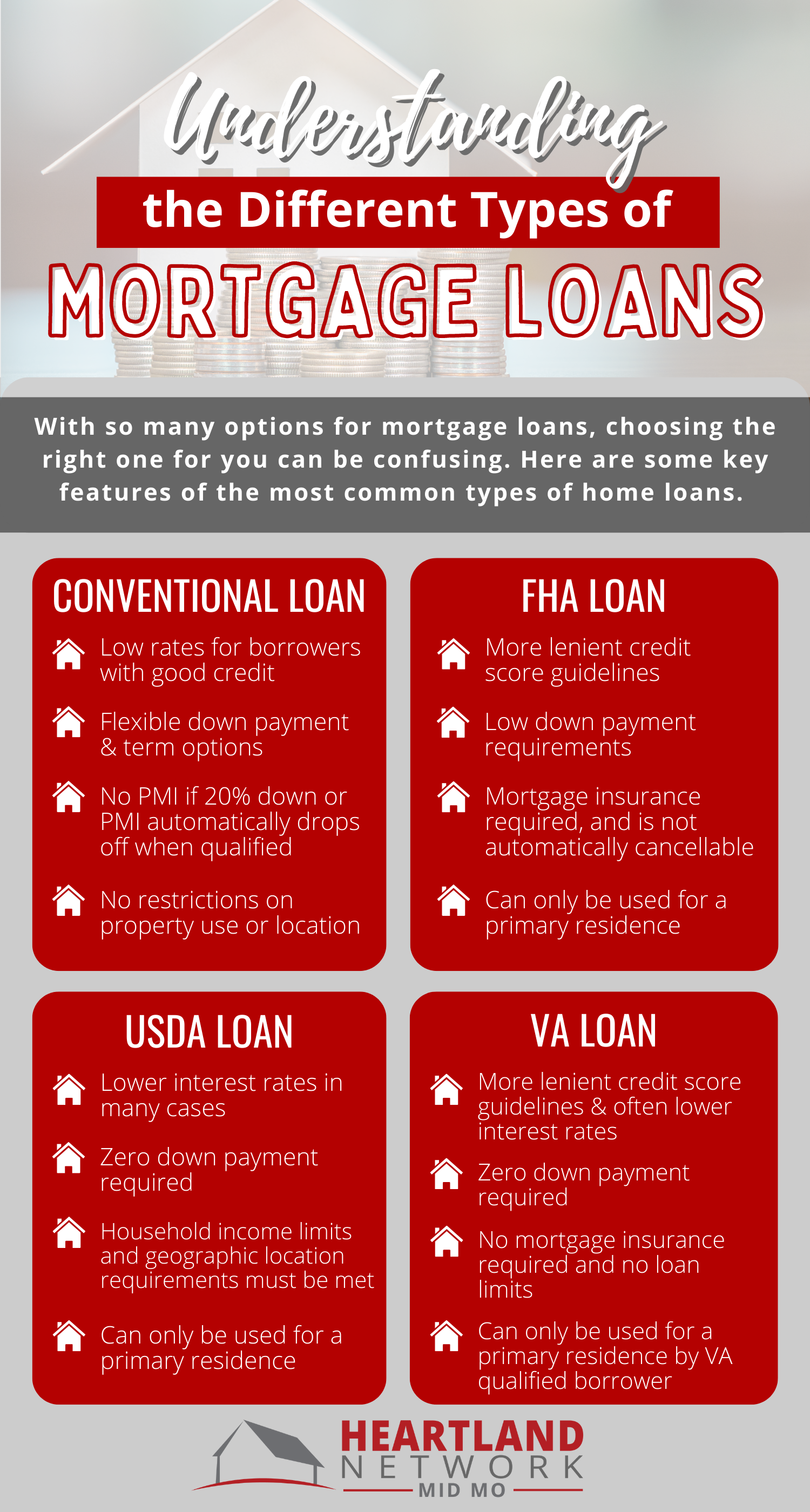
FHA loans are insured by the Federal Housing Administration, making them a popular choice for first-time homebuyers and those with less-than-perfect credit or limited funds for a down payment. The FHA does not lend money directly but insures loans made by approved lenders, reducing the risk for lenders and allowing them to offer more favorable terms. Key features include lower minimum credit score requirements (often as low as 580 with a 3.5% down payment, or 500-579 with a 10% down payment) and a relatively low minimum down payment. However, FHA loans require borrowers to pay Mortgage Insurance Premium (MIP), both an upfront premium (which can be financed into the loan) and an annual premium for the life of the loan or for a certain period, depending on the loan-to-value ratio and original term. This can add to the overall cost of the loan.
VA Loans (Department of Veterans Affairs)
VA loans are an incredible benefit exclusively available to eligible U.S. veterans, active-duty service members, and certain surviving spouses. Guaranteed by the Department of Veterans Affairs, these loans are renowned for their exceptional terms, designed to support those who have served our country. The most significant advantage of a VA loan is the ability to purchase a home with no down payment required, provided the purchase price does not exceed the appraised value of the home. Furthermore, VA loans typically do not require private mortgage insurance (PMI), which can save borrowers a substantial amount monthly. While there’s no PMI, VA loans usually have a one-time “funding fee” that helps offset the program’s cost, though this fee can be waived for veterans with service-connected disabilities. VA loans also often feature competitive interest rates and stricter limits on closing costs, protecting the borrower.
USDA Loans (United States Department of Agriculture)
USDA loans, also known as Rural Development loans, are designed to promote homeownership in rural and eligible suburban areas across the United States. These loans are guaranteed by the U.S. Department of Agriculture and aim to assist low-to-moderate-income individuals and families. A primary benefit of a USDA loan is the option for no down payment, making it an attractive choice for those with limited savings. Eligibility depends on two main factors: the property must be located in an eligible rural area (which often includes areas that are not typically considered “rural” by most people, so checking the USDA eligibility map is crucial), and the borrower’s income must meet specific limits for their area, typically not exceeding 115% of the median household income. Like FHA loans, USDA loans require both an upfront guarantee fee and an annual guarantee fee, which serve a similar purpose to mortgage insurance.
Conventional Loans: The Standard Path to Homeownership
Conventional loans are the most common type of mortgage and are not insured or guaranteed by a government agency. Instead, they are typically offered by private lenders such as banks, credit unions, and mortgage companies, adhering to guidelines set by government-sponsored enterprises (GSEs) like Fannie Mae and Freddie Mac.
Conforming Conventional Loans
Conforming conventional loans are those that meet the specific loan limits and underwriting standards established by Fannie Mae and Freddie Mac. These GSEs purchase eligible mortgages from lenders, which helps maintain liquidity in the market and encourages lenders to offer these products. To qualify for a conforming loan, borrowers generally need a good to excellent credit score (typically 620 or higher, with 700+ being ideal for the best rates), a manageable debt-to-income ratio, and a down payment of at least 3% (though 5-20% is more common). If your down payment is less than 20% of the home’s purchase price, you will typically be required to pay Private Mortgage Insurance (PMI). Unlike FHA’s MIP, PMI on conventional loans can often be cancelled once you reach a certain amount of equity in your home (usually 20-22%), which is a significant advantage. Conforming loans offer flexibility in terms and competitive rates for qualified borrowers.
Non-Conforming Conventional Loans (Jumbo Loans)
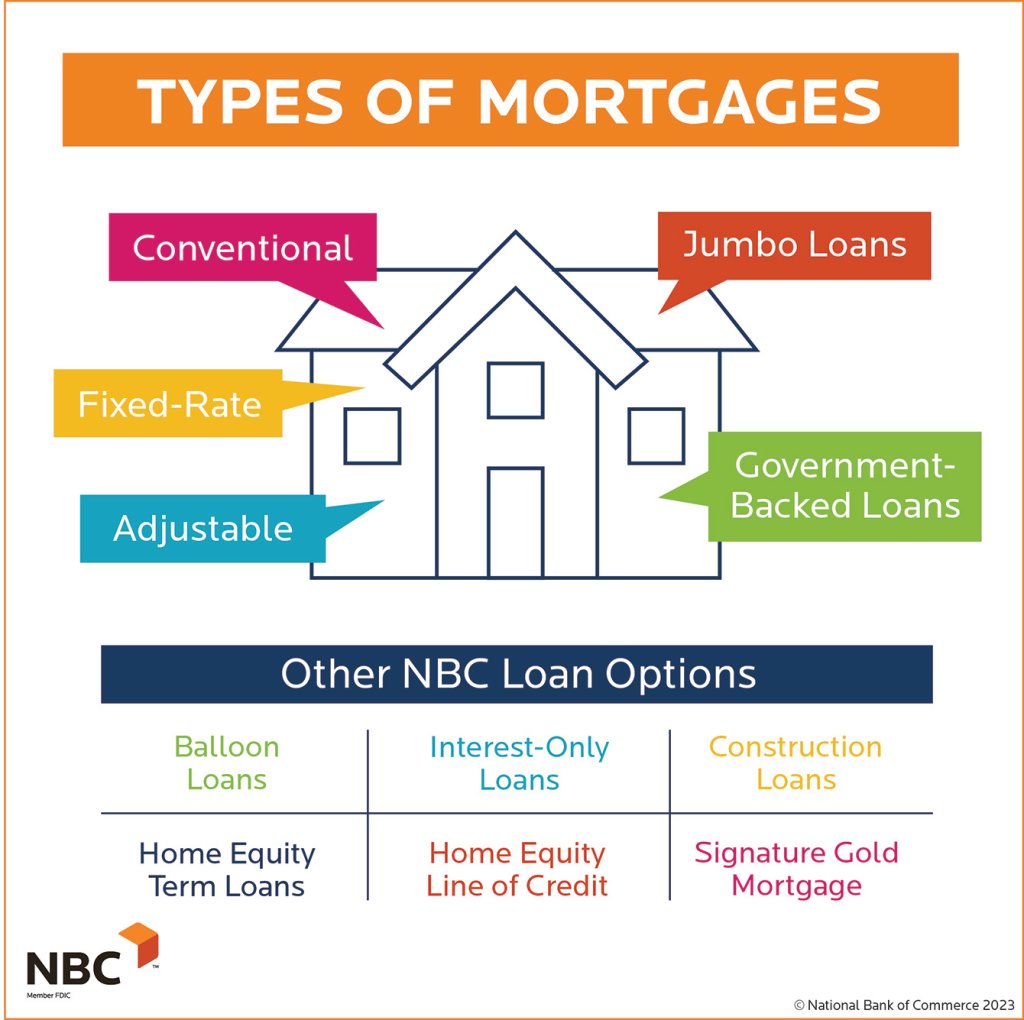
Non-conforming loans are those that exceed the loan limits set by Fannie Mae and Freddie Mac for conforming loans. These are often referred to as “jumbo loans” and are used to finance the purchase of high-value properties that exceed the conventional loan limits in a given area. Because jumbo loans cannot be sold to Fannie Mae or Freddie Mac, lenders assume a greater risk, leading to stricter underwriting standards. Borrowers seeking jumbo loans typically need exceptional credit scores (often 700+ or higher), a larger down payment (often 10-20% or more), and substantial cash reserves after closing to demonstrate financial stability. Interest rates on jumbo loans can sometimes be slightly higher than conforming loans due to the increased risk, or they can be competitive, depending on market conditions and the borrower’s financial profile.
Specialty and Niche Mortgage Products
Beyond the primary categories, there are several specialized mortgage products designed for unique financial situations or specific types of property transactions.
Interest-Only Mortgages
An interest-only mortgage allows the borrower to pay only the interest portion of the loan for a specified initial period (e.g., 5 to 10 years). During this time, the principal balance of the loan remains unchanged. After the interest-only period, the payments typically increase significantly as the borrower begins to pay both principal and interest, amortized over the remaining loan term. These loans can offer lower initial monthly payments, providing flexibility for those with irregular incomes or investors who plan to sell the property before the interest-only period ends. However, a major drawback is that no equity is built through payments during the interest-only phase, and borrowers face potential “payment shock” when the full principal and interest payments begin.
Construction Loans
Construction loans are short-term loans used to finance the building of a new home or significant renovation. Unlike a traditional mortgage, the funds are not disbursed all at once. Instead, they are released in “draws” at various stages of construction as work is completed and inspected. These loans typically have variable interest rates and are for a shorter term, often lasting only for the duration of the construction project (e.g., 6-12 months). Once the construction is complete, the borrower typically obtains a permanent mortgage (a “take-out” loan) to pay off the construction loan. Some lenders offer “construction-to-permanent” loans, which combine both phases into a single loan, converting to a long-term mortgage after construction without requiring a separate closing.
Piggyback Mortgages (80/10/10 or 80/15/5)
A piggyback mortgage is a strategy used by some homebuyers to avoid Private Mortgage Insurance (PMI) or to make a smaller down payment on their primary mortgage. This involves taking out two separate loans simultaneously to purchase a home. The most common structure is an “80/10/10,” where the first mortgage covers 80% of the home’s value, a second mortgage (the “piggyback”) covers 10%, and the remaining 10% is the buyer’s down payment. Another variation is 80/15/5. By keeping the first mortgage at 80% loan-to-value, the borrower avoids PMI. The second mortgage is typically a home equity loan or a home equity line of credit (HELOC) and usually has a higher interest rate than the primary mortgage. This strategy can be beneficial for borrowers who have good credit but don’t want to make a full 20% down payment or pay PMI.
Reverse Mortgages
Reverse mortgages are specialized loans available to homeowners typically aged 62 or older (though some programs may allow 55+) who have significant equity in their home. Unlike a traditional mortgage where the homeowner makes payments to the lender, a reverse mortgage allows the homeowner to convert a portion of their home equity into cash, with the lender making payments to the homeowner. The loan becomes due and payable when the last surviving borrower dies, sells the home, or permanently moves out. Homeowners retain title to their home and are still responsible for property taxes, homeowner’s insurance, and home maintenance. While reverse mortgages can provide a valuable source of tax-free income or a lump sum, they come with fees, interest accrues on the loan balance, and they can reduce the equity left for heirs.
Choosing the Right Home Loan: A Strategic Decision
Navigating the multitude of home loan options requires careful consideration of your financial situation, future plans, and risk tolerance. Making the right choice is a strategic decision that can significantly impact your financial well-being for decades.
Assessing Your Financial Profile
Before diving into loan types, take an honest inventory of your financial health. This includes your credit score, which is a key determinant of eligibility and interest rates. Lenders will also scrutinize your debt-to-income (DTI) ratio, ensuring you can comfortably afford the new mortgage payment alongside existing debts. The amount you have saved for a down payment and closing costs is crucial, as is the stability and consistency of your income. A strong financial profile opens up more options and typically secures better terms. Conversely, understanding any weaknesses in your profile can help you identify loan types designed to accommodate those challenges, such as FHA or USDA loans.
Understanding Your Goals
Your personal and financial goals play a pivotal role in determining the most suitable loan. Do you plan to stay in the home for the long term (e.g., 10+ years), making a fixed-rate mortgage a strong contender for stability? Or do you anticipate moving or refinancing within a few years, potentially making an ARM’s lower initial rate more appealing? What is your risk tolerance? Are you comfortable with potential payment fluctuations, or do you prioritize predictability above all else? Your future income expectations also matter; if you anticipate a significant increase in income, a higher initial payment from a 15-year FRM or the later adjustment of an ARM might be manageable.
Comparing Lenders and Loan Offers
Once you have a clearer picture of which loan types align with your profile and goals, it’s essential to shop around. Don’t settle for the first offer. Compare interest rates, but more importantly, look at the Annual Percentage Rate (APR), which reflects the total cost of the loan including fees. Scrutinize all associated fees: origination fees, appraisal fees, underwriting fees, and other closing costs. These can vary significantly between lenders and can add thousands to your upfront expenses. Request Loan Estimates from multiple lenders for the same loan product to ensure an apples-to-apples comparison. Pay attention to lender reputation, customer service reviews, and their responsiveness during the application process.
The Role of Mortgage Professionals
The complexity of home loans often warrants the expertise of a mortgage professional. A loan officer working for a specific bank or lender can guide you through their product offerings. A mortgage broker, on the other hand, works with multiple lenders and can shop around on your behalf to find the best rates and terms across a wider range of products. Financial advisors can also provide guidance on how a mortgage fits into your overall financial plan. These professionals can help you understand the nuances of each loan type, navigate the application process, and ensure you’re making a decision that supports your long-term financial health.
Conclusion
The journey to homeownership is a significant milestone, and the mortgage you choose is a fundamental part of that journey. From the unwavering predictability of fixed-rate mortgages to the flexible, albeit riskier, nature of adjustable-rate options, and from the accessibility of government-backed programs like FHA, VA, and USDA loans to the widely utilized conventional loans, there is a diverse landscape of products to explore. Understanding the characteristics, benefits, and drawbacks of each type is paramount. By diligently assessing your financial profile, clarifying your long-term goals, and thoroughly comparing offers, you can confidently select a home loan that not only secures your dream home but also provides a stable and manageable financial foundation for years to come. Ultimately, an informed borrower is an empowered borrower, ready to make one of life’s most important financial decisions with clarity and conviction.
aViewFromTheCave is a participant in the Amazon Services LLC Associates Program, an affiliate advertising program designed to provide a means for sites to earn advertising fees by advertising and linking to Amazon.com. Amazon, the Amazon logo, AmazonSupply, and the AmazonSupply logo are trademarks of Amazon.com, Inc. or its affiliates. As an Amazon Associate we earn affiliate commissions from qualifying purchases.