
The prime interest rate stands as a foundational pillar in the landscape of global finance, influencing everything from the cost of a home mortgage to the profitability of a small business loan. While often discussed in economic news, its precise meaning and profound implications for both individual consumers and large corporations can sometimes remain shrouded in complexity. Understanding what the prime rate is, how it’s determined, and why its fluctuations matter is not just academic; it’s essential for making informed financial decisions in an ever-evolving economic environment.
This article aims to demystify the prime interest rate, providing a comprehensive overview that elucidates its significance, traces its origins, and offers practical insights into how its current standing and future trajectory can impact your financial well-being. By exploring the interplay between monetary policy, economic indicators, and the prime rate, we can better navigate the financial markets and empower ourselves with knowledge that translates into smarter money management.
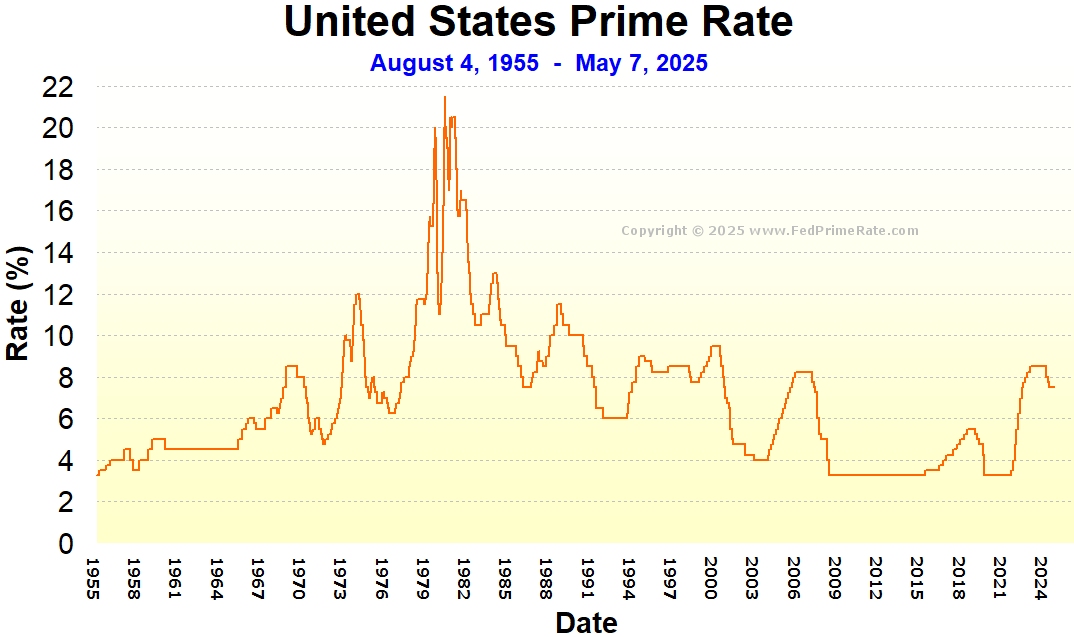
Understanding the Prime Rate: A Cornerstone of Finance
At its core, the prime interest rate is a benchmark—a reference point from which many other interest rates are set. It’s often the lowest available interest rate at which commercial banks lend to their most creditworthy corporate customers. For anyone looking to borrow money, from a personal loan to a business expansion, this rate is a crucial starting point.
Defining the Prime Interest Rate
The prime interest rate, or simply the prime rate, is essentially the interest rate that commercial banks charge their most creditworthy corporate clients for short-term loans. While it’s dubbed “prime,” it’s not exclusively for major corporations; it forms the basis for a wide range of consumer lending products as well, including variable-rate mortgages, home equity lines of credit (HELOCs), and certain credit cards.
It’s a floating rate, meaning it can change in response to broader economic conditions and, most notably, the actions of a country’s central bank. In the United States, for instance, nearly all commercial banks move their prime rate in lockstep with changes made by the Federal Reserve to the federal funds rate. This synchronized movement underscores its pervasive influence throughout the financial system.
How the Prime Rate is Established
The mechanism by which the prime rate is established is fundamental to understanding its economic power. In most major economies, the prime rate is directly influenced by the central bank’s monetary policy decisions. For example, in the United States, the Federal Reserve’s Federal Open Market Committee (FOMC) meets periodically to set a target range for the federal funds rate.
The federal funds rate is the interest rate at which commercial banks lend reserves to each other overnight to meet reserve requirements. While the Fed doesn’t directly set the prime rate, changes to the federal funds rate target almost immediately prompt commercial banks to adjust their prime rates by a corresponding amount. Typically, the U.S. prime rate is calculated by adding approximately 300 basis points (3 percentage points) to the upper target range of the federal funds rate.
This relationship ensures a degree of predictability and stability in the financial markets, allowing banks, businesses, and consumers to anticipate rate movements. When the Fed raises the federal funds rate, it generally signals an effort to cool an overheating economy or combat inflation; conversely, lowering it aims to stimulate economic activity during a slowdown.
Why the Prime Rate Matters to You (and Your Money)
The prime rate isn’t just an abstract economic indicator; its movements have tangible, direct consequences for the financial health of households and businesses alike. From the monthly payments on a credit card to the viability of a startup’s expansion plans, its ripple effects are far-reaching and deeply felt.
Impact on Consumer Loans: Credit Cards, Auto Loans, Mortgages
For the average consumer, the prime rate plays a pivotal role in determining the cost of borrowing. Many common financial products are directly tied to it, meaning that when the prime rate moves, so does the interest you pay.
- Credit Cards: A significant number of credit cards, particularly those with variable Annual Percentage Rates (APRs), use the prime rate as their basis. If the prime rate increases, the interest rate on your outstanding credit card balance will likely increase, leading to higher minimum payments and a greater overall cost of debt.
- Home Equity Lines of Credit (HELOCs) and Variable-Rate Mortgages (ARMs): These popular borrowing options are almost universally pegged to the prime rate. For homeowners with HELOCs or ARMs, an upward shift in the prime rate means their monthly interest payments will climb, potentially straining household budgets. Conversely, a falling prime rate can offer significant relief.
- Auto Loans and Personal Loans: While many auto loans and personal loans have fixed rates, a substantial portion are variable, or their initial fixed rates are influenced by the prevailing prime rate at the time of origination. A higher prime rate translates to more expensive new loans, impacting affordability and borrowing power.
Implications for Businesses: Operating Costs and Expansion
Businesses, from small sole proprietorships to multinational corporations, are equally sensitive to changes in the prime rate. Their ability to secure financing for operations, expansion, and investment is often directly tied to this benchmark.
- Working Capital Loans: Many businesses rely on lines of credit or short-term loans to manage cash flow, purchase inventory, or cover immediate operating expenses. These are frequently variable-rate products linked to the prime rate. An increase in the prime rate directly elevates a business’s cost of capital, potentially squeezing profit margins.
- Equipment Financing and Expansion: When a business plans to invest in new machinery, upgrade technology, or expand its facilities, it often requires significant capital. The interest rates on these long-term loans are heavily influenced by the prime rate. Higher rates can deter investment, slow expansion, and ultimately impact job creation and economic growth.
- Mergers and Acquisitions: Larger corporate transactions also hinge on the cost of borrowing. A rising prime rate can make debt-financed acquisitions more expensive, potentially cooling M&A activity across various sectors.
The Ripple Effect: From Banks to Borrowers
The prime rate’s influence extends throughout the financial ecosystem. When the prime rate shifts, banks adjust their lending policies, which then propagates through the economy. Higher rates can slow down consumer spending and business investment by making borrowing more costly, while lower rates can stimulate economic activity. This interconnectedness makes the prime rate a vital gauge of economic health and a key determinant of financial accessibility for all participants in the market.
Tracking the Prime Rate: Current Trends and Economic Indicators
Staying informed about the current prime interest rate and understanding the forces that shape its trajectory is paramount for effective financial planning. While the rate itself is a readily available number, appreciating the underlying economic context provides a deeper, more actionable insight.
Current Prime Rate Snapshot (Illustrative Example)
As of [Date of simulated article generation], the U.S. prime interest rate stands at approximately 8.50%. It’s crucial to note that this rate is subject to change based on the Federal Reserve’s monetary policy decisions. Typically, you can find the most up-to-date prime rate listed on the websites of major financial institutions, business news outlets, or the Federal Reserve’s official publications. This rate has been influenced by a series of rate hikes initiated by the Federal Reserve in response to inflationary pressures, marking a significant departure from the near-zero rates observed in previous years.

Key Economic Factors Influencing Rate Changes
The Federal Reserve and other central banks don’t adjust rates arbitrarily. Their decisions are data-driven, responding to a complex interplay of economic indicators. Understanding these factors provides insight into potential future rate movements:
- Inflation: This is arguably the most significant driver. When inflation (the general increase in prices and fall in the purchasing value of money) is high and persistent, central banks often raise interest rates to cool demand and bring price levels back to their target.
- Employment Data: Strong job growth and low unemployment rates can signal an overheating economy, potentially leading to inflationary pressures and prompting rate hikes. Conversely, a weakening job market might encourage central banks to lower rates to stimulate economic activity.
- GDP Growth: Gross Domestic Product (GDP) measures the total economic output. Robust GDP growth might lead to rate increases to prevent overheating, while sluggish growth could trigger rate cuts to spur investment and consumption.
- Consumer Spending and Business Investment: Healthy consumer spending and business investment indicate economic confidence and activity. Central banks monitor these trends closely, adjusting rates to either moderate or encourage these behaviors.
- Geopolitical Events: Global events, such as wars, pandemics, or trade disputes, can introduce uncertainty, impact supply chains, and influence energy prices, all of which can affect central bank policy and, by extension, the prime rate.
The Federal Reserve’s Role: Monetary Policy and Outlook
The Federal Reserve, as the central bank of the United States, holds immense sway over the prime rate through its conduct of monetary policy. Its primary tools include:
- Setting the federal funds rate target: As discussed, this is the most direct influence.
- Quantitative Easing (QE) and Quantitative Tightening (QT): These involve buying or selling government securities to inject or withdraw liquidity from the financial system, indirectly influencing longer-term interest rates.
- Forward Guidance: The Fed communicates its economic outlook and policy intentions to the public, providing transparency and helping financial markets anticipate future moves.
The Fed’s outlook on the economy, particularly its assessment of inflation and employment, is critical. Their public statements, meeting minutes, and speeches by Fed officials offer invaluable clues regarding the likely direction of the prime rate. Periods of hawkish sentiment (inclination to raise rates) indicate a focus on curbing inflation, while dovish sentiment (inclination to lower rates) prioritizes economic growth and employment.
Navigating a Changing Interest Rate Landscape
The dynamic nature of the prime rate necessitates proactive financial management. Whether rates are rising, falling, or holding steady, having a strategy in place can help individuals and businesses optimize their financial positions.
Strategies for Personal Finance in Fluctuating Rates
For individuals, understanding the prime rate’s impact allows for strategic adjustments to personal financial planning:
- When Rates are Rising:
- Prioritize high-interest, variable-rate debt: Focus on paying down credit card balances, HELOCs, and any other debt tied to the prime rate.
- Consider refinancing variable-rate loans to fixed: If you have an ARM or a HELOC, converting it to a fixed-rate loan could lock in your payments before rates climb further.
- Build an emergency fund: Higher debt costs mean less disposable income; a robust emergency fund provides a crucial buffer.
- Look for higher-yield savings accounts: Rising rates also mean banks offer better interest on savings and Certificates of Deposit (CDs), making it an opportune time to save.
- When Rates are Falling:
- Refinance fixed-rate loans: If you have a fixed-rate mortgage or other loans at a higher interest rate, refinancing could significantly reduce your monthly payments.
- Consider variable-rate loans (with caution): While risky, a variable-rate loan might offer lower initial payments if you anticipate rates continuing to fall or if you plan to pay off the debt quickly.
- Re-evaluate investment strategies: Falling rates can sometimes signal a weaker economy, prompting a review of your investment portfolio for resilience and growth potential.
Business Adaptations to Interest Rate Shifts
Businesses, with their often larger debt burdens and investment cycles, must be particularly agile in response to prime rate movements:
- When Rates are Rising:
- Hedge interest rate exposure: Explore financial instruments like interest rate swaps or caps to mitigate the impact of rising variable-rate debt.
- Lock in financing for expansion: If planning major investments, securing fixed-rate loans before rates climb too high can save substantial costs.
- Optimize cash flow management: Efficiently managing receivables and payables can reduce reliance on short-term, variable-rate borrowing.
- Review pricing strategies: Businesses may need to adjust their pricing to absorb higher borrowing costs without eroding profit margins.
- When Rates are Falling:
- Refinance existing debt: Restructuring higher-interest debt can significantly reduce operating costs and free up capital for other uses.
- Accelerate investment and expansion: Lower borrowing costs make capital expenditures more attractive and can stimulate growth.
- Increase inventory or production: If demand is expected to rise with lower rates, businesses might strategically increase output.
Tools and Resources for Staying Informed
Staying abreast of prime rate developments doesn’t require an economics degree. Numerous resources are available to help you track changes and understand their implications:
- Financial News Outlets: Reputable financial news sources (e.g., Wall Street Journal, Bloomberg, Reuters, Financial Times) provide real-time updates and expert analysis.
- Central Bank Websites: The Federal Reserve (www.federalreserve.gov) offers official statements, minutes from FOMC meetings, and economic data.
- Bank Websites: Major commercial banks typically publish their current prime rate prominently on their websites.
- Financial Calculators: Online tools can help you model the impact of different interest rates on your loans and savings.
- Financial Advisors: A professional financial advisor can offer personalized guidance tailored to your specific situation and risk tolerance.
The Future of Prime: Predictions and Preparedness
Forecasting the precise movements of the prime rate is challenging, as it depends on a multitude of unpredictable economic and geopolitical factors. However, by understanding the underlying drivers and maintaining a prepared stance, individuals and businesses can better position themselves for what lies ahead.
Expert Forecasts and Market Sentiment
Economists, financial analysts, and market strategists constantly analyze economic data, central bank communications, and global events to predict future interest rate trends. These forecasts, while not infallible, provide valuable insights into market sentiment. When there’s a strong consensus among experts that rates are likely to rise or fall, it often reflects a broader expectation within the financial community, influencing investment decisions and market behavior. Observing the bond market, particularly the yield curve, can also offer clues, as bond investors factor in anticipated future interest rates into current bond prices.

Long-Term Financial Planning
Regardless of short-term fluctuations, the prime rate’s long-term trajectory is crucial for sustained financial health. Integrating an understanding of interest rate cycles into your long-term financial planning is essential:
- Diversify Investments: A diversified portfolio that includes assets performing well in both high and low-interest rate environments can provide resilience.
- Maintain Financial Flexibility: Avoid over-leveraging and ensure you have sufficient liquidity to weather periods of higher borrowing costs.
- Continuous Learning: The economic landscape is always evolving. Regularly educating yourself on monetary policy, economic indicators, and their implications will empower you to adapt your strategies effectively.
- Scenario Planning: For businesses, conducting scenario planning that models the impact of different interest rate environments on profitability and cash flow can inform strategic decisions.
In conclusion, the prime interest rate is far more than just a number; it is a dynamic indicator that underpins the cost of money throughout the economy. Its careful monitoring, coupled with a solid understanding of the economic forces at play, empowers both individuals and businesses to navigate the financial world with greater confidence and strategic foresight, turning potential challenges into opportunities for financial growth and stability.
aViewFromTheCave is a participant in the Amazon Services LLC Associates Program, an affiliate advertising program designed to provide a means for sites to earn advertising fees by advertising and linking to Amazon.com. Amazon, the Amazon logo, AmazonSupply, and the AmazonSupply logo are trademarks of Amazon.com, Inc. or its affiliates. As an Amazon Associate we earn affiliate commissions from qualifying purchases.