
Amazon.com, Inc. (AMZN) has transformed from an online bookseller into a global e-commerce giant and cloud computing behemoth, captivating investors with its relentless growth and innovation. Over its storied history as a publicly traded company, Amazon’s stock price has soared to incredible heights, making it one of the most valuable companies in the world. This phenomenal appreciation occasionally brings companies to a crossroads where they consider a financial maneuver known as a stock split. For Amazon, this has occurred a significant number of times, reflecting not just its market success but also strategic decisions aimed at enhancing accessibility and liquidity.
Understanding stock splits is crucial for any investor tracking high-growth companies. It’s not merely an accounting adjustment; it reflects a company’s market maturity and its commitment to making its shares appealing to a broader investor base. Amazon’s journey through multiple stock splits offers a compelling case study into how such decisions impact shareholder perception, market dynamics, and the accessibility of a blue-chip stock. This article will delve into Amazon’s specific history of stock splits, unpack the reasons behind them, and explore their implications for both seasoned and prospective investors.
The Phenomenon of Stock Splits: A Primer for Investors
To fully appreciate Amazon’s stock split history, it’s essential to first grasp the fundamentals of what a stock split entails and why companies undertake such actions. For many, a high stock price can be a psychological barrier, making a company’s shares seem out of reach. Stock splits are a common corporate finance strategy to address this.
What Exactly is a Stock Split?
A stock split is a corporate action where a company increases the number of its outstanding shares by dividing each existing share into multiple shares. Critically, while the number of shares increases, the total market capitalization of the company remains unchanged immediately after the split. This is because the price per share decreases proportionally to the split ratio. For example, in a 2-for-1 (or 2:1) stock split, an investor holding one share priced at $100 would instead hold two shares, each priced at $50. The total value of their holding remains $100.
The mechanics are straightforward: existing shareholders receive additional shares for each share they own. The company’s market cap, which is calculated as the number of outstanding shares multiplied by the share price, doesn’t change due to the split itself. It’s purely an adjustment in the number of shares and their individual price.
Why Companies Opt for Splits
Companies typically opt for stock splits for several strategic reasons, primarily centered around market perception and liquidity. The most common drivers include:
- Increasing Accessibility: When a stock’s price climbs to very high levels (e.g., hundreds or even thousands of dollars per share), it can become less accessible to individual retail investors, particularly those with smaller portfolios. A lower per-share price makes the stock more affordable and psychologically appealing to a broader audience.
- Boosting Liquidity: With more shares outstanding and a lower per-share price, the stock generally experiences increased trading volume and liquidity. This means it’s easier for investors to buy and sell shares without significantly impacting the market price, leading to tighter bid-ask spreads.
- Signaling Confidence: While not its primary purpose, a stock split can sometimes signal management’s confidence in the company’s future growth prospects. Companies that split their stock often have a history of strong performance, suggesting that management expects the stock price to continue its upward trajectory post-split.
- Inclusion in Indices: Lower-priced stocks can sometimes be more attractive for inclusion in certain stock market indices, especially those that are price-weighted (though this is less common for market-cap giants like Amazon).
The Investor’s Immediate View: What Changes, What Doesn’t
For an existing shareholder, the immediate impact of a stock split is straightforward. The number of shares they own increases, and the price per share decreases proportionally. Crucially, the total value of their investment remains exactly the same. For instance, if you owned 10 shares of a company trading at $2,000 per share (total value $20,000) before a 20-for-1 split, afterward you would own 200 shares (10 x 20) trading at $100 per share ($2,000 / 20), still equating to a $20,000 total investment. The company’s fundamentals – its earnings, revenue, business operations, and underlying value – are unaffected by a split. It’s purely a cosmetic change to the share structure.
Amazon’s Stock Split History: A Testament to Growth
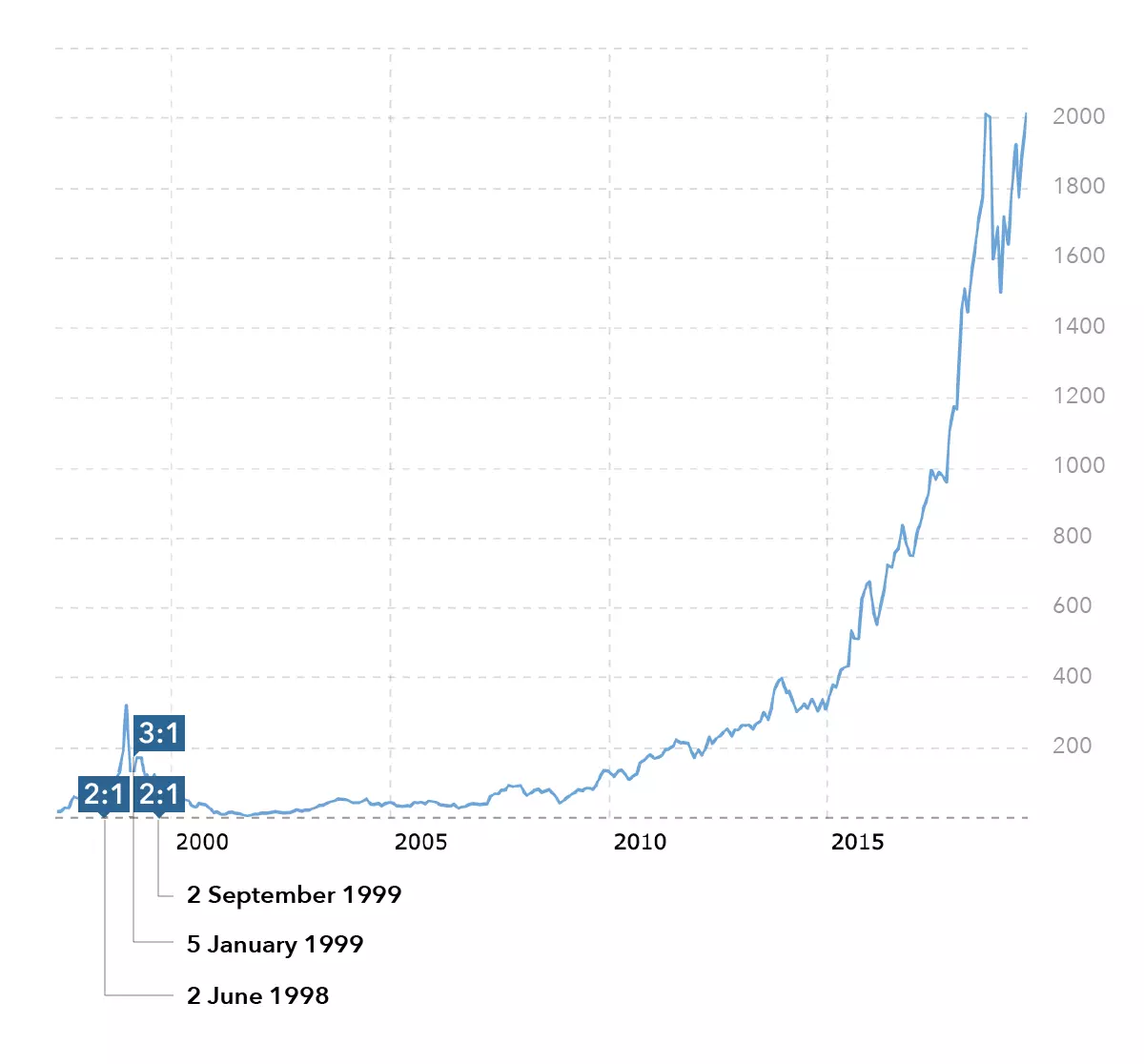
Amazon’s journey through the public markets has been marked by explosive growth, and its stock split history vividly reflects this trajectory. Despite its colossal market capitalization, Amazon has implemented stock splits only three times in its history. This scarcity, especially given its long and dramatic price appreciation, makes each split a notable event.
The Early Years: First Two Splits
Amazon’s initial two stock splits occurred relatively early in its life as a public company, during the heady days of the dot-com boom. These splits were reactive measures to a rapidly appreciating stock price as investors embraced the burgeoning e-commerce phenomenon.
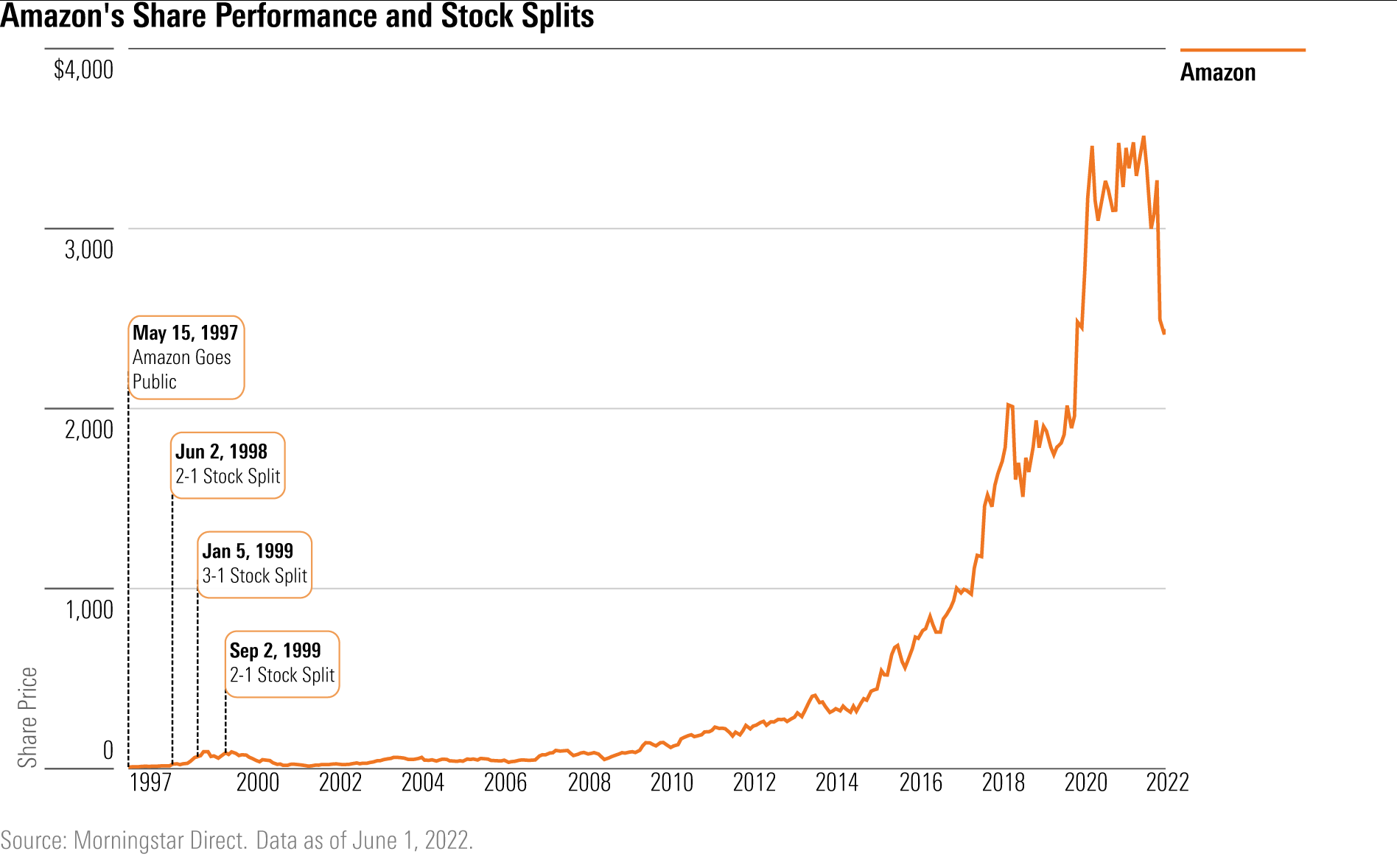
- June 2, 1998 – 2-for-1 Split: This was Amazon’s first stock split, occurring approximately one year after its IPO in May 1997. The split ratio was 2-for-1, meaning that for every share an investor owned, they received an additional share, effectively doubling their share count and halving the per-share price. At this stage, Amazon was still primarily an online bookseller, but its potential was already captivating the market.
- January 5, 1999 – 3-for-1 Split: Less than seven months after its first split, Amazon executed a more aggressive 3-for-1 split. This indicates the incredible pace at which its stock price was climbing during the height of the dot-com bubble. An investor holding one share would now possess three, with the price of each share adjusted down by a factor of three.
These early splits were crucial in maintaining the stock’s accessibility during a period of intense speculative interest and rapid value creation, ensuring that the individual investor could still participate in Amazon’s early growth story without needing a hefty initial capital outlay for a single share.
The Recent Split: Adapting to Modern Market Dynamics
After the 1999 split, Amazon’s stock price continued its ascent, weathering the dot-com bust, expanding into new verticals, launching AWS, and eventually becoming a dominant force in retail and cloud computing. For over two decades, despite its share price reaching thousands of dollars, Amazon did not conduct another stock split. This changed only recently.
- June 6, 2022 – 20-for-1 Split: This was Amazon’s most significant split by ratio and came after a remarkable 23-year hiatus. The stock price had soared to over $3,000 per share, making it one of the highest-priced individual stocks on major exchanges. The 20-for-1 split brought the share price down dramatically, making it significantly more affordable for individual investors. For every one share held before the split, shareholders received 19 additional shares, resulting in 20 shares where there was previously one.
This most recent split was a clear strategic move to enhance retail investor participation and align with practices seen from other high-flying tech giants that had also recently split their stock (e.g., Apple, Tesla). It also made the stock more attractive for inclusion in indices like the Dow Jones Industrial Average, which is price-weighted.
Ratios and Dates: A Detailed Look
To summarize Amazon’s stock split history:
- June 2, 1998: 2-for-1 split
- January 5, 1999: 3-for-1 split
- June 6, 2022: 20-for-1 split
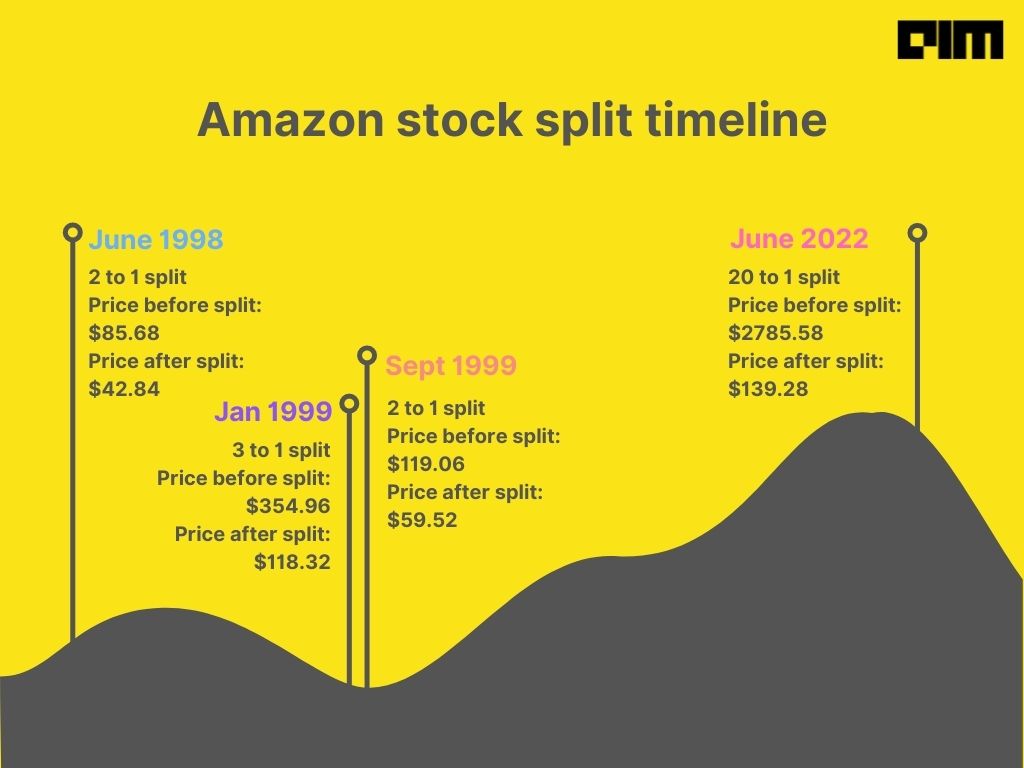
These three events collectively represent the company’s approach to managing its share structure in response to its overwhelming success in the market. An original investor who held just one share of Amazon stock before its first split would, after all three splits, own a significantly larger number of shares, assuming they never sold any. Specifically, one pre-1998 share would become 2 shares in 1998, then 6 shares in 1999 (2 * 3), and finally 120 shares in 2022 (6 * 20).
Unpacking the Rationale Behind Amazon’s Splits
While the immediate mechanics of a stock split are simple, the underlying rationale often involves a nuanced interplay of financial strategy, market psychology, and investor relations. Amazon’s decisions to split its stock, particularly the most recent one after a long gap, reflect these intricate considerations.
Enhancing Accessibility for Retail Investors
The primary driver behind most stock splits, and certainly Amazon’s recent 20-for-1 split, is to make shares more accessible to a broader base of retail investors. A stock trading at $3,000+ per share can be intimidating or simply unaffordable for many individual investors who might be looking to invest smaller amounts. By bringing the price down to, say, $150 per share (as it did after the 2022 split, based on pre-split prices), Amazon effectively lowers the entry barrier. This democratizes ownership, allowing more people to directly invest in one of the world’s leading companies. Increased retail participation can also foster a stronger sense of community and loyalty among shareholders.
Boosting Liquidity and Trading Volume
A lower per-share price typically leads to increased trading volume and improved liquidity. When shares are cheaper, more individual trades can occur, even with smaller capital commitments. This makes it easier for buyers and sellers to find counterparts in the market, reducing the spread between bid and ask prices and potentially making the stock more attractive to institutional investors who manage large portfolios and require deep liquidity. While Amazon’s stock was already highly liquid even at high prices due to its immense market cap, a split can still further enhance this characteristic, ensuring smooth trading operations across all investor segments.
Psychological Impact on Market Perception
Beyond the tangible benefits, stock splits also carry a significant psychological weight. A stock that appears “cheaper” can seem more attractive to potential investors, even though its underlying value and the company’s fundamentals haven’t changed. This phenomenon, often referred to as “the pizza effect” (where dividing a pizza into more slices doesn’t create more pizza, but each slice looks more manageable), plays a role in investor behavior. Furthermore, a stock split can reinforce the perception of a company’s success; companies don’t typically split their stock unless their price has soared significantly, indicating strong performance and investor confidence. This can contribute to a positive feedback loop, drawing in more interest.
The Long-Term Impact on Amazon Shareholders
For long-term investors, the immediate effects of a stock split are often negligible in terms of their total portfolio value. However, the indirect and subsequent impacts can be quite significant, especially when considering a company like Amazon that has demonstrated consistent growth over decades.
Maintaining Shareholder Value Post-Split
It’s crucial to reiterate that a stock split, by itself, does not create or destroy shareholder value. An investor’s total holdings value remains the same immediately after the split. The intrinsic value of the company and its future earnings potential are unaffected. Any subsequent increase or decrease in the total value of shares will be due to the company’s performance, market sentiment, and broader economic factors, not the split itself. However, the enhanced liquidity and accessibility post-split can contribute to sustained interest and potentially support a healthier trading environment for the stock.
Amazon’s Growth Trajectory and Stock Performance
Amazon’s stock splits have historically occurred amidst periods of robust growth. The early splits came as Amazon was rapidly expanding its e-commerce footprint. The recent split followed years of exponential growth across e-commerce, cloud computing (AWS), digital advertising, and other ventures. For long-term shareholders who held through these splits, the decision proved immensely beneficial. The splits allowed them to maintain a diversified portfolio without having an excessively large portion tied up in a single, high-priced share, and they ultimately benefited from the continued appreciation of the company’s fundamental value across their increased share count.
The Allure of Lower Entry Points for New Investors
For new investors, the lower entry point provided by a stock split can be highly appealing. It allows them to acquire whole shares of a premium company like Amazon without requiring a massive initial investment. While fractional share ownership has become more common, owning whole shares can still be preferable for many, offering a sense of direct ownership and simplifying tracking. This broader appeal to a new generation of investors can help sustain demand for the stock over time, which is a subtle but important long-term benefit for existing shareholders.
Beyond the Split: Amazon as an Investment
While understanding stock splits is an important aspect of financial literacy for investors, it’s critical to remember that a stock split is merely a corporate action, not an indicator of fundamental value change. The decision to invest in Amazon, or any company, should extend far beyond whether its stock has split.
Evaluating Fundamental Strength
For any prudent investor, the core of an investment decision lies in the fundamental strength of the company. Amazon’s enduring appeal stems from its market dominance, innovative culture, diversified revenue streams (e-commerce, AWS, advertising), and continued expansion into new markets and technologies. Investors should scrutinize its financial statements, competitive landscape, management quality, and future growth prospects rather than focusing solely on share price or splits. The splits only facilitated broader access to a stock that already possessed strong fundamentals.
The Broader Market Context
Investing in a company like Amazon also means considering the broader market and economic context. Factors such as interest rates, inflation, consumer spending trends, and regulatory environments can significantly impact even the most resilient companies. While Amazon has demonstrated remarkable resilience, its performance, like all stocks, is not immune to macro-economic headwinds. Investors should always consider their overall portfolio diversification and risk tolerance when allocating capital to individual stocks.
Strategic Considerations for Future Investors
For those considering investing in Amazon today, the 2022 stock split has indeed made it more accessible. However, the decision should be rooted in a thorough analysis of Amazon’s current valuation, its growth potential in various segments, and its ability to maintain its competitive edge. A lower share price doesn’t equate to a “cheap” stock; value is determined by its price relative to its earnings, assets, and future prospects. Investors should use financial tools and conduct due diligence to determine if Amazon aligns with their investment goals and risk profile.
In conclusion, Amazon has split its stock three times: twice in its early years (1998, 1999) and once more recently in 2022. These actions reflect its phenomenal growth, strategic decisions to enhance market accessibility, and efforts to maintain liquidity. For investors, understanding these events provides insight into corporate finance strategies and reinforces the importance of focusing on a company’s underlying fundamentals rather than superficial price adjustments.
aViewFromTheCave is a participant in the Amazon Services LLC Associates Program, an affiliate advertising program designed to provide a means for sites to earn advertising fees by advertising and linking to Amazon.com. Amazon, the Amazon logo, AmazonSupply, and the AmazonSupply logo are trademarks of Amazon.com, Inc. or its affiliates. As an Amazon Associate we earn affiliate commissions from qualifying purchases.