
In an increasingly digital world, managing your finances often requires quick access to crucial information, none more fundamental than your bank account number. While it might seem like a trivial detail stored away, knowing exactly how and where to retrieve this unique identifier is essential for a multitude of financial transactions and security practices. From setting up direct deposits and making online payments to resolving banking queries and ensuring the safety of your funds, your bank account number serves as a cornerstone of your financial identity. This guide will demystify the process of locating this vital piece of information, offering practical strategies and insights to empower you with seamless access while prioritizing your financial security.
The Indispensable Role of Your Bank Account Number
Your bank account number is more than just a sequence of digits; it is the unique identifier that distinguishes your specific account from millions of others within your financial institution. Understanding its multifaceted purpose and knowing when it’s required is the first step toward confident financial management.
Understanding Its Purpose
At its core, your bank account number facilitates the accurate routing of funds to and from your account. Think of it as your financial address within the banking system. When money is sent to you, whether from an employer, a government agency, or a friend, this number ensures it reaches the correct destination. Conversely, when you authorize payments or transfers, it tells the system precisely where to withdraw the funds. It’s a critical component that enables the intricate web of modern financial transactions to function smoothly and securely. Without it, financial operations would descend into chaos, making precise fund allocation impossible.
When You’ll Need It
The instances where you’ll need your bank account number are frequent and varied, spanning both routine and significant financial activities. For employment, your employer will require it to set up direct deposit for your salary, ensuring timely and consistent income. Similarly, if you receive benefits from a government agency or recurring payments from other sources, providing your bank account number is standard procedure.
Beyond income, it’s crucial for setting up automatic bill payments, allowing you to manage expenses efficiently without manually initiating each payment. For larger transactions, such as transferring funds between your own accounts at different institutions or sending money to others, the account number is indispensable. Even in less common scenarios, like initiating a wire transfer, resolving a billing dispute, or applying for a loan, having your account number readily available can significantly streamline the process and prevent delays. In essence, it’s a key that unlocks access to numerous financial services and ensures your money moves where and when it needs to.
Navigating Common Avenues for Retrieval
Fortunately, financial institutions provide several convenient and secure methods for you to find your bank account number. These avenues range from traditional physical documents to modern digital interfaces, catering to different preferences and levels of urgency.
Your Chequebook: A Traditional Lifeline
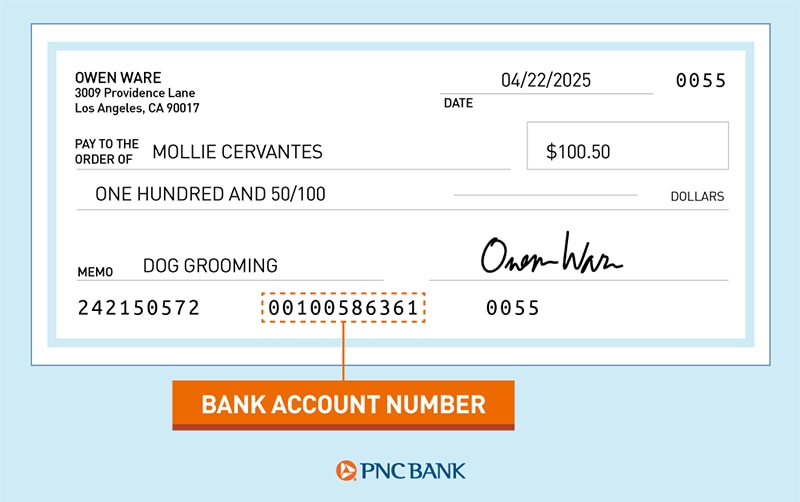
For many, the most straightforward and traditional method to find a bank account number is by consulting their chequebook. Each cheque issued by your bank contains a wealth of banking information printed along the bottom edge. Typically, you will find three sets of numbers, separated by special symbols:
- The Routing Number (or Sort Code): This is usually the first set of nine digits on the left, identifying your bank and its location. (In the UK, it’s a six-digit sort code, often in the middle).
- Your Account Number: This is generally the middle set of digits, which is your unique account identifier. The length can vary, but it’s often between 10 and 12 digits.
- The Cheque Number: The final set of digits, typically on the right, which uniquely identifies that specific cheque.
If you possess an active chequebook, simply grabbing one of your cheques offers an immediate and reliable way to pinpoint your account number. However, it’s crucial to remember that this method is only viable if you have a physical chequebook readily accessible.
Decoding Your Bank Statements (Physical and Digital)
Bank statements, whether received through the mail or downloaded digitally, are another authoritative source for your bank account number. Financial institutions are legally required to include essential account information on these documents.
- Physical Statements: If you opt for paper statements, your account number is almost always prominently displayed near the top of the document, often alongside your name and address, and the statement period. Keep these statements organized for easy reference, but ensure they are stored securely to prevent unauthorized access to your financial details.
- Digital Statements: For those who prefer digital banking, accessing e-statements through your bank’s online portal or mobile app is a convenient option. Navigate to the “Statements” or “Documents” section within your online banking profile, select the desired statement period, and download the PDF. Your account number will be clearly visible on the digital document, just as it would be on a physical one. This method offers excellent accessibility, as you can retrieve past statements instantly from virtually anywhere with an internet connection.
The Digital Frontier: Online Banking and Mobile Apps
In the age of digital transformation, your bank’s online banking platform and dedicated mobile application are perhaps the most frequently used and accessible tools for managing your finances, including finding your account number.
- Online Banking Portal: After logging into your bank’s secure website, navigate to the “Account Summary” or “Account Details” section. Your account number is usually displayed prominently on this page, often under the specific account (e.g., Checking Account, Savings Account). Some banks might partially mask the number for security reasons (e.g., showing only the last four digits), requiring you to click a button like “Show Full Account Number” or verify your identity again to reveal the complete sequence. This security measure is designed to protect your information in case your computer is compromised.
- Mobile Banking Apps: Most modern banking apps offer similar functionality. Once logged in, tap on the specific account you wish to query. The account details screen will typically show your account number. Like online banking portals, some apps may initially display a masked version, prompting you to tap an icon or use biometric authentication (fingerprint, face ID) to unveil the full number. The convenience of mobile apps means your account number is often just a few taps away, making it ideal for on-the-go financial tasks.
Direct Engagement: Contacting Your Financial Institution
When all other methods prove unsuccessful, or if you prefer direct assistance, contacting your bank directly is always an option. This can be done through a variety of channels:
- Phone Banking: Call your bank’s customer service line. Be prepared to go through a rigorous identity verification process, which usually involves answering security questions, providing personal details (like your full name, address, date of birth, and possibly the last few digits of your Social Security Number or national ID), and sometimes verifying recent transactions. This is a crucial step to prevent unauthorized individuals from accessing your financial information.
- In-Person at a Branch: Visiting a local branch of your bank is another reliable method. A bank teller or customer service representative will be able to provide your account number after verifying your identity, typically requiring a valid government-issued photo ID (driver’s license, passport) and possibly your debit card. This method offers the highest level of security and personalized assistance, especially if you have complex queries.
- Secure Messaging/Chat: Some banks offer secure messaging or live chat features within their online banking platforms or mobile apps. While slower than a phone call, this can be a convenient way to get help without making a call, as the identity verification is often linked to your secure login.
Beyond the Account Number: Differentiating Key Banking Identifiers
While your bank account number is critical, it’s often confused with other banking identifiers, particularly when dealing with different countries or types of transactions. Understanding these distinctions is vital for accurate financial operations.
Routing Numbers (ACH) vs. Account Numbers (US Context)
In the United States, two primary numbers are essential for domestic transactions:
- Routing Number (ABA or ACH Routing Number): This nine-digit number identifies the financial institution itself. It’s used for Automated Clearing House (ACH) transactions, such as direct deposits, electronic bill payments, and transfers between banks. You’ll find it on cheques and bank statements. A bank can have multiple routing numbers depending on the type of transaction or location.
- Account Number: As discussed, this number uniquely identifies your specific account within that financial institution.
For domestic transfers, you typically need both the recipient’s routing number and their account number to ensure funds are sent to the correct bank and then to the correct account within that bank.

Sort Codes vs. Account Numbers (UK Context)
In the United Kingdom, the system is slightly different:
- Sort Code: This six-digit number identifies a specific branch of a bank. It’s analogous to a routing number in the US but is branch-specific.
- Account Number: This is an eight-digit number that uniquely identifies your account at that specific branch.
When making a domestic payment in the UK, you will be asked for both the sort code and the account number.
SWIFT/BIC Codes for International Transactions
For international money transfers, another identifier comes into play:
- SWIFT Code (Society for Worldwide Interbank Financial Telecommunication) or BIC (Bank Identifier Code): This is an 8- or 11-character code that identifies banks and financial institutions globally. It’s crucial for sending or receiving money across national borders, as it ensures the transfer goes to the correct bank in the correct country. Your bank’s SWIFT/BIC code can usually be found on your bank statements, on their website, or by contacting customer service.
Confusing these numbers can lead to misdirected funds, delays, or even costly errors. Always double-check which number is being requested for any given transaction.
Safeguarding Your Financial Identity: Security Best Practices
Knowing your bank account number is empowering, but protecting it is paramount. While it’s not as sensitive as a Social Security Number or PIN, improper handling can still expose you to financial risks.
The Risks of Unnecessary Sharing
While your bank account number is needed for legitimate transactions, it’s not something you should share indiscriminately. Unlike your debit card number, which can be directly used for purchases, your account number generally requires additional information (like a routing number or signature authorization) for transactions to be initiated. However, sharing it with untrusted individuals or on unsecure platforms can still open doors to potential fraud, such as unauthorized direct debits or attempts at identity theft. Phishing scams often try to trick you into revealing this and other sensitive information. Always verify the legitimacy of any request for your account number.
Secure Storage and Access
Practicing secure storage and access methods is crucial for all your financial information.
- Physical Documents: If you receive paper statements or cheques, store them in a secure, locked location that is not easily accessible to others. Shred old statements and cancelled cheques before disposal.
- Digital Access: Use strong, unique passwords for your online banking accounts and enable two-factor authentication (2FA) whenever possible. This adds an extra layer of security, typically requiring a code sent to your phone or email in addition to your password. Be wary of public Wi-Fi networks when accessing sensitive financial information, as they can be vulnerable to eavesdropping. Ensure your devices are protected with up-to-date antivirus software.
- Memo Pads/Notes: Avoid writing your full account number on easily viewable sticky notes or in unencrypted digital notes on your phone or computer. If you must jot it down, use only a portion or obscure it with other numbers, ensuring only you know the full sequence.
Recognizing and Avoiding Scams
Scammers frequently target individuals by attempting to trick them into divulging banking details.
- Phishing Emails and Texts: Be suspicious of unsolicited emails or text messages claiming to be from your bank and asking for your account number, login credentials, or other personal information. Banks rarely ask for such details via email or text. Always verify the sender and, if in doubt, contact your bank directly using official contact information.
- Impersonation Calls: Be wary of phone calls from individuals claiming to be from your bank and pressuring you for account details. Legitimate bank representatives will never ask for your full PIN or entire password. If you receive such a call, hang up and call your bank back using the number on their official website or on the back of your debit card.
- Unknown Links: Never click on suspicious links in emails or texts that purport to lead to your bank’s website. Always type your bank’s URL directly into your browser or use your official mobile app.
Troubleshooting and Expert Tips for Seamless Access
Even with multiple methods available, you might occasionally face challenges in finding your account number. Here are some troubleshooting tips and best practices to ensure seamless access.
What if You’re Locked Out or Don’t Have Access?
If you are locked out of your online banking, don’t have a chequebook, or can’t locate any statements, direct contact with your bank remains the most reliable solution.
- Lost Login Credentials: Most banks offer an online password reset or username recovery process. Be prepared to answer security questions or use multi-factor authentication.
- No Physical Documents: If you’ve gone fully digital and accidentally deleted or can’t find a digital statement, the bank’s customer service or a branch visit is essential. They are equipped to verify your identity and provide the necessary details securely.
- Account Dormancy: If an account has been inactive for a long period, it might be classified as dormant, and you might need to reactivate it before you can access its details. Contact your bank for guidance on this process.
Maintaining Accessible Records
A proactive approach to managing your financial information can save significant time and stress.
- Centralized, Secure Record-Keeping: Consider creating a secure, encrypted document or using a reputable password manager to store essential banking details, including your account number. Ensure this document is password-protected and backed up securely.
- Know Your Bank’s Contacts: Keep your bank’s official customer service phone number and website address handy, perhaps saved in your phone contacts or a secure digital note. This prevents you from inadvertently searching for and clicking on phishing links.
- Digital Statement Habits: Make it a habit to periodically download and securely save your bank statements. This not only keeps your account number accessible but also provides a comprehensive record of your financial activity.

Regular Security Audits
Periodically review your financial security practices.
- Review Account Activity: Regularly check your bank statements and online banking activity for any unauthorized transactions. This vigilant oversight helps detect fraud early.
- Update Contact Information: Ensure your bank always has your current phone number and email address, as these are often used for security alerts and identity verification.
- Educate Yourself: Stay informed about the latest financial scams and security best practices. Financial literacy is your first line of defense against fraud.
In conclusion, your bank account number is a critical piece of financial information that facilitates the flow of your money in today’s interconnected banking ecosystem. By understanding its purpose, familiarizing yourself with the various retrieval methods, differentiating it from other banking identifiers, and committing to robust security practices, you can ensure seamless access to your funds while safeguarding your financial identity. Taking a proactive approach to knowing and protecting this number is a fundamental step toward intelligent and secure personal finance management.
aViewFromTheCave is a participant in the Amazon Services LLC Associates Program, an affiliate advertising program designed to provide a means for sites to earn advertising fees by advertising and linking to Amazon.com. Amazon, the Amazon logo, AmazonSupply, and the AmazonSupply logo are trademarks of Amazon.com, Inc. or its affiliates. As an Amazon Associate we earn affiliate commissions from qualifying purchases.