
Understanding the price of shares is fundamental to navigating the stock market and making informed investment decisions. Far more than just a number displayed on a screen, a share price represents a complex interplay of a company’s intrinsic value, market sentiment, economic conditions, and investor expectations. For anyone looking to build wealth, participate in the financial markets, or simply comprehend the daily news cycles dominated by stock market movements, grasping the nuances behind share pricing is an essential skill. This article delves into the multi-faceted nature of share prices, exploring what they truly signify, the myriad factors that influence their fluctuations, and why their interpretation is crucial for both individual investors and the broader economic landscape.
Deconstructing Share Price: More Than Just a Number
At its most basic level, the price of a share, also known as its stock price, is the current valuation of a single unit of ownership in a public company. When you buy a share, you are purchasing a tiny fraction of that company’s assets, earnings, and future potential. This price is determined by the forces of supply and demand on stock exchanges where shares are bought and sold. If more investors want to buy a particular stock than sell it, its price tends to rise. Conversely, if more investors are selling than buying, the price will fall.
The Mechanism of Price Discovery
Share prices are discovered in real-time through continuous trading on stock exchanges. When an investor places a “buy” order for a certain number of shares at a specific price (a limit order) or at the current market price (a market order), it interacts with “sell” orders from other investors. The point where a buyer and seller agree on a price is where a transaction occurs, and that transaction sets the new market price until the next trade happens. This constant ebb and flow of orders, driven by diverse motivations and information, creates the dynamic pricing we observe throughout trading hours.
Differentiating Price from Value
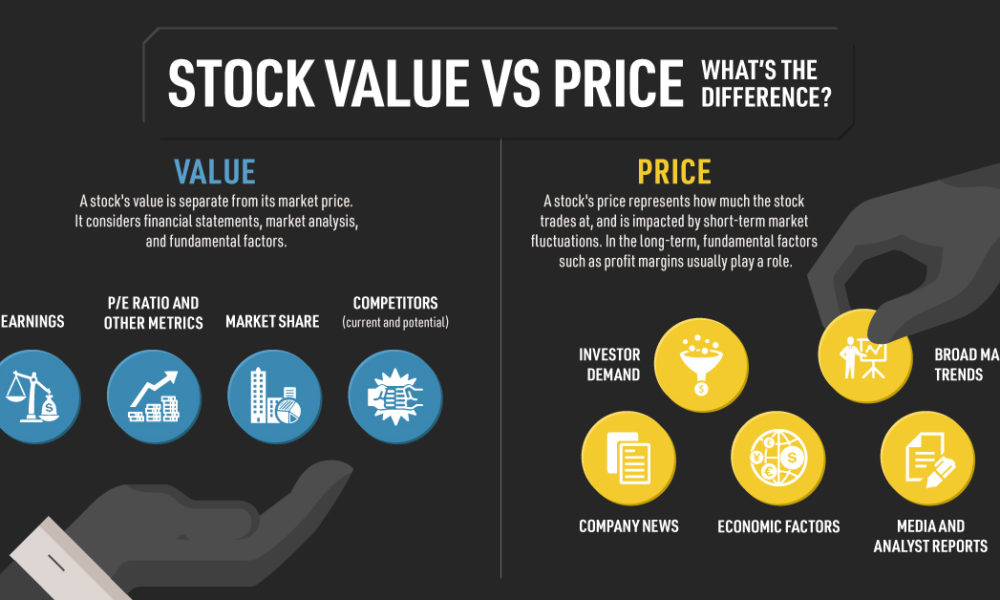
It’s critical for investors to distinguish between a share’s price and its underlying value. The price is what the market is currently willing to pay for the share; it is observable and fluctuates constantly. The value, however, is an estimate of what the share should be worth, based on a rigorous analysis of the company’s financial health, future prospects, industry position, and economic environment. Savvy investors often seek out shares where the market price is below their calculated intrinsic value, believing these opportunities offer the potential for future appreciation as the market eventually recognizes the true worth. This discrepancy forms the bedrock of value investing principles, where patience and thorough research are paramount.
Key Drivers of Share Price Fluctuation
The price of a share is a sensitive indicator, reacting to a broad spectrum of influences, from microscopic company-specific events to macroeconomic seismic shifts. Understanding these drivers is key to anticipating market movements and making well-informed investment choices.
Company-Specific Performance and Outlook
The fundamental health and prospects of a company are arguably the most significant long-term drivers of its share price. Strong earnings growth, increasing revenues, healthy profit margins, and a positive outlook for future business expansion tend to push share prices higher. Conversely, disappointing financial results, negative guidance, management changes, or adverse legal outcomes can trigger sharp declines. Investors scrutinize quarterly earnings reports, management conference calls, and company announcements for clues about a firm’s trajectory. News of a new product launch, a major contract win, or a successful acquisition can inject optimism, while product recalls or competitive threats can instill fear.
Market Sentiment and Investor Psychology
Beyond objective financials, the collective mood of the market – often termed “market sentiment” – plays a powerful role. Fear and greed are potent forces that can amplify or depress price movements. During periods of optimism, investors might be willing to pay a premium for shares, creating bubbles. In times of fear or uncertainty, panic selling can lead to crashes, even for fundamentally sound companies. News headlines, analyst ratings, social media trends, and even general economic confidence can swing sentiment dramatically. Technical analysis, which studies historical price and volume patterns, attempts to gauge and profit from these psychological shifts, assuming that past market behavior can offer clues about future movements.
Economic and Industry-Wide Factors
The broader economic environment provides a crucial backdrop for share prices. Factors such as interest rates, inflation, GDP growth, and unemployment rates can influence corporate profitability and investor behavior across the board. Rising interest rates, for instance, can make borrowing more expensive for companies and reduce the present value of future earnings, often leading to a broad market decline. High inflation can erode purchasing power and corporate margins. Industry-specific trends, such as technological disruption, regulatory changes, or shifts in consumer preferences, can also have a profound impact on the shares of companies within that sector, creating winners and losers irrespective of individual company performance.
Geopolitical Events and Global News
In an increasingly interconnected world, geopolitical events and global news can send ripples through stock markets worldwide. Wars, trade disputes, political instability, pandemics, and natural disasters can disrupt supply chains, alter consumer demand, and introduce significant uncertainty, causing investors to flee riskier assets like stocks. Conversely, resolutions to conflicts, favorable international agreements, or major scientific breakthroughs can spark rallies. The globalized nature of modern business means that even localized events can have far-reaching consequences for multinational corporations and their share prices.
Valuing Shares: Beyond the Sticker Price
While the daily quoted price is important, a sophisticated investor looks beyond it to understand a share’s true valuation. Several metrics and methodologies are employed to ascertain whether a share is overvalued, undervalued, or fairly priced relative to its peers and its potential.
Essential Valuation Metrics
- Price-to-Earnings (P/E) Ratio: This widely used metric compares a company’s share price to its earnings per share (EPS). A high P/E ratio suggests investors expect higher earnings growth in the future, or that the stock is currently expensive. A low P/E might indicate undervaluation or that the company faces significant challenges.
- Price-to-Book (P/B) Ratio: This compares a company’s share price to its book value per share (assets minus liabilities). It’s particularly useful for industries with significant physical assets, like banking or manufacturing, to gauge if the market is valuing the company above or below its net asset value.
- Dividend Yield: For income-focused investors, the dividend yield (annual dividends per share divided by the share price) indicates the return on investment from dividends alone. A high yield can be attractive but also warrants investigation to ensure the dividend is sustainable.
- Earnings Per Share (EPS): This is the portion of a company’s profit allocated to each outstanding share of common stock. Growing EPS is a strong indicator of a healthy and expanding business.
- Revenue Growth: Consistent increases in revenue signal a company’s ability to sell more products or services, a fundamental driver of long-term value.
Discounted Cash Flow (DCF) Analysis
For a more comprehensive valuation, professional analysts often employ Discounted Cash Flow (DCF) analysis. This method estimates the value of an investment based on its expected future cash flows. These future cash flows are “discounted” back to their present value using a discount rate, which typically reflects the cost of capital and the risk associated with the investment. If the sum of these present values is higher than the current market capitalization (share price multiplied by outstanding shares), the stock might be considered undervalued. While complex, DCF aims to provide a robust intrinsic value, allowing investors to judge if the current share price accurately reflects the company’s long-term earning potential.
The Investor’s Perspective: Why Share Price Matters
For investors, the price of shares is the cornerstone of their portfolio’s performance. It dictates entry and exit points, influences realized gains and losses, and shapes the overall return on investment.
Capital Appreciation and Total Return
The most direct impact of share price is capital appreciation – the increase in the value of your shares over time. If you buy a share at $100 and sell it later at $120, you’ve made a capital gain of $20 per share. However, experienced investors also consider “total return,” which includes both capital appreciation and any dividends received. A company with a stable share price and a generous dividend might offer a better total return than a volatile stock with significant price swings but no dividends, especially for long-term income-focused portfolios.
Risk and Reward Dynamics
The price you pay for a share fundamentally impacts your potential risk and reward. Buying a share at an inflated price increases the risk of capital loss if the price corrects. Conversely, buying a fundamentally strong company’s shares when they are undervalued offers a larger margin of safety and greater upside potential. Understanding the factors that drive share price helps investors assess the risk associated with an investment, balance their portfolios, and set realistic expectations for returns. It also informs strategies like stop-loss orders, designed to limit potential losses if a share price moves against an investment.
Psychological Impact on Decision Making
The constant fluctuation of share prices can have a significant psychological impact on investors. Watching a portfolio’s value rise can induce overconfidence (greed), leading to irrational exuberance and risky decisions. Conversely, seeing prices fall can trigger fear, prompting panic selling at the worst possible time. A deep understanding of why share prices move, coupled with a disciplined investment strategy, helps investors mitigate these emotional responses and stick to their long-term financial goals, resisting the urge to react impulsively to short-term market noise.

Conclusion: Navigating the Complex World of Share Prices
The price of shares is a dynamic and intricate reflection of a company’s worth, market forces, and the broader economic landscape. It is not merely a number, but a constantly updated barometer influenced by fundamental performance, investor sentiment, macroeconomic indicators, and global events. For anyone engaged with the financial markets, moving beyond a superficial understanding of share price to a comprehensive grasp of its underlying drivers and valuation methodologies is paramount.
By distinguishing between price and intrinsic value, diligently analyzing company fundamentals, and understanding the psychological tides of the market, investors can make more informed decisions, mitigate risks, and position themselves for long-term success. The journey of investment is one of continuous learning, and mastering the art of interpreting share prices is undoubtedly one of its most valuable lessons. It empowers individuals to not just participate in the market, but to engage with it intelligently and strategically, building a robust financial future one carefully chosen share at a time.
aViewFromTheCave is a participant in the Amazon Services LLC Associates Program, an affiliate advertising program designed to provide a means for sites to earn advertising fees by advertising and linking to Amazon.com. Amazon, the Amazon logo, AmazonSupply, and the AmazonSupply logo are trademarks of Amazon.com, Inc. or its affiliates. As an Amazon Associate we earn affiliate commissions from qualifying purchases.