
Apple Inc. stands as an undisputed titan of the global economy, not just in technology, but in pure financial might. Understanding the “net worth” of a company like Apple goes far beyond a simple number; it delves into the intricate financial landscape of one of the world’s most valuable corporations. While the concept of net worth is straightforward for an individual – assets minus liabilities – for a multifaceted global entity, it involves a complex interplay of physical assets, intellectual property, market perception, and financial strategies. This exploration aims to dissect Apple’s financial health, illustrating what constitutes its net worth and why this metric, alongside others, paints a comprehensive picture of its economic stature.
Deconstructing Corporate Net Worth: The Foundation
At its core, corporate net worth represents the total assets of a company minus its total liabilities. Also known as shareholder equity or owner’s equity, it signifies the residual value left for shareholders if all assets were liquidated and all debts paid off. This figure is a critical indicator of a company’s financial health, reflecting its solvency and long-term viability. For a company like Apple, with its vast global operations and diverse financial instruments, calculating this figure requires a thorough understanding of its balance sheet components.
Assets vs. Liabilities: The Core Calculation
The balance sheet is the primary financial statement for determining net worth. It presents a snapshot of a company’s financial position at a specific point in time, organized into three main sections: assets, liabilities, and equity.
- Assets: These are anything of economic value that the company owns or controls, which can be converted into cash. For Apple, assets include an enormous portfolio of cash and marketable securities (often held overseas), property, plant, and equipment (factories, retail stores, data centers), inventory (iPhones, Macs, accessories), accounts receivable (money owed by customers), and intangible assets like patents, trademarks, and brand value. The sheer scale and quality of Apple’s asset base are formidable.
- Liabilities: These represent the company’s financial obligations—debts or obligations to other entities. Apple’s liabilities range from short-term obligations like accounts payable (money owed to suppliers) and deferred revenue (payments received for services not yet rendered, like AppleCare or subscriptions) to long-term debts such as bonds issued to finance operations, capital expenditures, or shareholder returns (dividends and buybacks). While Apple maintains a substantial debt load, it is strategically managed and typically far outweighed by its assets.
The difference between these two categories forms the shareholder equity, which is the company’s net worth. A positive net worth indicates financial stability, while a negative net worth can signal financial distress, though it’s rare for established, profitable companies like Apple.
Why Net Worth Matters for a Corporation
Corporate net worth is more than just an accounting figure; it serves several crucial purposes:
- Financial Health Indicator: It provides a basic measure of a company’s financial strength and solvency. A growing net worth often signifies profitability and effective asset management.
- Shareholder Value: For investors, net worth indicates the intrinsic value of their ownership stake. While not directly equating to stock price, it underpins the company’s fundamental value.
- Creditworthiness: Lenders use net worth as a key metric to assess a company’s ability to repay debts. A robust net worth enhances a company’s credit rating, potentially leading to lower borrowing costs.
- Strategic Planning: Management uses net worth figures to make informed decisions about investments, acquisitions, divestitures, and capital allocation. It helps assess the capacity for future growth and expansion.
Apple’s Financial Juggernaut: A Deep Dive into its Balance Sheet
To truly grasp Apple’s net worth, one must examine the specific elements that contribute to its colossal financial stature. While precise, up-to-the-minute figures fluctuate and are best sourced from Apple’s latest quarterly or annual reports (Form 10-K and 10-Q filed with the SEC), we can discuss the categories that consistently define its balance sheet. As of recent filings, Apple’s balance sheet reflects hundreds of billions in both assets and liabilities, leading to shareholder equity in the tens of billions of dollars.
Key Assets: Cash, Investments, and Intellectual Property
Apple’s asset side is dominated by several massive categories:
- Cash and Marketable Securities: This is perhaps Apple’s most famous asset. For years, Apple maintained an unprecedented cash hoard, often exceeding $200 billion. While it has repatriated some funds and used others for buybacks and dividends, its liquidity remains exceptional. These funds provide immense financial flexibility, enabling R&D, acquisitions, and weathering economic downturns.
- Property, Plant, and Equipment (PP&E): This includes Apple’s iconic headquarters (Apple Park), vast retail stores globally, data centers, manufacturing equipment, and other physical infrastructure vital for its operations. These fixed assets represent a substantial, long-term investment in its operational capacity.
- Inventory: The sheer volume of iPhones, iPads, Macs, Apple Watches, and accessories produced and distributed globally means inventory is a significant current asset. Apple’s supply chain efficiency minimizes holding costs but inventory remains a crucial component.
- Intellectual Property (IP): While not always fully captured at market value on the balance sheet, Apple’s patents, trademarks (like the Apple logo), software copyrights, and proprietary technologies are arguably its most valuable intangible assets. These underpin its product differentiation and competitive advantage, albeit their accounting value may be historical cost rather than current market value.
Understanding Apple’s Liabilities: Debt, Payables, and Deferred Revenue
Despite its massive cash reserves, Apple strategically utilizes debt, which appears on the liabilities side:
- Long-Term Debt: Apple has issued billions in bonds to fund share buybacks, dividends, and other corporate activities, often leveraging low-interest rate environments. This debt allows Apple to return capital to shareholders efficiently without fully depleting its domestic cash, much of which was historically held overseas for tax reasons. While substantial, this debt is typically manageable for a company of Apple’s earning power.
- Accounts Payable: Money owed to its vast network of suppliers for components, manufacturing services, and operational expenses. Given Apple’s scale, these can run into billions.
- Deferred Revenue: A significant liability for Apple due to its subscription services (Apple Music, iCloud, Apple TV+), extended warranty programs (AppleCare), and gift card sales. Customers pay upfront, but Apple recognizes the revenue over time as services are delivered. This reflects future obligations to customers.
Shareholder Equity: The Residual Value
After subtracting total liabilities from total assets, the remainder is shareholder equity. For Apple, this figure is robust, though it can sometimes appear smaller than one might expect relative to its market capitalization. This is partly due to aggressive share buyback programs, which reduce the number of outstanding shares and thus the equity account on the balance sheet. Shareholder equity is typically composed of:
- Common Stock: The par value of shares issued.
- Additional Paid-in Capital: The amount shareholders paid for stock above its par value.
- Retained Earnings: Accumulated profits that have not been distributed as dividends.
- Treasury Stock: Shares repurchased by the company, which reduce equity. Apple’s extensive buyback programs mean its treasury stock balance is substantial, reducing its reported book value.
Beyond the Balance Sheet: Market Capitalization vs. Net Worth
It’s crucial to distinguish between a company’s net worth (shareholder equity, or book value) and its market capitalization. While both are measures of value, they represent different perspectives.

The Market’s Perception: How Valuation Differs
- Net Worth (Book Value): This is an accounting measure, calculated from the balance sheet. It reflects the historical cost of assets, adjusted for depreciation, and reduced by liabilities.
- Market Capitalization: This is the total value of a company as perceived by the stock market. It’s calculated by multiplying the current share price by the number of outstanding shares.
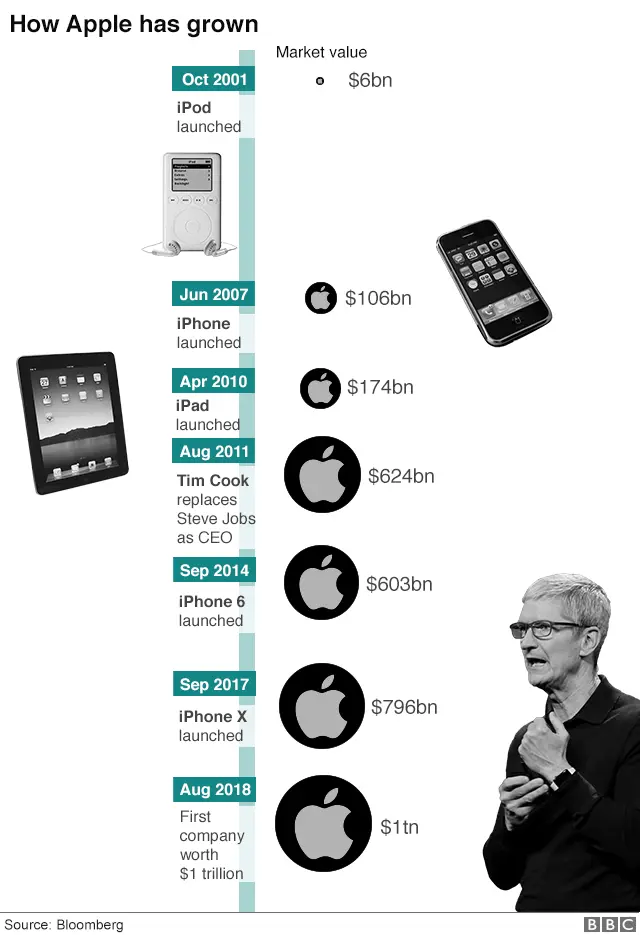
For Apple, its market capitalization often far exceeds its book value. This discrepancy highlights the market’s forward-looking assessment of the company’s potential. Investors assign a premium to Apple based on its strong brand, expected future earnings, innovation pipeline, market dominance, and robust ecosystem, none of which are fully captured by historical accounting values. The intangible assets like brand value, customer loyalty, and intellectual property’s true economic value far surpass their accounting book value. Apple’s market cap has regularly fluctuated around the $2.5 to $3 trillion mark, making it one of the most valuable companies globally, vastly outstripping its shareholder equity.
Impact of Share Buybacks and Dividends on Net Worth
Apple is known for its aggressive capital return program.
- Share Buybacks: When Apple repurchases its own shares from the open market, it reduces the number of outstanding shares. This also directly reduces shareholder equity on the balance sheet (specifically, the treasury stock account). While seemingly counterintuitive, buybacks are often seen as a way to enhance shareholder value by increasing earnings per share and supporting the stock price. This can lead to a lower book value per share, but if the market values the company highly, the stock price remains elevated.
- Dividends: Cash dividends paid to shareholders also reduce retained earnings, and thus net worth. While they distribute value to shareholders, they reduce the company’s internal equity.
These actions demonstrate that a company’s management actively manages its capital structure, impacting its reported net worth figures in strategic ways that don’t always reflect a decline in underlying business health or market value.
The Factors Fueling Apple’s Financial Might
Apple’s extraordinary financial health and ability to maintain a consistently high valuation are not accidental. They are the result of strategic execution across multiple fronts.
Product Innovation and Ecosystem Lock-in
Apple’s relentless focus on innovation, from the iPhone’s introduction to advancements in its silicon (e.g., M-series chips), wearables (Apple Watch), and spatial computing (Vision Pro), keeps its product lines fresh and highly desirable. Furthermore, its tightly integrated ecosystem (hardware, software, services) creates significant switching costs for users, fostering unparalleled customer loyalty and recurring revenue streams.
Global Brand Strength and Customer Loyalty
The Apple brand is consistently ranked among the most valuable globally. Its reputation for premium quality, design excellence, privacy, and user experience commands premium pricing and elicits profound customer loyalty. This brand equity allows Apple to maintain high margins and withstand competitive pressures, underpinning its financial robustness.
Supply Chain Mastery and Operational Efficiency
Apple’s legendary supply chain management is a critical financial asset. Its ability to procure components, manufacture, and distribute products at scale, with precision and cost-effectiveness, contributes significantly to its profitability. Operational efficiency in its logistics, manufacturing, and retail operations minimizes waste and maximizes throughput, directly impacting its bottom line.
Services Growth as a Revenue Driver
In recent years, Apple has strategically diversified its revenue streams beyond hardware, with a significant push into services (App Store, Apple Music, iCloud, Apple TV+, Apple Pay, AppleCare). The services segment now contributes a substantial and growing portion of Apple’s total revenue, offering high-margin, recurring income that adds stability and predictability to its financial outlook, further enhancing its fundamental value.
Implications and Future Outlook
Understanding Apple’s net worth and the factors influencing it offers insights into its strategic capabilities and future trajectory.
Challenges and Opportunities for Sustainable Growth
Apple faces ongoing challenges, including geopolitical tensions, supply chain disruptions, intense competition, and regulatory scrutiny over its App Store policies and market dominance. However, significant opportunities abound in emerging markets, new product categories (like augmented/virtual reality), expansion of its services ecosystem, and continued technological innovation. Maintaining its growth trajectory requires navigating these complexities while continuing to delight its vast customer base.

The Role of Financial Health in Strategic Decisions
Apple’s robust financial health provides it with immense strategic flexibility. It can invest heavily in research and development, acquire promising startups, expand into new markets, and return substantial capital to shareholders, all without significantly straining its balance sheet. This financial fortitude allows Apple to pursue long-term visions and maintain its competitive edge, underpinning its continuous evolution and impact on the global economy.
In conclusion, while the precise figure of Apple’s net worth (shareholder equity) provides a snapshot of its accounting value, a comprehensive understanding requires looking at its massive asset base, strategic liability management, and critically, its far larger market capitalization, which reflects the market’s confidence in its future earning power and enduring brand. Apple’s financial prowess is a testament to its innovation, operational excellence, and a deeply entrenched ecosystem that continues to generate immense value.
aViewFromTheCave is a participant in the Amazon Services LLC Associates Program, an affiliate advertising program designed to provide a means for sites to earn advertising fees by advertising and linking to Amazon.com. Amazon, the Amazon logo, AmazonSupply, and the AmazonSupply logo are trademarks of Amazon.com, Inc. or its affiliates. As an Amazon Associate we earn affiliate commissions from qualifying purchases.