
Navigating the world of personal and business finance often involves taking on loans. Whether it’s a mortgage, an auto loan, a student loan, or a personal line of credit, understanding how your monthly payment is calculated, especially the role of interest, is fundamental to sound financial planning. Far too many borrowers simply accept the payment figure presented to them without truly grasping the underlying mechanics. This lack of understanding can lead to poor financial decisions, missed opportunities to save, and even debt distress.
This comprehensive guide aims to demystify the process of calculating a loan payment with interest. We will break down the essential components of any loan, delve into the mathematical formulas that govern these calculations, explore modern tools that simplify the process, and provide crucial insights beyond just the monthly figure. By the end, you’ll be equipped with the knowledge to confidently assess loan offers, manage your debts more effectively, and make informed financial choices that serve your long-term goals. Understanding your loan payment isn’t just about knowing a number; it’s about financial empowerment.

Understanding the Core Components of a Loan
Before we dive into the intricacies of calculations, it’s crucial to understand the foundational elements that make up any loan. These components are the building blocks upon which your monthly payment is determined and directly influence the total cost of your borrowing.
Principal
The principal is the original amount of money you borrow from a lender. It’s the core sum that you are obligated to repay. If you take out a $200,000 mortgage, $200,000 is your principal. As you make payments, a portion of each payment goes towards reducing this principal amount, a process known as principal reduction. The faster you reduce the principal, the less interest you will accrue over the life of the loan.
Interest Rate
The interest rate is essentially the cost of borrowing money, expressed as a percentage of the principal. Lenders charge interest as compensation for the risk they take in lending you money and for the opportunity cost of not using that money elsewhere. Interest rates can be fixed, meaning they remain constant throughout the loan term, or variable, meaning they can fluctuate based on market conditions. For most consumer loans, the interest rate is often quoted as an Annual Percentage Rate (APR), which can sometimes include certain fees in addition to the base interest rate, offering a more holistic view of the loan’s cost. Understanding whether your interest compounds daily, monthly, or annually is also vital, as compounding frequency significantly impacts the total interest paid.
Loan Term
The loan term is the duration over which you agree to repay the loan, typically expressed in years or months. Common terms might be 30 years for a mortgage, 5 years for an auto loan, or 10 years for a student loan. The loan term has a significant impact on both your monthly payment and the total amount of interest you’ll pay over the life of the loan. A longer term generally results in lower monthly payments, as the principal and interest are spread out over more periods. However, a longer term also means you’ll pay more in total interest because the lender has more time to charge interest on the outstanding principal. Conversely, a shorter term will lead to higher monthly payments but substantially less total interest paid over time.
Amortization
Amortization refers to the process of gradually paying off a debt over time through a series of regular payments. With most installment loans, each payment consists of both principal and interest. In the initial stages of an amortizing loan, a larger portion of your payment goes towards interest, and a smaller portion towards principal. As the loan matures, this ratio gradually shifts, with more of your payment going towards principal and less towards interest. An amortization schedule is a table detailing each payment over the life of the loan, showing how much goes to principal, how much to interest, and the remaining principal balance after each payment. Understanding this schedule is key to seeing the true cost and progression of your loan.
The Amortization Formula: The Foundation of Loan Calculations
At the heart of every loan payment calculation lies a powerful mathematical formula. While it may appear daunting at first glance, breaking it down into its components reveals a logical and precise method for determining your regular payment. Understanding this formula is not just an academic exercise; it empowers you to understand exactly how your money is being allocated.
Introducing the Formula
The standard formula for calculating a fixed monthly loan payment (P) for an amortizing loan is:
P = [PV * r * (1 + r)^n] / [(1 + r)^n – 1]
Let’s dissect each variable:
- P: Your monthly loan payment. This is the figure we are trying to solve for.
- PV: The Present Value, or the principal loan amount. This is the initial sum you borrowed.
- r: The monthly interest rate. It’s crucial to note that lenders typically quote an annual interest rate, so you must convert this to a monthly rate. If the annual rate is 6%, the monthly rate
rwould be 0.06 / 12 = 0.005. - n: The total number of payments (or periods) over the life of the loan. Again, this is typically given in years, so you must convert it to months. For a 5-year loan,
nwould be 5 * 12 = 60 payments.
Step-by-Step Manual Calculation
Let’s walk through an example to illustrate how to use this formula:
Imagine you take out a loan for $10,000 (PV) at an annual interest rate of 5% for a term of 3 years.
-
Convert the Annual Interest Rate to a Monthly Rate (r):
Annual rate = 5% = 0.05
Monthly rate (r) = 0.05 / 12 = 0.0041666667 (it’s best to use as many decimal places as possible for accuracy). -
Convert the Loan Term to Total Number of Payments (n):
Loan term = 3 years
Total payments (n) = 3 years * 12 months/year = 36 months. -
Plug the Values into the Formula:
P = [10,000 * 0.0041666667 * (1 + 0.0041666667)^36] / [(1 + 0.0041666667)^36 – 1]Let’s break down the calculation:
(1 + r)=1 + 0.0041666667=1.0041666667(1 + r)^n=(1.0041666667)^36≈1.16147231(This is the compound interest factor)- Numerator part 1:
PV * r=10,000 * 0.0041666667=41.666667 - Numerator part 2:
PV * r * (1 + r)^n=41.666667 * 1.16147231=48.39467 - Denominator:
(1 + r)^n – 1=1.16147231 – 1=0.16147231 - Finally,
P = 48.39467 / 0.16147231≈ $299.71
So, your estimated monthly payment would be approximately $299.71.
Practical Limitations and When to Use It
While understanding the amortization formula is invaluable for grasping the underlying mechanics, manually calculating complex loans can be tedious and prone to human error, especially with long terms and precise interest rates. Its primary value lies in providing a foundational understanding rather than being the go-to method for everyday calculations. For quick, accurate, and iterative calculations, modern financial tools are far more efficient. However, knowing this formula empowers you to verify figures provided by lenders or financial calculators, fostering a deeper level of financial literacy and control.
Modern Tools for Calculating Loan Payments
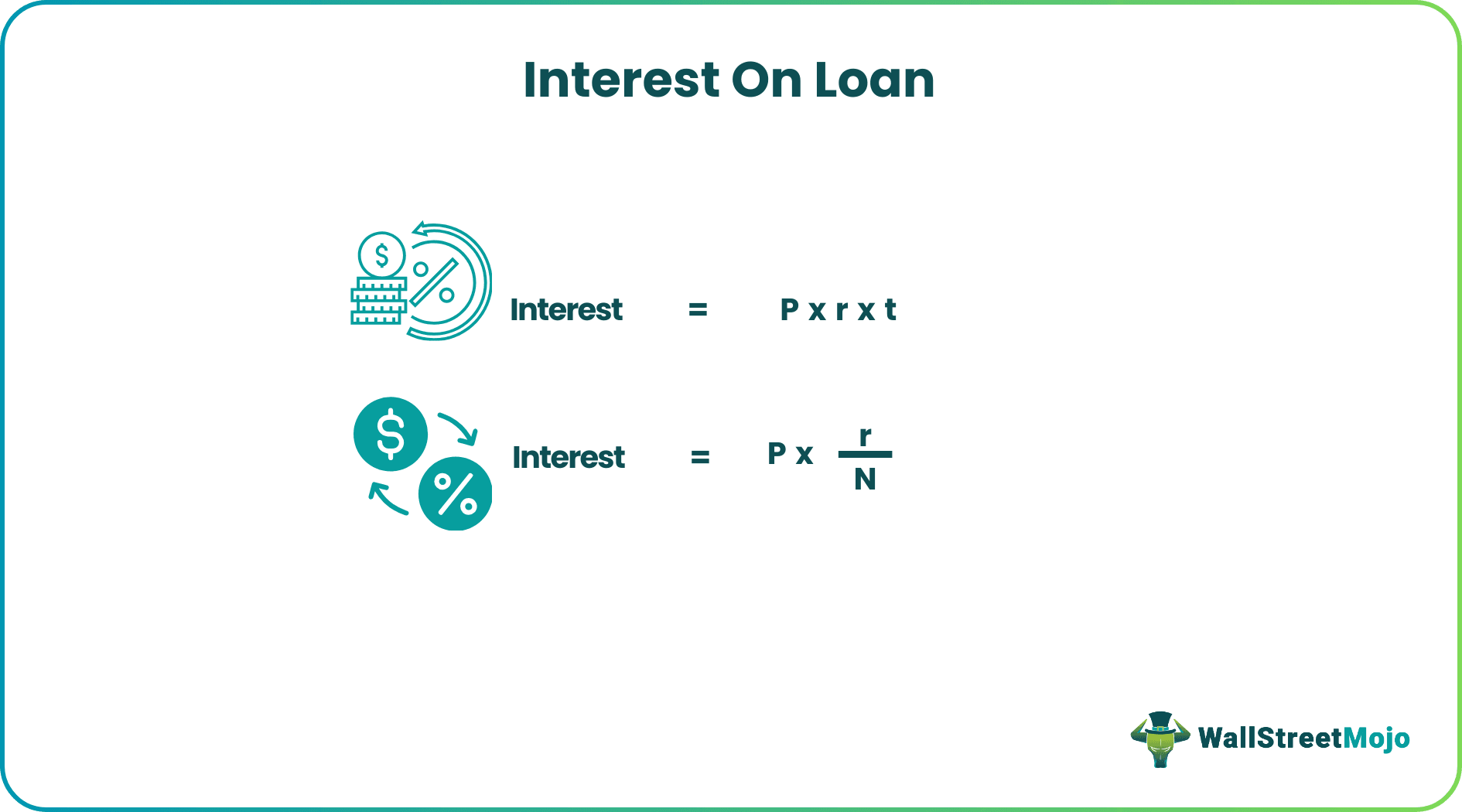
In today’s digital age, you don’t always need to wield a complex formula to figure out your loan payments. A variety of readily accessible tools can perform these calculations with speed and accuracy, providing not just the monthly payment but often a wealth of additional insights. These tools streamline the process, allowing you to explore different scenarios and make informed decisions effortlessly.
Online Loan Calculators
Perhaps the most accessible and widely used tools are online loan calculators. Websites of banks, financial news outlets, and independent financial planning services offer these free resources. They are designed for ease of use, requiring you only to input the principal amount, the annual interest rate, and the loan term.
What to look for in a good online calculator:
- Clear Input Fields: Easy to identify where to enter your principal, interest rate, and term.
- Comprehensive Output: Beyond just the monthly payment, look for calculators that provide the total interest paid, the total cost of the loan (principal + interest), and ideally, an amortization schedule.
- Scenario Analysis: Some advanced calculators allow you to see the impact of extra payments, lump-sum payments, or changes in interest rates.
- User-Friendly Interface: An intuitive design makes it easy to understand the results at a glance.
Popular examples include those found on Bankrate, NerdWallet, Credit Karma, and many individual bank websites. These tools are excellent for quick estimations and comparing different loan offers side-by-side.
Spreadsheet Software (Excel/Google Sheets)
For those who prefer a hands-on approach, or need to manage multiple loans and build custom financial models, spreadsheet software like Microsoft Excel or Google Sheets is incredibly powerful. The PMT function is specifically designed for calculating loan payments.
The syntax for the PMT function is generally: PMT(rate, nper, pv, [fv], [type])
rate: The interest rate per period (remember to divide the annual rate by 12 for monthly payments).nper: The total number of payments for the loan (total months).pv: The present value, or the principal amount of the loan.[fv]: (Optional) The future value, or a cash balance you want to attain after the last payment is made. If omitted, it’s assumed to be 0 (meaning the loan is paid off).[type]: (Optional) Indicates when payments are due (0 for end of period, 1 for beginning of period). If omitted, it’s assumed to be 0.
Example: For a $10,000 loan at 5% annual interest over 3 years:
=PMT(0.05/12, 3*12, 10000) would yield approximately -$299.71. (Note: Excel/Sheets typically returns a negative value for payments as it represents an outflow of cash).
Beyond just the PMT function, spreadsheets allow you to create full amortization schedules, track actual payments, and conduct sophisticated “what-if” analyses to see how different strategies (like making extra payments) impact your loan’s repayment timeline and total cost. This flexibility makes them an invaluable tool for financial management.
Financial Calculators and Apps
Dedicated financial calculators, like those from Texas Instruments or HP, offer specialized functions for time value of money calculations, including loan payments. These are often used by finance professionals but can also be beneficial for individuals who prefer a standalone device.
Furthermore, a plethora of mobile apps are available for smartphones and tablets that function as loan calculators. These apps offer the convenience of on-the-go calculations, often with intuitive interfaces and additional features like savings goal tracking or debt management tools. While some are free, others might offer premium features for a small fee. These apps bridge the gap between simple online calculators and the advanced capabilities of spreadsheets, providing a powerful tool right in your pocket.
Beyond the Monthly Payment: What Else to Consider
While understanding your monthly loan payment is crucial, it’s merely one piece of a larger financial puzzle. To truly grasp the implications of a loan and make the most financially savvy decisions, you need to look beyond that single figure. Considering the total cost, the amortization breakdown, and other potential charges will give you a comprehensive picture.
Total Cost of the Loan
One of the most significant figures to consider is the total cost of the loan over its entire term. This isn’t just the principal you borrowed; it’s the principal plus the total interest accrued over the life of the loan. A loan might have an attractive monthly payment, but if it has a very long term or a high-interest rate, the total amount of money you end up paying can be substantially higher than the original principal. For instance, a $200,000 mortgage at 4% over 30 years results in monthly payments of roughly $955, but the total paid back will be approximately $343,800 – meaning you pay nearly $143,800 in interest alone. Always calculate this total to understand the true financial commitment.
Amortization Schedule Insights
An amortization schedule is a powerful tool that details every payment you’ll make, showing how much of each payment goes towards principal and how much towards interest. Analyzing this schedule reveals key insights:
- Interest-Heavy Early Payments: In the early years of most amortizing loans, a significantly larger portion of your monthly payment goes towards interest, with only a small fraction reducing the principal.
- Principal-Heavy Later Payments: As the loan matures, the proportion shifts, and more of your payment begins to reduce the principal balance.
- Impact of Extra Payments: An amortization schedule visually demonstrates how even small extra payments can have a dramatic effect. By applying additional funds directly to the principal, you reduce the balance on which interest is calculated, thereby saving a considerable amount in total interest and shortening the loan term. This insight can be a strong motivator for accelerated debt repayment strategies.
Impact of Fees and Charges
The advertised interest rate and monthly payment might not always tell the whole story. Many loans come with additional fees that can increase the overall cost. These might include:
- Origination Fees: Charged by the lender for processing the loan, often a percentage of the loan amount.
- Application Fees: Non-refundable fees to cover the cost of processing your loan application.
- Closing Costs: Especially relevant for mortgages, these encompass various expenses like appraisal fees, title insurance, and legal fees.
- Prepayment Penalties: Some loans penalize you for paying off the loan early, offsetting the interest the lender would have earned.
- Late Payment Fees: Charges incurred if a payment is not made on time.
Always inquire about all potential fees and factor them into your overall cost assessment. The Annual Percentage Rate (APR) is intended to reflect some of these costs beyond just the interest rate, providing a more comprehensive cost comparison, but it’s still wise to break down each charge.
Comparing Loan Offers
Armed with the knowledge of how to calculate payments, understand total costs, and identify hidden fees, you are in a stronger position to compare multiple loan offers. Don’t just look at the monthly payment; compare the APR, total interest paid, and any associated fees. Even a seemingly small difference in interest rate can translate into thousands of dollars over the life of a long-term loan. Use the tools discussed previously to run different scenarios with each offer and determine which one truly offers the best value for your financial situation.
Strategies for Managing and Optimizing Loan Payments
Understanding how your loan payment is calculated is the first step; the next is strategically managing and optimizing those payments to achieve your financial goals. Proactive management can save you significant money in interest, shorten your loan term, and provide greater financial flexibility.
Making Extra Payments
One of the most effective strategies for reducing the total cost and term of an amortizing loan is to make extra payments. When you send more than your minimum required payment, ensure that the excess amount is explicitly applied to the principal balance. Since interest is calculated on the remaining principal, reducing this balance directly lowers the amount of interest you’ll pay over the loan’s lifetime and effectively shortens the repayment period. Even small, consistent extra payments—like adding an extra $50 or $100 to your monthly mortgage payment—can lead to substantial savings over years. Many online calculators and spreadsheet tools allow you to model the impact of extra payments, visually demonstrating the significant financial benefits.
Understanding Bi-Weekly Payments
A popular strategy, particularly for mortgages, is making bi-weekly payments. Instead of 12 monthly payments, you make 26 half-payments over the year. This effectively results in one extra full monthly payment per year (26 half-payments = 13 full payments). Because this extra payment goes directly towards reducing the principal, it accelerates the amortization process. For example, on a standard 30-year mortgage, switching to bi-weekly payments can typically shave several years off the loan term and save tens of thousands of dollars in interest, without a dramatic increase in your perceived monthly burden. It’s a subtle but powerful way to optimize your repayment.
Debt Consolidation
For individuals juggling multiple high-interest debts, such as credit card balances or personal loans, debt consolidation can be a viable strategy. This involves taking out a new, larger loan (often at a lower interest rate) to pay off several smaller debts. The goal is to simplify your payments into a single, more manageable monthly payment and, ideally, reduce your overall interest expense. When considering debt consolidation, it’s crucial to calculate the new single payment and compare the total interest costs and loan terms carefully. While it can offer simplification and potential savings, if the new interest rate isn’t significantly lower or the term is extended too much, it might not provide the anticipated benefits. Always ensure you address the underlying spending habits to avoid accumulating new debt after consolidation.

The Role of Credit Score
Your credit score plays a pivotal role in the interest rates you qualify for on future loans. Lenders use your credit score as a primary indicator of your creditworthiness and the risk associated with lending you money. A higher credit score (typically above 700) signifies a lower risk, allowing you to qualify for lower interest rates. Conversely, a lower credit score often leads to higher interest rates, which directly translates to higher monthly payments and a greater total cost over the life of the loan. Maintaining a good credit history by making timely payments, keeping credit utilization low, and managing your debts responsibly is one of the most impactful long-term strategies for optimizing your loan payments and overall financial health. Improving your credit score before applying for a major loan can result in significant savings.
In conclusion, deciphering how a loan payment is figured out with interest is a critical financial skill. From understanding the core components like principal, interest rate, and term, to leveraging the amortization formula, and utilizing modern tools like online calculators and spreadsheets, you now possess the knowledge to approach borrowing with confidence. Beyond the simple monthly figure, considering the total cost, the nuances of an amortization schedule, and potential fees allows for a truly informed decision. By actively implementing strategies such as making extra payments, utilizing bi-weekly schedules, or consolidating debt, and by diligently maintaining a strong credit score, you can not only manage your existing loans more effectively but also secure more favorable terms for future borrowing. Financial literacy is the bedrock of financial freedom, and mastering loan payment calculations is a significant step on that journey.
aViewFromTheCave is a participant in the Amazon Services LLC Associates Program, an affiliate advertising program designed to provide a means for sites to earn advertising fees by advertising and linking to Amazon.com. Amazon, the Amazon logo, AmazonSupply, and the AmazonSupply logo are trademarks of Amazon.com, Inc. or its affiliates. As an Amazon Associate we earn affiliate commissions from qualifying purchases.