
For the modern investor, the question “when does the market open?” is far more complex than a simple glance at a wall clock. In a globalized economy, the financial markets essentially represent a relay race that spans the globe, passing the baton from Sydney to Tokyo, London to New York, and back again. Understanding these windows of opportunity is not just about knowing when you can hit the “buy” button; it is about understanding liquidity, volatility, and the strategic windows that can make or break a portfolio.
In this guide, we will break down the operational hours of the world’s most significant exchanges, explore the nuances of extended-hours trading, and discuss how you can use timing to your advantage in your personal finance journey.
Understanding Standard Operating Hours for Major Exchanges
The backbone of the global financial system is built upon regulated exchanges. While digital technology allows for 24/7 access to information, the actual execution of trades for stocks and bonds generally follows a strict schedule. These “core hours” are when the highest volume of trading occurs, providing the liquidity needed for stable pricing.
The New York Stock Exchange (NYSE) and NASDAQ
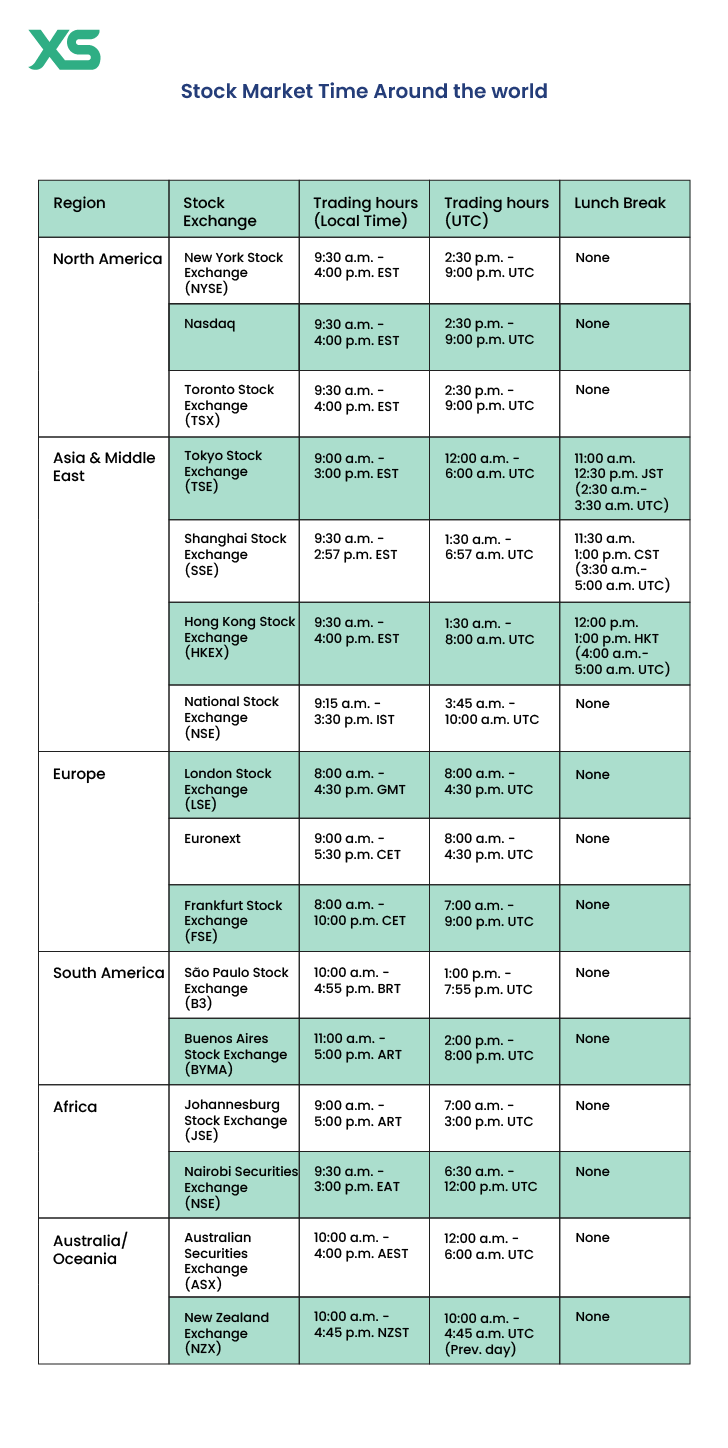
For the majority of retail investors in North America, the focus is on the “Big Two” in New York City. Both the NYSE and the NASDAQ operate on the same schedule. The standard trading session begins at 9:30 AM Eastern Time (ET) and concludes at 4:00 PM ET.
The “Opening Bell” at 9:30 AM is more than just a ceremony; it marks the moment when the “opening auction” concludes, establishing the initial price for the day based on orders that accumulated overnight. The final minutes of the session, leading up to the 4:00 PM “Closing Bell,” are equally critical, as institutional investors and mutual funds often execute large rebalancing trades during this window.
European Markets: LSE and Euronext
The European markets serve as a bridge between the Asian and American sessions. The London Stock Exchange (LSE), one of the oldest and most prestigious in the world, typically opens at 8:00 AM Greenwich Mean Time (GMT) and closes at 4:30 PM GMT.
Because of the time difference, there is a crucial “overlap” period between the London and New York markets (usually between 9:30 AM and 11:30 AM ET). During this window, global liquidity is at its peak, often resulting in high trading volumes and tighter spreads for multinational stocks and currency pairs.
Asian Markets: Tokyo, Hong Kong, and Shanghai
The trading day begins in the East. The Tokyo Stock Exchange (TSE) generally operates from 9:00 AM to 3:00 PM JST, but with a notable distinction: a “lunch break” usually occurring between 11:30 AM and 12:30 PM. This midday pause is common across many Asian exchanges, including the Hong Kong Stock Exchange (HKEX) and the Shanghai Stock Exchange (SSE). For Western investors, these markets are essential to watch, as developments in Asian manufacturing and tech often set the tone for the European and U.S. sessions that follow.
Beyond the 9:30 to 4:00 Window: Extended-Hours Trading
In the digital age, the market doesn’t truly “sleep” just because the floor of the NYSE is empty. Electronic Communication Networks (ECNs) allow investors to trade outside of standard hours. While this offers flexibility, it comes with a unique set of risks that every personal finance enthusiast should understand.
Pre-Market Trading: Opportunities and Risks
In the U.S., pre-market trading can start as early as 4:00 AM ET, though the most significant activity usually begins around 8:00 AM ET. Investors use this time to react to news that broke overnight or early-morning economic reports, such as the Consumer Price Index (CPI) or employment data.
However, the “Money” rule for pre-market trading is caution. Liquidity is significantly lower than during regular hours, meaning there are fewer buyers and sellers. This can lead to “wide spreads”—the difference between the bid and ask price—which can result in you paying significantly more for a stock than its “fair” value.
After-Hours Trading: Reacting to Earnings Reports
The after-hours session runs from 4:00 PM to 8:00 PM ET. This is perhaps the most volatile time for individual stocks. Most publicly traded companies release their quarterly earnings reports immediately after the 4:00 PM closing bell.
A company might beat its revenue expectations, causing the stock to jump 10% in the after-hours session. Conversely, a poor outlook can cause a sharp sell-off. While it is tempting to jump into these moves, the volatility is extreme. Professional traders often suggest that retail investors wait for the market to “digest” this news during the following day’s regular session before making a move.

The Role of ECNs in Extended Sessions
Extended-hours trading is made possible by ECNs, which are automated systems that match buy and sell orders directly. Unlike the regular session, there is no “specialist” or market maker required to ensure an orderly market. Because of this, many brokerages require investors to use “Limit Orders” only during extended hours. This ensures you won’t accidentally buy a stock at a massive premium due to a temporary lack of liquidity.
Holiday Schedules and Early Closures
One of the most common mistakes a novice investor makes is attempting to trade on a day when the market is closed. Unlike the cryptocurrency market, which operates 24/7/365, traditional stock markets observe national holidays.
Major U.S. Market Holidays to Watch
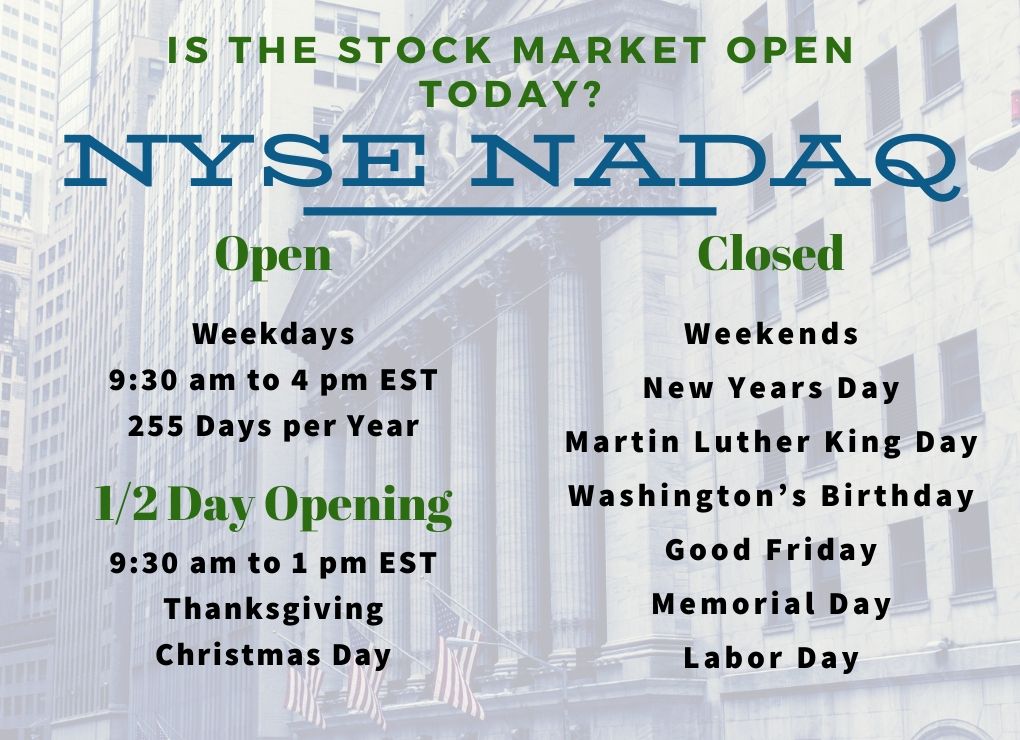
The U.S. markets are closed for several major holidays. These typically include:
- New Year’s Day
- Martin Luther King Jr. Day
- Presidents’ Day
- Good Friday
- Memorial Day
- Juneteenth National Independence Day
- Independence Day (July 4th)
- Labor Day
- Thanksgiving Day
- Christmas Day
When a holiday falls on a weekend, the market usually closes on the Friday before or the Monday after. Planning your trades around these dates is essential for managing your cash flow and ensuring you aren’t caught in a position you cannot exit.
Early Close Days: Black Friday and Christmas Eve
There are also specific days when the market closes early, typically at 1:00 PM ET. The day after Thanksgiving (Black Friday) and Christmas Eve are the most common examples. Trading volume on these days is usually “thin,” meaning prices can swing more than usual with very little news. For most long-term investors, these are days to step away from the screen and focus on personal financial planning rather than active trading.
Why Timing Matters: Strategic Trading Windows
In the world of business finance and investing, when you trade can be just as important as what you trade. The market’s behavior changes throughout the day based on the types of participants active at that time.
The Opening Bell Volatility
The first 30 to 60 minutes of the trading day (9:30 AM – 10:30 AM ET) are often referred to as the “amateur hour,” though this is a bit of a misnomer. It is a period of intense price discovery. All the news from the previous night is being baked into the stock prices simultaneously. For the disciplined investor, this is often a time to watch rather than act, as prices can be erratic before settling into a trend.
The Mid-Day Lull
From approximately 12:00 PM to 1:30 PM ET, trading volume typically drops. Many institutional traders in New York take lunch, and the European markets are closing for the day. During this “lull,” stock prices may drift sideways. This can be a good time for long-term investors to enter positions without the frantic competition of the opening or closing rushes.
The “Power Hour” Before Closing
The final hour of trading, from 3:00 PM to 4:00 PM ET, is known as the “Power Hour.” This is when the “smart money”—institutional investors, hedge funds, and pension funds—completes its positions. Volatility often picks up again, and the direction a stock moves during the Power Hour can often indicate the sentiment for the following day.
How Digital Tools Help You Track Global Market Openings
In the modern financial landscape, you don’t need to memorize dozens of time zones to be an effective investor. There are numerous financial tools designed to keep you synchronized with global markets.
Using Economic Calendars
Personal finance apps and websites like Investing.com, Bloomberg, and Yahoo Finance offer comprehensive economic calendars. These tools don’t just tell you when the market opens; they highlight when major financial events—like Federal Reserve interest rate announcements—will occur. These events can cause “market-moving” volatility regardless of the time of day.
Setting Up Custom Alerts on Trading Platforms
Most modern brokerage platforms allow you to set alerts based on time or price. For example, if you are interested in a specific European stock but live in California, you can set an alert to notify you when the LSE opens at midnight your time, or more practically, an alert for when a specific price target is hit during those hours.
Staying Disciplined with Your Time
The most important tool in your financial arsenal is discipline. Just because technology allows you to track the markets 24 hours a day doesn’t mean you should. Successful investing is about high-quality decision-making. By understanding “when the market opens” and the nuances of those hours, you can schedule your financial activities to coincide with periods of high liquidity and clear information, ensuring that your money is working as efficiently as possible for your future.
aViewFromTheCave is a participant in the Amazon Services LLC Associates Program, an affiliate advertising program designed to provide a means for sites to earn advertising fees by advertising and linking to Amazon.com. Amazon, the Amazon logo, AmazonSupply, and the AmazonSupply logo are trademarks of Amazon.com, Inc. or its affiliates. As an Amazon Associate we earn affiliate commissions from qualifying purchases.