
In the annals of scientific history, few milestones carry as much weight as the discovery of the double helix structure of DNA. When James Watson and Francis Crick published their findings in 1953, they did more than just solve a biological puzzle; they identified the fundamental information system of life. While their work is often relegated to the realm of biology textbooks, its most profound impact today is felt in the world of high-tech innovation, computational data, and the burgeoning field of biological software.
To understand what Watson and Crick did is to understand the origin of “Bio-Tech.” By identifying the chemical structure that stores and transmits genetic instructions, they effectively reverse-engineered the most complex operating system in existence. Today, their legacy is the foundation for everything from AI-driven drug discovery to the storage of digital data in synthetic DNA.
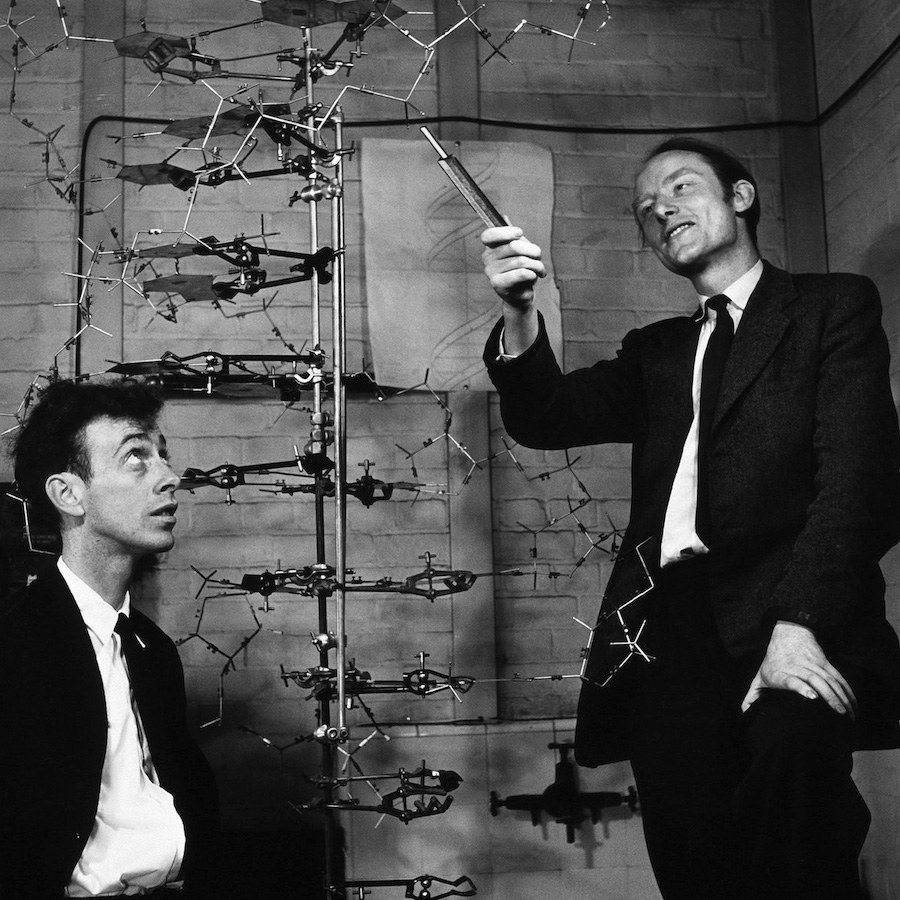
The Discovery of the Biological Operating System
At its core, the work of Watson and Crick was an exercise in structural analysis and information theory. By using X-ray diffraction data—famously provided by Rosalind Franklin and Maurice Wilkins—they modeled the double helix. This structure revealed a elegant mechanism for how information is stored: via base pairs (Adenine, Thymine, Cytosine, and Guanine) that act as a four-character digital code.
Decoding the Biological Machine
Watson and Crick identified that the arrangement of these bases was not random but a precise sequence that directed the synthesis of proteins. In tech terms, they discovered the source code of life. This realization shifted biology from a descriptive science (observing what organisms do) to a predictive, engineering-based science. If life had a code, then that code could be read, analyzed, and eventually, programmed.
From Double Helix to Digital Data
The realization that DNA is a high-density data storage medium has led to one of the most exciting trends in modern tech: DNA data storage. Because DNA is incredibly stable and can store massive amounts of information in a microscopic space, tech giants are now exploring how to use the principles Watson and Crick discovered to archive the world’s digital data. We are moving toward a future where the “technology” discovered in 1953 becomes the “gadget” of 2053, replacing silicon-based hard drives with biological ones.
The Technological Evolution of Genomic Sequencing
The discovery of the double helix was the “Hello World” moment for genomics. However, the transition from knowing the structure to actually reading the code required a massive leap in hardware and software engineering. What Watson and Crick did was provide the map; modern tech companies provided the high-speed vehicles to traverse it.
Next-Generation Sequencing (NGS) Hardware
The evolution of DNA sequencing hardware is a testament to Moore’s Law. In the decades following the initial discovery, sequencing moved from manual, laborious processes to automated Next-Generation Sequencing (NGS). Modern gadgets, such as the handheld devices produced by Oxford Nanopore Technologies, allow scientists to sequence DNA in real-time using nanopore sensors. These devices are the direct descendants of Watson and Crick’s model, miniaturizing the process of reading the double helix into a portable tech tool that can be used in the field.
Cloud Computing and Genomic Data Management
One of the biggest challenges in modern biotech is the sheer volume of data. A single human genome generates roughly 200 gigabytes of raw data. To process this, the industry relies on sophisticated software and cloud infrastructure. Tech leaders like AWS and Google Cloud have developed dedicated “Omics” platforms to handle the storage and analysis of genomic sequences. This infrastructure allows researchers to compare billions of base pairs in seconds, a task that would have been unimaginable to Watson and Crick in their Cambridge laboratory.

AI and Machine Learning in Modern Genetics
Perhaps the most significant tech trend currently impacting the field Watson and Crick pioneered is Artificial Intelligence. If DNA is the code, then AI is the ultimate debugger and compiler. We are no longer just reading the double helix; we are using neural networks to predict how it behaves and how to optimize it for human health.
AlphaFold and the Protein Folding Revolution
While Watson and Crick focused on the DNA “blueprints,” the actual “buildings” constructed from those blueprints are proteins. For decades, predicting how a sequence of DNA would result in a complex 3D protein structure was one of the “Grand Challenges” of science. Enter DeepMind’s AlphaFold. This AI tool has effectively solved the protein-folding problem, using deep learning algorithms to predict structures with incredible accuracy. This is the ultimate technological extension of Watson and Crick’s work—using digital intelligence to decode the physical outcomes of biological information.
Predictive Analytics in Personalized Medicine
The marriage of genomic data and machine learning has given birth to the “Precision Medicine” software niche. Digital platforms now use AI to scan an individual’s DNA—the very structure Watson and Crick identified—to predict their risk for specific diseases or their likely response to certain medications. This shift from “one-size-fits-all” medicine to algorithm-driven healthcare is a direct result of being able to treat genetic information as a structured dataset.
CRISPR and Programmable Biological Software
If sequencing is about “reading” the double helix, CRISPR-Cas9 is about “writing” it. This technology represents the transition from being observers of the DNA structure to being its editors. It is, quite literally, software for the genome.
Editing the Code: The Ultimate Debugging Tool
CRISPR technology allows scientists to target specific sequences within the double helix and modify them with surgical precision. In the tech world, this is equivalent to finding a bug in a line of code and deploying a patch. This “bio-software” approach is being used to develop treatments for genetic disorders, create resilient crops, and even engineer microbes to produce carbon-neutral fuels. None of this would be possible without the foundational understanding of how the DNA strands unzip and replicate—a mechanism first proposed by Watson and Crick in their original 1953 paper.
Bio-Security and Digital Encryption
As we become more adept at “writing” DNA, the tech world is increasingly focused on digital security within biology. The ability to engineer life brings about new cybersecurity challenges. Researchers are currently developing encryption methods to protect genomic databases from hackers. Furthermore, “DNA watermarking”—the practice of inserting synthetic, non-coding sequences into a genome to track intellectual property or identify the source of an engineered organism—has become a vital tool in bio-tech security. We are now applying the principles of digital security to the biological strands Watson and Crick first modeled.
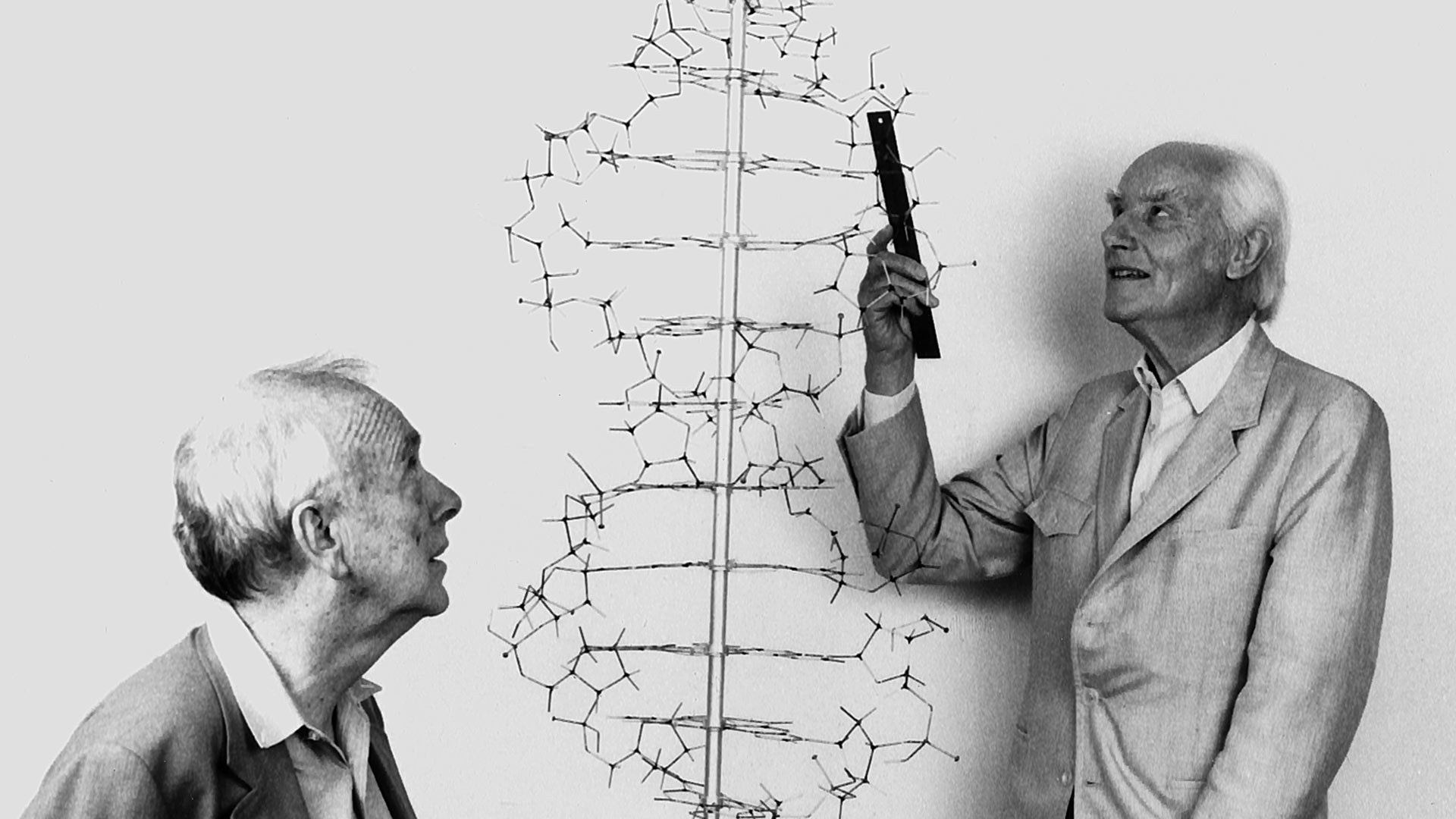
The Future: Integrating the Biological and the Digital
What Watson and Crick did was initiate the convergence of biology and technology. We are currently entering an era where the distinction between a “tech company” and a “biotech company” is blurring. Companies like Moderna and BioNTech describe their mRNA platforms as “operating systems” where they can “plug and play” different genetic instructions to create vaccines.
The double helix is no longer just a scientific discovery; it is a technological standard. As we look toward the future, we see the integration of biological sensors into wearable gadgets, the use of AI to design entirely new life forms from scratch, and the potential for “biological computers” that process information using the very base pairs Watson and Crick identified over seventy years ago.
In conclusion, James Watson and Francis Crick did more than identify the shape of a molecule. They discovered the architecture of information. Their work allowed us to view the natural world through the lens of data, leading to a technological revolution that continues to redefine what is possible in computing, medicine, and engineering. By uncovering the double helix, they provided the “specification document” for all of life, and today’s tech industry is busy building the applications.
aViewFromTheCave is a participant in the Amazon Services LLC Associates Program, an affiliate advertising program designed to provide a means for sites to earn advertising fees by advertising and linking to Amazon.com. Amazon, the Amazon logo, AmazonSupply, and the AmazonSupply logo are trademarks of Amazon.com, Inc. or its affiliates. As an Amazon Associate we earn affiliate commissions from qualifying purchases.