
For the modern traveler, a visit to Disneyland is more than a leisure activity; it is a significant financial undertaking. With ticket prices climbing and in-park inflation often outpacing the general consumer price index, the “Happiest Place on Earth” can quickly become one of the most expensive if approached without a rigorous budgetary strategy. One of the most effective levers a visitor has to control their “total cost of attendance” is a mastery of the park’s permitted items list.
By understanding exactly what you can bring inside Disneyland, you can shift your spending from high-markup consumables to high-value experiences. This guide analyzes the “bring vs. buy” decision through the lens of personal finance, helping you optimize your capital allocation during your next Disney excursion.

The Cost of Magic: Analyzing the Disneyland Markup
To understand why bringing your own items is a critical financial move, one must first look at the economics of theme park pricing. Disneyland operates as a “closed ecosystem.” Once a guest passes through the gates, the park holds a near-monopoly on goods and services. This allows for significant markups on basic necessities—often ranging from 300% to 600% above retail prices.
The Psychology of Convenience Spending
Theme parks are designed to maximize “frictionless spending.” When a guest is tired, hungry, or caught in a sudden rainstorm, the psychological barrier to overspending drops. A $5 bottle of water or a $15 plastic poncho feels like a necessary investment in comfort. However, these micro-transactions are the primary drivers of budget “leakage.” By proactively bringing these items, you retain control over your financial boundaries.
Opportunity Cost and Time Management
In the context of Disney, time is literally money. If you have paid $160 for a single-day ticket and the park is open for 16 hours, your time is valued at $10 per hour. Standing in a 20-minute line to buy a snack you could have brought in your backpack represents a $3.33 loss in “park time value” on top of the inflated cost of the food. Bringing your own supplies is not just a savings strategy; it is a productivity hack for your vacation.
The Grocery Strategy: Mastering Food and Beverage Logistics
The most significant area for potential savings lies in food and beverage. Disneyland has a surprisingly generous policy regarding outside food, provided it is not in glass containers and does not require heating. For a family of four, bringing your own meals can result in a daily savings of $150 to $250.
Permitted Food Items and Storage
You are allowed to bring snacks and pre-made meals into the park. The key is to focus on nutrient-dense, portable options that stabilize blood sugar and prevent “hanger-induced” impulse buys at the nearest churro cart. High-protein snacks, such as beef jerky, almonds, and protein bars, offer the best ROI for your energy levels.
- H3: Cold Storage Logistics: While large, hard-sided coolers are prohibited, soft-sided coolers no larger than a 6-pack of soda are permitted. Utilizing reusable ice packs—which are more cost-effective and less messy than loose ice—allows you to keep sandwiches and fruit fresh throughout the day.
Hydration as a Financial Asset
A single bottle of water inside the park can cost upwards of $4.50. For a family of four, staying hydrated in the California sun can easily cost $60 per day if purchased in-park.
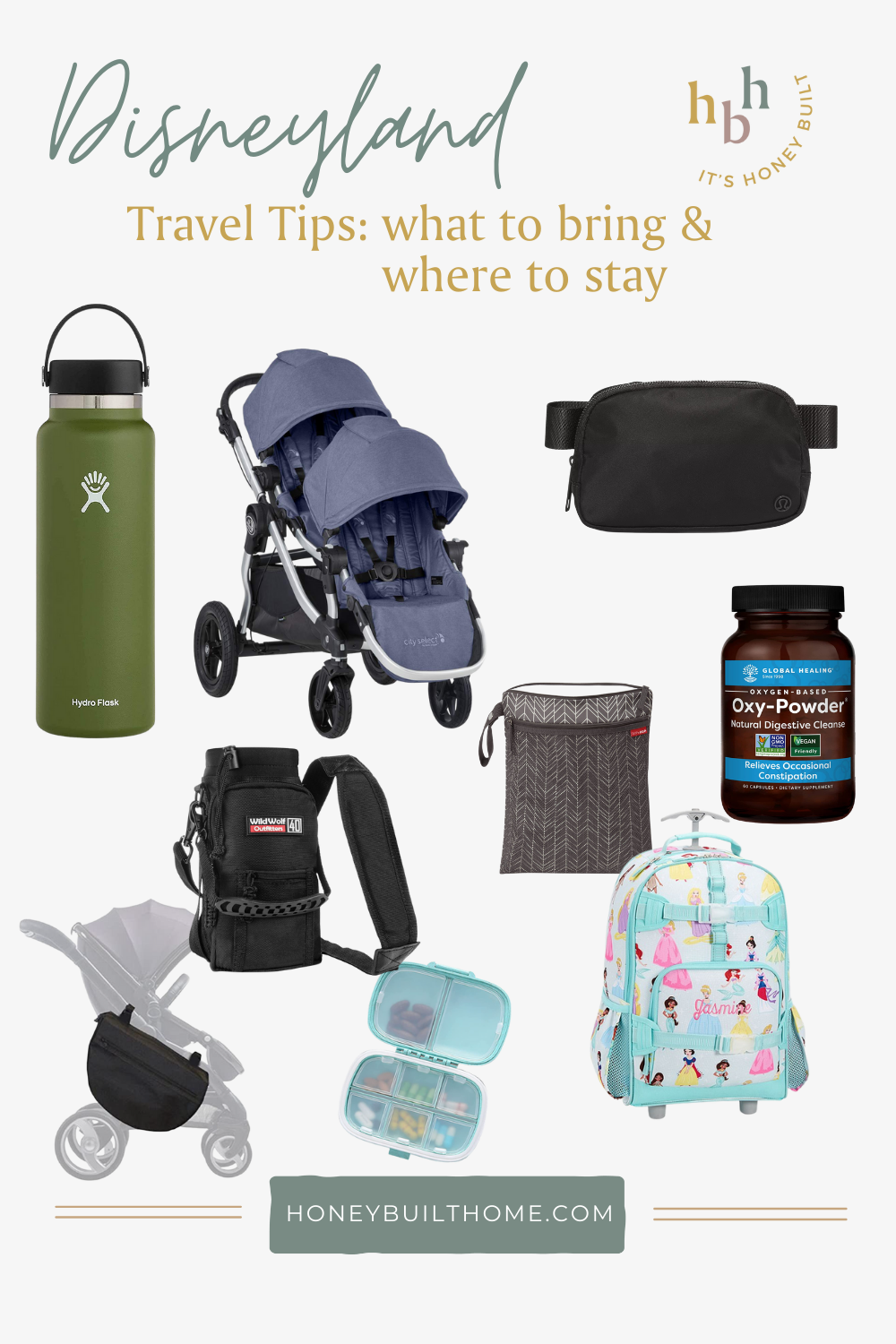
- H3: The Refillable Container Strategy: Disneyland allows non-glass refillable water bottles. Strategically using the free water refill stations or asking for free cups of ice water at Quick Service locations is a foundational “Money” hack. Over a five-day trip, this single habit can save a family nearly $300—equivalent to the cost of an additional park ticket or a high-end dining experience.
The Psychology of the “Splurge Fund”
Financial planning for Disney shouldn’t be about total deprivation. The goal is to eliminate “low-value” spending (like $5 crackers) to afford “high-value” spending (like a meal at Blue Bayou). By bringing 80% of your food, you create the budgetary “float” necessary to enjoy the iconic treats that define the Disney brand without feeling financial strain.
Gear and Apparel: Avoiding the Convenience Premium
Beyond food, the “convenience premium” on apparel and gear is where many budgets fail. When the sun gets too hot or a rare Anaheim rain shower begins, the price of comfort skyrockets.
Weather Protection and Sun Care
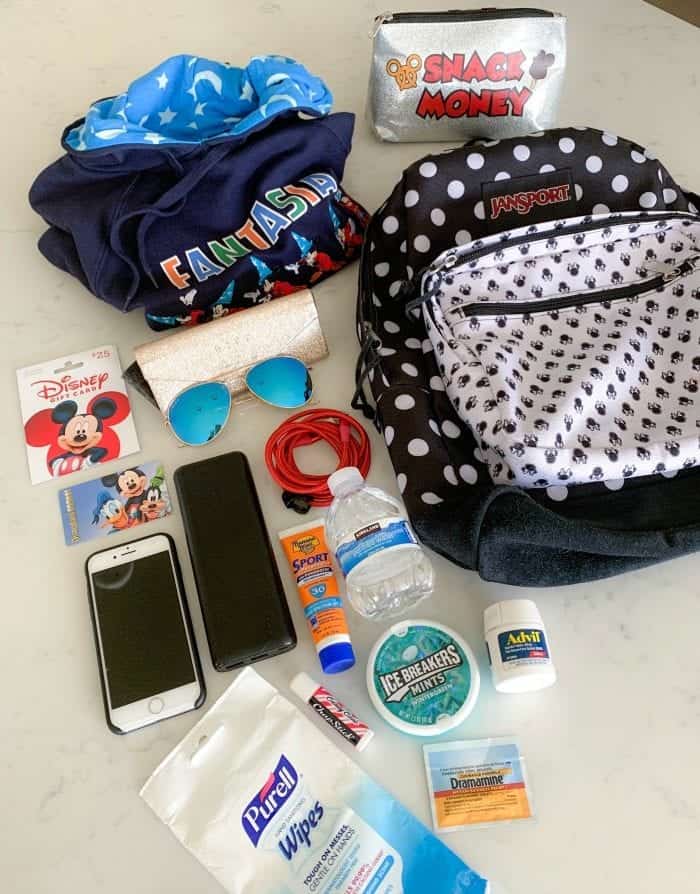
Sunscreen at a Disney resort pharmacy can cost double the price of a bottle at a local big-box retailer. Similarly, the “misting fans” sold in the park for $25–$35 are often available online for under $10.
- H3: The Poncho Pivot: Perhaps the most egregious markup in the park is the disposable rain poncho. When it rains, thousands of guests flock to shops to buy $12 plastic sheets. Bringing a pack of $1 emergency ponchos from a dollar store is a 1,100% savings move.
Power and Connectivity
In the modern park experience, a smartphone is a required tool for navigating the Disneyland App, checking wait times, and managing Genie+. A dead battery isn’t just an inconvenience; it’s a disruption of your “digital asset” management.
- H3: Avoiding the Charging Trap: While Disney sells “FuelRods” for approximately $30, bringing your own high-capacity portable power bank is a more fiscally sound decision. You get more “milliampere-hours” (mAh) for your dollar, and you aren’t tethered to the park’s specific ecosystem of kiosks.
Specialized Equipment: Strollers and Wagons
For those with young children, the decision to bring a stroller or rent one is a major financial touchpoint. Disney rentals cost $18 per day for a single stroller. Over a week, that’s $126 for a piece of equipment you don’t own.
- H3: The Resale Value Factor: Bringing your own stroller (provided it meets the 31″x52″ size requirement) provides better comfort and saves money. Alternatively, many savvy travelers buy a used “Disney-compliant” stroller on secondary markets like Facebook Marketplace, use it for the week, and resell it for the same price upon their return, effectively “renting” the equipment for $0.
Strategic Rentals and Logistics Management
While the goal is to bring as much as possible to save money, there is a point where the logistics of carrying items yields diminishing returns. This is where “Locker ROI” comes into play.
Locker ROI (Return on Investment)
Disneyland offers lockers for a flat daily fee (usually $7 to $15 depending on size). From a financial perspective, this is a “force multiplier.” If spending $10 on a locker allows you to bring in $100 worth of groceries and extra gear that you otherwise couldn’t carry, the locker has paid for itself ten times over. It facilitates the “Bring Your Own” strategy by removing the physical burden.
Prohibited Items: Avoiding Confiscation Loss
A key part of money management is risk mitigation. Bringing a prohibited item (like a selfie stick, a glass bottle, or a folding chair) can lead to two financial losses: the loss of the item if you choose to discard it, or the loss of time (money) if you have to walk back to your car or hotel to store it.
- H3: The “No-Go” List: Always audit your bag for glass containers, alcohol, and prohibited “wheels” (skateboards/scooters). Ensuring compliance prevents the “hidden tax” of lost time and confiscated property.
Financial Optimization Tools for the Park Visitor
Finally, the items you “bring” inside Disneyland should include the right financial tools. Managing your spending in real-time is much easier when you utilize specific payment structures.
The Disney Gift Card Arbitrage
One of the most popular “side hustle” style hacks for Disney fans is the gift card arbitrage. Retailers like Target often offer a 5% discount on Disney gift cards for RedCard holders. By “bringing” these pre-purchased cards into the park, you are effectively locking in a 5% discount on every single dollar spent inside the gates—from souvenirs to snacks.
Credit Card Rewards and Points
When you do spend money inside the park, ensure you are using a card that categorizes Disney as “Travel” or “Entertainment” to maximize point yields. Bringing the right “plastic” in your wallet can help subsidize the cost of your next trip.
- H3: Sinking Funds and Budget Tracking: Use apps to track your spending in real-time against a pre-set “sinking fund.” By bringing a clear digital budget into the park, you prevent the “vacation brain” that leads to impulse purchases and post-trip debt.
Conclusion: The Wealth-Building Power of Preparation
The question of “what can I bring inside Disneyland” is ultimately a question of personal financial discipline. Every item you pack—from the refillable water bottle to the dollar-store poncho—is a strategic move that protects your net worth from the hyper-inflated costs of the tourism industry.
By treating your Disneyland visit as a managed financial project rather than an uncontrolled spending spree, you can enjoy the “Magic” without the lingering “debt.” The most valuable thing you can bring inside the park isn’t a physical object at all; it is a well-researched, disciplined strategy for capital preservation. Pack wisely, spend intentionally, and remember that every dollar saved on a bottle of water is a dollar that can be invested in your family’s future or your next great adventure.
aViewFromTheCave is a participant in the Amazon Services LLC Associates Program, an affiliate advertising program designed to provide a means for sites to earn advertising fees by advertising and linking to Amazon.com. Amazon, the Amazon logo, AmazonSupply, and the AmazonSupply logo are trademarks of Amazon.com, Inc. or its affiliates. As an Amazon Associate we earn affiliate commissions from qualifying purchases.