
In the rapidly evolving landscape of digital manufacturing and hardware technology, “sublimation” has transitioned from a basic principle of chemistry into a cornerstone of high-definition imaging and product customization. While the scientific term refers to the transition of a substance directly from a solid to a gas, in the tech world, sublimation—specifically dye-sublimation—represents a sophisticated printing method that has redefined how we apply digital designs to physical substrates.
As the demand for high-fidelity, durable, and personalized tech accessories and apparel grows, understanding the mechanics of sublimation technology is essential for tech enthusiasts, hardware engineers, and digital designers alike.
The Science and Engineering of Dye-Sublimation Technology
At its core, sublimation printing is an end-to-end technological process that utilizes heat-sensitive inks to create permanent, high-resolution images. Unlike traditional inkjet printing, which deposits droplets of ink on top of a surface, sublimation involves a molecular bond.
From Solid to Gas: The Phase Change Principle
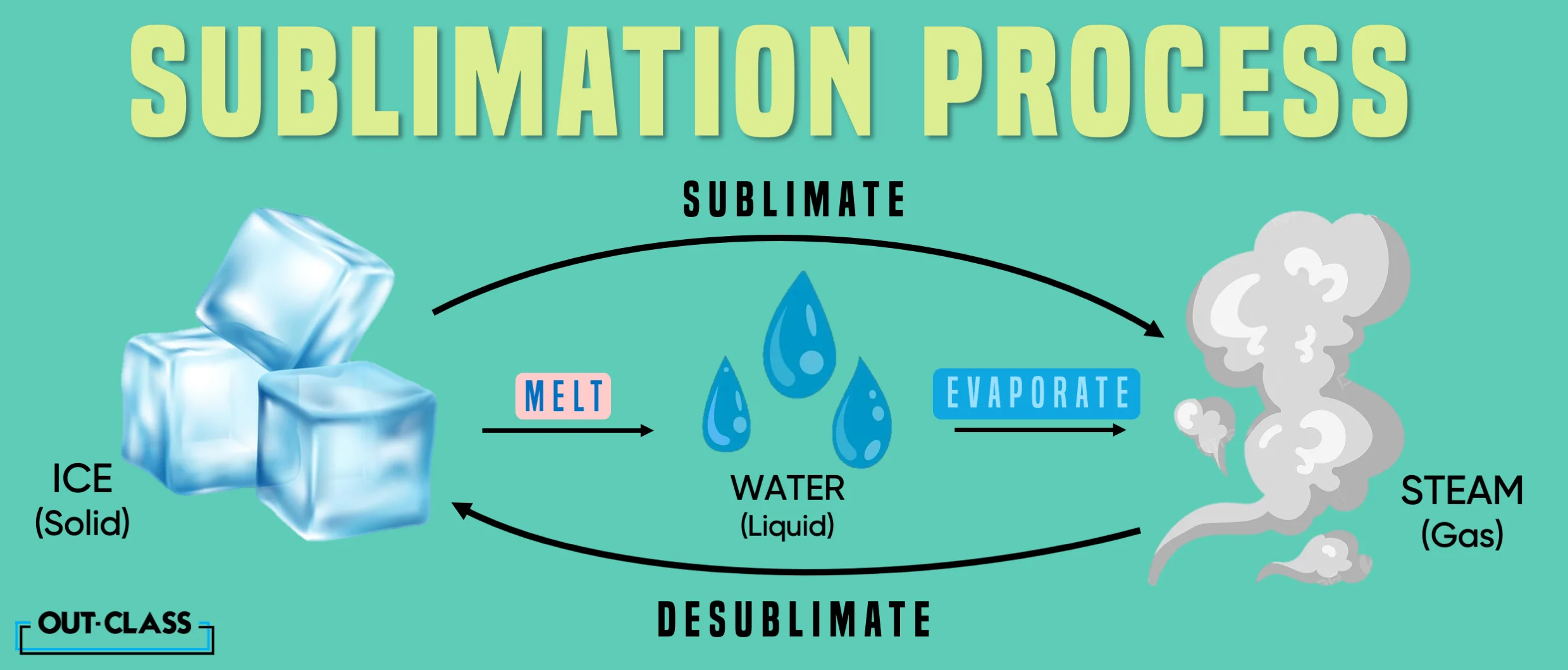
The technological magic of sublimation lies in the “phase change.” In a dye-sublimation printer, the “ink” is actually a solid pigment suspended in a liquid carrier. When this ink is printed onto specialized transfer paper and subsequently subjected to intense heat (typically between 380°F to 400°F) and pressure via a heat press, the solid dye particles bypass the liquid stage.
They turn into a gas and penetrate the pores of the substrate—which must be polymer-based or polyester-coated. As the heat is removed, the pores close, and the gas reverts to a solid, becoming an integral part of the material’s molecular structure. This results in a print that is scratch-resistant, waterproof, and incapable of peeling or cracking.
The Anatomy of a Sublimation Printer
A professional sublimation printer differs significantly from a standard office inkjet. The most critical component is the print head. Most high-end sublimation tech utilizes Piezoelectric print heads. Unlike thermal print heads that use heat to drop ink (which would cause sublimation inks to clog), Piezo heads use a mechanical vibration or electric pulse to eject the ink.
This allows for extreme precision in drop size and placement, enabling resolutions that can reach up to 1440 DPI (dots per inch) or higher. Furthermore, these machines are engineered with specialized ink delivery systems (CISS or high-capacity cartridges) designed to handle the unique viscosity and sedimentation properties of sublimation dyes.
The Digital Workflow: Software and Design Integration
Sublimation is not merely a hardware process; it is a digital-first workflow that requires a sophisticated synergy between software and output devices. To achieve color accuracy on a physical product that matches the digital file, several layers of tech must work in tandem.
Color Management and ICC Profiles
One of the most complex aspects of sublimation technology is color management. Because the colors of the ink change during the gaseous phase transition under heat, the “input” color on the screen rarely looks like the “output” color on the paper.
To bridge this gap, tech professionals use ICC (International Color Consortium) Profiles. These are specialized software files that act as a translator between the design software (like Adobe Photoshop or CorelDRAW) and the printer. They ensure that the digital hex code for “Navy Blue” results in the correct chemical reaction to produce that exact hue on the final substrate. Without high-level color management software, the technological advantage of high-resolution printing would be lost to chromatic inaccuracy.
Vector vs. Raster: Optimizing Files for Heat Transfer
The digital preparation stage involves choosing between vector and raster graphics. For sublimation, vector files (SVG, AI, EPS) are often preferred for logos and typography because they allow for infinite scaling without pixelation, which is crucial when transitioning from a small digital screen to a large physical surface like a laptop sleeve or a custom-built mechanical keyboard chassis.

However, for photographic reproductions, high-bitrate raster files are used. The sophisticated Raster Image Processor (RIP) software then takes these files and calculates the exact ink density required to ensure that when the gas permeates the polyester fibers, the gradients remain smooth and the details remain sharp.
Hardware Innovations in Sublimation Substrates
The technology of sublimation is only as effective as the material it is applied to. Over the last decade, there has been a massive surge in the engineering of “sublimation-ready” hardware and gadgets.
Specialized Substrates and Polymer Coatings
Sublimation only works on polymers. This is a chemical limitation that has driven technological innovation in material science. For non-fabric items—such as aluminum photo panels, ceramic mugs, or glass—engineers have developed specialized polymer sprays and coatings.
These coatings are applied in a vacuum-sealed environment to ensure a perfectly level surface. In the tech industry, we see this applied to high-end aluminum laptop skins and custom-molded plastic components. The coating must be durable enough to withstand the heat of the sublimation process while remaining optically clear to let the vibrant dyes shine through.
The Heat Press: A Precision Instrument
The heat press is the final piece of the hardware puzzle. Modern heat presses are no longer just “hot irons.” They are precision instruments equipped with digital controllers for time, temperature, and pressure (the “Big Three” of sublimation).
Advanced units feature “auto-swing” mechanisms and pneumatic pressure systems that ensure an even distribution of heat across the entire surface area. This is critical because even a 5-degree variance or a slight pressure drop can result in “ghosting”—a technological failure where the gas escapes horizontally, causing a blurred image.
The Future of Sublimation in the Tech Industry
As we look toward the future of manufacturing, sublimation technology is evolving to meet the needs of a more automated and high-tech world. We are moving beyond flat surfaces into more complex geometric applications.
3D Sublimation and Curved Surface Printing
One of the most exciting frontiers in this niche is 3D Vacuum Sublimation. Standard heat presses are limited to flat or cylindrical objects. However, 3D sublimation tech uses a combination of vacuum pressure and a flexible heat-resistant silicone membrane. This allows the transfer paper to wrap perfectly around complex curves—think of the rounded edges of a smartphone case or the ergonomic contours of a gaming mouse. This technology utilizes specialized ovens rather than flat presses, representing a significant leap in how we apply digital skins to complex hardware.
Eco-Friendly Inks and Sustainable Tech Developments
The tech industry is under increasing pressure to adopt sustainable practices. Traditional printing often involves heavy water usage and chemical runoff. Sublimation technology, however, is inherently “dryer” and produces less waste.
Current R&D is focused on developing aqueous (water-based) sublimation inks that are biodegradable and free from volatile organic compounds (VOCs). Furthermore, as the tech for recycling polyester improves, sublimation remains a top choice for circular manufacturing because the dye becomes part of the fiber, meaning it doesn’t flake off into the environment as microplastics in the same way that some film-based transfers might.
AI Integration in Sublimation Workflows
Artificial Intelligence is also finding its way into the sublimation tech stack. AI-driven software is now being used to optimize “nesting”—the process of arranging multiple designs on a single sheet of transfer paper to minimize waste. Additionally, AI algorithms are being developed to predict color shifts based on the specific humidity and temperature of the print environment, automatically adjusting the ICC profile in real-time to ensure perfect results every time.

Conclusion
Sublimation is far more than a simple printing technique; it is a sophisticated intersection of chemistry, digital imaging software, and precision hardware engineering. From the piezoelectric pulses of the print head to the molecular bonding within polymer fibers, it represents a pinnacle of digital-to-physical manufacturing. As the technology continues to advance into the realms of 3D applications and AI-optimized workflows, sublimation will remain at the forefront of the tech industry’s push toward hyper-personalization and high-durability digital products. Whether you are looking at the vivid colors on a custom-designed gadget or the intricate details on a piece of high-performance tech apparel, you are witnessing the power of sublimation technology in action.
aViewFromTheCave is a participant in the Amazon Services LLC Associates Program, an affiliate advertising program designed to provide a means for sites to earn advertising fees by advertising and linking to Amazon.com. Amazon, the Amazon logo, AmazonSupply, and the AmazonSupply logo are trademarks of Amazon.com, Inc. or its affiliates. As an Amazon Associate we earn affiliate commissions from qualifying purchases.