
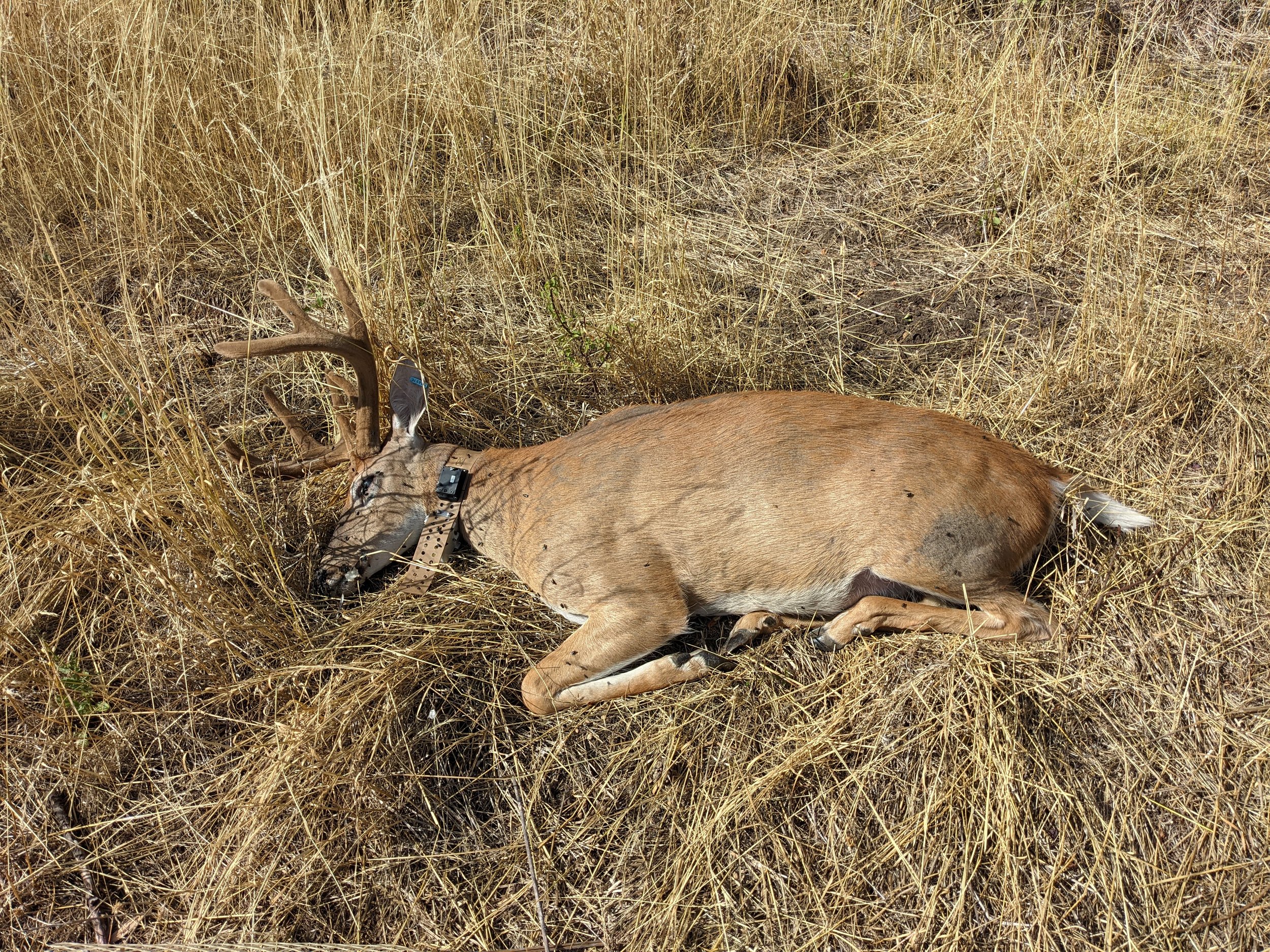
Epizootic Hemorrhagic Disease (EHD) is often discussed in the context of wildlife biology and veterinary science. However, for investors, rural landowners, and stakeholders in the massive outdoor recreation market, EHD is far more than a biological phenomenon—it is a significant financial risk factor. As one of the most impactful viral diseases affecting white-tailed deer populations in North America, EHD has the power to disrupt local economies, devalue high-end real estate, and shift the trajectory of the multi-billion dollar hunting industry.
Understanding “what’s EHD in deer” from a financial perspective requires an analysis of how biological volatility translates into market volatility. In this article, we will examine the economic footprint of EHD, its impact on land as an asset class, and the fiscal strategies required to mitigate its damage to the outdoor economy.
1. The Fiscal Footprint: EHD’s Impact on the $37 Billion Hunting Industry
The outdoor recreation industry is a powerhouse of the American economy, with hunting specifically contributing over $37 billion to the GDP annually. When an EHD outbreak occurs, it is not merely a loss of wildlife; it is a direct hit to the revenue streams of rural communities and national retailers alike.
The Direct Loss of License Revenue and Conservation Funding
State wildlife agencies rely heavily on the sale of hunting licenses and permits to fund conservation efforts. EHD outbreaks, which typically occur in late summer and early fall, can decimate local deer populations just weeks before hunting seasons begin. When populations crash, state agencies often have to reduce the number of available permits or see a voluntary decline in hunter participation.
This creates a “double-whammy” for state budgets. First, the immediate loss of permit revenue reduces the agency’s operating budget. Second, under the Pittman-Robertson Act, federal funding is distributed to states based on the number of paid hunting license holders. A significant decline in hunters due to an EHD-ravaged season can lead to a long-term reduction in federal subsidies, hampering conservation infrastructure for years.
Impact on Rural Tourism and Small Business Cash Flow
For many rural counties, “deer season” is the equivalent of the Christmas shopping season for a retail mall. Hotels, gas stations, diners, and local processors see a massive influx of capital over a two-month period. An EHD outbreak acts as a localized economic recession. If a region gains a reputation for a “die-off,” out-of-state hunters—who spend significantly more than residents on lodging and services—will divert their capital to other regions. This shift in consumer behavior can lead to a 20-30% loss in seasonal revenue for small businesses that operate on thin margins.
The Retail and Manufacturing Chain
The financial ripple effect extends to the manufacturing sector. Companies producing archery equipment, firearms, camouflage apparel, and supplemental feed see a direct correlation between herd health and consumer spending. If EHD reduces the “trophy quality” or density of a herd, the perceived ROI (Return on Investment) for the hunter decreases, leading to deferred purchases of high-ticket items like new rifles or high-tech scouting cameras.
2. Real Estate and Asset Management: How EHD Influences Rural Land Valuations
For high-net-worth individuals and institutional investors, rural land—specifically “recreational timberland”—is an essential part of a diversified portfolio. The value of this land is inextricably linked to the quality of the wildlife it supports. EHD serves as a primary “biological hazard” that can negatively impact the appraisal and liquidity of these assets.
The Devaluation of “Trophy” Properties
In the world of recreational real estate, a property’s value is often determined by its ability to produce mature, high-quality white-tailed deer. An EHD outbreak that kills off a significant portion of the “age class” (the older, larger deer) can effectively reset a property’s value growth by five to seven years.
Appraisers and specialized brokers note that properties in “EHD-prone” zones—often near stagnant water sources during drought years—may trade at a discount compared to properties with better topographical resilience. For an investor, an EHD outbreak is essentially a “portfolio drawdown” where the primary asset (the wildlife) loses its immediate market appeal.

Impact on Hunting Lease Rates and Passive Income
Many landowners offset the carrying costs of their property (taxes, insurance, and maintenance) by leasing the hunting rights. In prime states like Iowa, Illinois, and Kansas, these leases can command anywhere from $25 to $70 per acre annually.
When EHD strikes, the contractual value of these leases is compromised. Landowners may be forced to offer rebates or lower the lease price for subsequent years to retain tenants. In some cases, a severe outbreak can lead to a total loss of lease income for multiple seasons as the herd recovers, turning a cash-flowing asset into a liability that requires out-of-pocket maintenance.
Strategic Land Improvements as Capital Expenditure
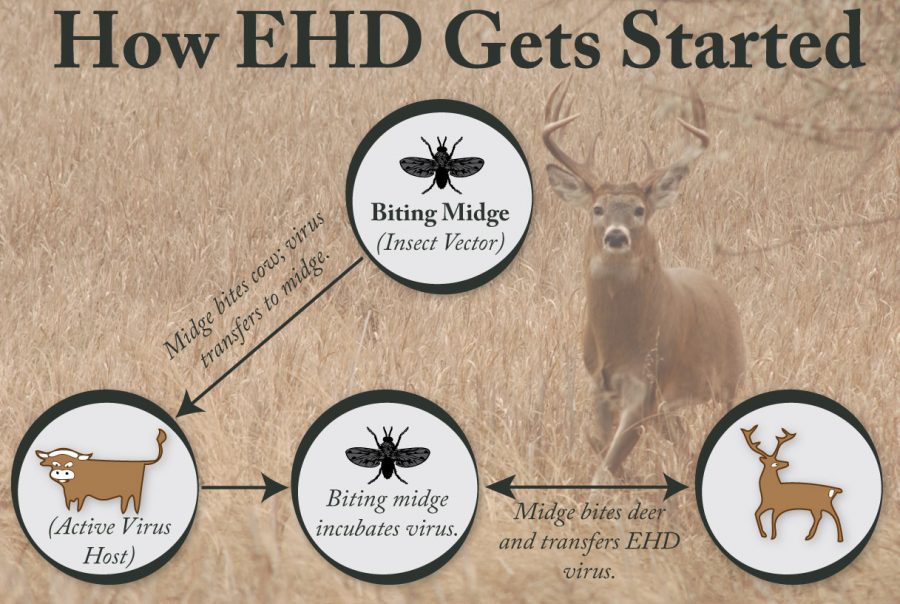
To protect land value, owners must treat EHD mitigation as a capital expenditure (CapEx). This includes investing in “drought-proof” water systems, such as solar-powered wells and aerated troughs, to discourage deer from congregating around the muddy, stagnant ponds where the midges that carry EHD thrive. While these improvements require upfront capital, they enhance the long-term valuation and “insulate” the property against biological shocks.
3. The Business of Mitigation: Investment in Research and Bio-Security
As the frequency of EHD outbreaks increases—driven by shifting weather patterns and longer summers—a new sector of “bio-security” for the outdoor industry is emerging. This represents both a cost to managers and an opportunity for specialized businesses.
The Role of Supplemental Nutrition and Pharmaceutical Interventions
The supplemental feed industry is a multi-million dollar niche. Historically focused on antler growth, the industry is pivoting toward “immune-support” products. Businesses are now marketing feed infused with essential minerals and probiotics designed to boost the deer’s natural immune response to viral loads. For the landowner, this represents a recurring operational expense, but for the companies providing these products, it is a growing revenue stream driven by the fear of EHD-related losses.
Private Veterinary Consulting and Herd Monitoring
High-end hunting ranches and managed properties are increasingly hiring private biologists and veterinary consultants. This professionalization of herd management involves intensive monitoring, including “trail camera audits” and tissue sampling, to detect EHD early. The cost of this professional oversight is becoming a standard line item in the budget of any serious recreational land venture, shifting the “hobby” of land management into a sophisticated business operation.
Data Analytics and GIS Mapping
Technology companies are finding a market in EHD prediction. By using GIS (Geographic Information Systems) to map soil moisture levels, midge hatch patterns, and historical outbreak data, firms can provide “risk assessments” for land buyers. Investors are willing to pay a premium for data that helps them avoid “hot zones” or provides a timeline for herd recovery, further integrating tech-based financial tools into the rural land market.
4. Financial Risk Mitigation: Insurance and Hedging Against Biological Volatility
In any other industry, a risk that can wipe out 50% of an asset’s productivity overnight would be heavily insured. However, the “wildlife economy” is unique because the deer are technically a public trust resource, even when they reside on private land. This creates a complex financial environment for managing EHD risk.
Specialized Insurance Products
While you cannot traditionally insure a wild deer herd, there are emerging insurance products for the “business of hunting.” High-fence operations and deer breeders—who can have millions of dollars invested in specific genetic lines—utilize livestock mortality insurance. For these businesses, EHD is a catastrophic risk that requires high-premium coverage. For the general landowner, insurance is more likely to take the form of “Loss of Income” coverage for those who run outfitting businesses, protecting them if they are forced to cancel hunts due to a die-off.
Diversification of Revenue Streams
To hedge against the financial impact of EHD, savvy rural investors are diversifying their land use. Instead of relying solely on deer hunting revenue, they are incorporating:
- Timber Harvesting: Managed timber provides a stable, long-term ROI that is unaffected by EHD.
- Carbon Credits: Selling carbon sequestration rights provides a passive income stream that remains constant regardless of wildlife health.
- Agritourism and Alternative Recreation: Developing trails for hiking or mountain biking ensures the land remains a productive asset even during “down” years for hunting.
Conclusion: The Bottom Line on EHD
In the final analysis, EHD is far more than a “deer disease.” It is a sophisticated economic variable that impacts everything from state-level tax revenue to the personal net worth of rural landowners. As we move into an era of increased climatic volatility, the financial stakeholders in the outdoor industry must treat EHD with the same analytical rigor they would apply to interest rate hikes or market corrections.
By understanding the fiscal footprint of the disease, investing in land resilience, and utilizing modern risk management tools, the outdoor economy can weather the cyclical nature of EHD. The goal for any investor or business owner in this space is to transform a biological threat into a managed risk, ensuring the long-term profitability and sustainability of the multi-billion dollar wildlife economy.
aViewFromTheCave is a participant in the Amazon Services LLC Associates Program, an affiliate advertising program designed to provide a means for sites to earn advertising fees by advertising and linking to Amazon.com. Amazon, the Amazon logo, AmazonSupply, and the AmazonSupply logo are trademarks of Amazon.com, Inc. or its affiliates. As an Amazon Associate we earn affiliate commissions from qualifying purchases.