
The date March 3, 1991, stands as a pivotal moment in the intersection of technology, media, and social justice. While the event itself—the brutal beating of Rodney King by Los Angeles Police Department officers—is a cornerstone of American civil rights history, its legacy is inextricably linked to a specific piece of consumer technology: the Sony Handycam. Before the dawn of the smartphone era or the ubiquity of high-speed internet, this incident served as the world’s first major “viral” video, setting a technological precedent that would eventually lead to the democratization of information and the rise of modern digital activism.
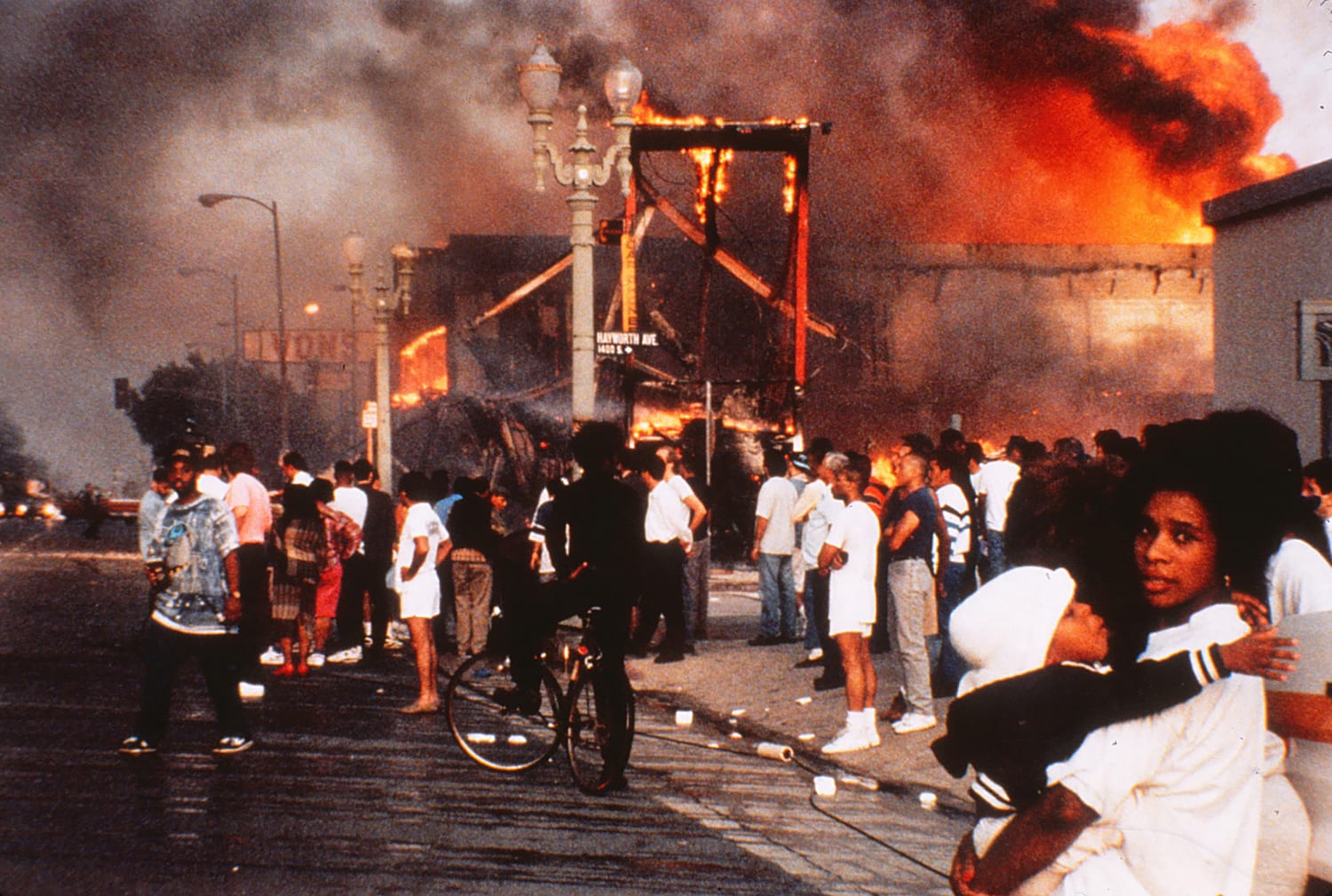
To understand the year 1991 through a technological lens is to understand the transition from centralized media to the era of the citizen-observer. The footage captured by George Holliday from his balcony was not just a recording of an event; it was a disruption of the traditional news cycle. This article explores how that specific moment triggered a tech revolution, evolving from analog tape to the sophisticated AI-driven surveillance and verification tools used in the 2020s.
The Technological Context of 1991: From Professional Satellites to Personal Camcorders
In the early 1990s, the “news” was a product curated by massive corporations with the budget for satellite trucks, professional-grade Betacam systems, and specialized editing suites. The average person had no means of capturing high-quality video, let alone distributing it to a mass audience. However, the landscape was beginning to shift with the introduction of the consumer camcorder.
The Rise of the Consumer Handycam
The footage of Rodney King was captured on a Sony Video8 Handycam. Released in the late 1980s and early 90s, these devices utilized 8mm tape, which allowed for a significantly smaller form factor than the bulky VHS-C camcorders of the previous decade. For the first time, a civilian could reasonably carry a video recording device in a small bag. This portability was the technological “patient zero” for what we now recognize as mobile journalism. The Video8 format offered better resolution and longer recording times than previous consumer efforts, making it possible for George Holliday to capture several minutes of continuous action from a distance—a feat that would have been impossible with earlier consumer tech.
The Democratization of the Visual Narrative
Before 1991, the narrative of police-civilian interactions was largely controlled by official reports and professional news crews who arrived after the fact. The 1991 incident demonstrated the power of “Tech as Witness.” It broke the monopoly that institutional entities held over “the truth.” When Holliday’s tape was handed to KTLA-TV, it bypasses the standard filters of the era. This shift forced the tech industry to realize there was a massive market for personal recording devices that could serve as tools for accountability, not just for recording family birthdays and vacations.
Digital Evolution: The Journey from Analog Tape to Viral Social Media Algorithms
The decade following 1991 saw an aggressive push toward digitization. If the Rodney King incident proved that video could change the world, the tech industry’s response was to make that video easier to capture, edit, and share. This journey from analog tape to the cloud represents one of the fastest technological escalations in history.
The Transition to High-Definition and Mobile Recording
By the late 1990s and early 2000s, the analog Video8 format was replaced by MiniDV, and eventually, flash-memory-based recording. The real leap, however, occurred in 2007 with the launch of the iPhone and the subsequent explosion of the smartphone market. The tech evolved from a niche consumer product (the camcorder) to a universal utility integrated into every person’s pocket. In 1991, George Holliday had to be in the right place at the right time with a specific piece of equipment. Today, the “Handycam” is an omnipresent sensor capable of 4K resolution, optical stabilization, and instant global distribution via 5G networks.
The Infrastructure of Instant Distribution
In 1991, distribution was the bottleneck. Holliday had to physically drive a tape to a television station. Today, the “distribution tech” is built into the recording device. The development of content delivery networks (CDNs) and social media algorithms has turned individual recordings into global movements within seconds. The transition from physical tape to bitstream data allowed for the “viral” phenomenon. Cloud computing ensures that once a video is uploaded, it is nearly impossible to delete or suppress, providing a level of data persistence that was unimaginable in the analog era of the early 90s.

Surveillance and Accountability: The Rise of Body-Worn Cameras and IoT
The legacy of the 1991 incident eventually moved from the hands of civilians into the official equipment of law enforcement through the development of Body-Worn Cameras (BWCs). This shift represents a technological attempt to institutionalize the “Holliday Effect”—ensuring that a camera is always present during high-stakes interactions.
Bridging the Trust Gap through Wearable Tech
Modern body cameras are marvels of Internet of Things (IoT) engineering. Unlike the simple “on/off” switch of a 1991 camcorder, today’s BWCs feature “pre-event buffering,” which allows the camera to save the 30 seconds of video prior to the officer hitting the record button. They are equipped with Bluetooth triggers that can activate recording the moment a cruiser’s sirens are turned on or a holster is unclipped. This automation is a direct technological response to the gaps in documentation highlighted by the Rodney King incident.
Cloud Storage and Data Integrity in Modern Policing
The challenge of 1991 was capturing the footage; the challenge today is managing the petabytes of data generated by these devices. Companies like Axon have built massive cloud infrastructures (such as Evidence.com) designed specifically to handle the security, chain of custody, and storage of digital evidence. These platforms use sophisticated encryption and audit trails to ensure that video files cannot be tampered with, addressing the “trust” issue that has persisted since the grainy, easily-edited tapes of the early 90s.
The Future of Truth: AI, Deepfakes, and Blockchain Verification
As we move further away from 1991, the technology used to document social issues is facing a new crisis: the erosion of digital “truth.” In an era where Artificial Intelligence can generate realistic video from a text prompt, the mere existence of video footage is no longer absolute proof of an event.
Forensic Video Analysis and Artificial Intelligence
The grainy footage of 1991 required human experts to squint at frames to determine what was happening. Today, AI-driven forensic tools can enhance low-light footage, stabilize shaky movement, and even use “super-resolution” to clarify details that were previously invisible. However, AI is a double-edged sword. The same tech used to clarify truth can be used to manufacture “deepfakes.” This has led to a new tech sector focused on “Liveness Detection” and synthetic media detection, ensuring that video evidence remains a reliable tool for justice.
Using Blockchain for Content Authenticity
To solve the problem of digital tampering, tech innovators are looking toward blockchain. By “hashing” a video at the moment of capture—essentially creating a digital fingerprint that is stored on a decentralized ledger—technology can prove that a video has not been altered since the moment it was recorded. If George Holliday were recording today, his smartphone might automatically create a cryptographic proof of the video’s metadata (location, time, and file integrity). This would ensure that the footage could be verified as authentic in a court of law or in the court of public opinion, bypassing the “he-said, she-said” debates that often plague digital media.

Conclusion: The Enduring Tech Legacy of 1991
What year was the Rodney King beating? It was 1991, but its technological ripples are still expanding in 2024. That single event transformed the video camera from a luxury hobbyist tool into a powerful instrument of social change and digital accountability. It forced the tech industry to prioritize portability, ease of sharing, and eventually, data integrity.
From the analog Sony Handycam to the AI-verified, blockchain-secured, 4K smartphone streams of today, the evolution of this technology reflects our ongoing quest for transparency. The incident in 1991 taught us that the world changes when the “invisible” is made “visible.” As we look toward the future of technology—incorporating augmented reality, ubiquitous sensors, and advanced AI—we must remember that the core purpose of these tools remains the same as it was on that California balcony: to serve as an undeniable record of our shared reality.
aViewFromTheCave is a participant in the Amazon Services LLC Associates Program, an affiliate advertising program designed to provide a means for sites to earn advertising fees by advertising and linking to Amazon.com. Amazon, the Amazon logo, AmazonSupply, and the AmazonSupply logo are trademarks of Amazon.com, Inc. or its affiliates. As an Amazon Associate we earn affiliate commissions from qualifying purchases.