
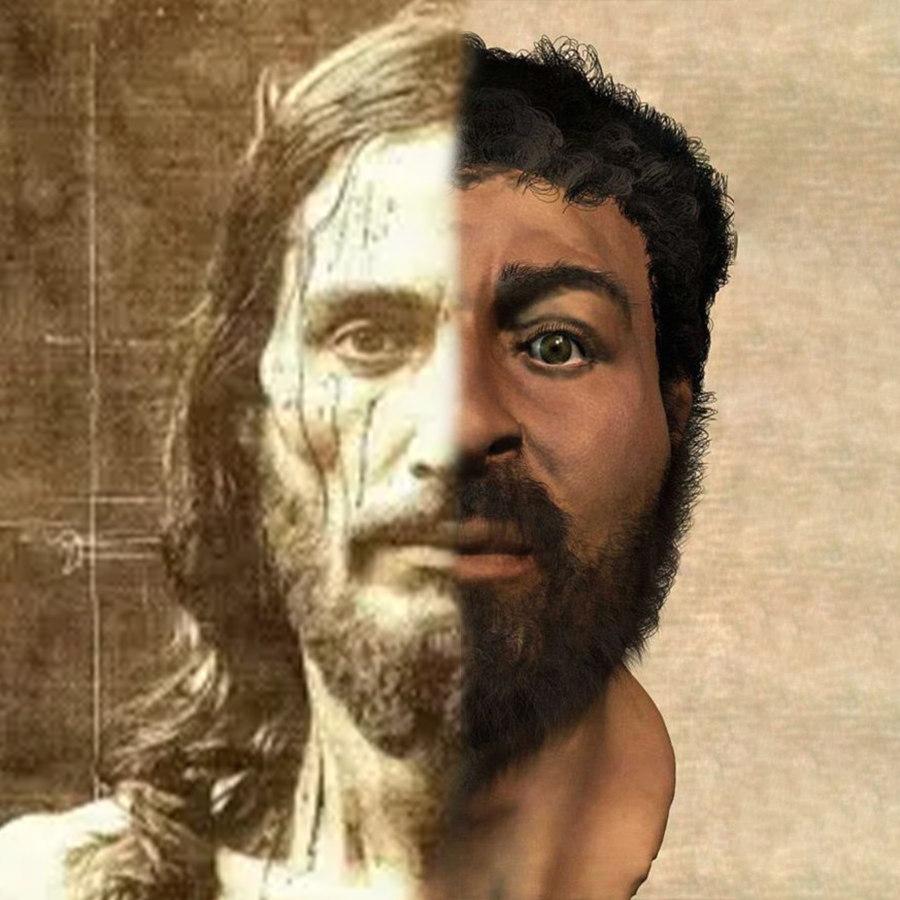
For centuries, the visual representation of historical figures has been shaped by the brushes of artists rather than the precision of science. Perhaps no figure has been more subjected to this artistic license than Jesus of Nazareth. The traditional image—often characterized by long flowing hair, fair skin, and blue eyes—is a product of Byzantine and Renaissance aesthetics rather than historical or biological accuracy. However, we are currently witnessing a paradigm shift. Through the lens of advanced technology, forensic anthropology, and generative AI, we are finally able to peel back the layers of tradition to uncover a more scientifically grounded representation of what a man living in first-century Judea would have actually looked like.
The Intersection of Archaeology and Digital Reconstruction
The journey to visualize the past begins not with a canvas, but with a data set. In the realm of “Tech-driven History,” the primary tool is forensic anthropology. This discipline uses skeletal remains to determine physical characteristics, and when applied to the historical context of Jesus, it relies on the biological data of Semitic people from the first century.
Moving Beyond Renaissance Iconography
To understand why technology is necessary, we must first recognize the limitations of the “software” of the past: human memory and artistic bias. For over a millennium, the image of Jesus was a “Brand Identity” crafted by the Church to resonate with European populations. Renaissance masters used models from their own neighborhoods, resulting in a look that was geographically and genetically improbable.
Modern tech-driven reconstruction ignores these artistic legacies. Instead, it utilizes craniofacial superimposition and 3D modeling software to build a face from the bone structure outward. By analyzing skulls found in archaeological sites near Jerusalem, researchers can identify the common facial architecture—high cheekbones, specific nasal bridges, and jaw alignments—that defined the population of that era.
The Role of Forensic Anthropology in Biblical Studies
The “hardware” of this investigation involves high-resolution CT scans of ancient remains. These scans are imported into 3D modeling environments like ZBrush or Maya, where forensic artists apply “tissue depth markers.” These markers are based on statistical averages of skin thickness across different points of the human face.
This is where technology bridges the gap between the skeletal and the living. Software can calculate how muscles like the masseter or the temporalis would have attached to the bone, providing a muscular “mesh” that dictates the overall shape of the face. Unlike an artist’s subjective interpretation, these digital meshes are dictated by the physical constraints of anatomy.
Advanced AI Models and the Digital Resurrection of Historical Figures
In the last five years, the field has been revolutionized by the emergence of Generative AI. While forensic science provides the structure, AI provides the texture and realism. Tools like Midjourney, Stable Diffusion, and specialized Neural Networks are being used to synthesize historical data into photorealistic images.
Deep Learning and Generative Adversarial Networks (GANs)
The most sophisticated reconstructions today utilize Generative Adversarial Networks (GANs). In this process, two neural networks—the generator and the discriminator—work in tandem. The generator creates a face based on the skeletal data and historical descriptions (e.g., short, dark, curly hair and olive-toned skin), while the discriminator compares it against a massive database of human facial features to ensure it looks “real.”
By training these AI models on the genetic markers and environmental factors of the Levant region (Sun exposure, diet-related bone density, etc.), the tech can generate a skin texture that includes pores, sun damage, and realistic pigmentation. This moves us away from the “wax figure” look of early CGI into the realm of “Digital Resurrection.”
The Ethical Implications of AI-Generated Historical Portraits
As with any emerging technology, the use of AI in reconstructing historical figures raises significant ethical questions. When we use an AI tool to “guess” the features of a person like Jesus, we are relying on the biases present in the training data. If the dataset is skewed, the reconstruction will be too.
Furthermore, there is the question of “Digital Authenticity.” Does a hyper-realistic AI render create a new, modern myth that is just as inaccurate as the Renaissance paintings? Tech experts and historians are currently collaborating to create “Transparent AI” workflows, where every digital choice—from the curve of the lip to the shade of the iris—is backed by a specific archaeological or genetic data point, making the process reproducible and verifiable.
Case Studies: From Richard Neave to Modern Neural Networks
The evolution of this technology can be seen in the progression of attempts to visualize the historical Jesus. Each iteration reflects the state of technology at the time.
The 2001 Seminal Forensic Model
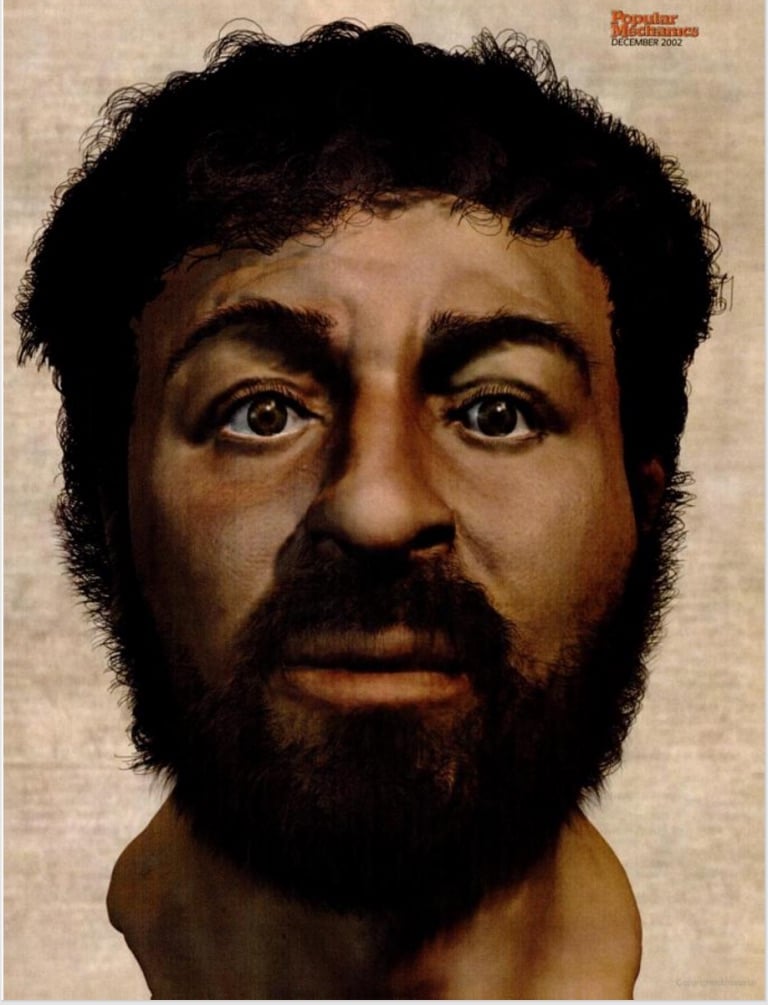
In 2001, forensic artist Richard Neave led a team that used early 3D reconstruction software to create what became a famous image of a first-century Judean man. Using a skull from a Galilean site and X-ray computerized tomography, they built a clay model over a 3D-printed skull. While revolutionary for its time, this was a “hybrid” tech approach, combining digital scans with physical sculpting. It gave us a man with a broad face, dark skin, and short, coiled hair—a stark contrast to the Westernized image.
Contemporary AI Interpretations and Data Accuracy
Fast forward to the 2020s, and the tools have migrated entirely into the digital cloud. Modern researchers are now using “Generative Reconstruction.” By feeding the 2001 forensic data into modern AI engines, we can add layers of environmental realism.
For instance, we can program the AI to factor in “occupational wear.” Historical accounts suggest Jesus was a tekton (traditionally translated as a carpenter, but likely a general stonemason or builder). AI can simulate how years of outdoor manual labor and UV exposure would affect the aging process of the skin and the development of facial musculature. This level of technical granularity provides a portrait that is not just a face, but a story of a life lived in a specific geographic and socioeconomic context.
The Future of Virtual Archaeology and Interactive History
The technology used to determine what Jesus looked like is not an end in itself; it is a gateway to a new form of digital interaction with the past. We are moving toward a future where “Historical Digital Twins” will be common in education and research.
Immersive Education through AR and VR
Through Augmented Reality (AR) and Virtual Reality (VR), these reconstructions are being integrated into “Living Museums.” Using high-fidelity engines like Unreal Engine 5, developers can place the reconstructed model of Jesus into a digitally recreated first-century Jerusalem.
In these environments, the tech allows for “Subsurface Scattering”—a rendering technique that simulates how light penetrates human skin. This makes the figure look startlingly alive. When a student wears a VR headset, they aren’t looking at a flat image; they are standing in front of a three-dimensional, biologically accurate human being. This shifts the experience from passive observation to an empathetic, tech-driven encounter with history.

Preserving Human Heritage in the Digital Cloud
The broader application of this tech involves the digital preservation of human heritage. As archaeological sites are threatened by climate change or conflict, the ability to “digitize” human history is paramount. By using photogrammetry and LiDAR to map burial sites and remains, we can store the “blueprints” of historical populations in the cloud.
The question of what Jesus looked like has served as the ultimate “beta test” for these technologies. It has forced software developers and scientists to refine their algorithms to handle one of the most scrutinized faces in human history. As these AI tools and forensic techniques continue to evolve, our “vision” of the past will only become clearer, replacing the shadows of artistic intuition with the bright light of digital precision.
In conclusion, the face of Jesus—as revealed by technology—is a testament to the power of modern innovation. It represents a synthesis of biology, history, and compute power. While we may never have a photograph from the first century, the convergence of AI and forensic science has given us the next best thing: a data-driven window into the reality of the past.
aViewFromTheCave is a participant in the Amazon Services LLC Associates Program, an affiliate advertising program designed to provide a means for sites to earn advertising fees by advertising and linking to Amazon.com. Amazon, the Amazon logo, AmazonSupply, and the AmazonSupply logo are trademarks of Amazon.com, Inc. or its affiliates. As an Amazon Associate we earn affiliate commissions from qualifying purchases.